Lemmer Kimberly C, Zhang Weiping, Langer Samantha J, Dohnalkova Alice C, Hu Dehong, Lemke Rachelle A, Piotrowski Jeff S, Orr Galya, Noguera Daniel R, Donohue Timothy J
DOE Great Lakes Bioenergy Research Center, University of Wisconsin-Madison, Madison, Wisconsin, USA.
Department of Civil and Environmental Engineering, University of Wisconsin-Madison, Madison, Wisconsin, USA.
mBio. 2017 May 23;8(3):e00513-17. doi: 10.1128/mBio.00513-17.
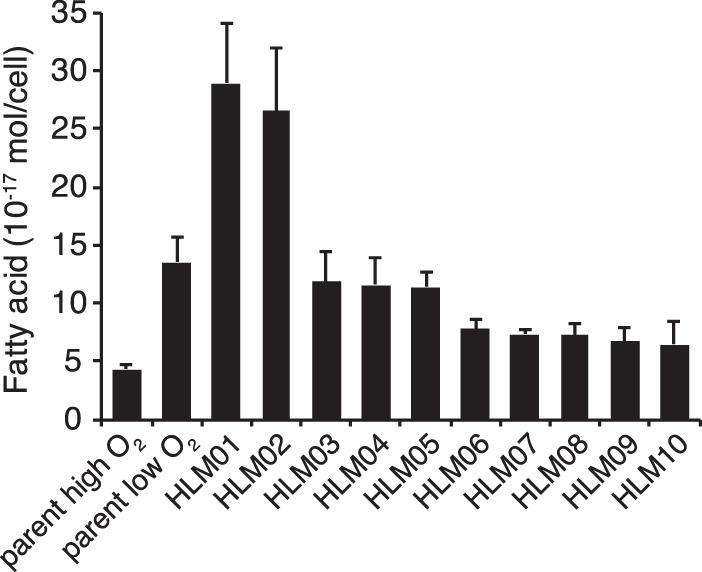
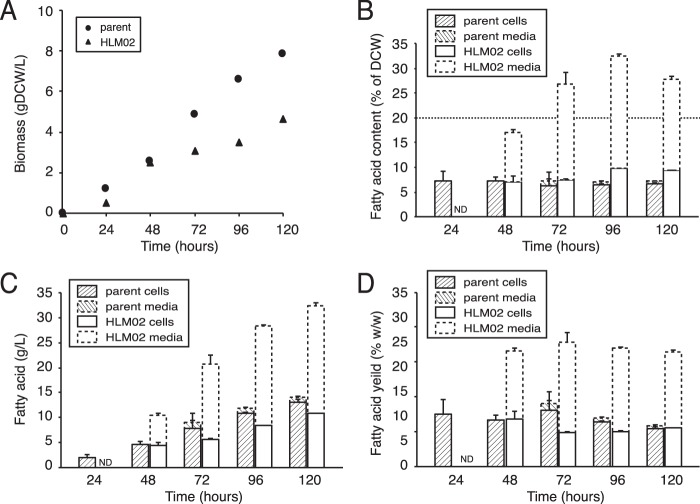
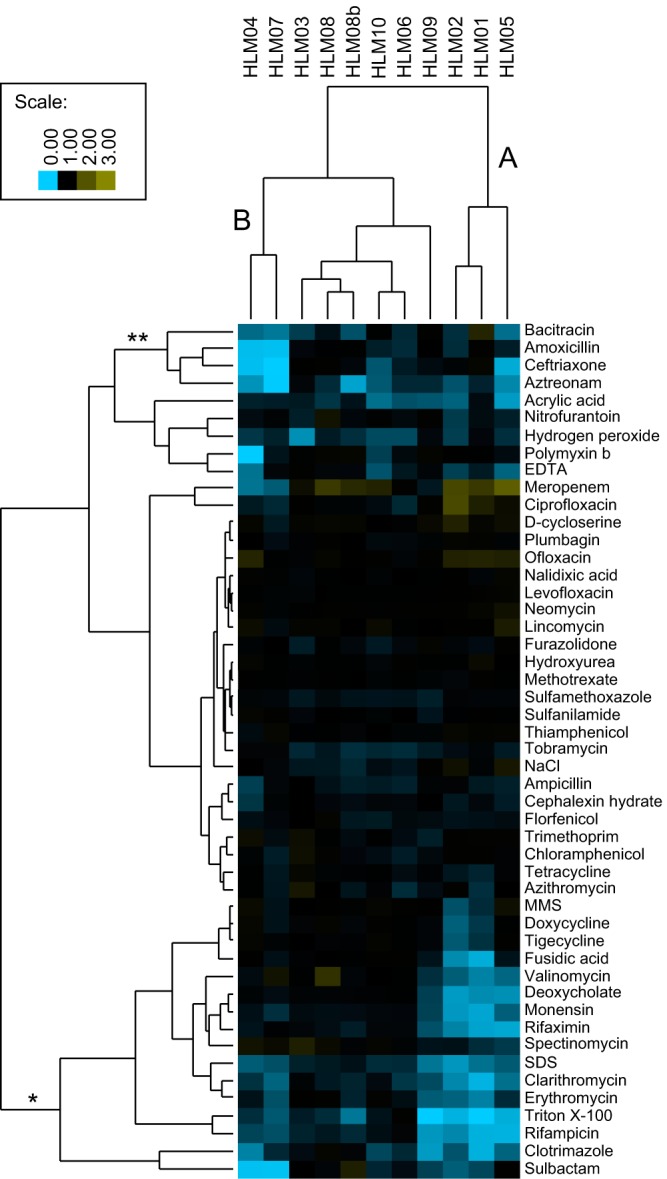
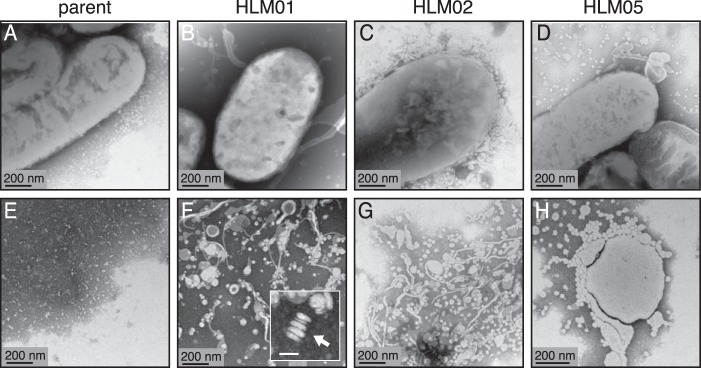
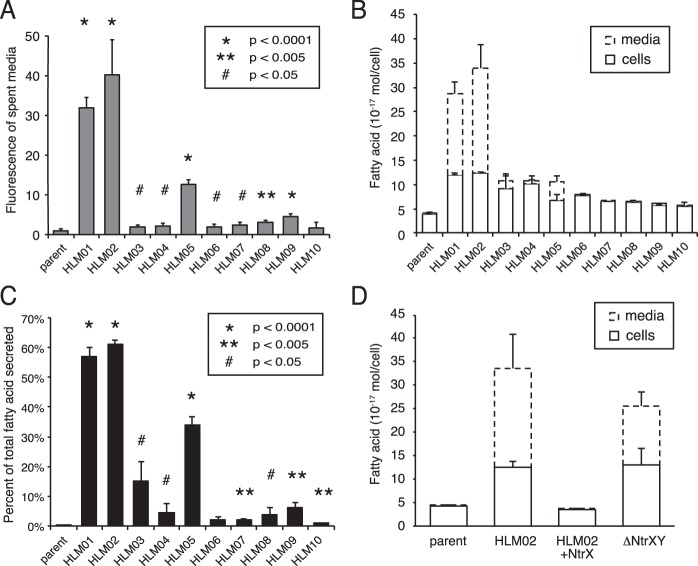
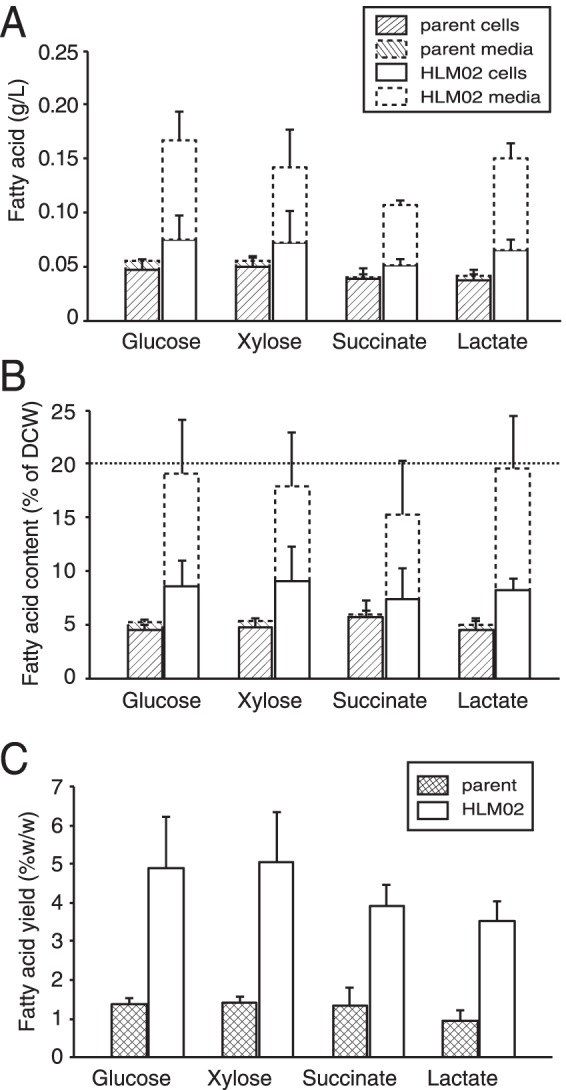
Lipids from microbes offer a promising source of renewable alternatives to petroleum-derived compounds. In particular, oleaginous microbes are of interest because they accumulate a large fraction of their biomass as lipids. In this study, we analyzed genetic changes that alter lipid accumulation in By screening an Tn mutant library for insertions that increased fatty acid content, we identified 10 high-lipid (HL) mutants for further characterization. These HL mutants exhibited increased sensitivity to drugs that target the bacterial cell envelope and changes in shape, and some had the ability to secrete lipids, with two HL mutants accumulating ~60% of their total lipids extracellularly. When one of the highest-lipid-secreting strains was grown in a fed-batch bioreactor, its lipid content was comparable to that of oleaginous microbes, with the majority of the lipids secreted into the medium. Based on the properties of these HL mutants, we conclude that alterations of the cell envelope are a previously unreported approach to increase microbial lipid production. We also propose that this approach may be combined with knowledge about biosynthetic pathways, in this or other microbes, to increase production of lipids and other chemicals. This paper reports on experiments to understand how to increase microbial lipid production. Microbial lipids are often cited as one renewable replacement for petroleum-based fuels and chemicals, but strategies to increase the yield of these compounds are needed to achieve this goal. While lipid biosynthesis is often well understood, increasing yields of these compounds to industrially relevant levels is a challenge, especially since genetic, synthetic biology, or engineering approaches are not feasible in many microbes. We show that altering the bacterial cell envelope can be used to increase microbial lipid production. We also find that the utility of some of these alterations can be enhanced by growing cells in bioreactor configurations that can be used industrially. We propose that our findings can inform current and future efforts to increase production of microbial lipids, other fuels, or chemicals that are currently derived from petroleum.
微生物脂质为石油衍生化合物提供了一种很有前景的可再生替代来源。特别是,产油微生物备受关注,因为它们会将大部分生物量积累为脂质。在本研究中,我们分析了改变脂质积累的基因变化。通过筛选Tn突变体文库以寻找增加脂肪酸含量的插入突变,我们鉴定出10个高脂质(HL)突变体用于进一步表征。这些HL突变体对靶向细菌细胞壁的药物表现出更高的敏感性且形状发生改变,一些突变体具有分泌脂质的能力,其中两个HL突变体在细胞外积累了约60%的总脂质。当其中一个脂质分泌量最高的菌株在补料分批生物反应器中培养时,其脂质含量与产油微生物相当,且大部分脂质分泌到培养基中。基于这些HL突变体的特性,我们得出结论,改变细胞壁是一种此前未报道的增加微生物脂质产量的方法。我们还提出,这种方法可与关于该微生物或其他微生物中生物合成途径的知识相结合,以增加脂质和其他化学品的产量。本文报道了旨在了解如何增加微生物脂质产量的实验。微生物脂质常被视为石油基燃料和化学品的一种可再生替代品,但要实现这一目标,需要提高这些化合物产量的策略。虽然脂质生物合成通常已被充分了解,但将这些化合物的产量提高到工业相关水平是一项挑战,特别是因为遗传、合成生物学或工程方法在许多微生物中并不可行。我们表明,改变细菌细胞壁可用于增加微生物脂质产量。我们还发现,通过在可用于工业生产的生物反应器配置中培养细胞,可以增强其中一些改变的效用。我们认为,我们的发现可为当前和未来增加微生物脂质、其他燃料或目前源自石油的化学品产量的努力提供参考。