Fraser Tricia, Brown Paul D
Department of Basic Medical Sciences, Biochemistry Section, University of the West IndiesMona, Jamaica.
Veterinary Services Division, Ministry of AgricultureHope Gardens, Jamaica.
Front Microbiol. 2017 May 9;8:783. doi: 10.3389/fmicb.2017.00783. eCollection 2017.
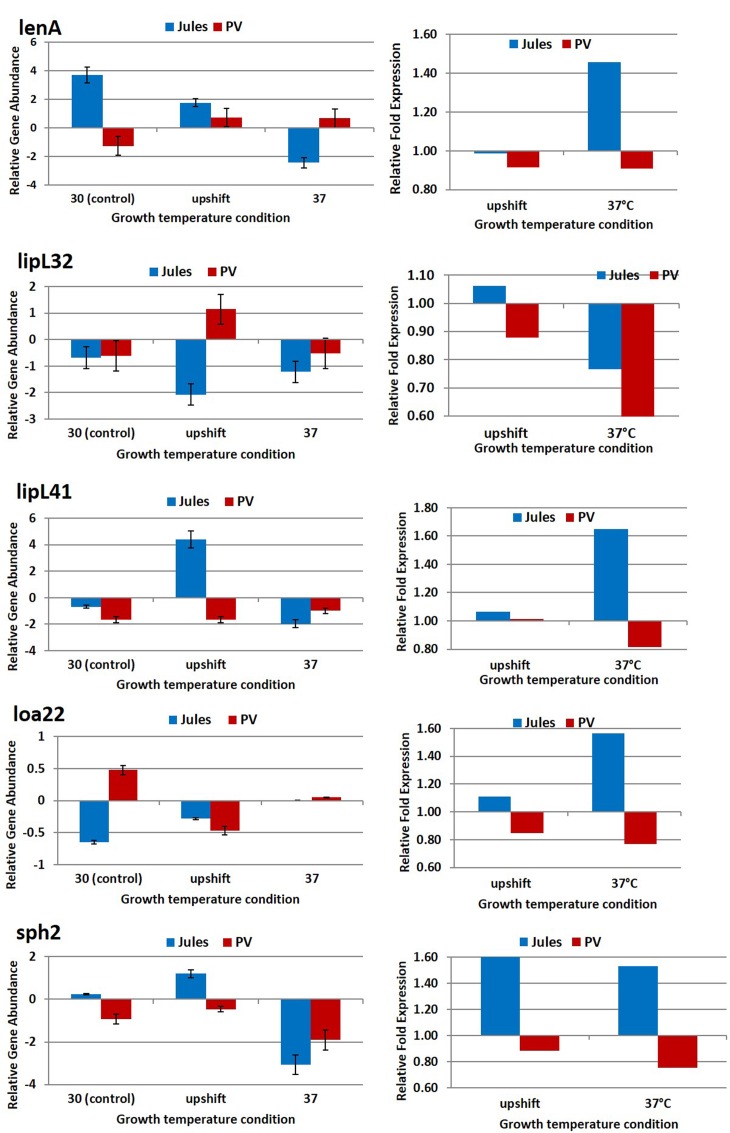
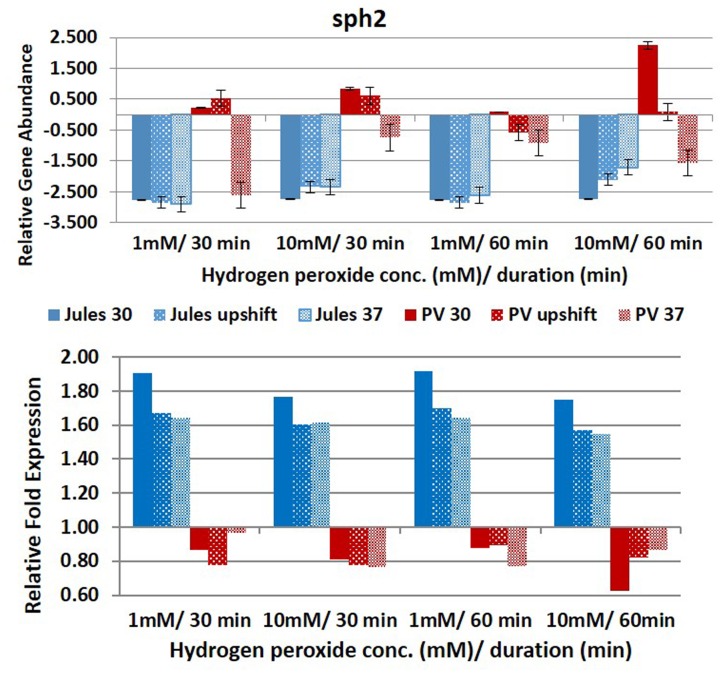
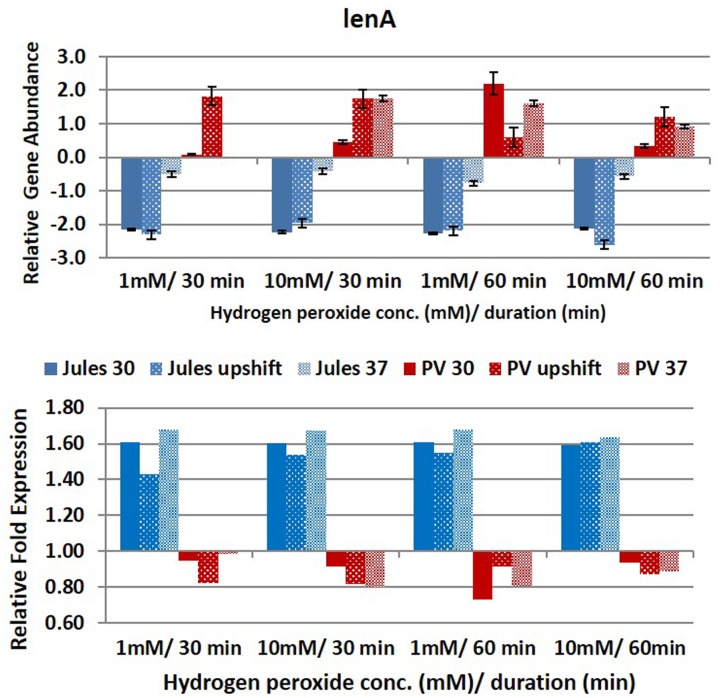
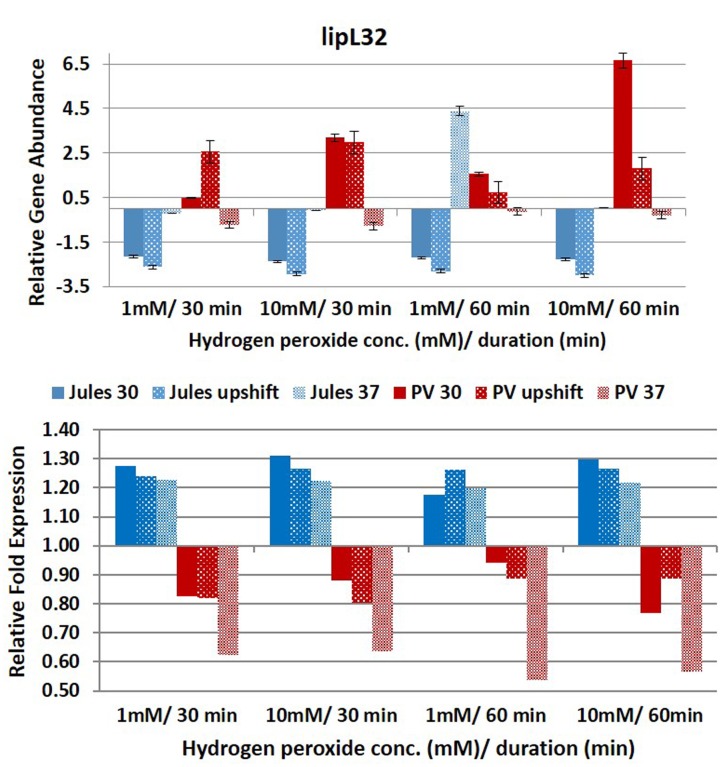
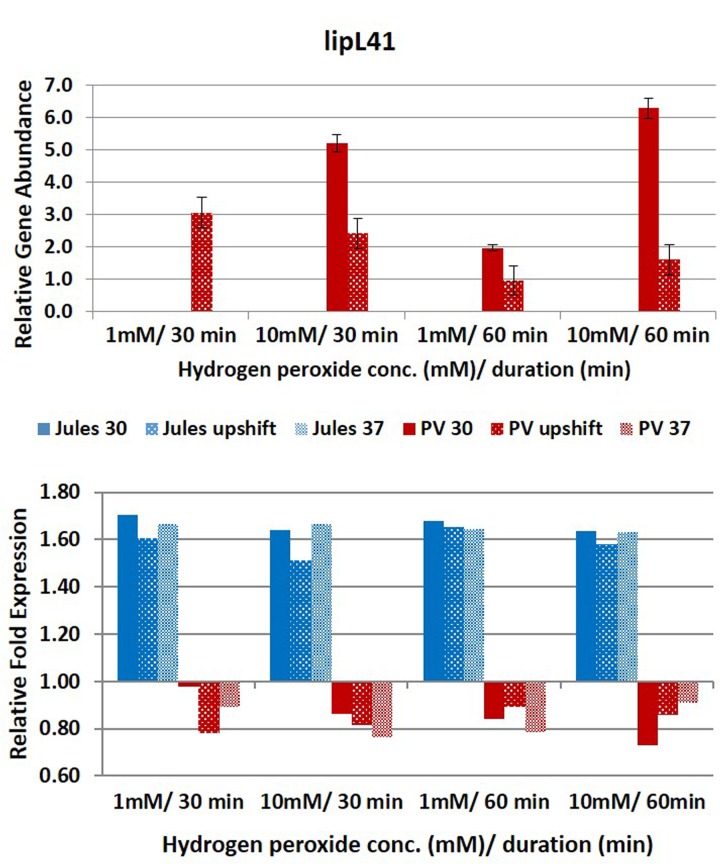
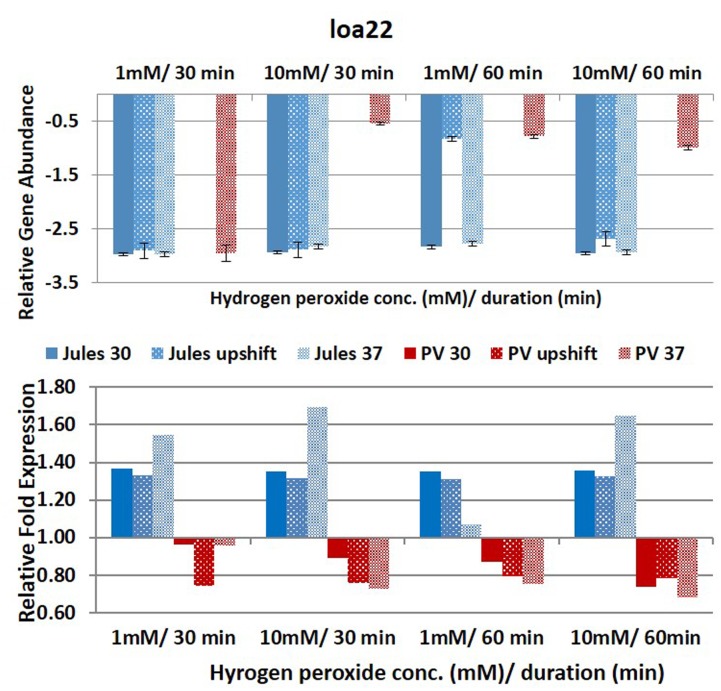
Leptospirosis is a zooanthroponosis aetiologically caused by pathogenic bacteria belonging to the genus, . Environmental signals such as increases in temperatures or oxidative stress can trigger response regulatory modes of virulence genes during infection. This study sought to determine the effect of temperature and oxidative stress on virulence associated genes in highly passaged Jules and Portlandvere. Bacteria were grown in EMJH at 30°C, 37°C, or at 30°C before being transferred to 37°C. A total of 14 virulence-associated genes (, and ) were assessed using endpoint PCR. Transcriptional analyses of , , , , were assessed by quantitative real-time RT-PCR at the temperature conditions. To assess oxidative stress, bacteria were exposed to HO for 30 and 60 min with or without the temperature stress. All genes except (for Portlandvere) and and (for Jules) were detectable in the strains. Quantitatively, temperature stress resulted in significant changes in gene expression within species or between species. Temperature changes were more influential in gene expression for Jules, particularly at 30°C and upshift conditions; at 37°C, expression levels were higher for Portlandvere. However, compared to Jules, where temperature was influential in two of five genes, temperature was an essential element in four of five genes in Portlandvere exposed to oxidative stress. At both low and high oxidative stress levels, the interplay between genetic predisposition (larger genome size) and temperature was biased towards Portlandvere particularly at 30°C and upshift conditions. While it is clear that expression of many virulence genes in highly passaged strains of are attenuated or lost, genetic predisposition, changes in growth temperature and/or oxidative intensity and/or duration were factors which acted in isolation or together with other regulatory cues to contribute to the variable gene expression observed in this study. Overall, differential gene expression in serovar Portlandvere was more responsive to temperature and oxidative stress.
钩端螺旋体病是一种人畜共患病,病因是由钩端螺旋体属的致病细菌引起。环境信号,如温度升高或氧化应激,可在感染期间触发毒力基因的应答调节模式。本研究旨在确定温度和氧化应激对高传代的朱尔斯株和波特兰株中与毒力相关基因的影响。细菌在EMJH培养基中于30°C、37°C下培养,或先在30°C培养然后转移至37°C培养。使用终点PCR评估了总共14个与毒力相关的基因(、和)。在上述温度条件下,通过定量实时RT-PCR评估了、、、、的转录分析。为评估氧化应激,将细菌暴露于过氧化氢中30分钟和60分钟,有无温度应激。除(针对波特兰株)和及(针对朱尔斯株)外,所有基因在菌株中均可检测到。定量分析表明,温度应激导致种内或种间基因表达发生显著变化。温度变化对朱尔斯株的基因表达影响更大,尤其是在30°C和升温条件下;在37°C时,波特兰株的表达水平更高。然而,与朱尔斯株相比,温度对其五个基因中的两个有影响,而在暴露于氧化应激的波特兰株中,温度是五个基因中四个基因表达的关键因素。在低和高氧化应激水平下,遗传易感性(更大的基因组大小)和温度之间的相互作用尤其在30°C和升温条件下偏向于波特兰株。虽然很明显,在高传代的菌株中许多毒力基因的表达减弱或丧失,但遗传易感性、生长温度变化和/或氧化强度和/或持续时间是单独或与其他调节信号共同作用的因素,导致了本研究中观察到的基因表达变化。总体而言,血清型波特兰株中的差异基因表达对温度和氧化应激更敏感。