Kane Kristin, Debinski Diane M, Anderson Chris, Scasta John D, Engle David M, Miller James R
Department of Natural Resources and Environmental Science, University of Nevada RenoReno, NV, USA.
Department of Ecology, Evolution and Organismal Biology, Iowa State UniversityAmes, IA, USA.
Front Plant Sci. 2017 May 9;8:730. doi: 10.3389/fpls.2017.00730. eCollection 2017.
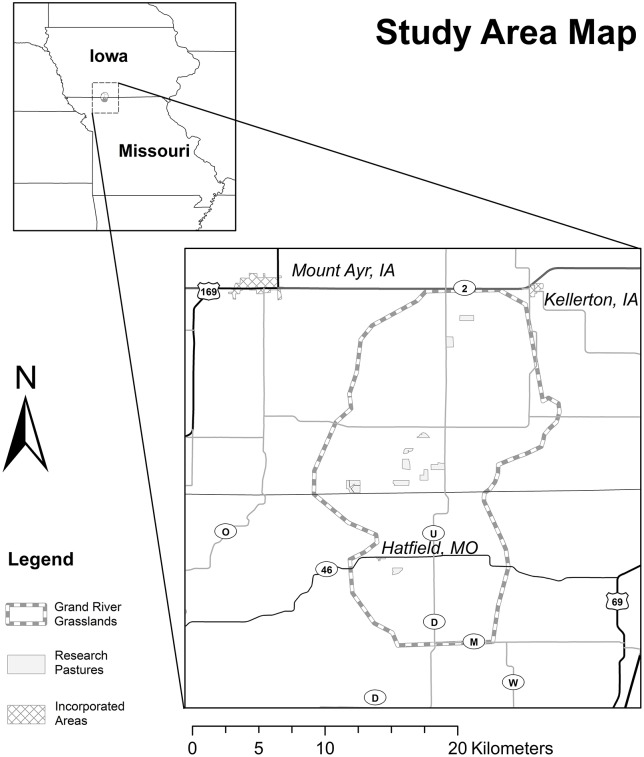
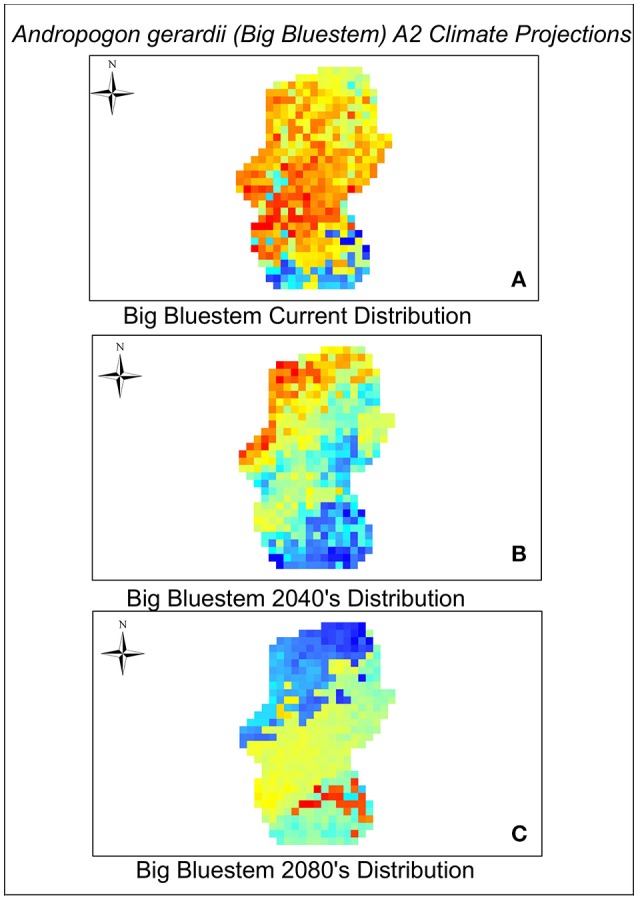
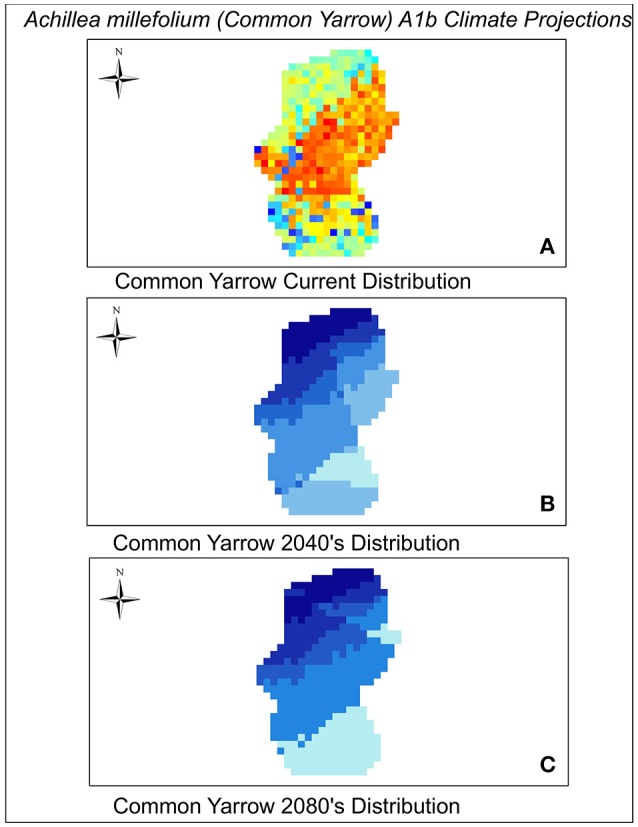
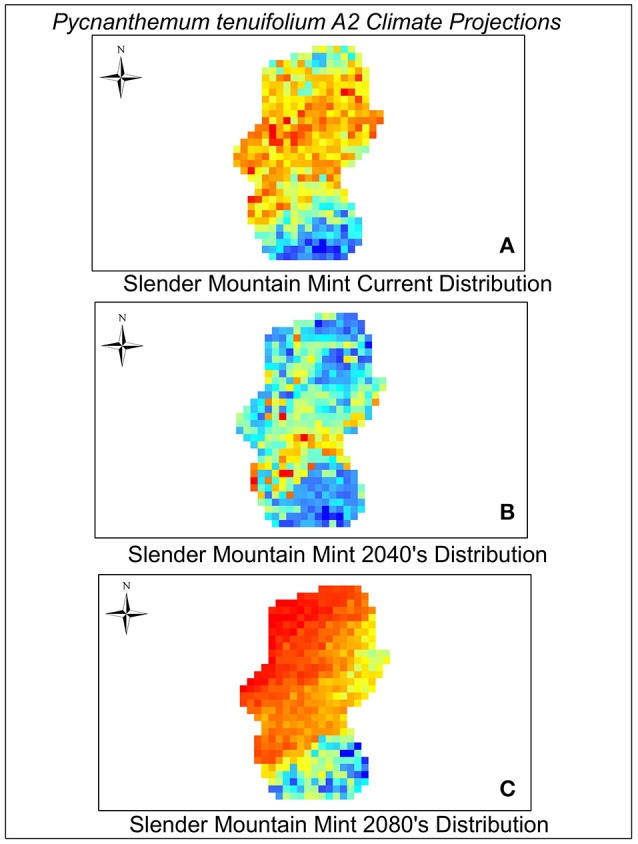
Grassland loss has been extensive worldwide, endangering the associated biodiversity and human well-being that are both dependent on these ecosystems. Ecologists have developed approaches to restore grassland communities and many have been successful, particularly where soils are rich, precipitation is abundant, and seeds of native plant species can be obtained. However, climate change adds a new filter needed in planning grassland restoration efforts. Potential responses of species to future climate conditions must also be considered in planning for long-term resilience. We demonstrate this methodology using a site-specific model and a maximum entropy approach to predict changes in habitat suitability for 33 grassland plant species in the tallgrass prairie region of the U.S. using the Intergovernmental Panel on Climate Change scenarios A1B and A2. The A1B scenario predicts an increase in temperature from 1.4 to 6.4°C, whereas the A2 scenario predicts temperature increases from 2 to 5.4°C and much greater CO emissions than the A1B scenario. Both scenarios predict these changes to occur by the year 2100. Model projections for 2040 under the A1B scenario predict that all but three modeled species will lose ~90% of their suitable habitat. Then by 2080, all species except for one will lose ~90% of their suitable habitat. Models run using the A2 scenario predict declines in habitat for just four species by 2040, but models predict that by 2080, habitat suitability will decline for all species. The A2 scenario appears based on our results to be the less severe climate change scenario for our species. Our results demonstrate that many common species, including grasses, forbs, and shrubs, are sensitive to climate change. Thus, grassland restoration alternatives should be evaluated based upon the long-term viability in the context of climate change projections and risk of plant species loss.
全球范围内草地流失现象广泛,危及与之相关的生物多样性以及依赖这些生态系统的人类福祉。生态学家已研发出恢复草地群落的方法,其中许多已取得成功,尤其是在土壤肥沃、降水充沛且能获取本地植物物种种子的地方。然而,气候变化给草地恢复工作的规划增加了一个新的考量因素。在规划长期恢复力时,还必须考虑物种对未来气候条件的潜在反应。我们运用特定地点模型和最大熵方法,以政府间气候变化专门委员会的A1B和A2情景为依据,展示了这种方法,用于预测美国高草草原地区33种草原植物物种栖息地适宜性的变化。A1B情景预测温度将升高1.4至6.4摄氏度,而A2情景预测温度将升高2至5.4摄氏度,且二氧化碳排放量比A1B情景大得多。两种情景均预测这些变化将在2100年发生。A1B情景下2040年的模型预测显示,除三种建模物种外,所有物种将失去约90%的适宜栖息地。到2080年,除一种物种外,所有物种将失去约90%的适宜栖息地。使用A2情景运行的模型预测,到2040年只有四种物种的栖息地会减少,但模型预测到2080年,所有物种的栖息地适宜性都会下降。根据我们的结果,A2情景似乎是对我们研究的物种而言不太严峻的气候变化情景。我们的结果表明,许多常见物种,包括禾本科植物、多年生草本植物和灌木,对气候变化敏感。因此,应根据气候变化预测背景下的长期可行性以及植物物种丧失风险,对草地恢复方案进行评估。