*Department of Pathology and Medical Biology, University Medical Center Groningen, University of Groningen, Groningen, The Netherlands †Academic Pediatric Center Suriname, Paramaribo, Suriname ‡Scientific Research Center Suriname, Academic Hospital Paramaribo, Paramaribo, Suriname §Department of Critical Care, University Medical Center Groningen, University of Groningen, Groningen, The Netherlands ||Department of Anesthesiology, University Medical Center Groningen, University of Groningen, Groningen, The Netherlands ¶Department of Pediatrics, Diakonessen Hospital, Paramaribo, Suriname #Department of Pediatrics, Tergooi Hospitals, Blaricum, The Netherlands.
Shock. 2017 Dec;48(6):638-643. doi: 10.1097/SHK.0000000000000903.
Vascular inflammation and leakage in sepsis is mediated by Angiopoietin-1 (Ang-1) and Angiopoietin-2 (Ang-2) and their phosphorylation of the endothelial Tie-2 receptor. This study investigates levels of Ang-1 and Ang-2 in newborns to gain insight in the vascular pathophysiology of early onset sepsis (EOS) within 72 h after birth.
A prospective cohort study was performed among 71 Surinamese newborns treated with antibiotics for suspected EOS and 20 control newborns. Newborns with suspected EOS were divided in two groups: blood culture negative and positive EOS. Ang-1 and Ang-2 levels were measured in serum obtained at the start of antibiotic treatment and at re-evaluation after 48 to 72 h.
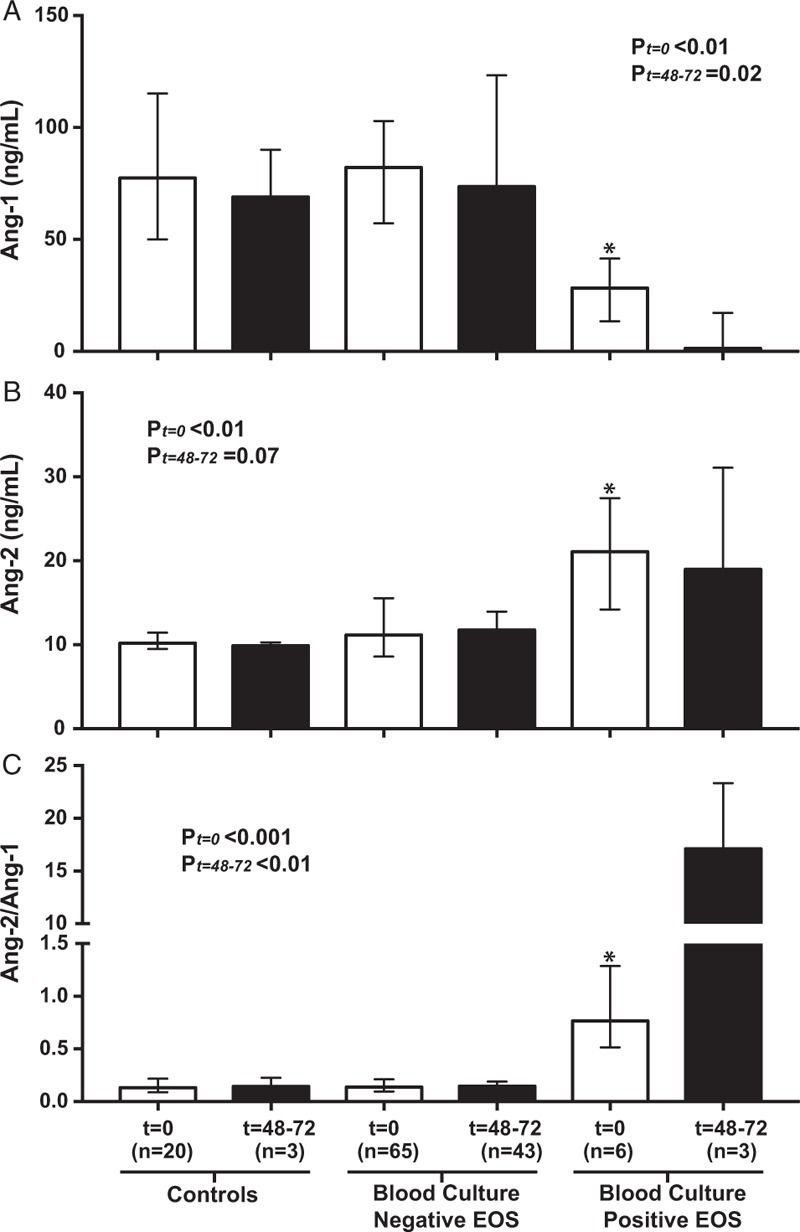
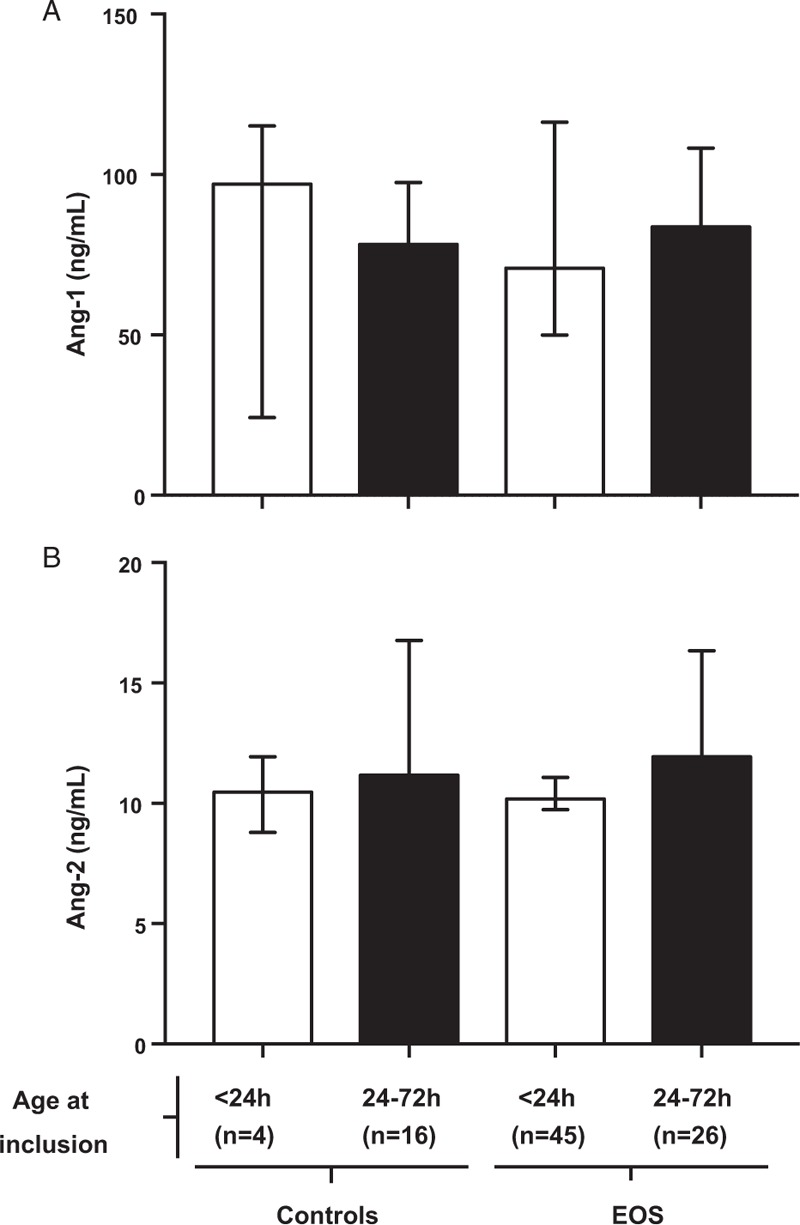
In this cohort 8.5% of newborns had a positive blood culture. At the start of antibiotic treatment Ang-1 serum levels were lower (P < 0.01), and Ang-2 and Ang-2/Ang-1 serum protein ratios were higher (P < 0.01 and P < 0.01, respectively) in newborns with blood culture positive EOS than in controls. These levels were not dependent on timing of first blood draw after birth. After 48 to 72 h levels of Ang-1 further decreased in blood culture positive EOS, while in the other groups no change was observed.
Our findings support the hypothesis that a disbalance in the Angiopoietins plays a role in the vascular pathophysiology of EOS.
败血症中的血管炎症和渗漏是由血管生成素 1(Ang-1)和血管生成素 2(Ang-2)及其对内皮 Tie-2 受体的磷酸化介导的。本研究旨在调查新生儿中 Ang-1 和 Ang-2 的水平,以深入了解出生后 72 小时内早期发病败血症(EOS)的血管病理生理学。
对 71 名接受抗生素治疗疑似 EOS 的苏里南新生儿和 20 名对照新生儿进行了前瞻性队列研究。疑似 EOS 的新生儿分为两组:血培养阴性和阳性 EOS。在开始抗生素治疗时和 48 至 72 小时后重新评估时,分别测量血清中的 Ang-1 和 Ang-2 水平。
在该队列中,8.5%的新生儿血培养阳性。在开始抗生素治疗时,血培养阳性 EOS 组的血清 Ang-1 水平较低(P<0.01),Ang-2 和 Ang-2/Ang-1 血清蛋白比值较高(P<0.01 和 P<0.01,分别)与对照组相比。这些水平与出生后首次采血的时间无关。48 至 72 小时后,血培养阳性 EOS 组的 Ang-1 水平进一步下降,而其他组则没有变化。
我们的研究结果支持这样一种假设,即血管生成素的失衡在 EOS 的血管病理生理学中起作用。