Department of Anthropology, 13-8 Tory Building, University of Alberta, Edmonton AB, T6R 3H8, Canada.
Faculty of Archaeology, Leiden University, PO Box 9514, 2300, RA Leiden, The Netherlands.
Sci Rep. 2017 May 24;7(1):2319. doi: 10.1038/s41598-017-02636-w.
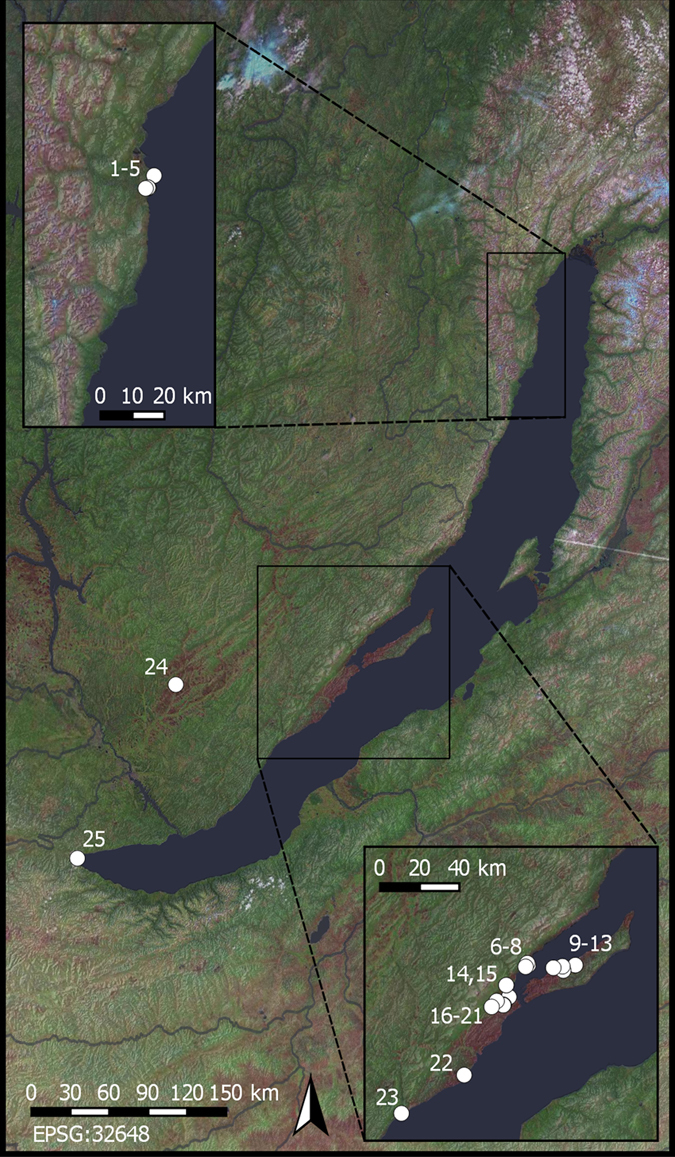
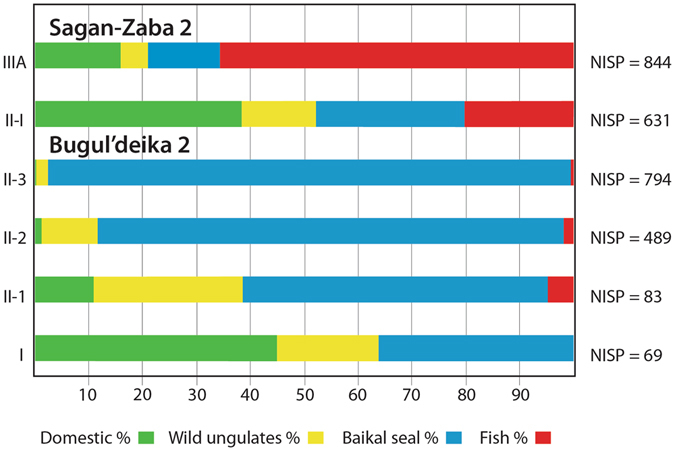
The spread of pastoralism in Asia is poorly understood, including how such processes affected northern forager populations. Lake Baikal's western shore has a rich Holocene archaeological record that tracks these processes. The Early Bronze Age here is evidenced by numerous forager burials. The Early Iron Age (EIA) is thought to mark the arrival of pastoralists, but archaeological remains from this period have received little analysis. New radiocarbon dates for EIA human remains from 23 cemeteries indicate that no burials were created along this shore for ~900 years. This period, from ~3670 to 2760 cal. BP, spans from the end of the Early Bronze Age to the advent of the EIA. The burial gap may mark disruption of local foraging populations through incursions by non-local pastoralists. Radiocarbon dates on faunal remains indicate that domestic herd animals first appear around 3275 cal. BP, just prior to the first EIA human burials. Stable carbon and nitrogen isotope analysis of human remains and zooarchaeological data indicate that domestic fauna were minor dietary components for EIA people. Like preceding foragers, the EIA groups relied extensively on Baikal's aquatic food sources, indicating that the scale of pastoralism during this period was relatively limited.
亚洲畜牧业的传播情况了解甚少,包括这些过程如何影响北方狩猎采集人群。贝加尔湖西岸拥有丰富的全新世考古记录,可以追踪这些过程。这里的青铜时代早期有大量狩猎采集者的墓葬为证。人们认为,铁器时代早期(EIA)标志着牧民的到来,但这一时期的考古遗迹几乎没有得到分析。来自 23 个墓地的 EIA 人类遗骸的新放射性碳测年日期表明,在这一时期,约 900 年来,该地区没有任何墓葬。这一时期从公元前 3670 年到 2760 年,跨越了从青铜时代早期到铁器时代早期的到来。这一时期的墓葬空缺可能标志着当地狩猎采集人群受到非本地牧民的入侵而受到破坏。动物遗骸的放射性碳测年日期表明,家养牲畜最早出现在公元前 3275 年左右,就在第一批 EIA 人类埋葬之前。人类遗骸的稳定碳和氮同位素分析以及动物考古学数据表明,家养动物在 EIA 人群的饮食中只是次要组成部分。与之前的狩猎采集者一样,EIA 群体广泛依赖贝加尔湖的水生食物资源,这表明这一时期的畜牧业规模相对有限。