Nephrology Hospital, The First Affiliated Hospital of Zhengzhou University, NO. 1 Jianshe Eastern Road, 6th Floor of NO. 7 Building, Erqi District, Zhengzhou, 450052, China.
Zhengzhou University Institute of Nephrology, Zhengzhou, 450052, China.
Sci Rep. 2017 May 24;7(1):2314. doi: 10.1038/s41598-017-01027-5.
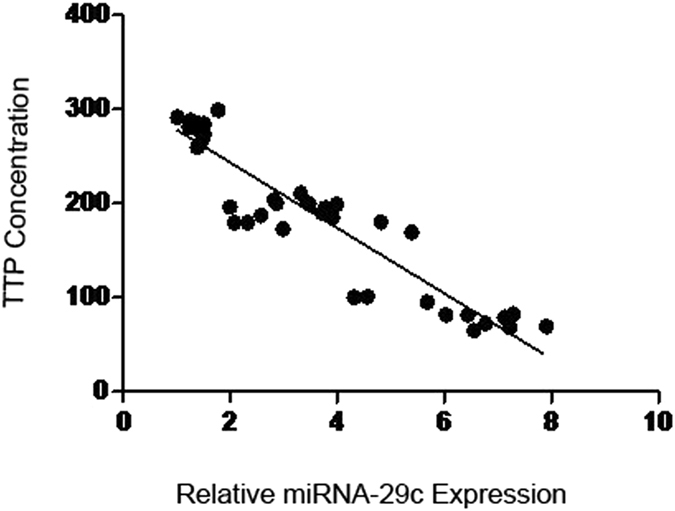
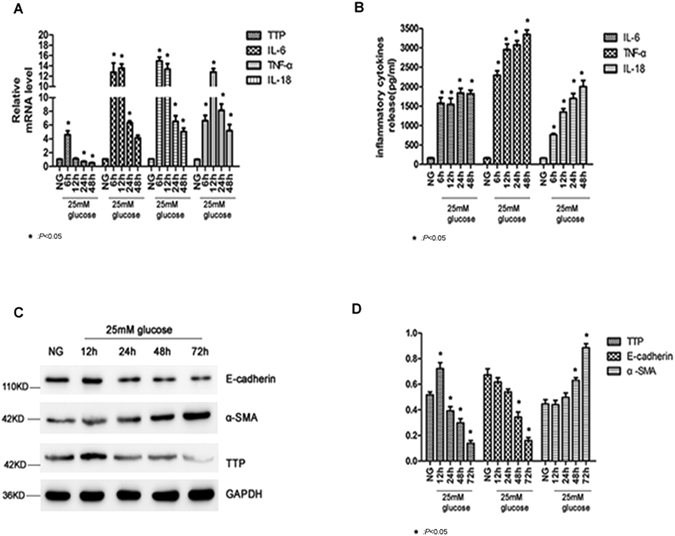
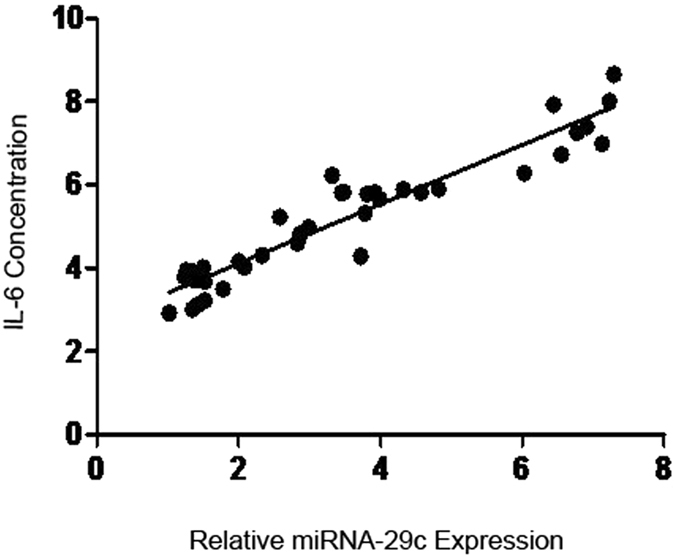
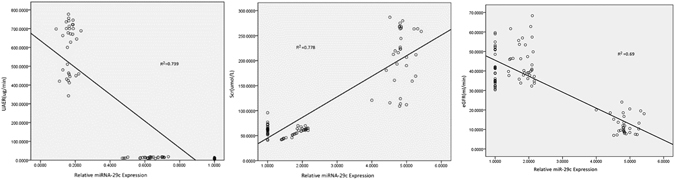
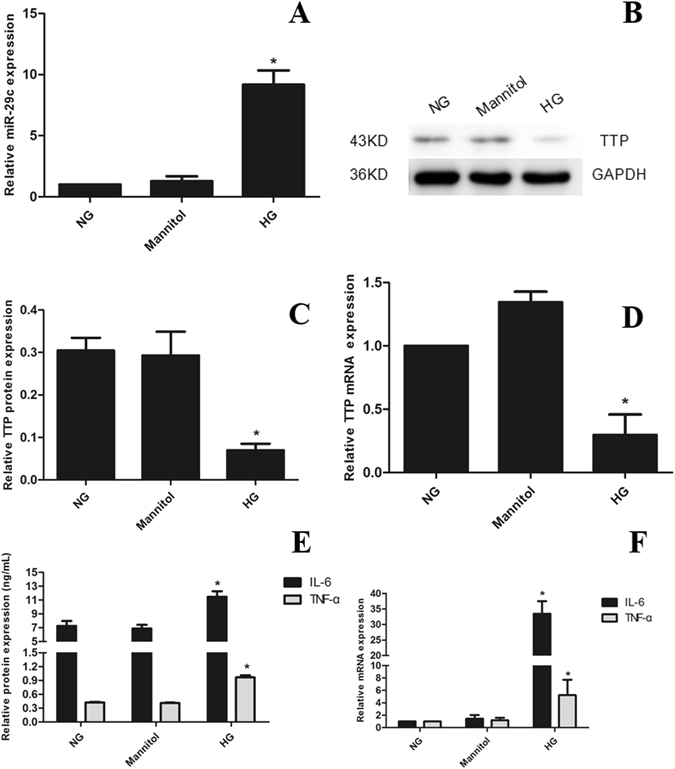
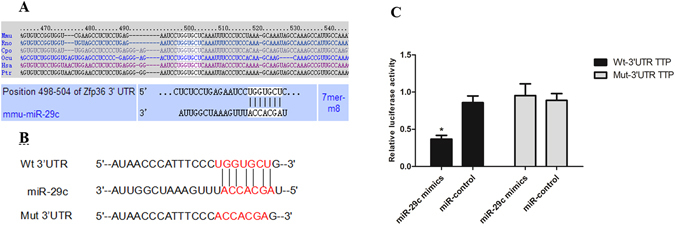
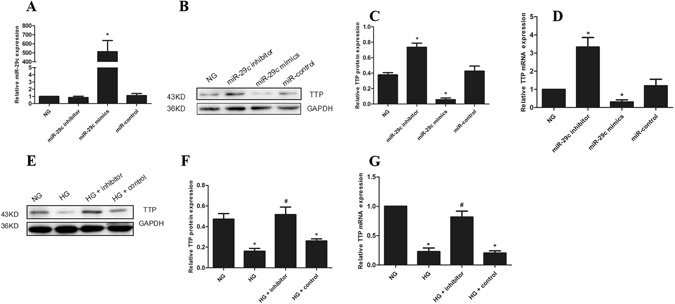
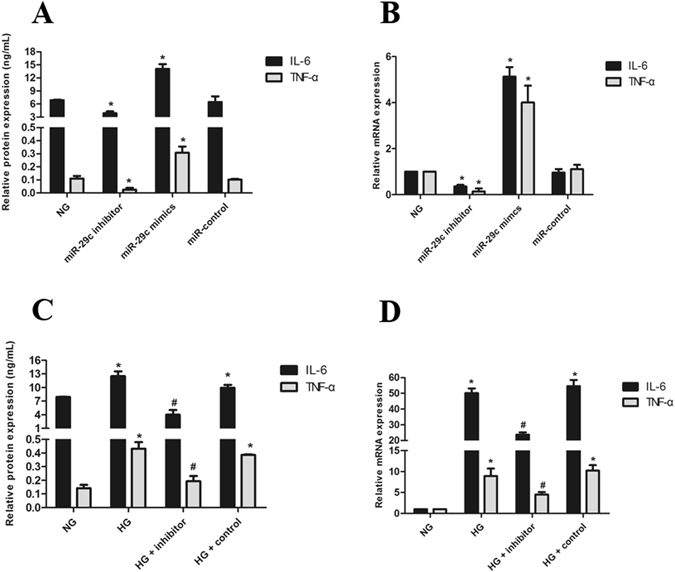
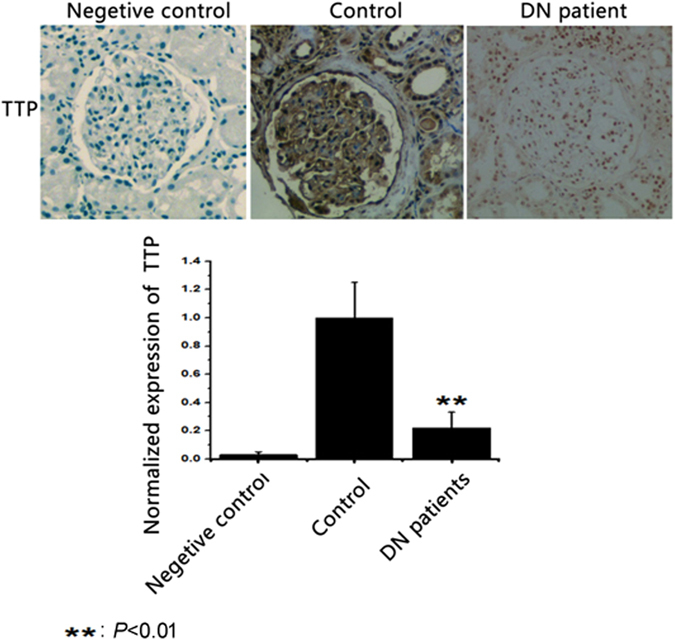
Diabetic nephropathy is one of the most prevalent chronic complications of Diabetes mellitus, but its pathogenesis remains elusive. This study was designed to determine the role of tristetraprolin (TTP), inflammatory cytokines and microRNAs (miRNAs) in DN. The blood and urine samples were obtained from 32 patients with DN, 33 patients with type 2 DM, and 35 normal healthy subjects as controls. Renal tissue samples were also obtained from 10 DN patients and 10 normal controls. The miRNA microarray analyses were performed in pooled plasma and urine sediment samples of eight DN patients and eight age- and sex-matched health control subjects and three paired renal tissues from patients with DN and normal controls. Conditionally immortalized mouse podocytes (MPC5) were used a cell model. The expressions of TTP and cytokines in patient samples and cultured cells were determined by qRT-PCR and Western blotting or ELISA. Our results indicated that miRNA-29c directly targeted TTP and promoted inflammatory response under hyperglycemic conditions. Overexpression of miRNA-29c in podocytes resulted in an increase in inflammatory cytokines and inhibition of miRNA-29c by using its inhibitor reduced the inflammatory cytokines in podocytes. Finally, miRNA-29c promoted the progression of DN by targeting TTP, providing a target for a therapeutic intervention of DN.
糖尿病肾病是糖尿病最常见的慢性并发症之一,但发病机制仍不清楚。本研究旨在探讨 tristetraprolin(TTP)、炎症细胞因子和 microRNAs(miRNAs)在糖尿病肾病(DN)中的作用。收集 32 例 DN 患者、33 例 2 型糖尿病患者和 35 例正常健康受试者的血液和尿液样本作为对照。还从 10 例 DN 患者和 10 例正常对照者中获得肾组织样本。对 8 例 DN 患者和 8 例年龄和性别匹配的健康对照者的混合血浆和尿液沉淀物样本以及 3 对来自 DN 患者和正常对照者的配对肾组织进行 miRNA 微阵列分析。使用条件永生化的小鼠足细胞(MPC5)作为细胞模型。通过 qRT-PCR、Western blot 或 ELISA 测定患者样本和培养细胞中 TTP 和细胞因子的表达。结果表明,miRNA-29c 在高血糖条件下可直接靶向 TTP 并促进炎症反应。足细胞中 miRNA-29c 的过表达导致炎症细胞因子增加,而使用其抑制剂抑制 miRNA-29c 则减少了足细胞中的炎症细胞因子。最后,miRNA-29c 通过靶向 TTP 促进 DN 的进展,为 DN 的治疗干预提供了一个靶点。