Ramsden Benjamin M, Hung Chou P, Roe Anna Wang
Department of Psychological and Brain Sciences, Indiana University, Bloomington, IN, USA.
Department of Neuroscience, Georgetown University Medical Center, Washington, DC, USA.
Eye Brain. 2014 Sep 24;6(Suppl 1):97-112. doi: 10.2147/EB.S51821. eCollection 2014.
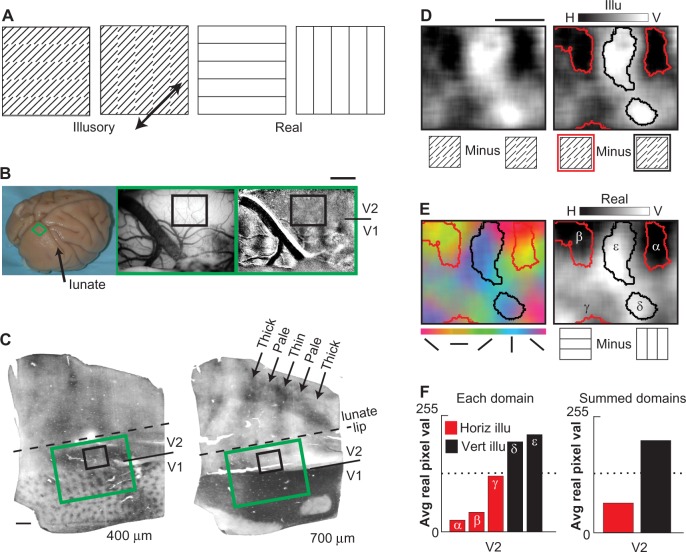
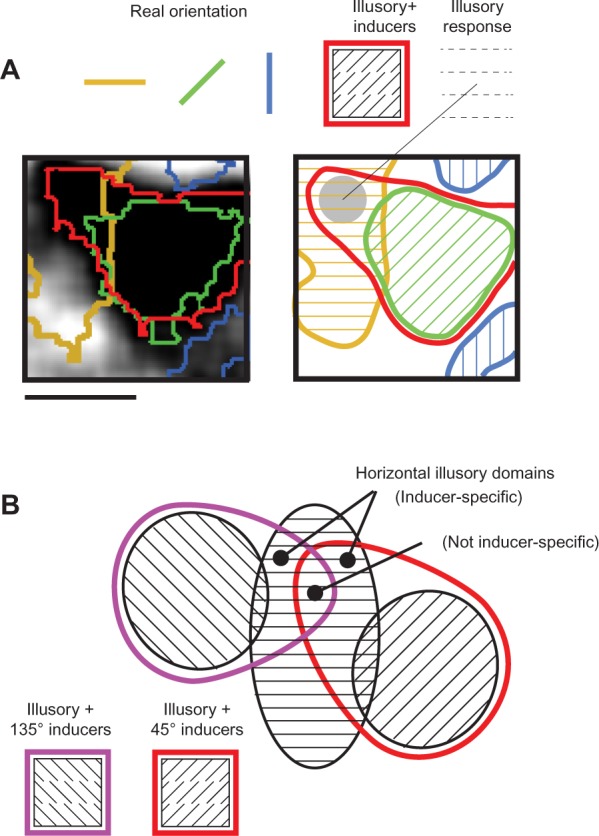
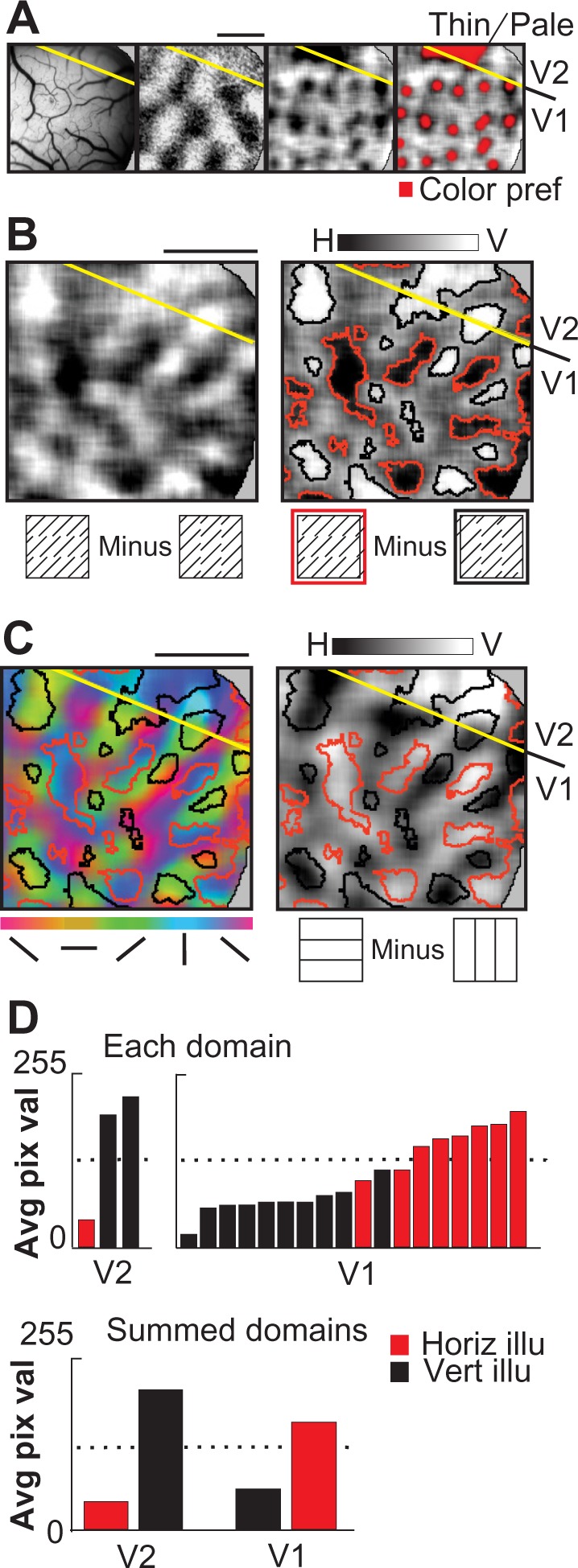
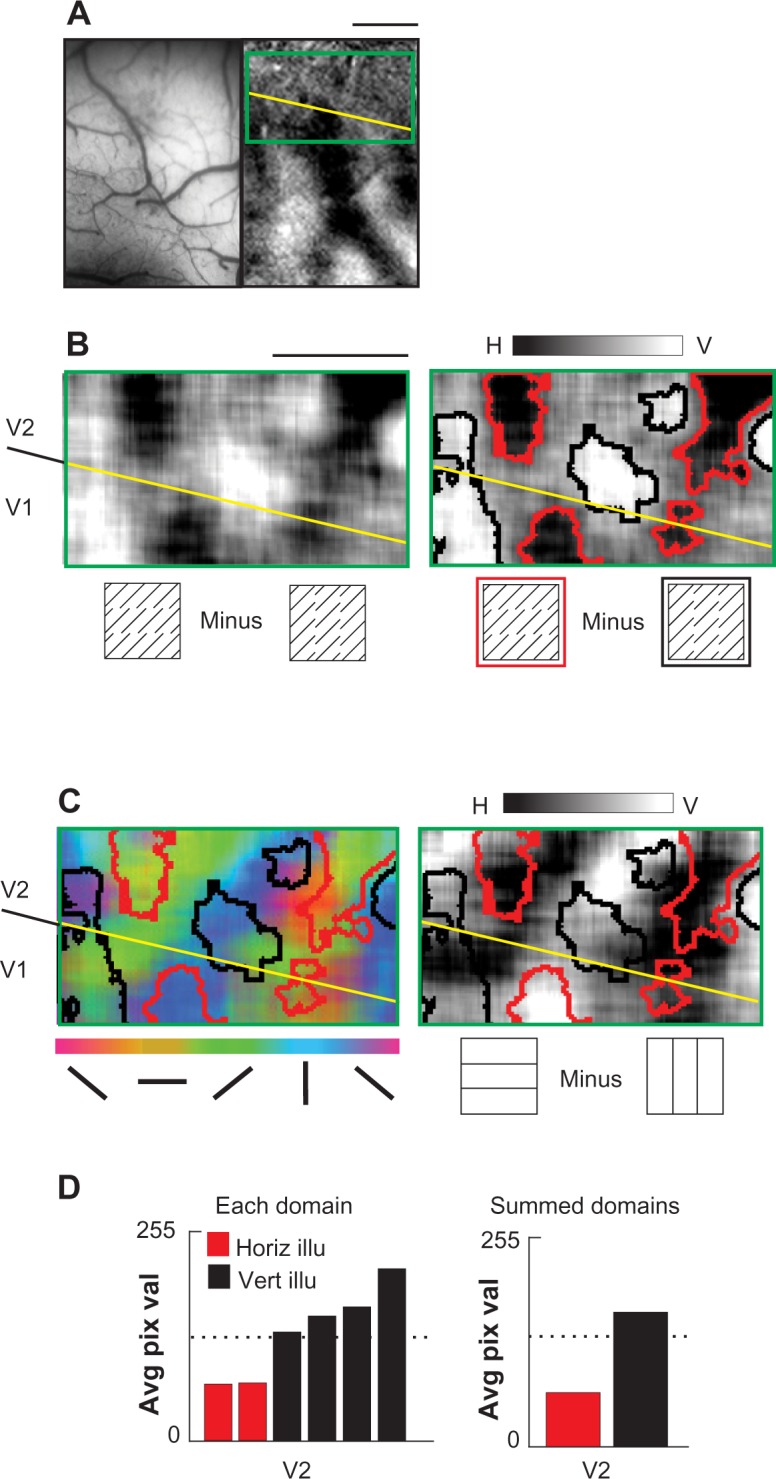
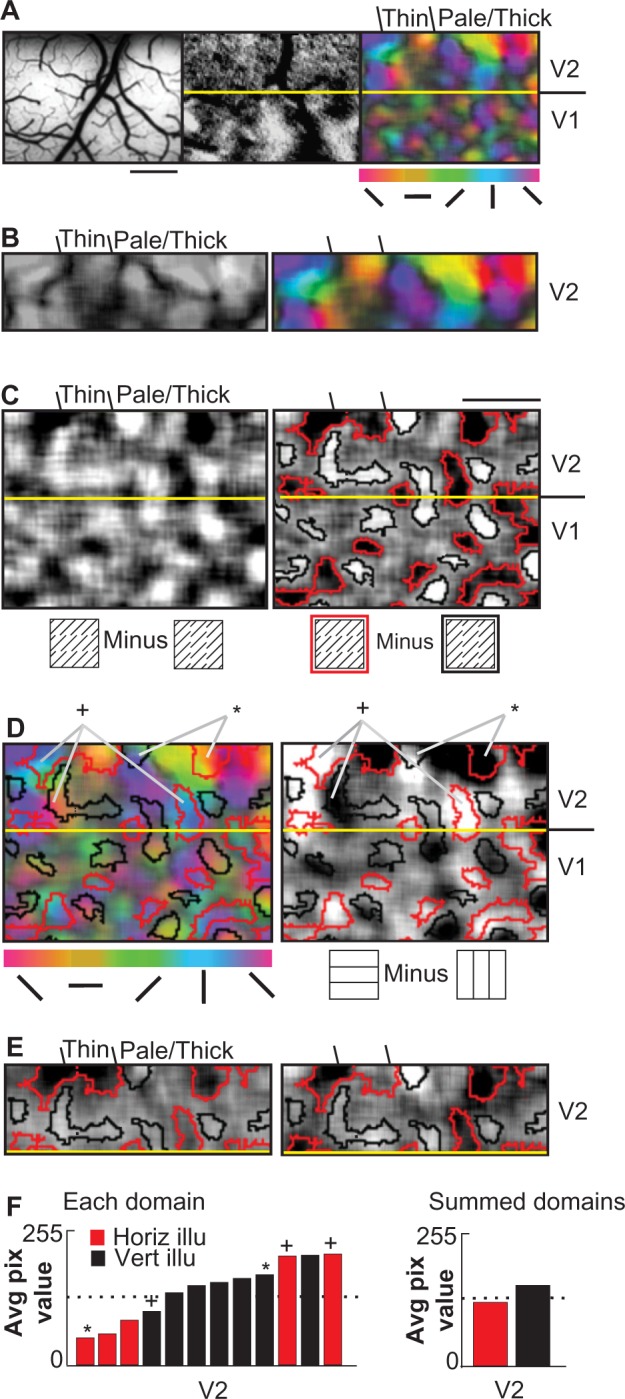
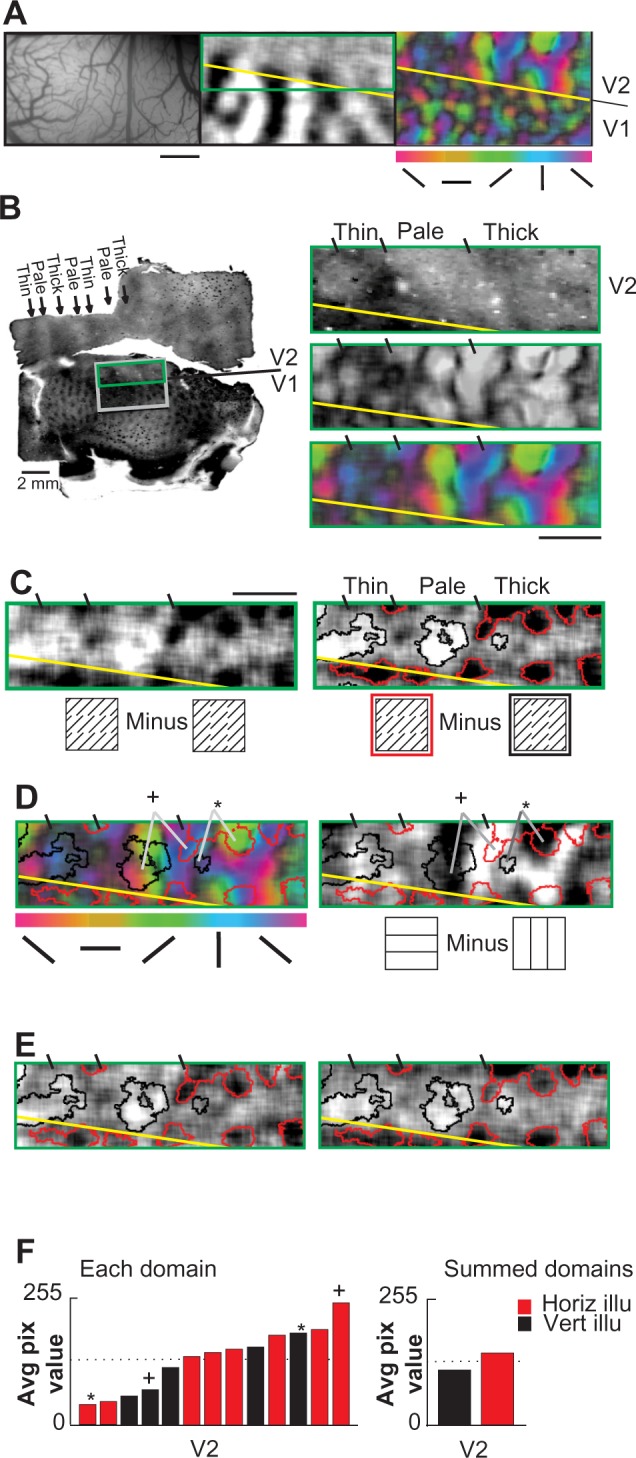
Single orientation domains in primary (V1) and second (V2) visual cortical areas are known to encode the orientation of visual contours. However, the visual world contains multiple and complex contour types. How do these domains handle such complexity? Using optical imaging methods, we have examined orientation response to two types of contours: real (luminance-defined) and illusory (inferred). We find that, unlike area V1, there are multiple types of orientation domain in V2. These include "real only" domains, "higher-order" domains (which respond to an orientation whether real or illusory), and other domains with nonmatching real/illusory orientation preference. We suggest that this plurality of orientation domains in V2 enables the complexities of local and global contour extraction.
已知初级视觉皮层(V1)和次级视觉皮层(V2)中的单取向域编码视觉轮廓的取向。然而,视觉世界包含多种复杂的轮廓类型。这些域如何处理这种复杂性?我们使用光学成像方法,研究了对两种轮廓类型的取向响应:真实的(由亮度定义)和虚幻的(推断的)。我们发现,与V1区不同,V2区存在多种类型的取向域。这些包括“仅真实”域、“高阶”域(对真实或虚幻的取向均有响应)以及其他具有不匹配的真实/虚幻取向偏好的域。我们认为,V2区中这种多种取向域能够实现局部和全局轮廓提取的复杂性。