Kocsel Natália, Szabó Edina, Galambos Attila, Édes Andrea, Pap Dorottya, Elliott Rebecca, Kozák Lajos R, Bagdy György, Juhász Gabriella, Kökönyei Gyöngyi
Doctoral School of Psychology, Eötvös Loránd UniversityBudapest, Hungary.
Institute of Psychology, Eötvös Loránd UniversityBudapest, Hungary.
Front Behav Neurosci. 2017 May 10;11:85. doi: 10.3389/fnbeh.2017.00085. eCollection 2017.
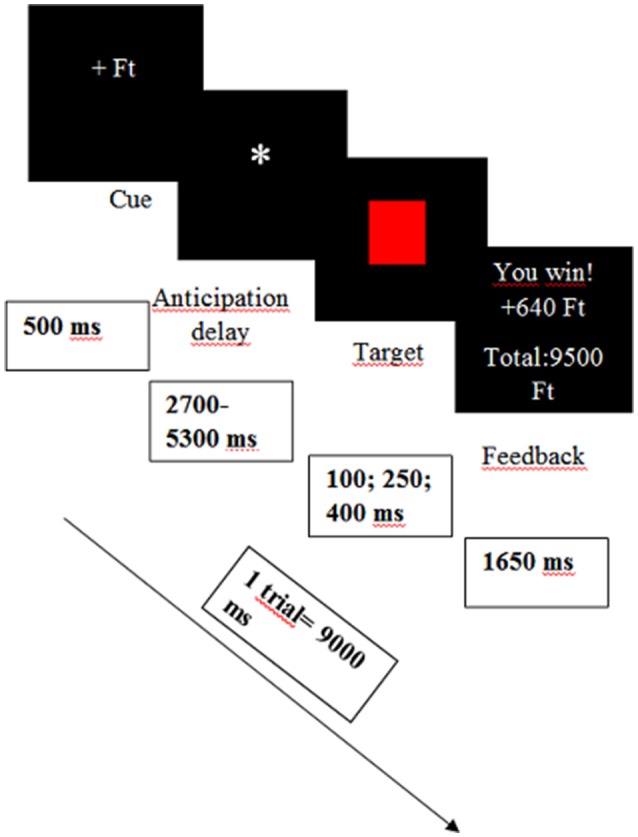
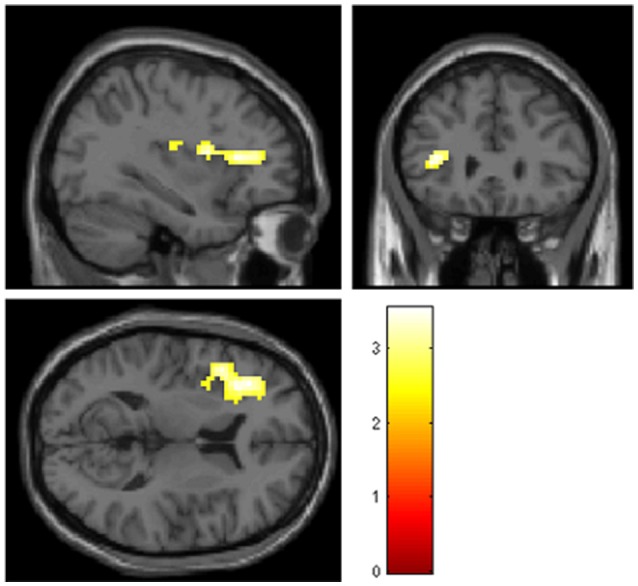
Cumulative evidence suggests that trait rumination can be defined as an abstract information processing mode, which leads people to constantly anticipate the likely impact of present events on future events and experiences. A previous study with remitted depressed patients suggested that enhanced rumination tendencies distort brain mechanisms of anticipatory processes associated with reward and loss cues. In the present study, we explored the impact of trait rumination on neural activity during reward and loss anticipation among never-depressed people. We analyzed the data of 37 healthy controls, who performed the monetary incentive delay (MID) task which was designed for the simultaneous measurement of the anticipation (motivational) and consumption (hedonic) phase of reward processing, during functional magnetic resonance imaging (fMRI). Our results show that rumination-after controlling for age, gender, and current mood-significantly influenced neural responses to reward (win) cues compared to loss cues. Blood-oxygenation-level-dependent (BOLD) activity in the left inferior frontal gyrus (IFG) triangularis, left anterior insula, and left rolandic operculum was positively related to Ruminative Response Scale (RRS) scores. We did not detect any significant rumination-related activations associated with win-neutral or loss-neutral cues and with reward or loss consumption. Our results highlight the influence of trait rumination on reward anticipation in a non-depressed sample. They also suggest that for never-depressed ruminators rewarding cues are more salient than loss cues. BOLD response during reward consumption did not relate to rumination, suggesting that rumination mainly relates to processing of the motivational (wanting) aspect of reward rather than the hedonic (liking) aspect, at least in the absence of pathological mood.
越来越多的证据表明,特质性沉思可以被定义为一种抽象的信息处理模式,它会导致人们不断预测当前事件对未来事件和经历可能产生的影响。之前一项针对缓解期抑郁症患者的研究表明,增强的沉思倾向会扭曲与奖励和损失线索相关的预期过程的大脑机制。在本研究中,我们探讨了特质性沉思对从未患过抑郁症的人在奖励和损失预期过程中神经活动的影响。我们分析了37名健康对照者的数据,他们在功能磁共振成像(fMRI)期间执行了货币激励延迟(MID)任务,该任务旨在同时测量奖励处理的预期(动机)和消费(享乐)阶段。我们的结果表明,在控制了年龄、性别和当前情绪后,与损失线索相比,沉思显著影响了对奖励(赢)线索的神经反应。左侧额下回(IFG)三角部、左侧前岛叶和左侧中央 operculum 的血氧水平依赖(BOLD)活动与沉思反应量表(RRS)得分呈正相关。我们没有检测到与赢-中性或损失-中性线索以及奖励或损失消费相关的任何显著的沉思相关激活。我们的结果突出了特质性沉思对非抑郁症样本中奖励预期的影响。它们还表明,对于从未患过抑郁症的沉思者来说,奖励线索比损失线索更突出。奖励消费期间的BOLD反应与沉思无关,这表明沉思主要与奖励的动机(想要)方面的处理有关,而不是享乐(喜欢)方面,至少在没有病理性情绪的情况下是这样。