Radziwill-Bienkowska Joanna Maria, Robert Véronique, Drabot Karolina, Chain Florian, Cherbuy Claire, Langella Philippe, Thomas Muriel, Bardowski Jacek Karol, Mercier-Bonin Muriel, Kowalczyk Magdalena
Institute of Biochemistry and Biophysics, Polish Academy of Sciences, Pawinskiego 5A, 02-106, Warsaw, Poland.
Micalis Institute, INRA, AgroParisTech, Université Paris-Saclay, 78350, Jouy-en-Josas, France.
Appl Microbiol Biotechnol. 2017 Jul;101(14):5709-5721. doi: 10.1007/s00253-017-8334-1. Epub 2017 May 24.
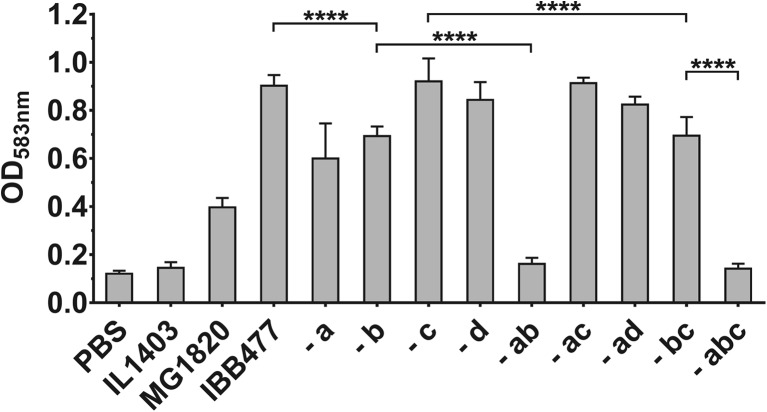
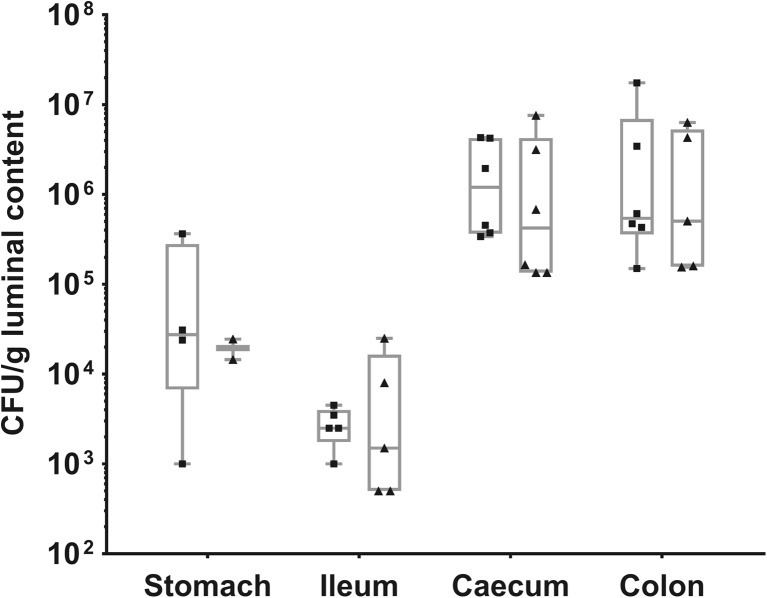
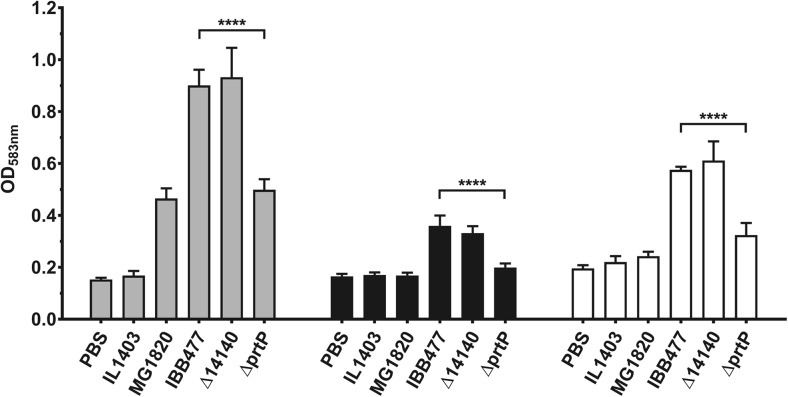
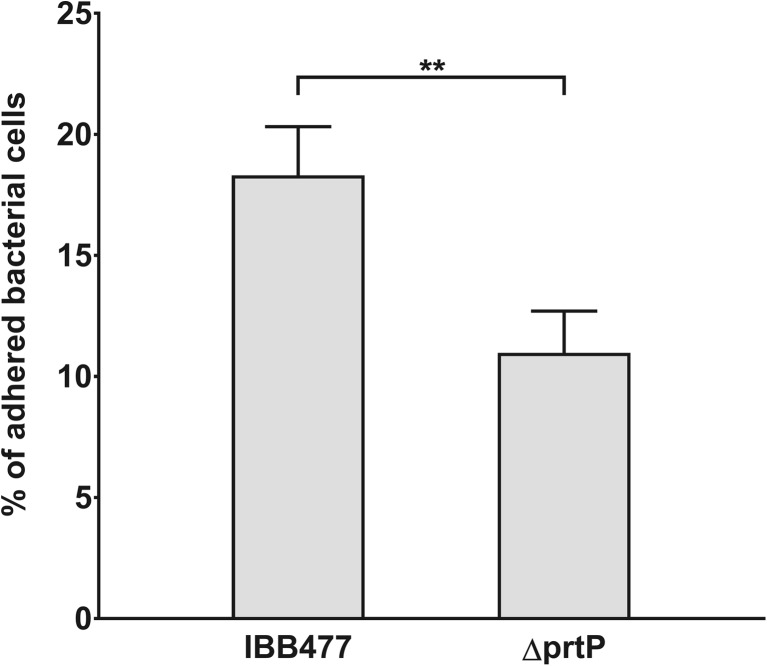
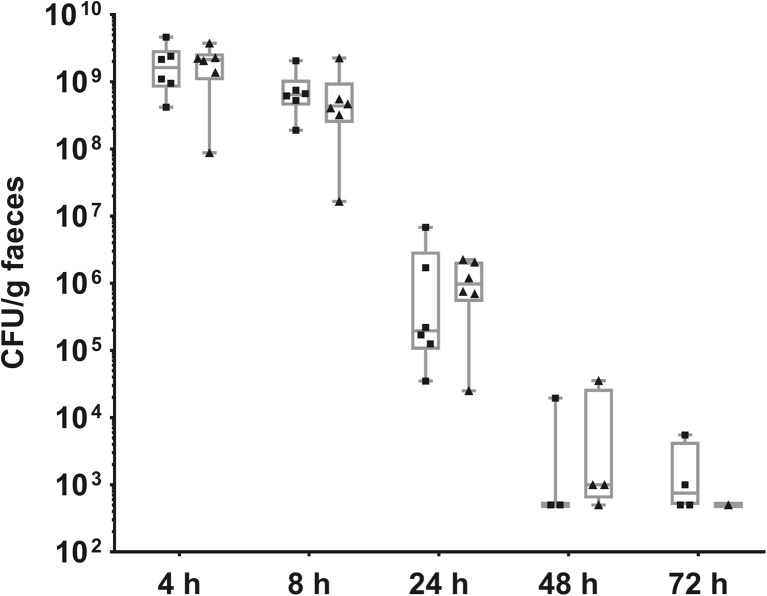
The ability of Lactococcus lactis to adhere to the intestinal mucosa can potentially prolong the contact with the host, and therefore favour its persistence in the gut. In the present study, the contribution of plasmid-encoded factors to the adhesive and transit properties of the L. lactis subsp. cremoris IBB477 strain was investigated. Plasmid-cured derivatives as well as deletion mutants were obtained and analysed. Adhesion tests were performed using non-coated polystyrene plates, plates coated with mucin or fibronectin and mucus-secreting HT29-MTX intestinal epithelial cells. The results indicate that two plasmids, pIBB477a and b, are involved in adhesion of the IBB477 strain. One of the genes localised on plasmid pIBB477b (AJ89_14230), which encodes cell wall-associated peptidase S8 (PrtP), mediates adhesion of the IBB477 strain to bare, mucin- and fibronectin-coated polystyrene, as well as to HT29-MTX cells. Interactions between bacteria and mucus secreted by HT29-MTX cells were further investigated by fluorescent staining and confocal microscopy. Confocal images showed that IBB477 forms dense clusters embedded in secreted mucus. Finally, the ability of IBB477 strain and its ΔprtP deletion mutant to colonise the gastrointestinal tract of conventional C57Bl/6 mice was determined. Both strains were present in the gut for up to 72 h. In summary, adhesion and persistence of IBB477 were analysed by in vitro and in vivo approaches, respectively. Our studies revealed that plasmidic genes encoding cell surface proteins are more involved in the adhesion of IBB477 strain than in the ability to confer a selective advantage in the gut.
乳酸乳球菌黏附于肠道黏膜的能力可能会延长其与宿主的接触时间,因此有利于其在肠道中持续存在。在本研究中,调查了质粒编码因子对乳酸乳球菌亚种cremoris IBB477菌株黏附及转运特性的贡献。获得并分析了质粒消除衍生物以及缺失突变体。使用未包被的聚苯乙烯板、包被有黏蛋白或纤连蛋白的板以及分泌黏液的HT29-MTX肠上皮细胞进行黏附试验。结果表明,两个质粒pIBB477a和b参与了IBB477菌株的黏附。位于质粒pIBB477b上的一个基因(AJ89_14230)编码细胞壁相关肽酶S8(PrtP),介导IBB477菌株对裸露的、包被有黏蛋白和纤连蛋白的聚苯乙烯以及HT29-MTX细胞的黏附。通过荧光染色和共聚焦显微镜进一步研究了细菌与HT29-MTX细胞分泌的黏液之间的相互作用。共聚焦图像显示,IBB477形成密集簇嵌入分泌的黏液中。最后,测定了IBB477菌株及其ΔprtP缺失突变体定殖于常规C57Bl/6小鼠胃肠道的能力。两种菌株在肠道中均存在长达72小时。总之,分别通过体外和体内方法分析了IBB477的黏附及持久性。我们的研究表明,编码细胞表面蛋白的质粒基因在IBB477菌株的黏附中比在赋予肠道选择性优势的能力中发挥了更大作用。