Pils Sophie, Springer Stephanie, Wehrmann Verena, Chalubinski Kinga, Ott Johannes
Clinical Division of Gynecologic Endocrinology and Reproductive Medicine, Department of Obstetrics and Gynecology, Medical University of Vienna, Waehringer Guertel 18-20, 1090, Vienna, Austria.
Clinical Division of Obstetrics and Fetomaternal Medicine, Department of Obstetrics and Gynecology, Medical University of Vienna, Waehringer Guertel 18-20, 1090, Vienna, Austria.
Arch Gynecol Obstet. 2017 Aug;296(2):191-198. doi: 10.1007/s00404-017-4402-0. Epub 2017 May 24.
To review our experience with a screening program that included sequential cervical length measurements in our large population of triplet pregnancies.
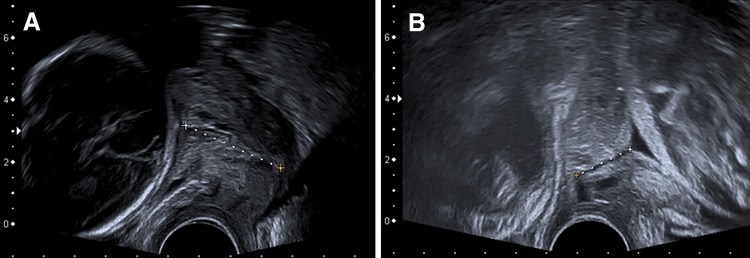
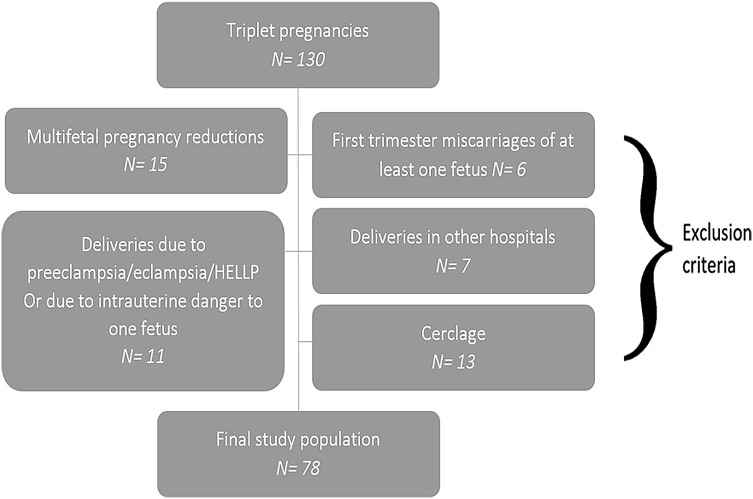
Seventy-eight triplet pregnancies were retrospectively included. Cervical length measurements were performed by transvaginal ultrasound in 2-week intervals from week 16 + 0 onwards in a tertiary-care center in Vienna. The main outcome measurement was preterm delivery prior to 32 + 0 weeks of gestation. Statistical analyses were performed using paired and unpaired t tests and a stepwise linear regression model.
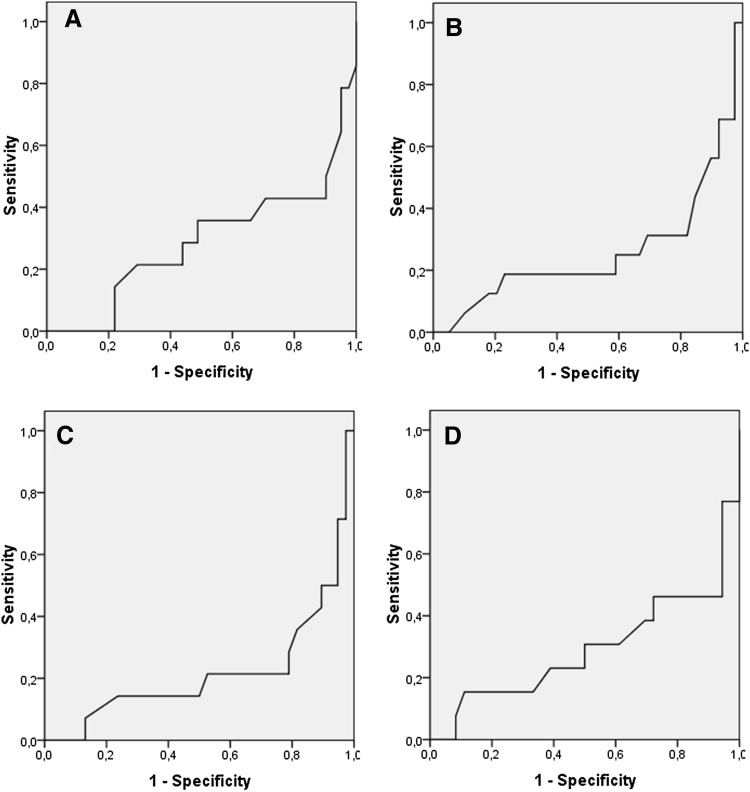
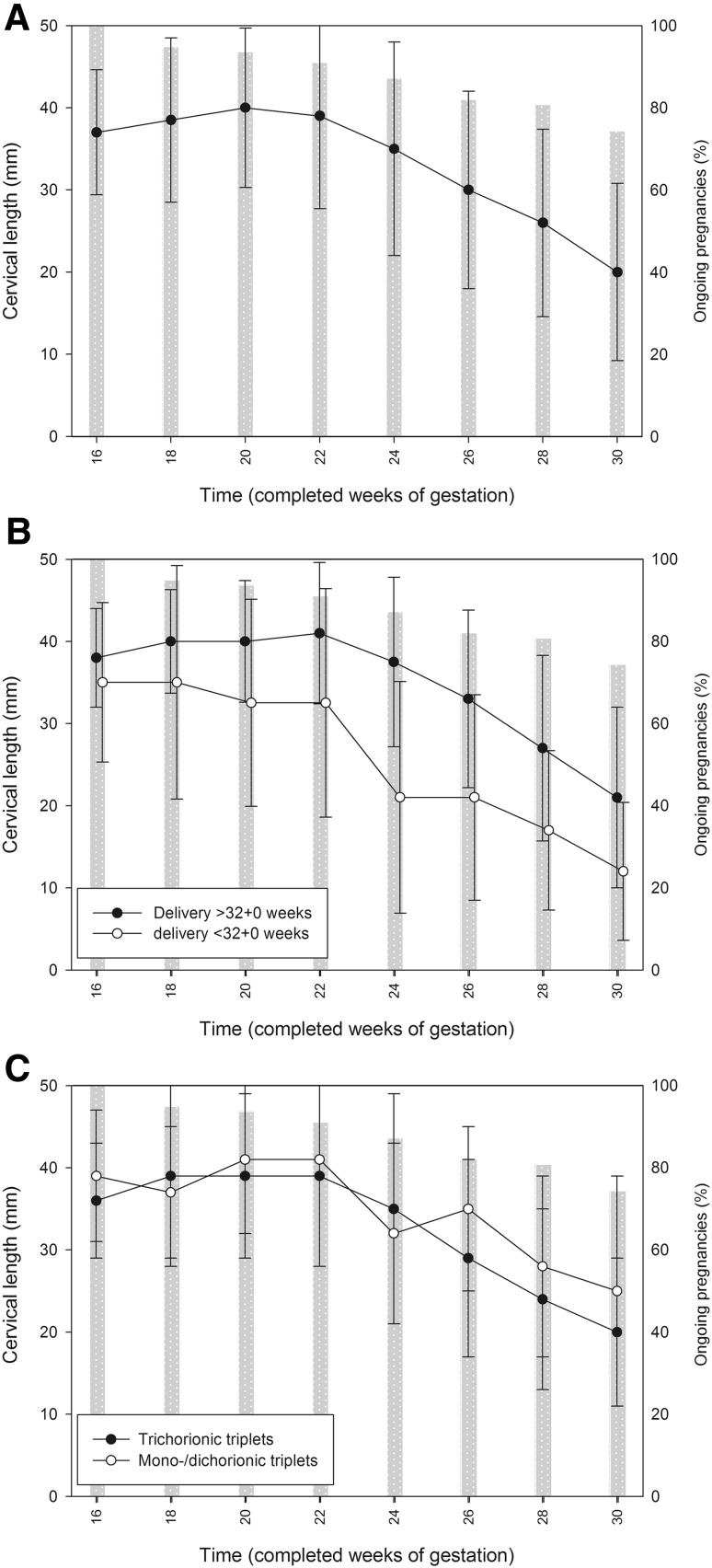
There were 26 cases of preterm delivery (33.3%). Women with preterm delivery revealed significant cervical length shortening from week 22 + 0 (median 33 mm, interquartile range, IQR 17-39) to 24 + 0 (median 21 mm, IQR 7-30; p = 0.005). This was not observed in women without preterm delivery. From week 22 + 0 onwards, both groups showed further significant 2-week differences in cervical length (p < 0.05). Univariate analysis of cervical length in weeks 20 + 0, 22 + 0, and 24 + 0 as well as cervical length dynamics from 22 + 0 to 24 + 0 predicted preterm delivery.
In triplet pregnancies, a decrease in cervical length seems physiological from week 22 + 0 onwards. A sharp decrease in cervical length from the 22 + 0 to the 24 + 0 week as well as the smaller cervical length in weeks 20 + 0, 22 + 0, and 24 + 0 increase the risk of preterm delivery.
回顾我们在大量三胎妊娠人群中开展的一项包含连续宫颈长度测量的筛查项目的经验。
回顾性纳入78例三胎妊娠。在维也纳的一家三级医疗中心,从孕16⁺⁰周起,每2周经阴道超声测量一次宫颈长度。主要观察指标为孕32⁺⁰周前的早产情况。采用配对和非配对t检验以及逐步线性回归模型进行统计分析。
有26例早产(33.3%)。早产女性的宫颈长度从孕22⁺⁰周(中位数33mm,四分位间距,IQR 17 - 39)显著缩短至24⁺⁰周(中位数21mm,IQR 7 - 30;p = 0.005)。未发生早产的女性未观察到这种情况。从孕22⁺⁰周起,两组宫颈长度在2周内均出现进一步显著差异(p < 0.05)。对孕20⁺⁰周、22⁺⁰周和24⁺⁰周的宫颈长度以及从22⁺⁰周到24⁺⁰周的宫颈长度动态变化进行单因素分析,可预测早产情况。
在三胎妊娠中,从孕22⁺⁰周起宫颈长度的缩短似乎是生理性的。从22⁺⁰周到24⁺⁰周宫颈长度的急剧下降以及孕20⁺⁰周、22⁺⁰周和24⁺⁰周时较短的宫颈长度会增加早产风险。