Department of Gastroenterological Surgery, Division of Cancer Medicine, Graduate School of Medical Science, Kanazawa University, 13-1 Takara-machi, Kanazawa, Ishikawa, 920-8641, Japan.
Center for Biomedical Research and Education, School of Medicine, Kanazawa University, Kanazawa, Ishikawa, 920-8641, Japan.
Gastric Cancer. 2018 Jan;21(1):55-67. doi: 10.1007/s10120-017-0726-5. Epub 2017 May 24.
Scirrhous gastric cancer is an intractable disease with a high incidence of peritoneal dissemination and obstructive symptoms (e.g., ileus, jaundice, and hydronephrosis) arising from accompanying marked fibrosis. Microenvironmental interactions between cancer cells and cancer-associated fibroblasts are the suggested cause of the disease. We elucidated the mechanisms of tumor growth and fibrosis using human peritoneal mesothelial cells (HPMCs) and investigated the effects of tranilast treatment on cells and a xenograft mouse model of fibrosis.
HPMCs were isolated from surgically excised omentum and their interaction with MKN-45 gastric cancer cells was investigated using co-culture. Furthermore, a fibrosis tumor model was developed based on subcutaneous transplantation of co-cultured cells into the dorsal side of nude mice to form large fibrotic tumors. Mice were subsequently treated with or without tranilast.
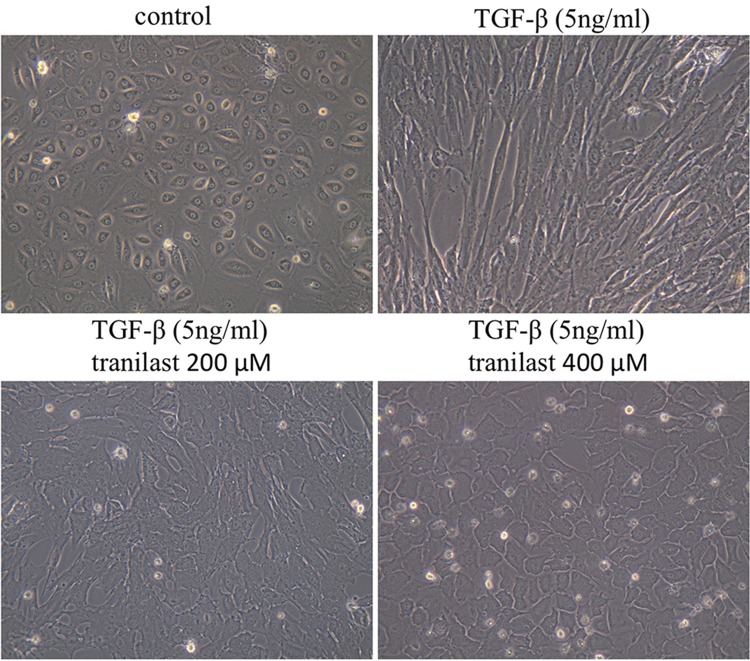
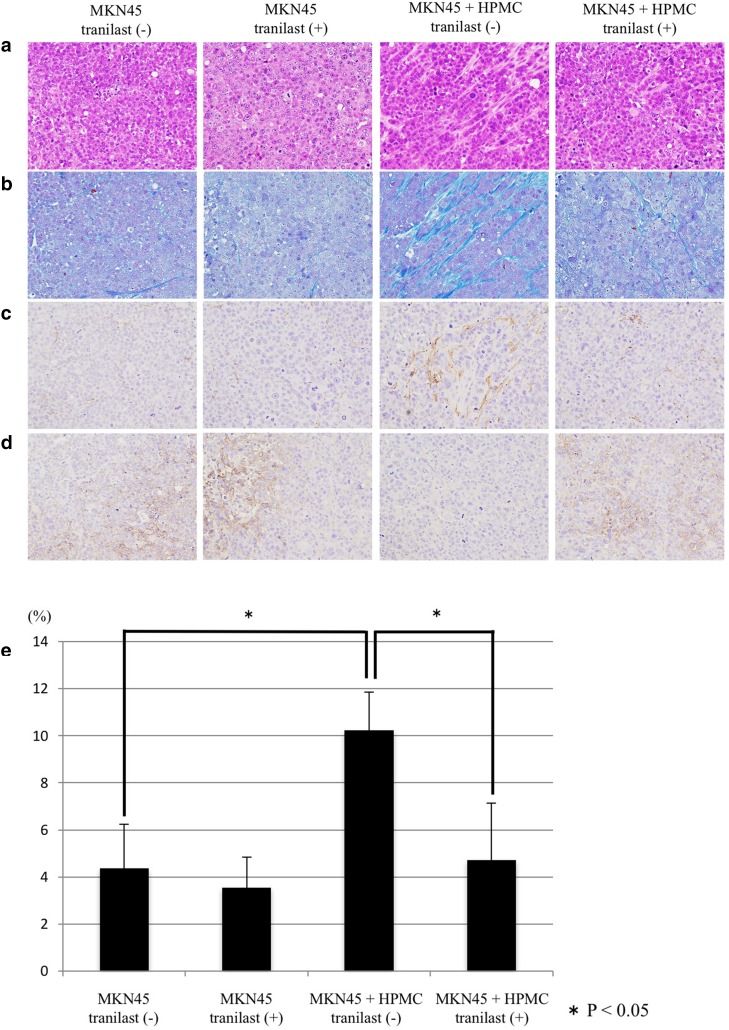
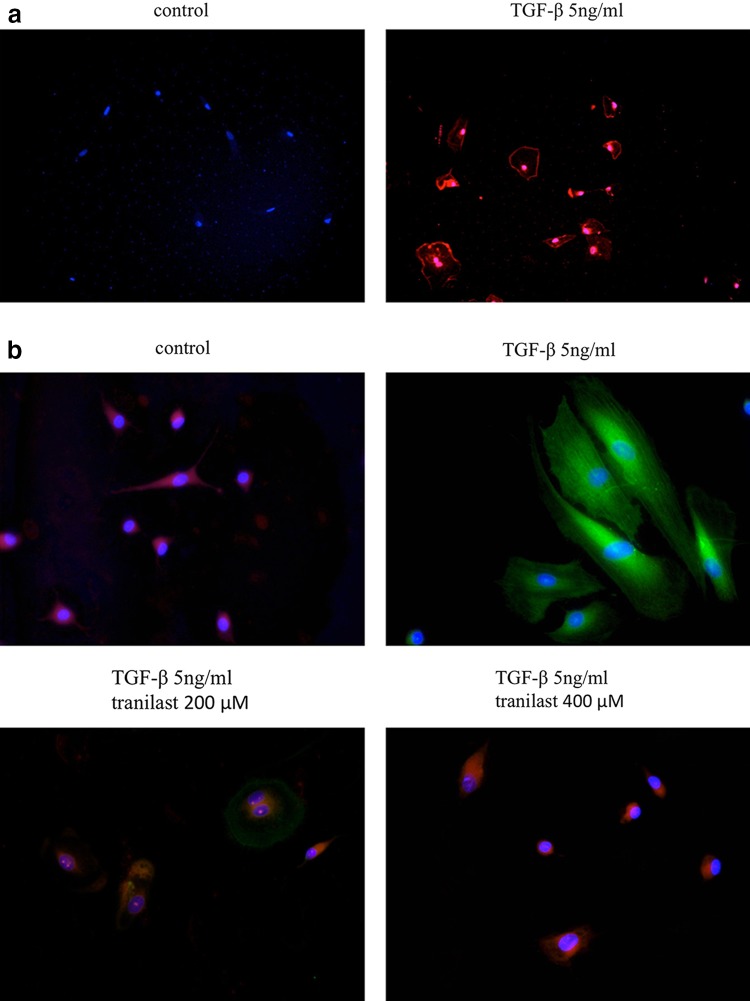
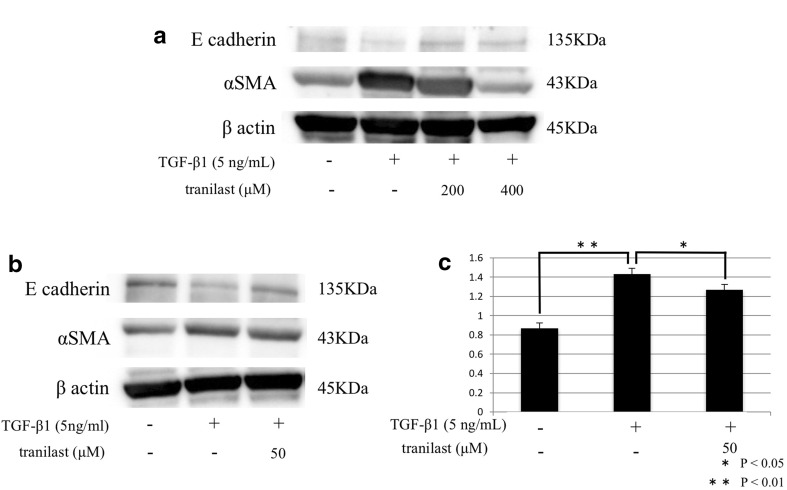
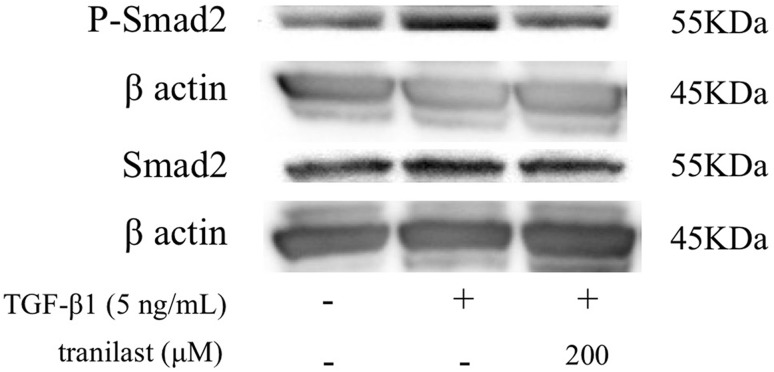
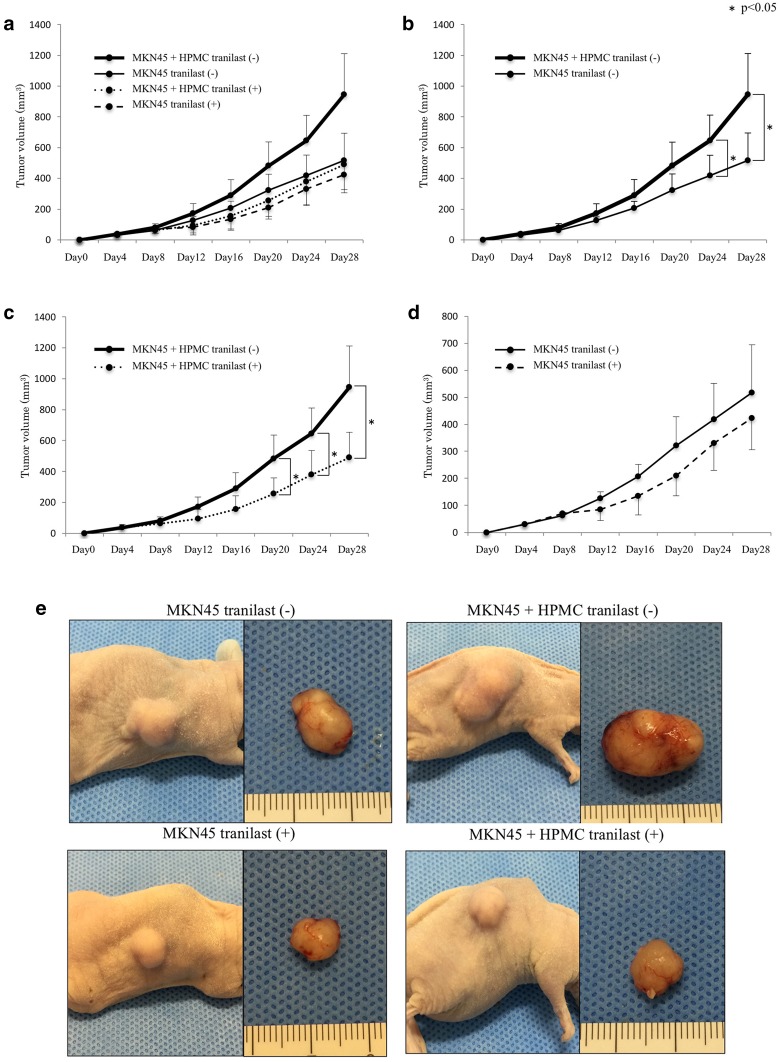
The morphology of HPMCs treated with transforming growth factor (TGF)-β1 changed from cobblestone to spindle-type. Moreover, E-cadherin was weakly expressed whereas high levels of α-smooth muscle actin expression were observed. TGF-β-mediated epithelial-mesenchymal transition-like changes in HPMCs were inhibited in a dose-dependent manner following tranilast treatment through inhibition of Smad2 phosphorylation. In the mouse model, tumor size decreased significantly and fibrosis was inhibited in the tranilast treatment group compared with that in the control group.
Tranilast acts on the TGF-β/Smad pathway to inhibit interactions between cancer cells and cancer-associated fibroblasts, thereby inhibiting tumor growth and fibrosis. This study supports the hypothesis that tranilast represents a novel strategy to prevent fibrous tumor establishment represented by peritoneal dissemination.
硬癌型胃癌是一种难治性疾病,其腹膜扩散和梗阻症状(如肠梗阻、黄疸和肾积水)的发生率较高,这是由于伴随的显著纤维化所致。癌细胞与癌相关成纤维细胞之间的微环境相互作用被认为是该病的原因。我们使用人腹膜间皮细胞(HPMCs)阐明了肿瘤生长和纤维化的机制,并研究了曲尼司特治疗对细胞和纤维肉瘤移植瘤模型的影响。
从手术切除的大网膜中分离 HPMCs,并通过共培养研究其与 MKN-45 胃癌细胞的相互作用。此外,基于共培养细胞皮下移植到裸鼠背部形成大的纤维性肿瘤,建立了纤维性肿瘤模型。随后对小鼠进行曲尼司特治疗或不治疗。
转化生长因子(TGF)-β1 处理的 HPMCs 的形态从鹅卵石状变为梭形。此外,E-钙黏蛋白表达减弱,而α-平滑肌肌动蛋白表达水平升高。曲尼司特通过抑制 Smad2 磷酸化,以剂量依赖的方式抑制 TGF-β介导的 HPMCs 上皮间质转化样变化。在小鼠模型中,与对照组相比,曲尼司特治疗组肿瘤体积明显减小,纤维化受到抑制。
曲尼司特作用于 TGF-β/Smad 通路,抑制癌细胞与癌相关成纤维细胞的相互作用,从而抑制肿瘤生长和纤维化。这项研究支持了曲尼司特代表一种预防腹膜扩散为代表的纤维性肿瘤形成的新策略的假说。