Panchal Trupti, Chen Xi, Alchits Ekaterina, Oh Youjin, Poon James, Kouptsova Jane, Laski Frank A, Godt Dorothea
Department of Cell and Systems Biology, University of Toronto, Toronto, Ontario, Canada.
Department of Molecular, Cell, and Developmental Biology, University of California Los Angeles, Los Angeles, California, United States of America.
PLoS Genet. 2017 May 19;13(5):e1006790. doi: 10.1371/journal.pgen.1006790. eCollection 2017 May.
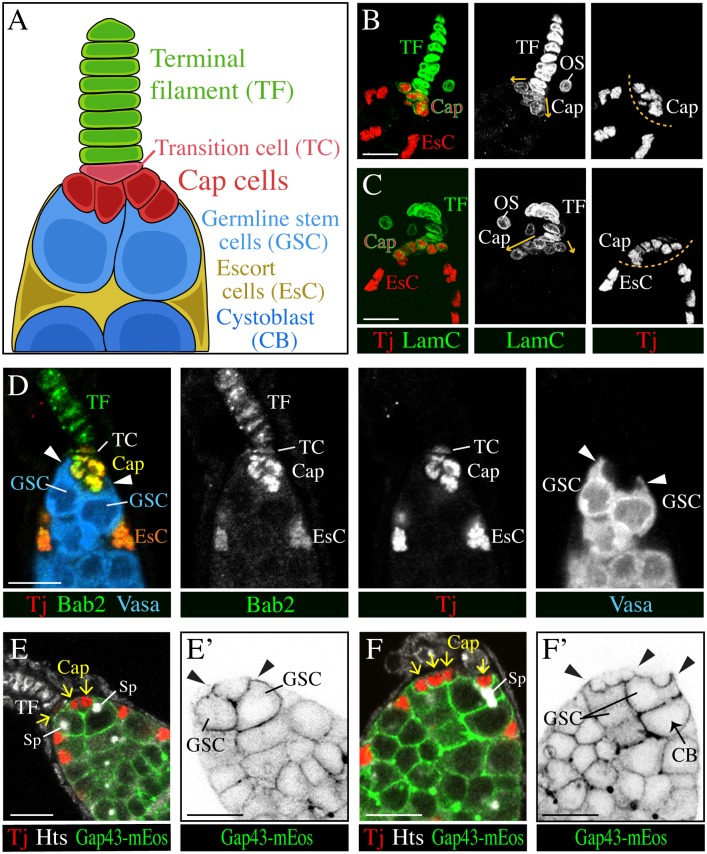
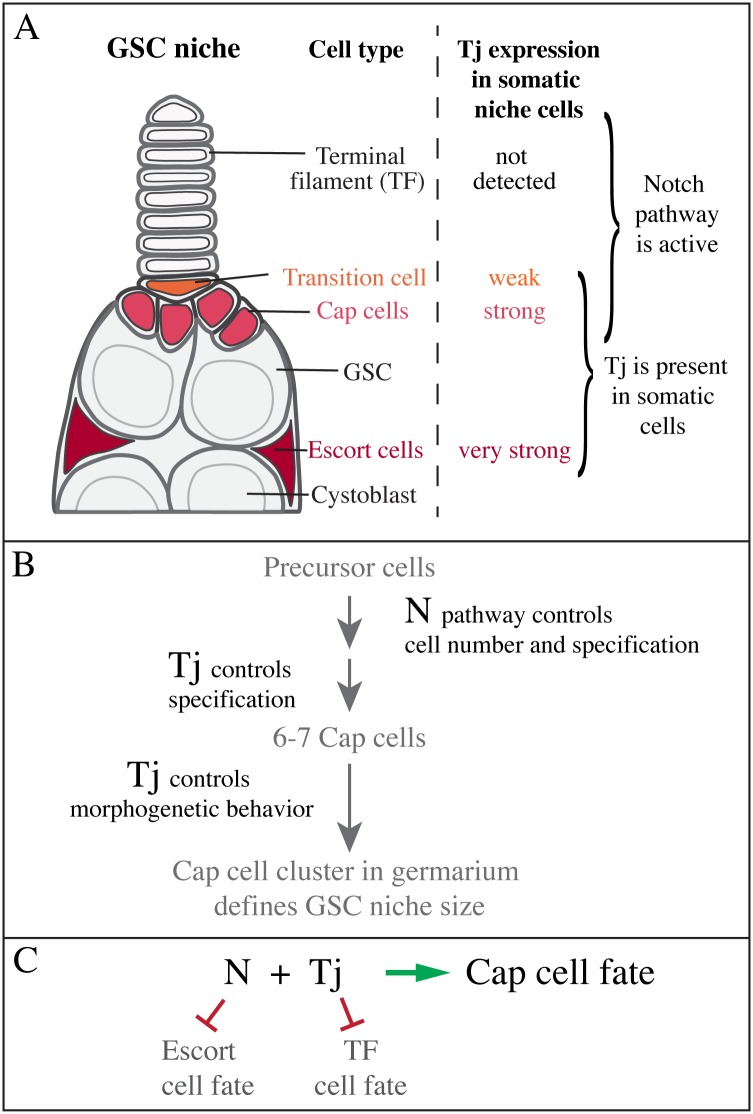
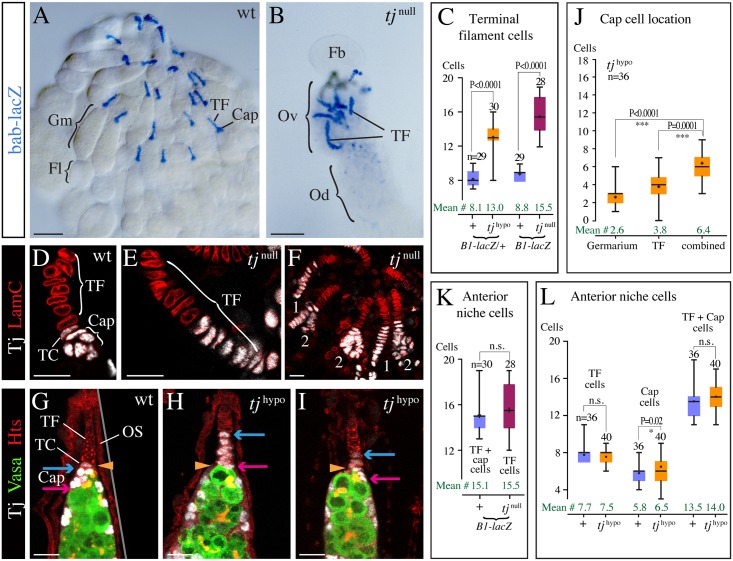
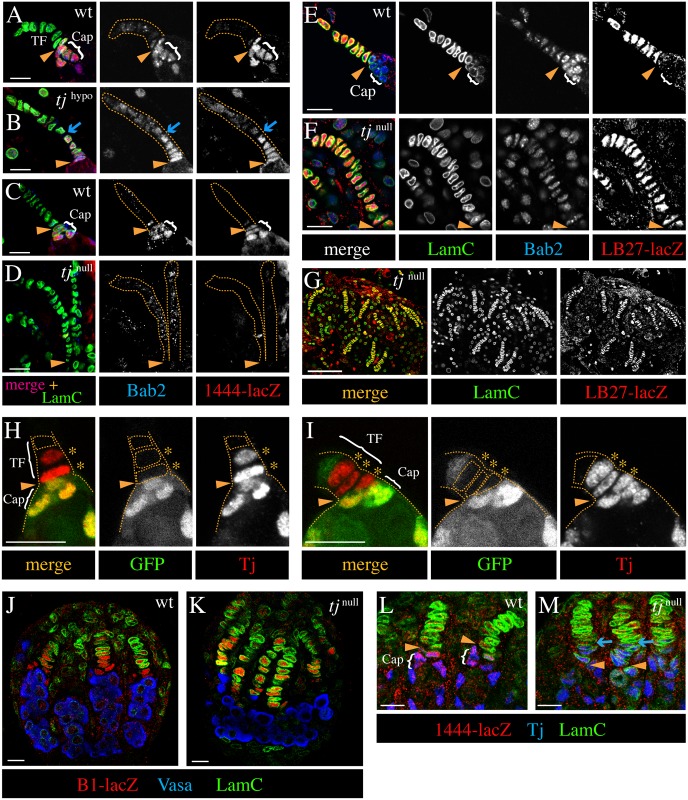
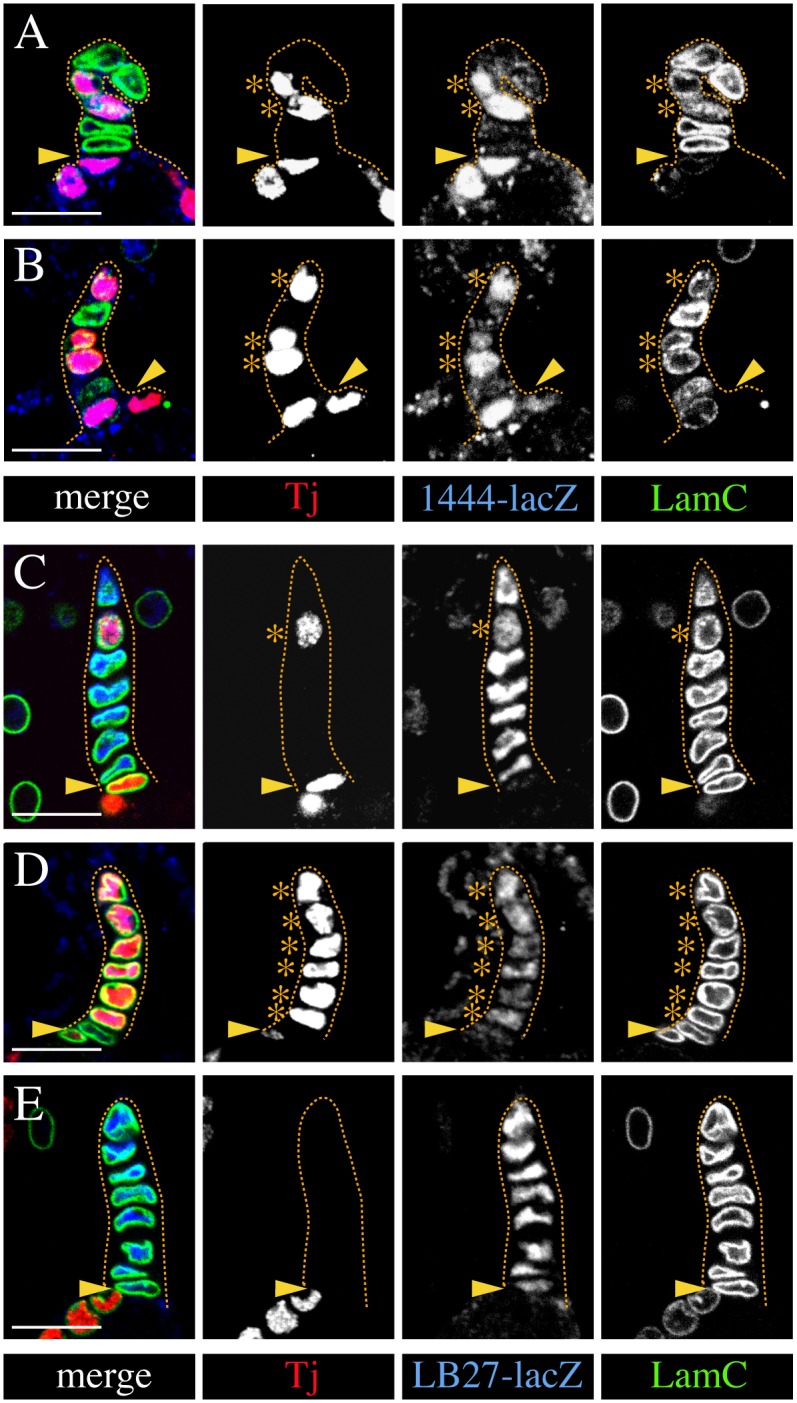
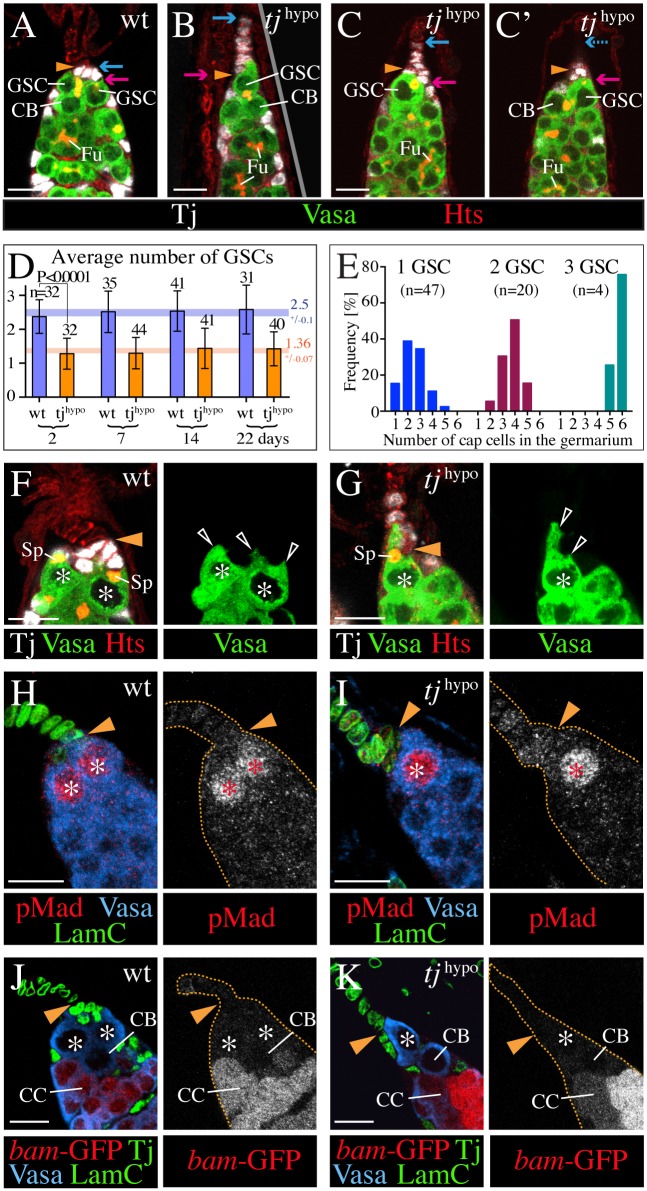
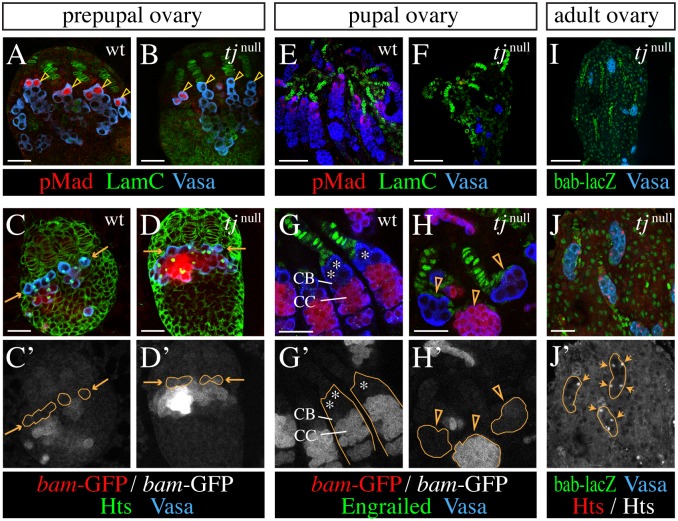
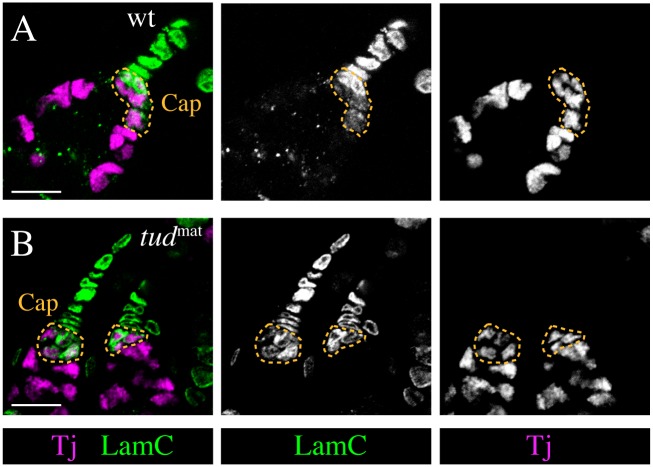
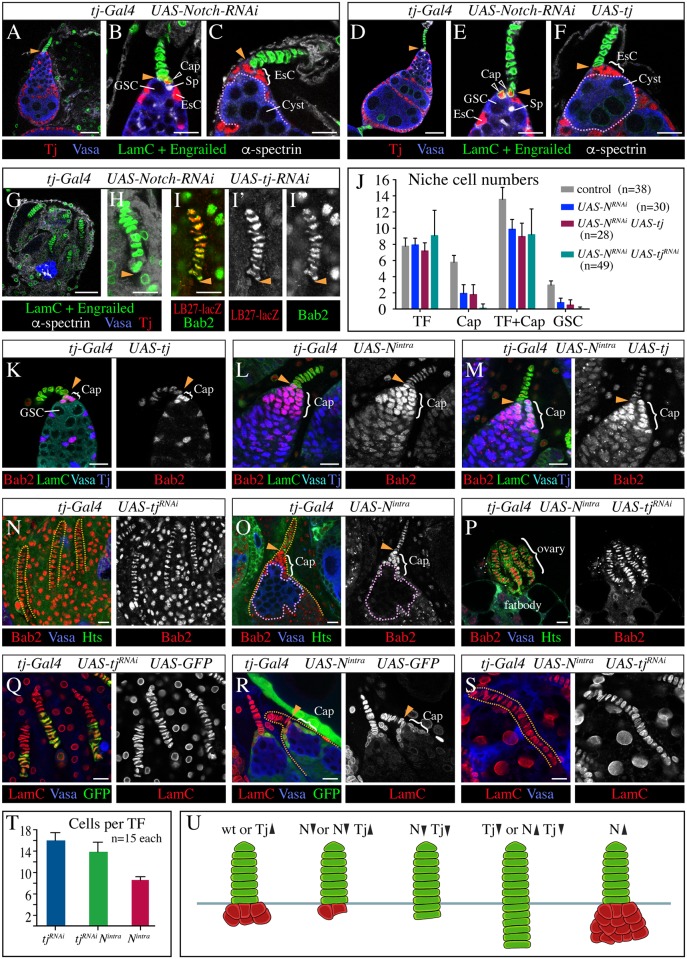
Germline stem cells in the Drosophila ovary are maintained by a somatic niche. The niche is structurally and functionally complex and contains four cell types, the escort, cap, and terminal filament cells and the newly identified transition cell. We find that the large Maf transcription factor Traffic jam (Tj) is essential for determining niche cell fates and architecture, enabling each niche in the ovary to support a normal complement of 2-3 germline stem cells. In particular, we focused on the question of how cap cells form. Cap cells express Tj and are considered the key component of a mature germline stem cell niche. We conclude that Tj controls the specification of cap cells, as the complete loss of Tj function caused the development of additional terminal filament cells at the expense of cap cells, and terminal filament cells developed cap cell characteristics when induced to express Tj. Further, we propose that Tj controls the morphogenetic behavior of cap cells as they adopted the shape and spatial organization of terminal filament cells but otherwise appeared to retain their fate when Tj expression was only partially reduced. Our data indicate that Tj contributes to the establishment of germline stem cells by promoting the cap cell fate, and controls the stem cell-carrying capacity of the niche by regulating niche architecture. Analysis of the interactions between Tj and the Notch (N) pathway indicates that Tj and N have distinct functions in the cap cell specification program. We propose that formation of cap cells depends on the combined activities of Tj and the N pathway, with Tj promoting the cap cell fate by blocking the terminal filament cell fate, and N supporting cap cells by preventing the escort cell fate and/or controlling the number of cap cell precursors.
果蝇卵巢中的生殖系干细胞由一个体细胞微环境维持。该微环境在结构和功能上都很复杂,包含四种细胞类型,即护送细胞、帽细胞、终丝细胞以及新发现的过渡细胞。我们发现,大型Maf转录因子交通堵塞(Tj)对于确定微环境细胞的命运和结构至关重要,它能使卵巢中的每个微环境支持正常数量的2 - 3个生殖系干细胞。具体而言,我们聚焦于帽细胞如何形成的问题。帽细胞表达Tj,被认为是成熟生殖系干细胞微环境的关键组成部分。我们得出结论,Tj控制帽细胞的特化,因为Tj功能的完全丧失导致以帽细胞为代价额外发育出终丝细胞,而当诱导终丝细胞表达Tj时,它们会发育出帽细胞的特征。此外,我们提出Tj控制帽细胞的形态发生行为,因为当Tj表达仅部分降低时,帽细胞采用了终丝细胞的形状和空间组织,但在其他方面似乎保留了它们的命运。我们的数据表明,Tj通过促进帽细胞命运来促进生殖系干细胞的建立,并通过调节微环境结构来控制微环境承载干细胞的能力。对Tj与Notch(N)信号通路之间相互作用的分析表明,Tj和N在帽细胞特化程序中具有不同的功能。我们提出帽细胞的形成取决于Tj和N信号通路的联合作用,其中Tj通过阻止终丝细胞命运来促进帽细胞命运,而N通过阻止护送细胞命运和/或控制帽细胞前体的数量来支持帽细胞。