Bonfini Alessandro, Wilkin Marian B, Baron Martin
Faculty of Life Sciences, Michael Smith Building, Oxford Road, University of Manchester, Manchester, M13 9PT, UK.
BMC Dev Biol. 2015 Jan 31;15:8. doi: 10.1186/s12861-015-0059-8.
Stem cells can respond to environmental and physiological inputs to adaptively remodel tissues. Little is known about whether stem cell niches are similarly responsive. The Drosophila ovary germline stem cell (GSC) niche is a well-studied model, which is comprised of cap cells that provide anchorage and maintenance signals for GSCs to maintain oogenesis. Previous studies have shown a strong link between diet and the regulation of oogenesis, making this a useful model system in which to investigate dietary regulation of the niche and its associated stem cells.
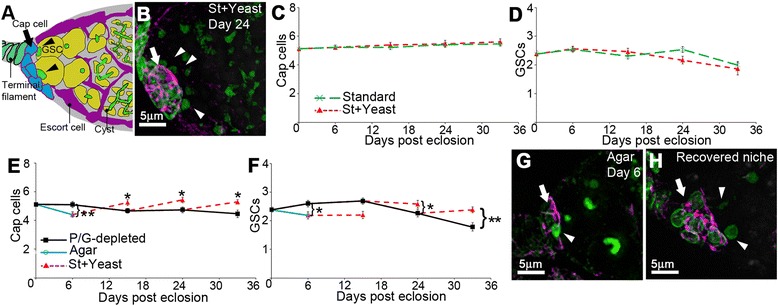
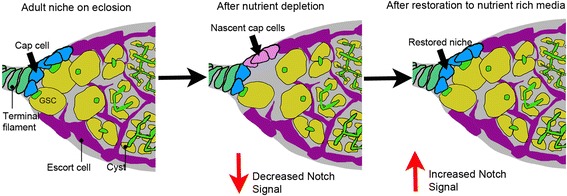
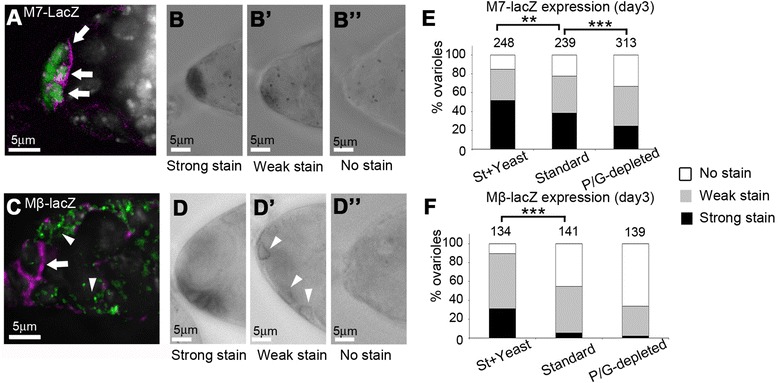
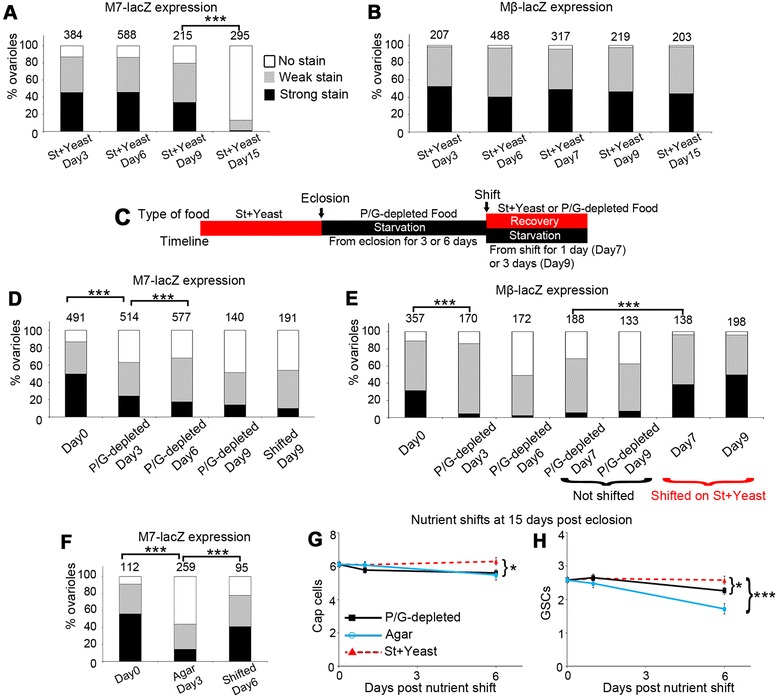
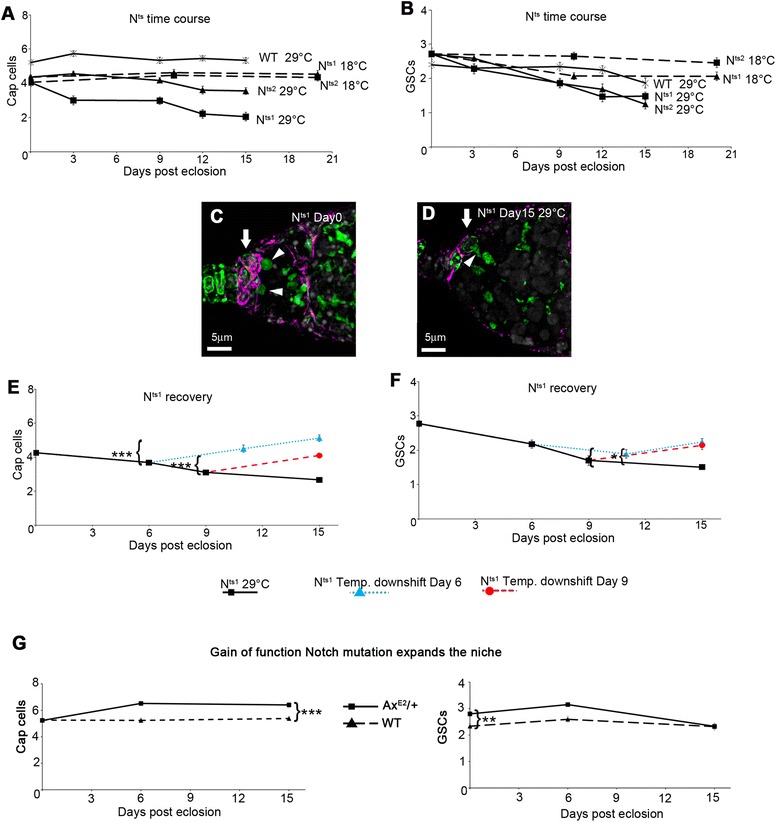
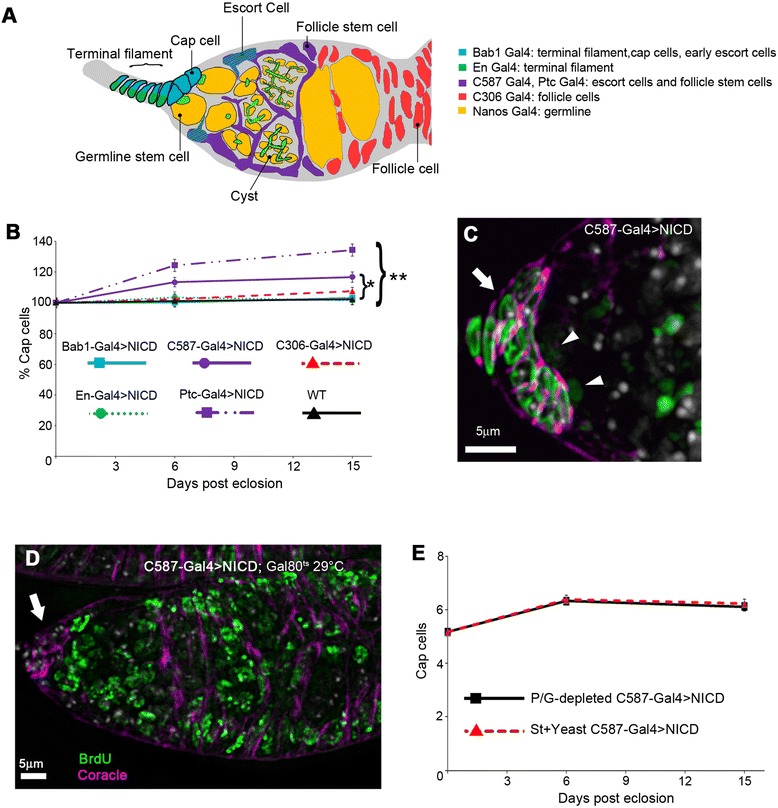
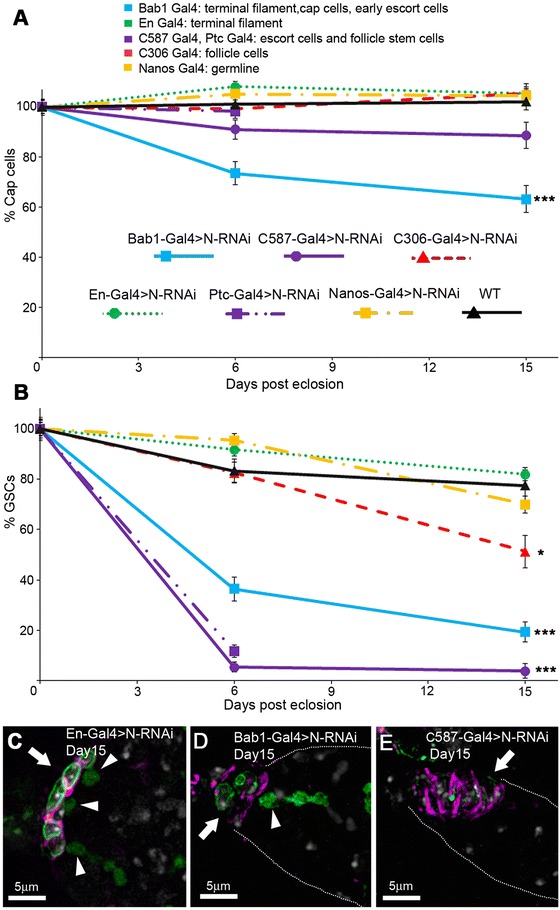
We show that the Drosophila ovary GSC cap cell niche is a dynamic structure, which can contract and expand in fluctuating dietary conditions. Cap cells are lost when adult flies are shifted to nutrient poor diet and are restored after returning flies to nutrient-rich medium. Notch signalling in cap and escort cells is similarly reduced and restored by dietary shifts to nutrient poor and rich media. In old flies decreased Notch signalling is associated with decreased robustness of the niche to dietary changes. We demonstrated using a Notch temperature sensitive allele that removal and restoration of Notch signalling also leads to a reduction and re-expansion of the niche. Changes in niche size were not associated with apoptosis or cell division. We identified two distinct roles for Notch in the adult germarium. Notch can act in cap cells to prevent their loss while activation of Notch in the flanking escort cells results in expansion of the niche.
We provide evidence that dietary changes alone are sufficient to alter Notch signalling and reversibly change niche size in the adult in wild type flies. We show Notch acts in different cells to maintain and re-expand the niche and propose a model in which cell fate transitions between cap cells and flanking somatic cells accounts for niche dynamics. These findings reveal an unexpected reversible plasticity of the GSC niche whose responses provide an integrated read out of the physiological status of the fly that is modulated by diet and age.
干细胞能够对环境和生理输入做出反应,以适应性地重塑组织。关于干细胞微环境是否也有类似的反应,我们所知甚少。果蝇卵巢生殖系干细胞(GSC)微环境是一个经过充分研究的模型,它由帽细胞组成,帽细胞为GSC提供锚定和维持信号以维持卵子发生。先前的研究表明饮食与卵子发生的调控之间存在紧密联系,这使得它成为一个有用的模型系统,可用于研究微环境及其相关干细胞的饮食调控。
我们发现果蝇卵巢GSC帽细胞微环境是一个动态结构,在饮食条件波动时它可以收缩和扩张。当成年果蝇转移到营养匮乏的饮食中时,帽细胞会丢失,而将果蝇重新放回营养丰富的培养基后,帽细胞会恢复。饮食转变为营养匮乏和丰富的培养基时,帽细胞和护送细胞中的Notch信号同样会减少和恢复。在老龄果蝇中,Notch信号降低与微环境对饮食变化的稳健性降低有关。我们使用Notch温度敏感等位基因证明,Notch信号的去除和恢复也会导致微环境的缩小和重新扩张。微环境大小的变化与细胞凋亡或细胞分裂无关。我们确定了Notch在成年生殖腺中的两个不同作用。Notch可在帽细胞中发挥作用以防止其丢失,而侧翼护送细胞中Notch的激活会导致微环境扩张。
我们提供的证据表明,仅饮食变化就足以改变野生型果蝇成虫中的Notch信号,并可逆地改变微环境大小。我们表明Notch在不同细胞中发挥作用以维持和重新扩张微环境,并提出了一个模型,其中帽细胞和侧翼体细胞之间的细胞命运转变解释了微环境的动态变化。这些发现揭示了GSC微环境出人意料的可逆可塑性,其反应提供了果蝇生理状态的综合读数,该生理状态受饮食和年龄调节。