Park Hyun-Eui, Park Hong-Tae, Jung Young Hoon, Yoo Han Sang
Department of Infectious Disease, College of Veterinary Medicine, Seoul National University, Seoul, Republic of Korea.
Department of Animal Resoures Devlopment, National Instiute of Animal Science, Rural Development Administration, Cheonan, Republic of Korea.
PLoS One. 2017 May 25;12(5):e0178336. doi: 10.1371/journal.pone.0178336. eCollection 2017.
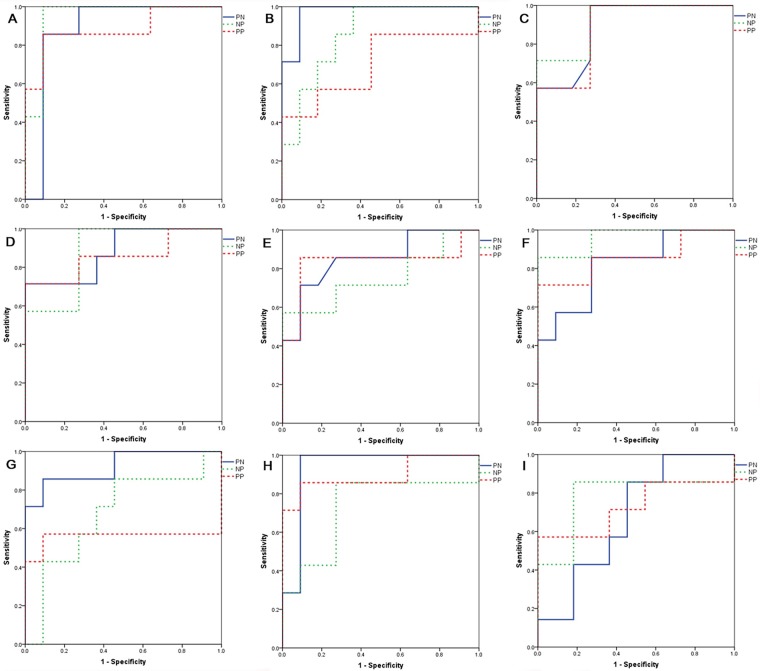
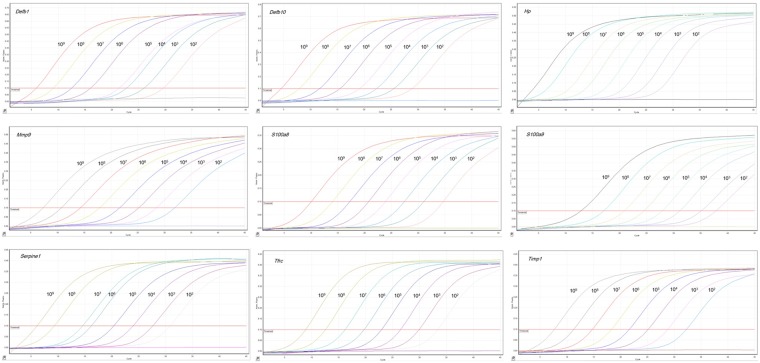
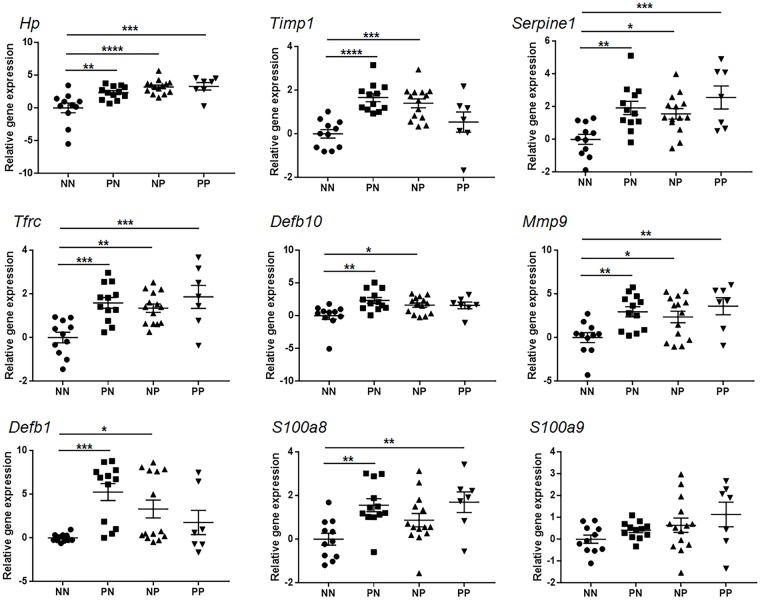
Bovine paratuberculosis (PTB) is a chronic enteric inflammatory disease of ruminants caused by Mycobacterium avium subsp. paratuberculosis (MAP) that causes large economic losses in the dairy industry. Spread of PTB is mainly provoked by a long subclinical stage during which MAP is shed into the environment with feces; accordingly, detection of subclinical animals is very important to its control. However, current diagnostic methods are not suitable for detection of subclinical animals. Therefore, the current study was conducted to develop a diagnostic method for analysis of the expression of genes of prognostic potential biomarker candidates in the whole blood of cattle naturally infected with MAP. Real-time PCR with nine potential biomarker candidates was developed for the diagnosis of MAP subclinical infection. Animals were divided into four groups based on fecal MAP PCR and serum ELISA. Eight genes (Timp1, Hp, Serpine1, Tfrc, Mmp9, Defb1, Defb10, and S100a8) were up-regulated in MAP-infected cattle (p <0.05). Moreover, ROC analysis revealed that eight genes (Timp1, Hp, Serpine1, Tfrc, Mmp9, Defb1, Defb10, and S100a8) showed fair diagnostic performance (AUC≥0.8). Four biomarkers (Timp1, S100a8, Defb1, and Defb10) showed the highest diagnostic accuracy in the PCR positive and ELISA negative group (PN group) and three biomarkers (Tfrc, Hp, and Serpine1) showed the highest diagnostic accuracy in the PCR negative and ELISA positive group (NP group). Moreover, three biomarkers (S100a8, Hp, and Defb10) were considered the most reliable for the PCR positive and ELISA positive group (PP group). Taken together, our data suggest that real-time PCR based on eight biomarkers (Timp1, Hp, Serpine1, Tfrc, Mmp9, Defb1, Defb10, and S100a8) might be useful for diagnosis of JD, including subclinical stage cases.
牛副结核病(PTB)是由鸟分枝杆菌副结核亚种(MAP)引起的反刍动物慢性肠道炎症性疾病,给乳制品行业造成巨大经济损失。PTB的传播主要是由漫长的亚临床阶段引发的,在此期间MAP随粪便排到环境中;因此,检测亚临床感染动物对该病的防控非常重要。然而,目前的诊断方法并不适用于检测亚临床感染动物。因此,开展了本研究以开发一种诊断方法,用于分析自然感染MAP的牛全血中具有预后潜力的生物标志物候选基因的表达。针对9个潜在生物标志物候选基因开发了实时荧光定量PCR,用于诊断MAP亚临床感染。根据粪便MAP PCR和血清ELISA将动物分为四组。8个基因(Timp1、Hp、Serpine1、Tfrc、Mmp9、Defb1、Defb10和S100a8)在感染MAP的牛中上调(p<0.05)。此外,ROC分析显示,8个基因(Timp1、Hp、Serpine1、Tfrc、Mmp9、Defb1、Defb10和S100a8)具有较好的诊断性能(AUC≥0.8)。4种生物标志物(Timp1、S100a8、Defb1和Defb10)在PCR阳性和ELISA阴性组(PN组)中诊断准确性最高,3种生物标志物(Tfrc、Hp和Serpine1)在PCR阴性和ELISA阳性组(NP组)中诊断准确性最高。此外,3种生物标志物(S100a8、Hp和Defb10)被认为对PCR阳性和ELISA阳性组(PP组)最可靠。综上所述,我们的数据表明,基于8种生物标志物(Timp1、Hp、Serpine1、Tfrc、Mmp9、Defb1、Defb10和S100a8)的实时荧光定量PCR可能有助于诊断副结核病,包括亚临床阶段病例。