Key Laboratory of Biotechnology and Pharmaceutical Engineering, School of Pharmaceutical Sciences, Wenzhou Medical University, Wenzhou, Zhejiang, China.
Center for Translational Medicine, Department of Biotechnology, Dalian Institute of Chemical Physics, Chinese Academy of Sciences, Dalian, Liaoning, China.
J Cell Mol Med. 2017 Nov;21(11):2909-2925. doi: 10.1111/jcmm.13203. Epub 2017 May 24.
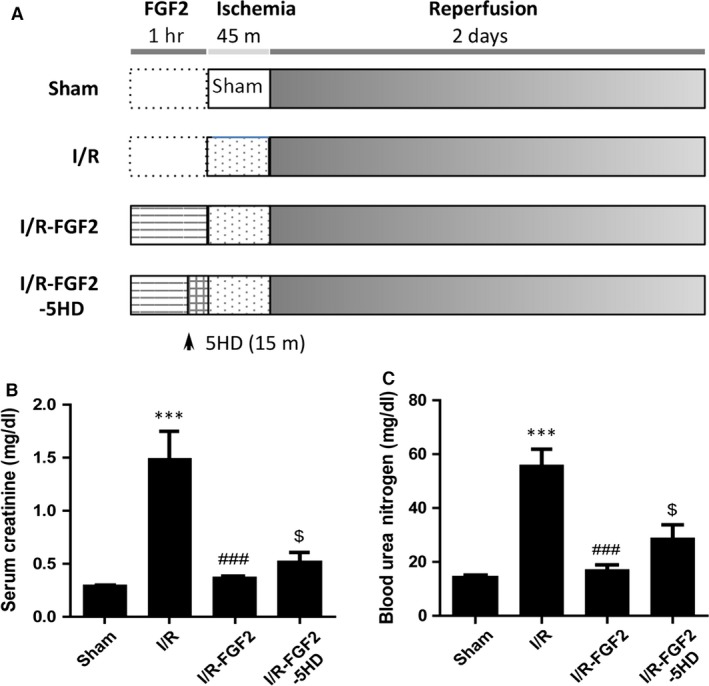
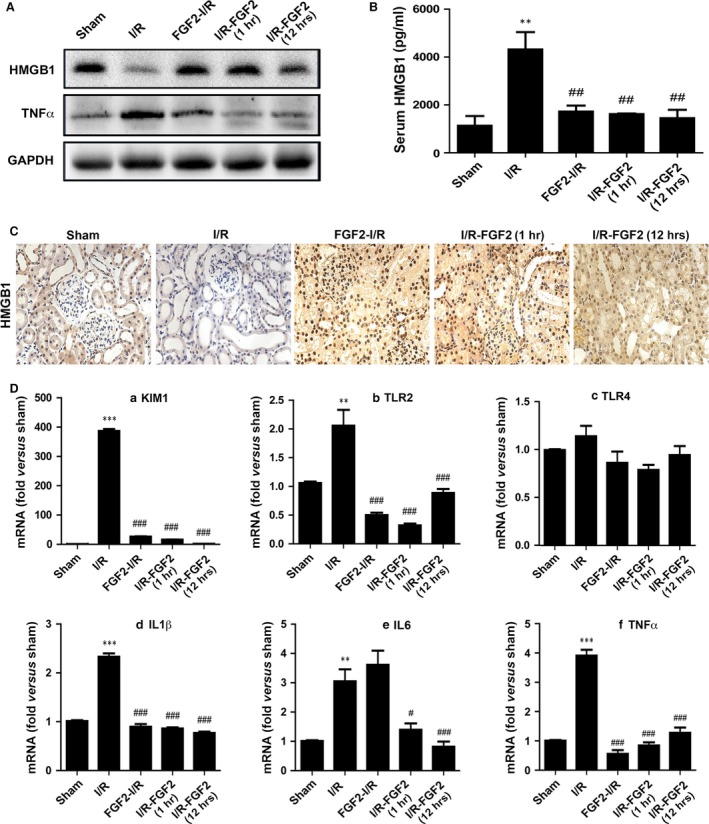
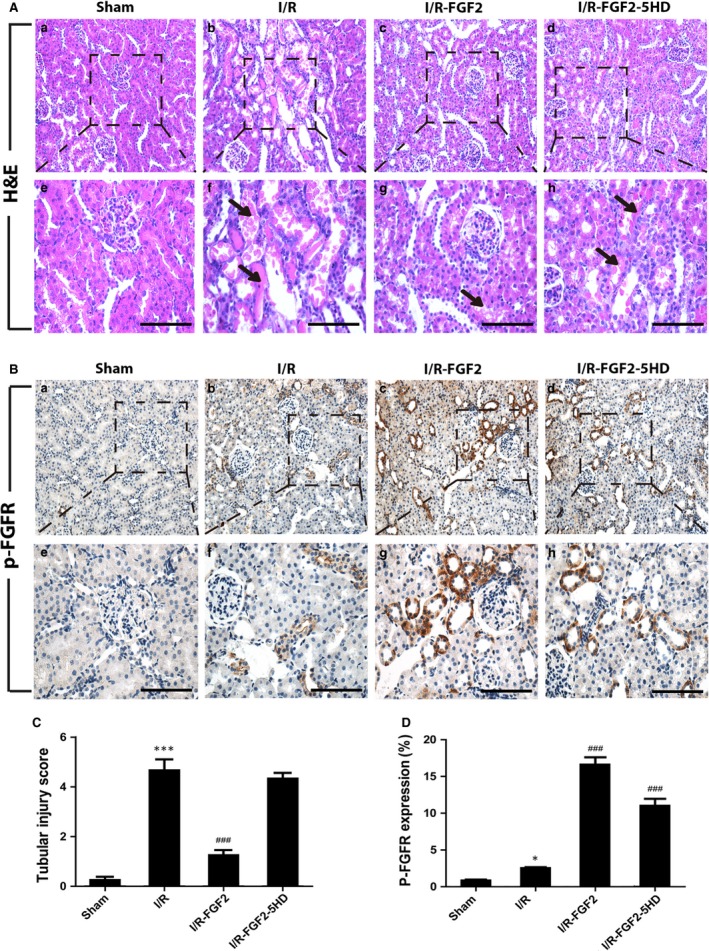
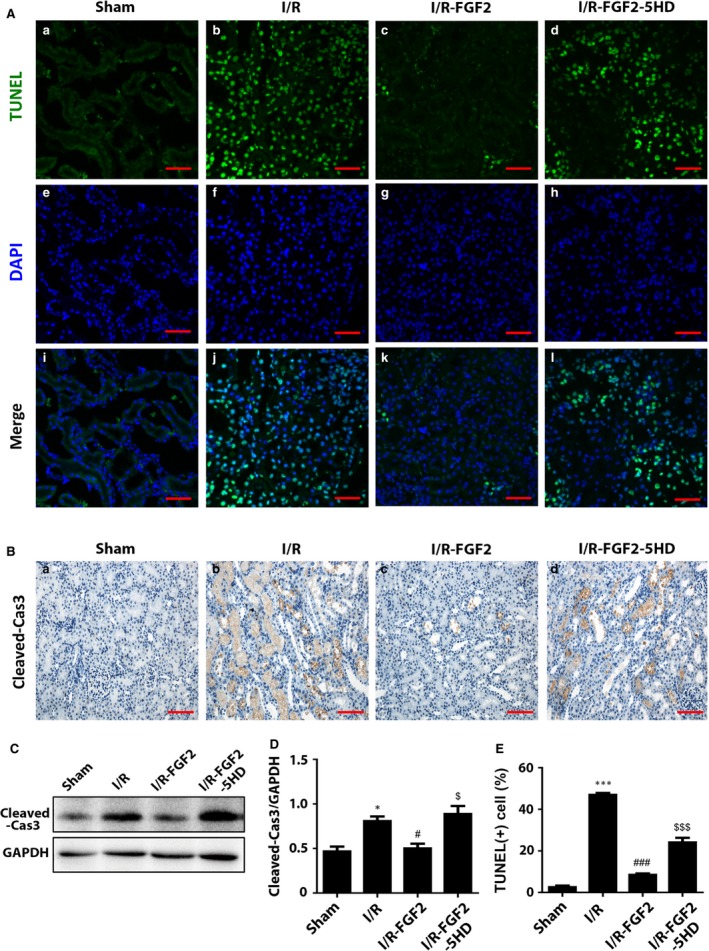
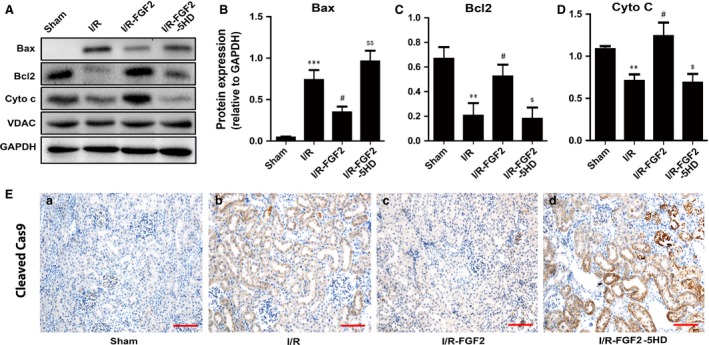
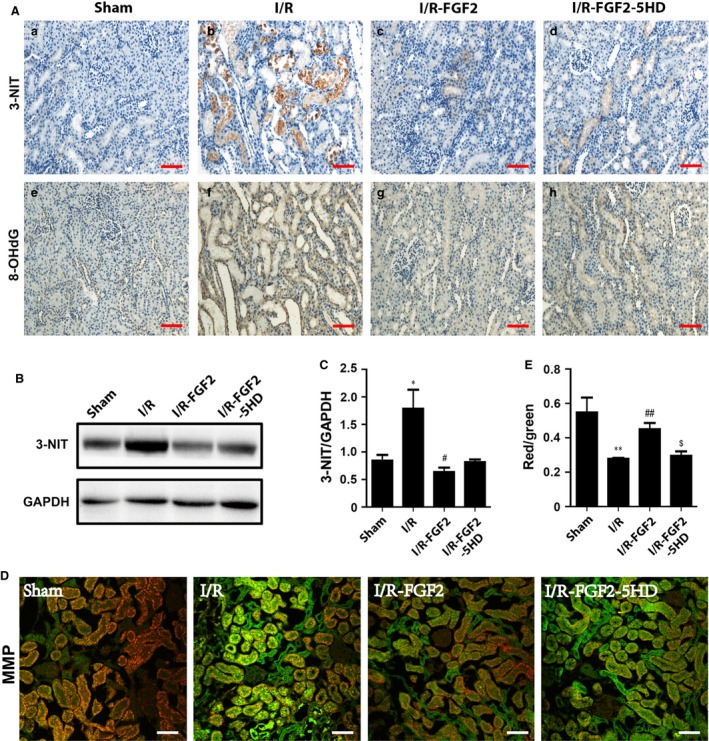
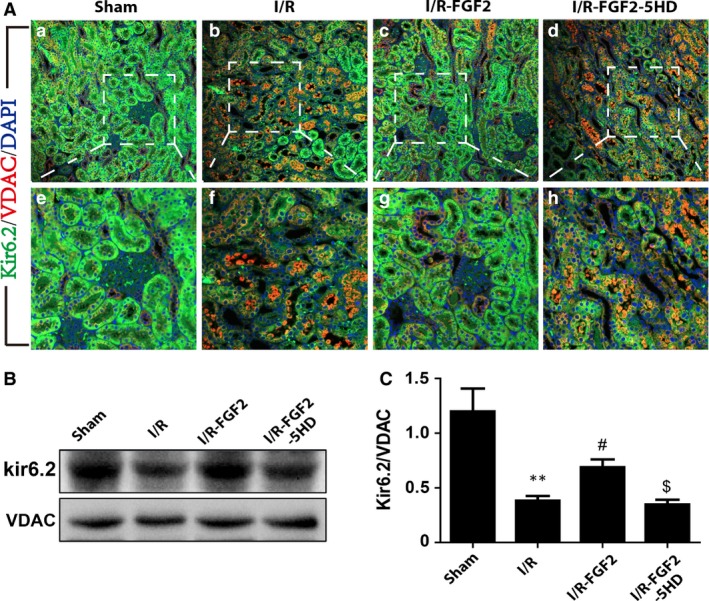
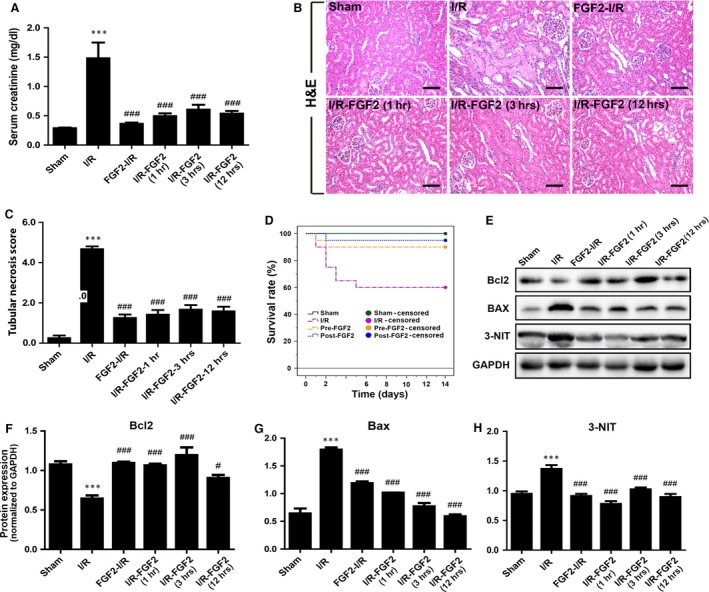
Ischaemia-reperfusion injury (I/RI) is a common cause of acute kidney injury (AKI). The molecular basis underlying I/RI-induced renal pathogenesis and measures to prevent or reverse this pathologic process remains to be resolved. Basic fibroblast growth factor (FGF2) is reported to have protective roles of myocardial infarction as well as in several other I/R related disorders. Herein we present evidence that FGF2 exhibits robust protective effect against renal histological and functional damages in a rat I/RI model. FGF2 treatment greatly alleviated I/R-induced acute renal dysfunction and largely blunted I/R-induced elevation in serum creatinine and blood urea nitrogen, and also the number of TUNEL-positive tubular cells in the kidney. Mechanistically, FGF2 substantially ameliorated renal I/RI by mitigating several mitochondria damaging parameters including pro-apoptotic alteration of Bcl2/Bax expression, caspase-3 activation, loss of mitochondrial membrane potential and K channel integrity. Of note, the protective effect of FGF2 was significantly compromised by the K channel blocker 5-HD. Interestingly, I/RI alone resulted in mild activation of FGFR, whereas FGF2 treatment led to more robust receptor activation. More significantly, post-I/RI administration of FGF2 also exhibited robust protection against I/RI by reducing cell apoptosis, inhibiting the release of damage-associated molecular pattern molecule HMBG1 and activation of its downstream inflammatory cytokines such as IL-1α, IL-6 and TNF α. Taken together, our data suggest that FGF2 offers effective protection against I/RI and improves animal survival by attenuating mitochondrial damage and HMGB1-mediated inflammatory response. Therefore, FGF2 has the potential to be used for the prevention and treatment of I/RI-induced AKI.
缺血再灌注损伤(I/RI)是急性肾损伤(AKI)的常见原因。导致 I/RI 诱导的肾发病机制的分子基础以及预防或逆转这一病理过程的措施仍有待解决。碱性成纤维细胞生长因子(FGF2)据报道在心肌梗死以及其他几种 I/R 相关疾病中具有保护作用。本文我们提供的证据表明,FGF2 在大鼠 I/RI 模型中对肾组织学和功能损伤具有强大的保护作用。FGF2 治疗极大地缓解了 I/R 引起的急性肾功能障碍,并大大减轻了 I/R 引起的血清肌酐和血尿素氮升高,以及肾脏中 TUNEL 阳性管状细胞的数量。从机制上讲,FGF2 通过减轻几种线粒体损伤参数来显著改善肾 I/RI,包括促凋亡的 Bcl2/Bax 表达改变、caspase-3 激活、线粒体膜电位丧失和 K 通道完整性丧失。值得注意的是,K 通道阻滞剂 5-HD 显著削弱了 FGF2 的保护作用。有趣的是,I/RI 本身导致 FGFR 轻度激活,而 FGF2 治疗导致更强烈的受体激活。更重要的是,I/RI 后给予 FGF2 还通过减少细胞凋亡、抑制损伤相关分子模式分子 HMBG1 的释放以及其下游炎症细胞因子(如 IL-1α、IL-6 和 TNFα)的激活来对 I/RI 表现出强大的保护作用。总之,我们的数据表明,FGF2 可有效预防和治疗 I/RI 诱导的 AKI,通过减轻线粒体损伤和 HMGB1 介导的炎症反应来提高动物存活率。因此,FGF2 有可能用于预防和治疗 I/RI 引起的 AKI。