Kalogeris Theodore, Bao Yimin, Korthuis Ronald J
Department of Medical Pharmacology and Physiology, School of Medicine, Dalton Cardiovascular Research Center, University of Missouri, 1 Hospital Drive, Columbia, MO 65212-0001, United States of America.
Redox Biol. 2014 Jun 2;2:702-14. doi: 10.1016/j.redox.2014.05.006. eCollection 2014.
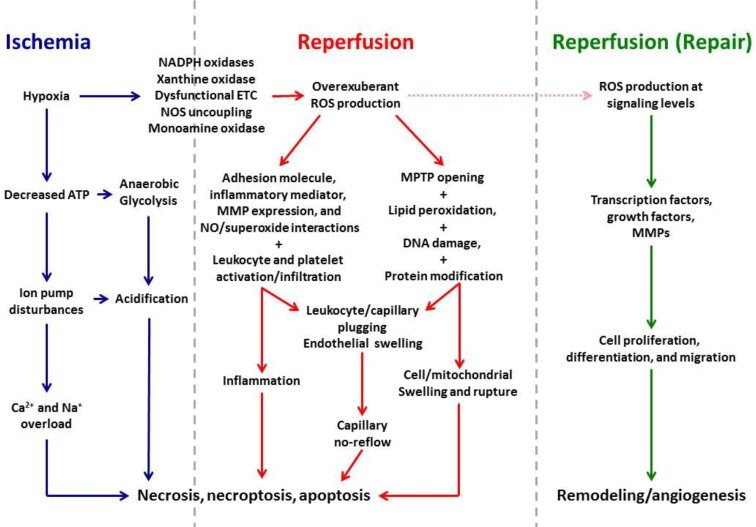
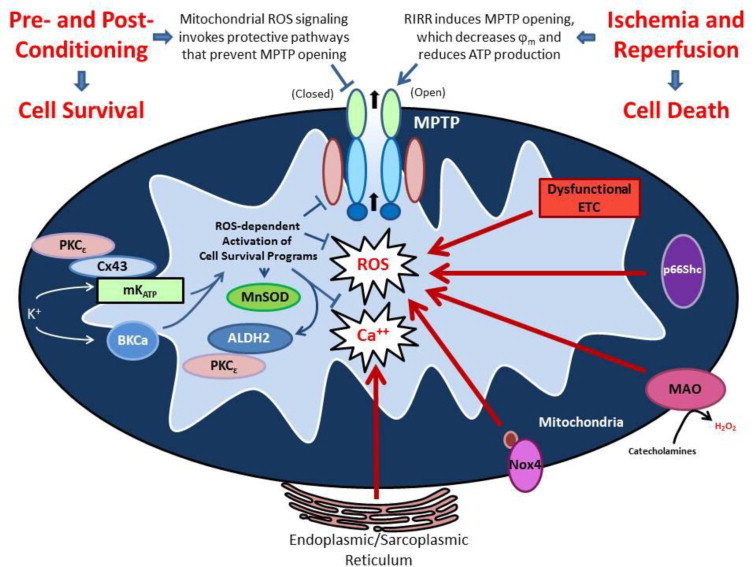
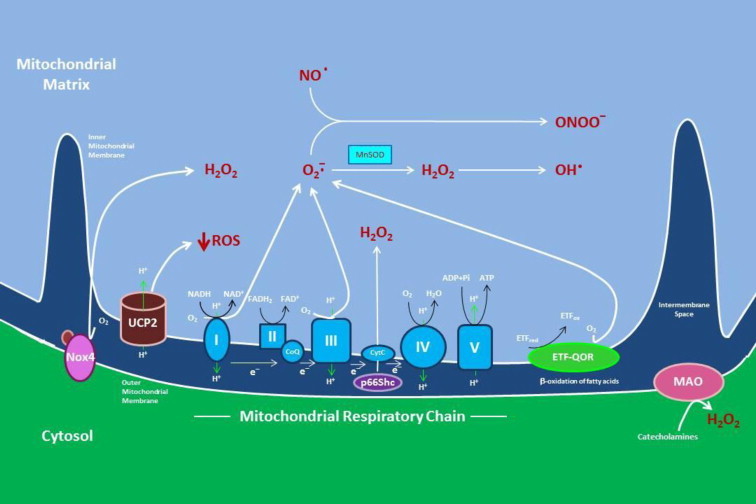
Reductions in the blood supply produce considerable injury if the duration of ischemia is prolonged. Paradoxically, restoration of perfusion to ischemic organs can exacerbate tissue damage and extend the size of an evolving infarct. Being highly metabolic organs, the heart and brain are particularly vulnerable to the deleterious effects of ischemia/reperfusion (I/R). While the pathogenetic mechanisms contributing to I/R-induced tissue injury and infarction are multifactorial, the relative importance of each contributing factor remains unclear. However, an emerging body of evidence indicates that the generation of reactive oxygen species (ROS) by mitochondria plays a critical role in damaging cellular components and initiating cell death. In this review, we summarize our current understanding of the mechanisms whereby mitochondrial ROS generation occurs in I/R and contributes to myocardial infarction and stroke. In addition, mitochondrial ROS have been shown to participate in preconditioning by several pharmacologic agents that target potassium channels (e.g., ATP-sensitive potassium (mKATP) channels or large conductance, calcium-activated potassium (mBKCa) channels) to activate cell survival programs that render tissues and organs more resistant to the deleterious effects of I/R. Finally, we review novel therapeutic approaches that selectively target mROS production to reduce postischemic tissue injury, which may prove efficacious in limiting myocardial dysfunction and infarction and abrogating neurocognitive deficits and neuronal cell death in stroke.
如果缺血持续时间延长,血液供应减少会造成相当大的损伤。矛盾的是,恢复缺血器官的灌注会加剧组织损伤并扩大正在形成的梗死面积。心脏和大脑作为高代谢器官,特别容易受到缺血/再灌注(I/R)有害影响的损伤。虽然导致I/R诱导的组织损伤和梗死的发病机制是多因素的,但每个促成因素的相对重要性仍不清楚。然而,越来越多的证据表明,线粒体产生的活性氧(ROS)在破坏细胞成分和引发细胞死亡方面起关键作用。在这篇综述中,我们总结了目前对I/R过程中线粒体ROS产生的机制及其导致心肌梗死和中风的理解。此外,线粒体ROS已被证明参与了几种靶向钾通道(如ATP敏感性钾(mKATP)通道或大电导钙激活钾(mBKCa)通道)的药物预处理,以激活细胞存活程序,使组织和器官对I/R的有害影响更具抵抗力。最后,我们综述了选择性靶向线粒体ROS产生以减少缺血后组织损伤的新型治疗方法,这可能在限制心肌功能障碍和梗死以及消除中风后的神经认知缺陷和神经元细胞死亡方面证明有效。