Mali Aniket V, Joshi Asavari A, Hegde Mahabaleshwar V, Kadam Shivajirao S
Center for Innovation in Nutrition Health and Disease (CINHD), Interactive Research School of Health Affairs (IRSHA), Bharati Vidyapeeth University (BVU), Dhankawadi, Pune, Maharashtra 411043, India.
Pharmaceutical Sciences, Poona College of Pharmacy, Bharati Vidyapeeth University (BVU), Erandawane, Pune, Maharashtra 411038, India. Email:
Asian Pac J Cancer Prev. 2017 Apr 1;18(4):905-915. doi: 10.22034/APJCP.2017.18.4.905.
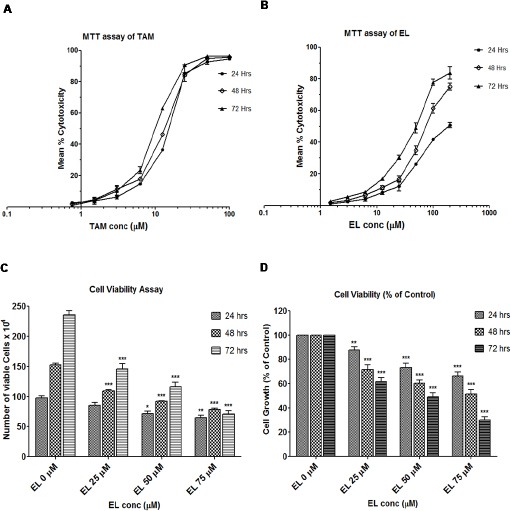
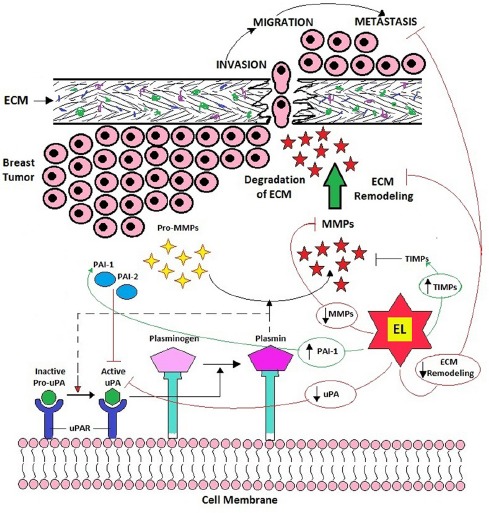
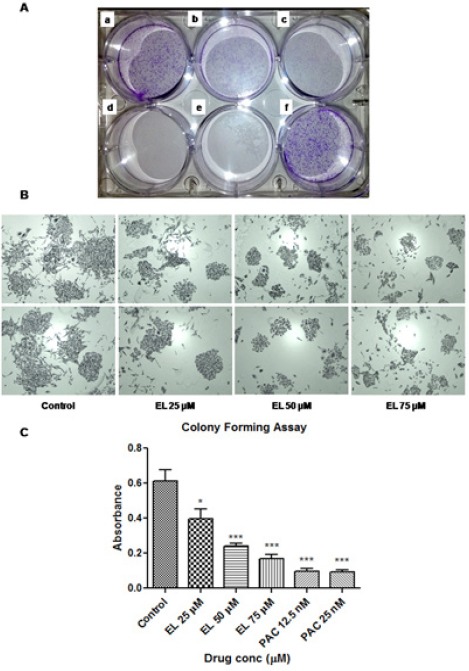
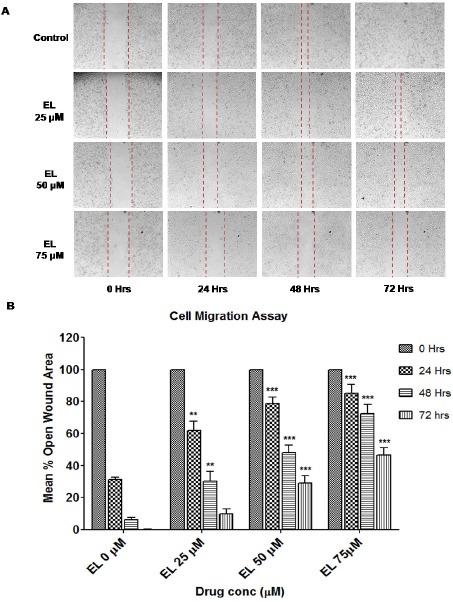
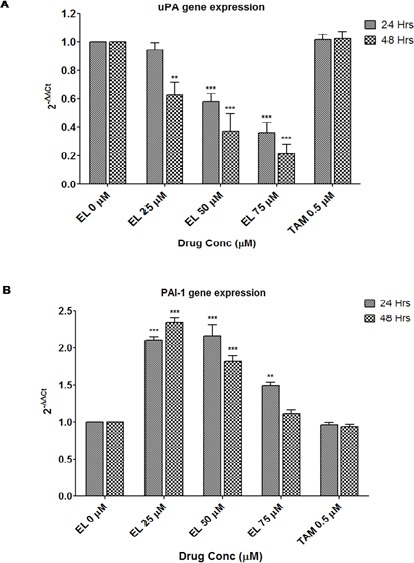
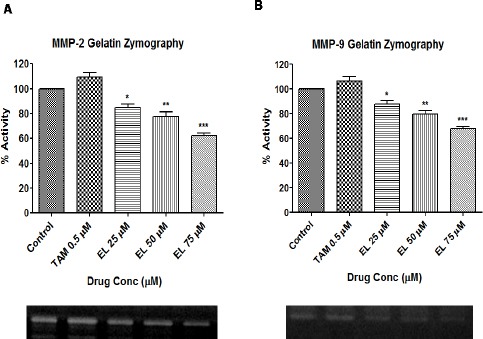
Background: To enhance their own survival, tumor cells can manipulate their microenvironment through remodeling of the extra cellular matrix (ECM). The urokinase-type plasminogen activator (uPA) system catalyzes plasmin production which further mediates activation of matrix metalloproteinases (MMPs) and plays an important role in breast cancer invasion and metastasis through ECM remodeling. This provides a potential target for therapeutic intervention of breast cancer treatment. Enterolactone (EL) is derived from dietary flax lignans in the human body and is known to have anti-breast cancer activity. We here investigated molecular and cellular mechanisms of EL action on the uPA-plasmin- MMPs system. Methods: MTT and trypan blue dye exclusion assays, anchorage-dependent clonogenic assays and wound healing assays were carried out to study effects on cell proliferation and viability, clonogenicity and migration capacity, respectively. Real-time PCR was employed to study gene expression and gelatin zymography was used to assess MMP-2 and MMP-9 activities. All data were statistically analysed and presented as mean ± SEM values. Results: All the findings collectively demonstrated anticancer and antimetastatic potential of EL with antiproliferative, antimigratory and anticlonogenic cellular mechanisms. EL was found to exhibit multiple control of plasmin activation by down-regulating uPA expression and also up-regulating its natural inhibitor, PAI-1, at the mRNA level. Further, EL was found to down-regulate expression of MMP-2 and MMP-9 genes, and up-regulate TIMP-1 and TIMP-2; natural inhibitors of MMP-2 and MMP-9, respectively. This may be as a consequence of inhibition of plasmin activation, resulting in robust control over migration and invasion of breast cancer cells during metastasis. Conclusions: EL suppresses proliferation, migration and metastasis of MDA-MB-231 breast cancer cells by inhibiting induced ECM remodeling by the ‘uPA-plasmin-MMPs system’.
为提高自身存活率,肿瘤细胞可通过重塑细胞外基质(ECM)来操控其微环境。尿激酶型纤溶酶原激活剂(uPA)系统催化纤溶酶生成,进而介导基质金属蛋白酶(MMPs)的激活,并通过ECM重塑在乳腺癌侵袭和转移中发挥重要作用。这为乳腺癌治疗的治疗干预提供了一个潜在靶点。肠内酯(EL)是人体饮食中亚麻木脂素衍生而来的,已知具有抗乳腺癌活性。我们在此研究了EL对uPA-纤溶酶-MMPs系统作用的分子和细胞机制。
分别进行MTT和台盼蓝染料排除试验、锚定依赖性克隆形成试验和伤口愈合试验,以研究对细胞增殖和活力、克隆形成能力和迁移能力的影响。采用实时PCR研究基因表达,并用明胶酶谱法评估MMP-2和MMP-9的活性。所有数据均进行统计学分析,并以平均值±标准误表示。
所有研究结果共同证明了EL具有抗癌和抗转移潜力,其细胞机制包括抗增殖、抗迁移和抗克隆形成。发现EL通过在mRNA水平下调uPA表达并上调其天然抑制剂PAI-1,对纤溶酶激活具有多重调控作用。此外,发现EL下调MMP-2和MMP-9基因的表达,并上调TIMP-1和TIMP-2;TIMP-1和TIMP-2分别是MMP-2和MMP-9的天然抑制剂。这可能是抑制纤溶酶激活的结果,从而在转移过程中对乳腺癌细胞的迁移和侵袭进行有力控制。
EL通过抑制“uPA-纤溶酶-MMPs系统”诱导的ECM重塑,抑制MDA-MB-231乳腺癌细胞的增殖、迁移和转移。