Moritz Falk, Schniering Janine, Distler Jörg H W, Gay Renate E, Gay Steffen, Distler Oliver, Maurer Britta
Department of Rheumatology, University Hospital Zurich, Gloriastrasse 25, 8091, Zurich, Switzerland.
Department of Oncology, St. Georg Hospital, Leipzig, Germany.
Arthritis Res Ther. 2017 May 25;19(1):105. doi: 10.1186/s13075-017-1304-2.
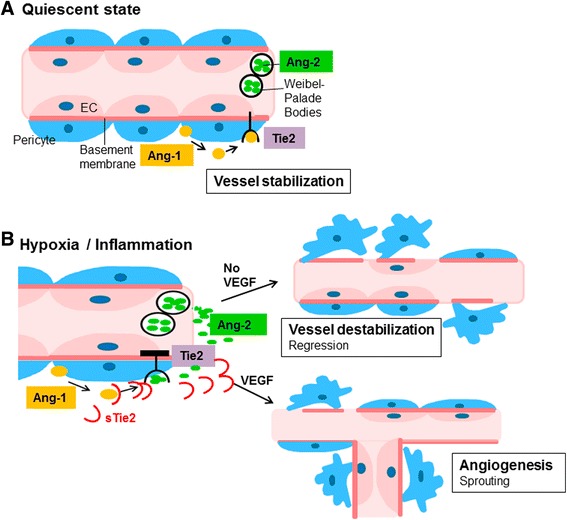
The angiopoietin(Ang)/Tie2 system is a key regulator of vascular biology. The expression of membrane bound (mb) Tie2 and Ang-1 ensures vessel stability, whereas Ang-2, inducible by vascular endothelial growth factor (VEGF), hypoxia, and inflammation, acts as an antagonist. Tie2 signalling is also attenuated by soluble Tie2 (sTie2), the extracellular domain of the receptor, which is shed upon stimulation with VEGF. Herein, we investigate the role of Ang/Tie2 in the peripheral vasculopathy in systemic sclerosis (SSc) including animal models.
The expression of Ang-1/-2 and Tie2 in skin/serum of SSc patients was compared with healthy controls by immunohistochemistry (IHC)/ELISA. Expression of Ang/Tie2 was analysed in different animal models: VEGF transgenic (tg) mice, hypoxia model, bleomycin-induced skin fibrosis, and tight skin 1 (TSK1) mice.
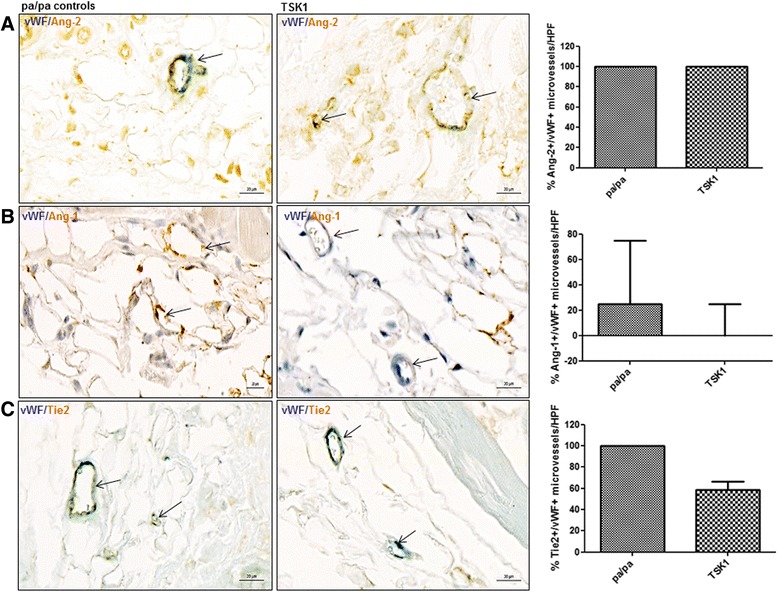
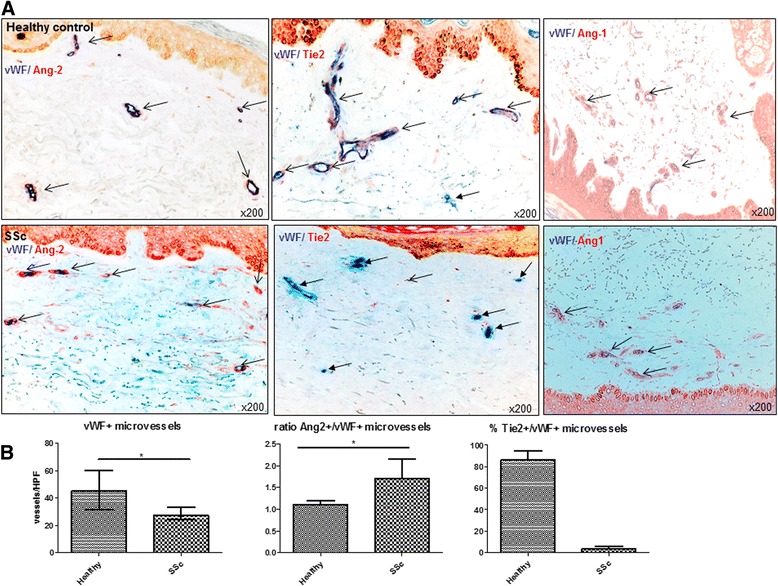
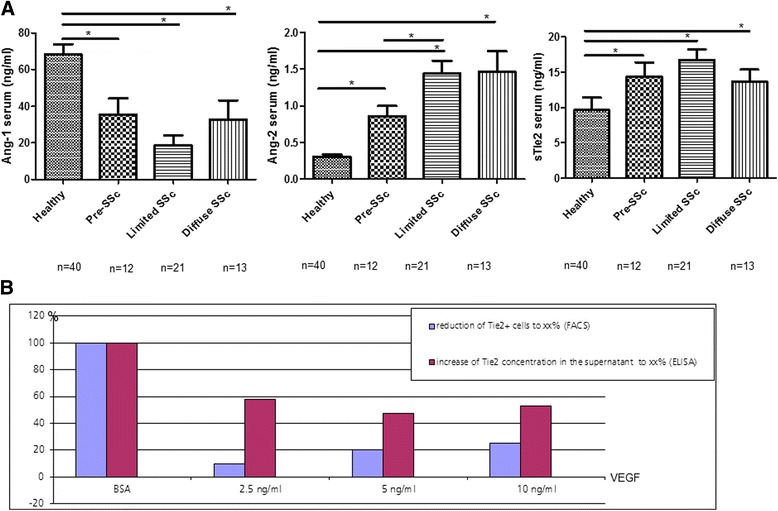
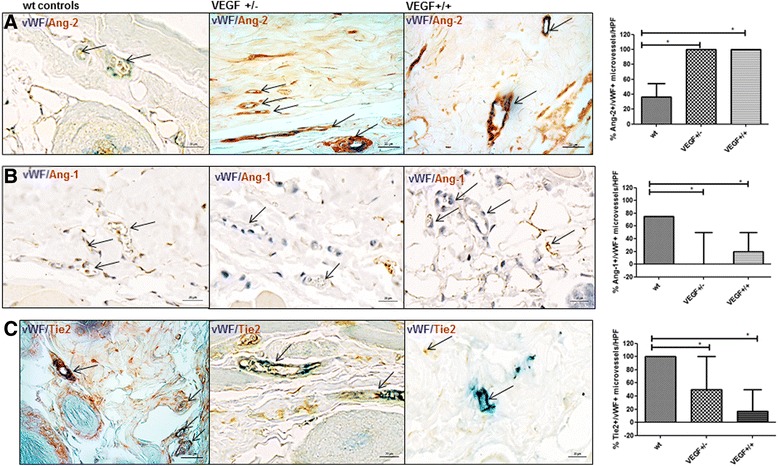
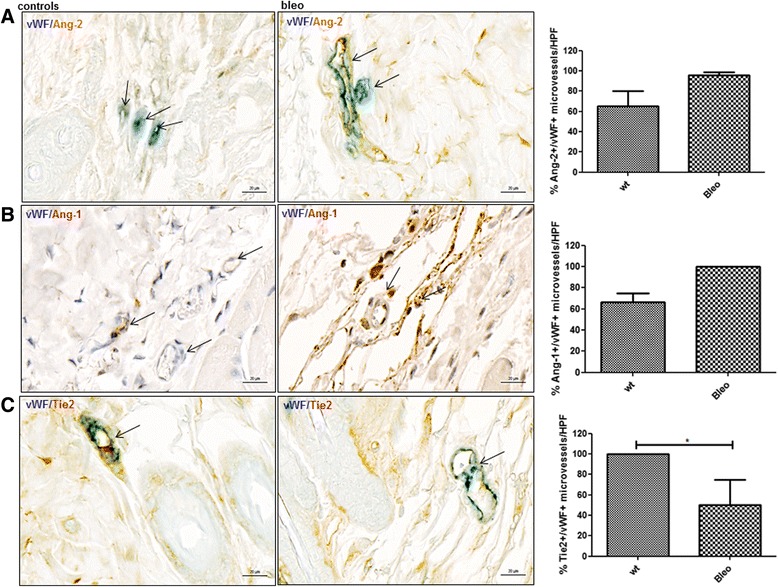
In SSc, dermal microvessels abundantly expressed Ang-2, but not Ang-1 compared with healthy controls. The percentage of mbTie2+ microvessels was profoundly decreased whereas the levels of sTie2 were increased already in early disease. Both in skin and sera of SSc patients, the Ang1/2 ratio was reduced, being lowest in patients with digital ulcers indicating vessel destabilizing conditions. We next studied potential influencing factors in animal models. The VEGF tg mouse model, the hypoxia, and the inflammation-dependent bleomycin model all showed a similar dysregulation of Ang/Tie2 as in SSc, which did not apply for the non-inflammatory TSK1 model.
Peripheral microvasculopathy in SSc results from a complex dysregulation of angiogenic signalling networks including the VEGF and the Ang/Tie2 system. The profoundly disturbed Ang-/Tie-2 balance might represent an important target for vascular therapeutic approaches in SSc.
血管生成素(Ang)/Tie2系统是血管生物学的关键调节因子。膜结合型(mb)Tie2和Ang-1的表达可确保血管稳定性,而血管内皮生长因子(VEGF)、缺氧和炎症诱导产生的Ang-2则起拮抗剂作用。Tie2信号传导也会被可溶性Tie2(sTie2,即受体的细胞外结构域)减弱,sTie2在VEGF刺激下会脱落。在此,我们研究Ang/Tie2在系统性硬化症(SSc)外周血管病变中的作用,包括动物模型。
通过免疫组织化学(IHC)/酶联免疫吸附测定(ELISA)比较SSc患者皮肤/血清中Ang-1/-2和Tie2的表达与健康对照。在不同动物模型中分析Ang/Tie2的表达:VEGF转基因(tg)小鼠、缺氧模型、博来霉素诱导的皮肤纤维化模型和紧皮1(TSK1)小鼠。
与健康对照相比,在SSc中,真皮微血管大量表达Ang-2,但不表达Ang-1。mbTie2+微血管的百分比显著降低,而sTie2水平在疾病早期就已升高。在SSc患者的皮肤和血清中,Ang1/2比值均降低,在有指端溃疡的患者中最低,提示血管不稳定状态。接下来我们研究了动物模型中的潜在影响因素。VEGF tg小鼠模型、缺氧模型和炎症依赖性博来霉素模型均显示出与SSc中类似的Ang/Tie2失调,而非炎症性TSK1模型则未出现这种情况。
SSc的外周微血管病变是由包括VEGF和Ang/Tie2系统在内的血管生成信号网络的复杂失调所致。严重紊乱的Ang-/Tie-2平衡可能是SSc血管治疗方法的重要靶点。