Hui Min, Song Chengwen, Liu Yuan, Li Chaolun, Cui Zhaoxia
Key Laboratory of Experimental Marine Biology, Institute of Oceanology, Chinese Academy of Sciences, Qingdao, China.
Laboratory for Marine Biology and Biotechnology, Qingdao National Laboratory for Marine Science and Technology, Qingdao, China.
PLoS One. 2017 May 26;12(5):e0178417. doi: 10.1371/journal.pone.0178417. eCollection 2017.
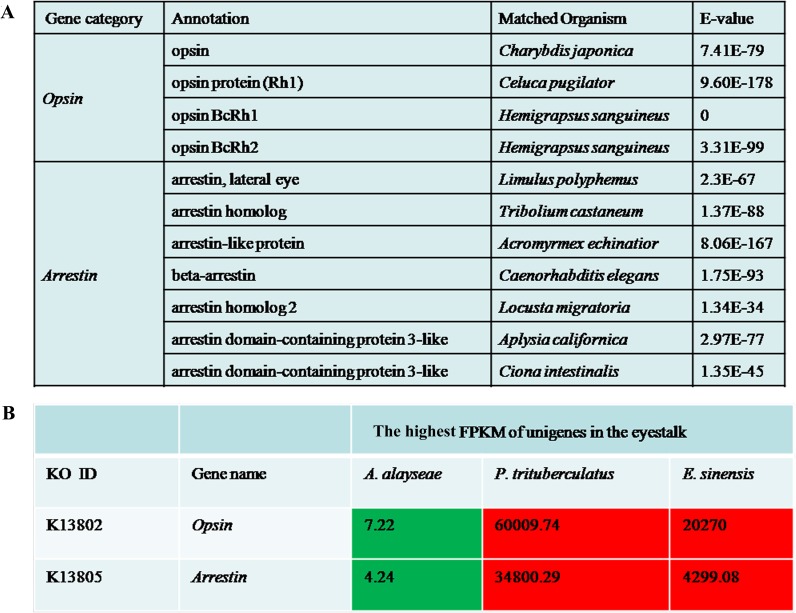
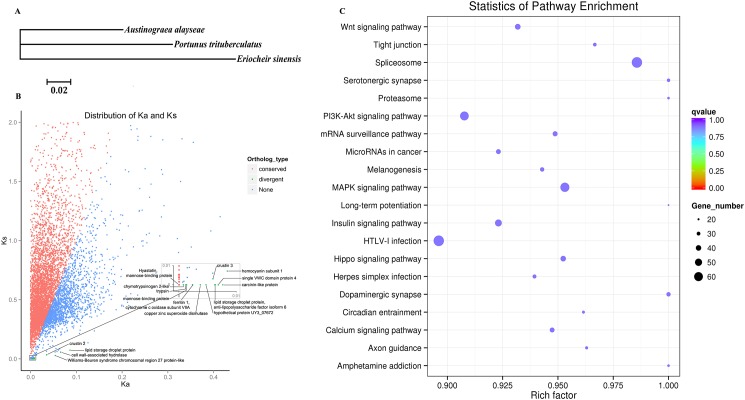
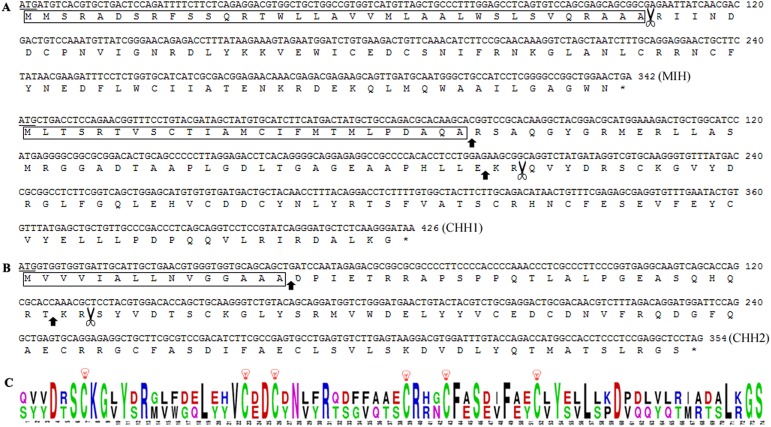
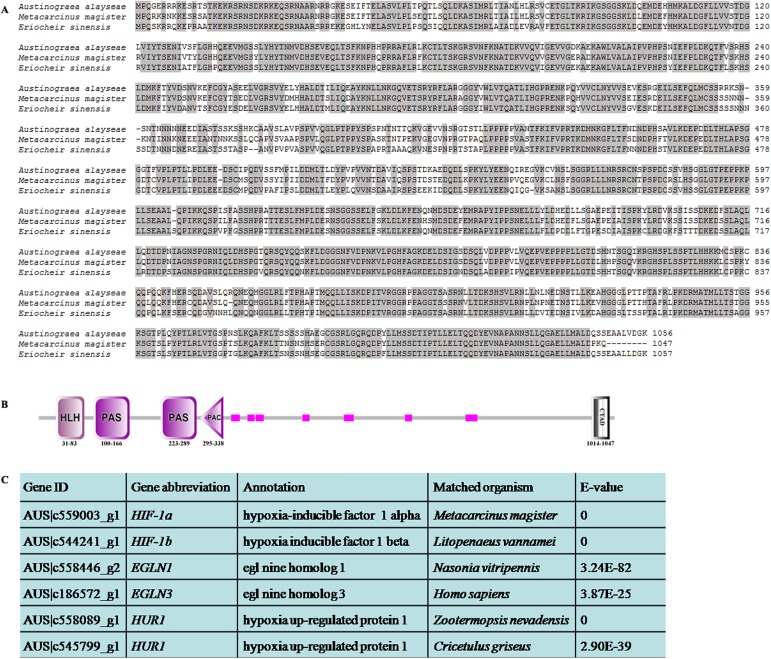
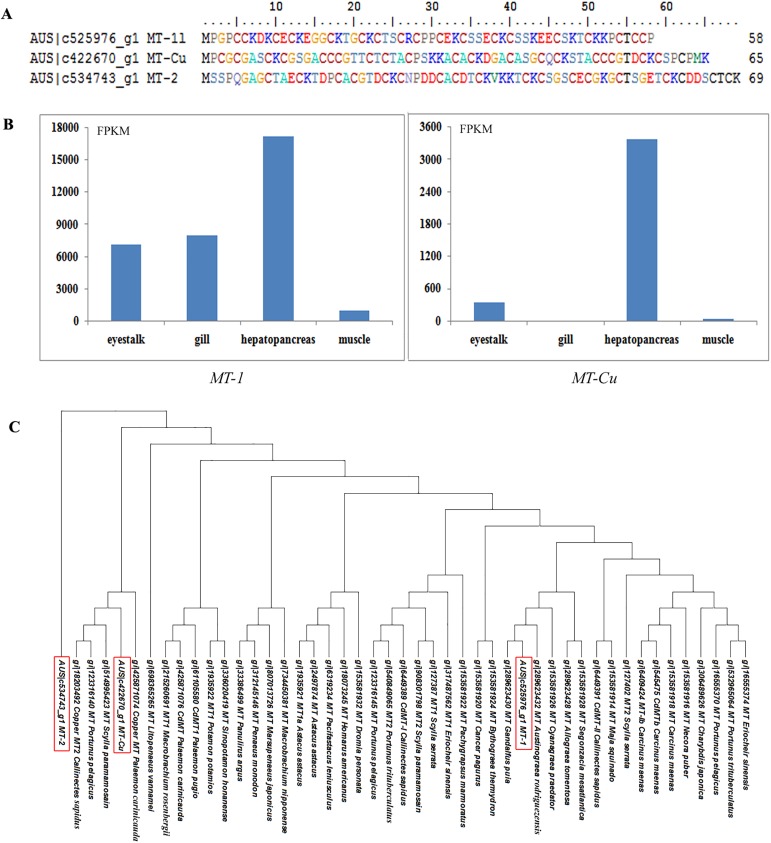
Elucidating the genetic mechanisms of adaptation to the hydrothermal vent in organisms at genomic level is significant for understanding the adaptive evolution process in the extreme environment. We performed RNA-seq on four different tissues of a vent crab species, Austinograea alayseae, producing 725,461 unigenes and 134,489 annotated genes. Genes related to sensory, circadian rhythm, hormone, hypoxia stress, metal detoxification and immunity were identified. It was noted that in the degenerated eyestalk, transcription of phototransduction related genes which are important for retinal function was greatly reduced; three crucial neuropeptide hormones, one molt-inhibiting and two crustacean hyperglycemic hormone precursors were characterized with conserved domains; hypoxia-inducible factor 1 and two novel isoforms of metallothioneins in the vent crabs were discovered. An analysis of 6,932 orthologs among three crabs A. alayseae, Portunus trituberculutus and Eriocheir sinensis revealed 19 positive selected genes (PSGs). Most of the PSGs were involved in immune responses, such as crustins and anti-lipopolysaccharide factor, suggesting their function in the adaptation to environment. The characterization of the first vent crab transcriptome provides abundant resources for genetic and evolutionary studies of this species, and paves the way for further investigation of vent adaptation process in crabs.
在基因组水平上阐明生物适应热液喷口的遗传机制,对于理解极端环境中的适应性进化过程具有重要意义。我们对一种热液喷口蟹类——阿拉西奥热蟹(Austinograea alayseae)的四种不同组织进行了RNA测序,获得了725,461个单基因和134,489个注释基因。鉴定出了与感官、昼夜节律、激素、缺氧应激、金属解毒和免疫相关的基因。值得注意的是,在退化的眼柄中,对视网膜功能至关重要的光转导相关基因的转录大幅减少;三种关键的神经肽激素,一种蜕皮抑制激素和两种甲壳类高血糖激素前体具有保守结构域;在热液喷口蟹中发现了缺氧诱导因子1和两种新型金属硫蛋白异构体。对阿拉西奥热蟹、三疣梭子蟹(Portunus trituberculutus)和中华绒螯蟹(Eriocheir sinensis)三种蟹类中6,932个直系同源基因的分析揭示了19个正选择基因(PSGs)。大多数PSGs参与免疫反应,如甲壳素和抗脂多糖因子,表明它们在适应环境中的作用。首个热液喷口蟹转录组的特征为该物种的遗传和进化研究提供了丰富资源,并为进一步研究蟹类对热液喷口的适应过程铺平了道路。