Irannejad Roshanak, Pessino Veronica, Mika Delphine, Huang Bo, Wedegaertner Philip B, Conti Marco, von Zastrow Mark
Department of Psychiatry, University of California, San Francisco, San Francisco, California, USA.
Department of Biochemistry and Biophysics, University of California, San Francisco, San Francisco, California, USA.
Nat Chem Biol. 2017 Jul;13(7):799-806. doi: 10.1038/nchembio.2389. Epub 2017 May 29.
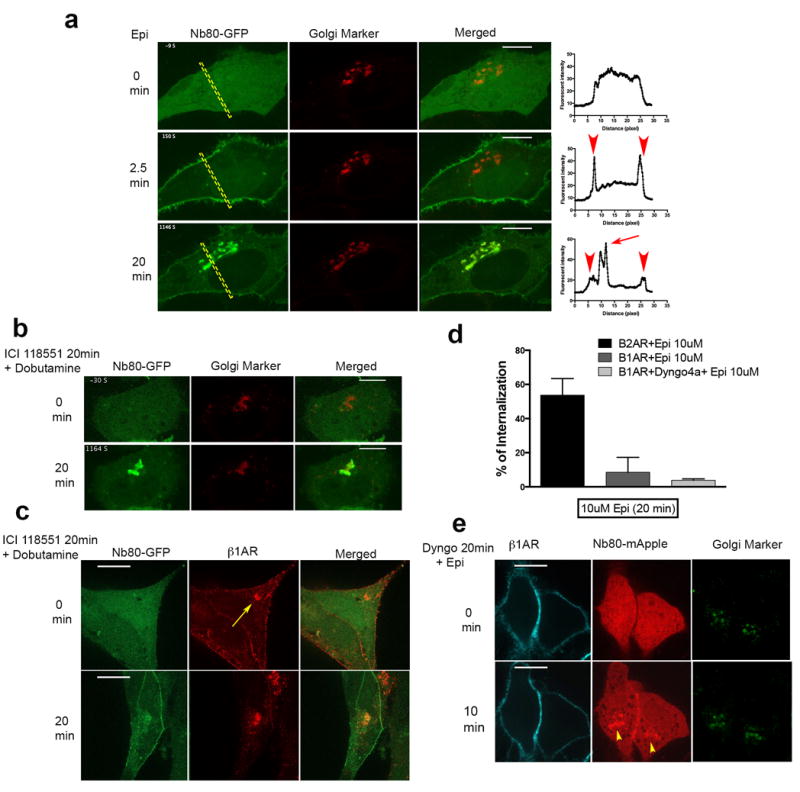
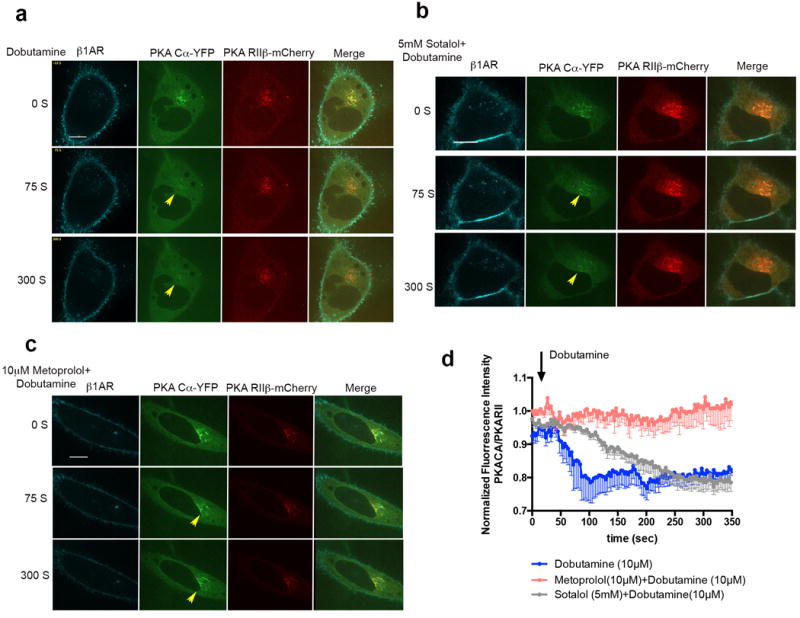
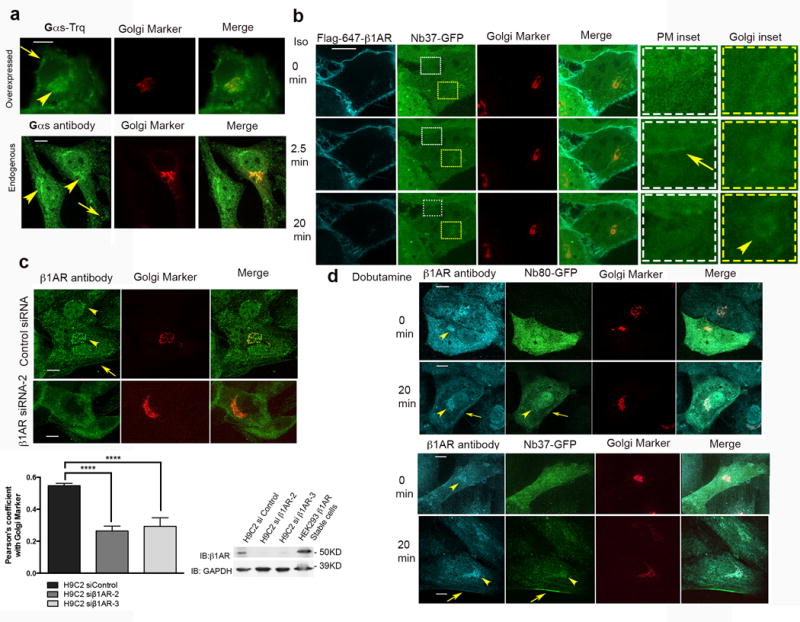
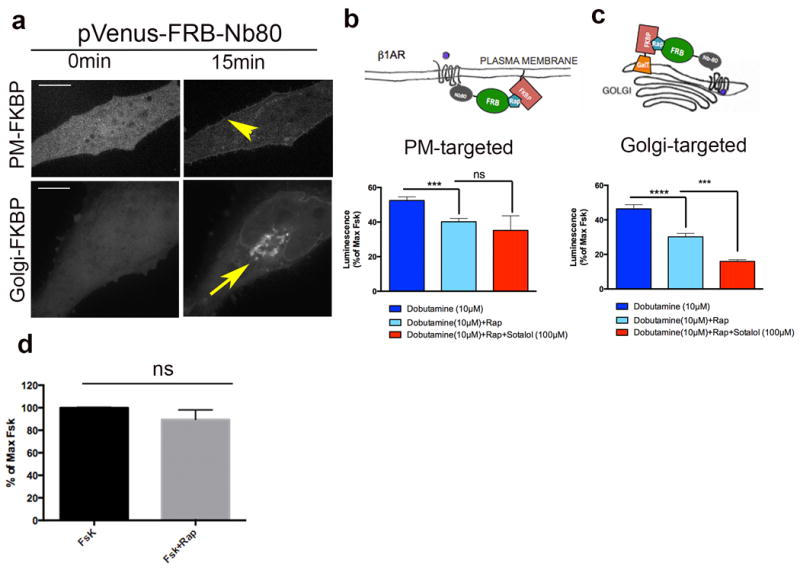
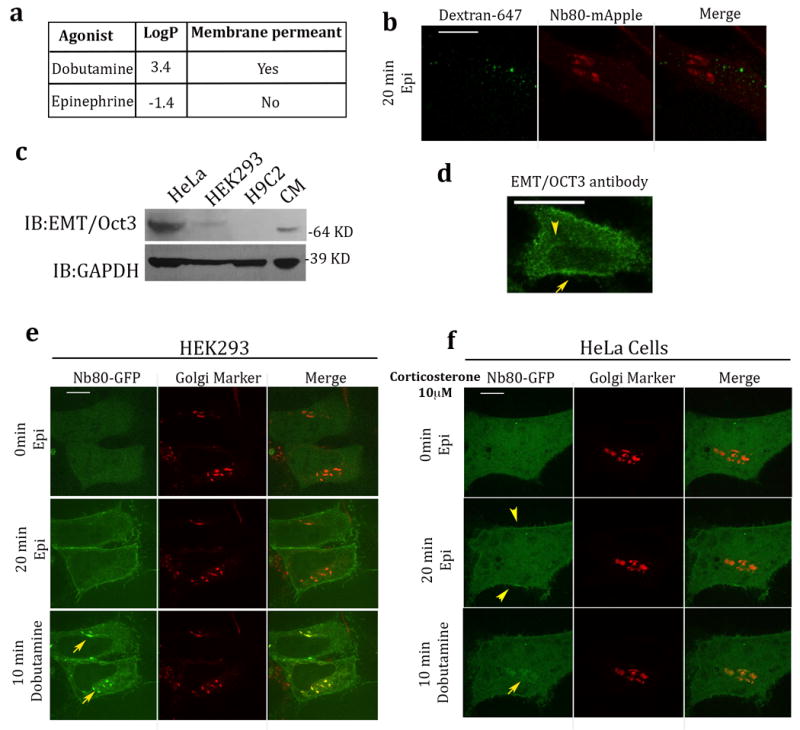
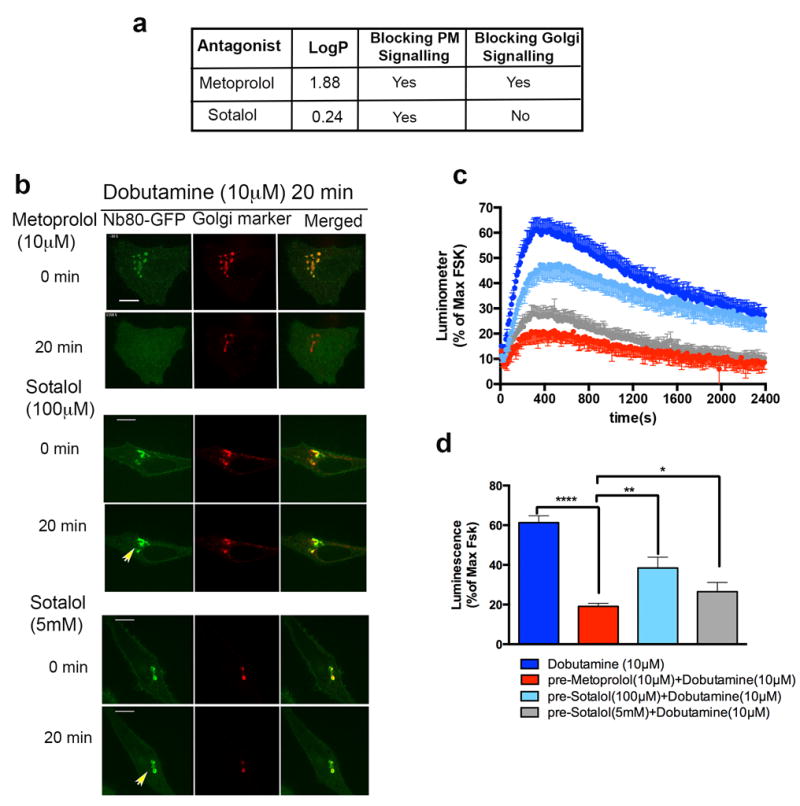
G-protein-coupled receptors (GPCRs) are increasingly recognized to operate from intracellular membranes as well as the plasma membrane. The β-adrenergic GPCR can activate G-linked cyclic AMP (G-cAMP) signaling from endosomes. We show here that the homologous human β-adrenergic receptor initiates an internal G-cAMP signal from the Golgi apparatus. By developing a chemical method to acutely squelch G-protein coupling at defined membrane locations, we demonstrate that Golgi activation contributes significantly to the overall cellular cAMP response. Golgi signaling utilizes a preexisting receptor pool rather than receptors delivered from the cell surface, requiring separate access of extracellular ligands. Epinephrine, a hydrophilic endogenous ligand, accesses the Golgi-localized receptor pool by facilitated transport requiring the organic cation transporter 3 (OCT3), whereas drugs can access the Golgi pool by passive diffusion according to hydrophobicity. We demonstrate marked differences, among both agonist and antagonist drugs, in Golgi-localized receptor access and show that β-blocker drugs currently used in the clinic differ markedly in ability to antagonize the Golgi signal. We propose 'location bias' as a new principle for achieving functional selectivity of GPCR-directed drug action.
G蛋白偶联受体(GPCRs)越来越被认为不仅能在质膜上发挥作用,还能在细胞内膜上发挥作用。β-肾上腺素能GPCR可在内体中激活G-联环磷酸腺苷(G-cAMP)信号传导。我们在此表明,同源的人β-肾上腺素能受体可从高尔基体启动内部G-cAMP信号。通过开发一种化学方法来急性抑制特定膜位置的G蛋白偶联,我们证明高尔基体激活对整体细胞cAMP反应有显著贡献。高尔基体信号传导利用预先存在的受体池,而非从细胞表面递送的受体,这需要细胞外配体的单独进入。肾上腺素是一种亲水性内源性配体,通过需要有机阳离子转运体3(OCT3)的易化转运进入高尔基体定位的受体池,而药物可根据疏水性通过被动扩散进入高尔基体池。我们证明,在激动剂和拮抗剂药物中,高尔基体定位的受体进入存在显著差异,并表明目前临床上使用的β-阻滞剂药物在拮抗高尔基体信号的能力上有显著差异。我们提出“位置偏向”作为实现GPCR导向药物作用功能选择性的新原则。