Yin Xin, Li Xinlei, Ambardekar Charuta, Hu Zhimin, Lhomme Sébastien, Feng Zongdi
Center for Vaccines and Immunity, The Research Institute at Nationwide Children's Hospital, Columbus, Ohio, United States of America.
Department of Pediatrics, The Ohio State University College of Medicine, Columbus, Ohio, United States of America.
PLoS Pathog. 2017 May 30;13(5):e1006417. doi: 10.1371/journal.ppat.1006417. eCollection 2017 May.
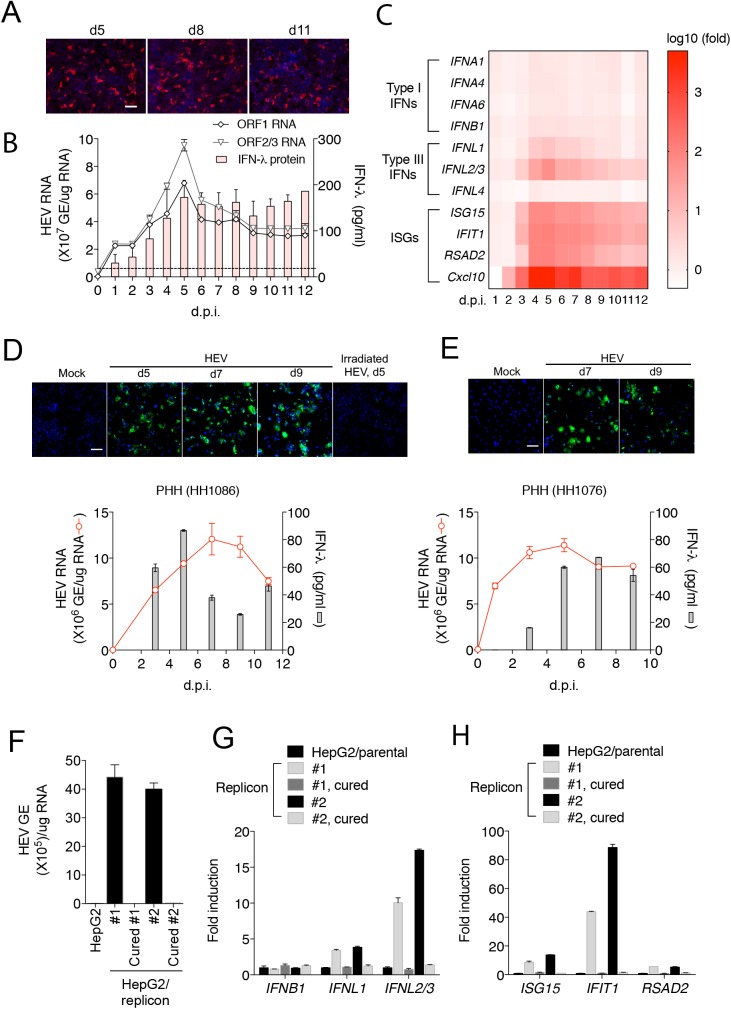
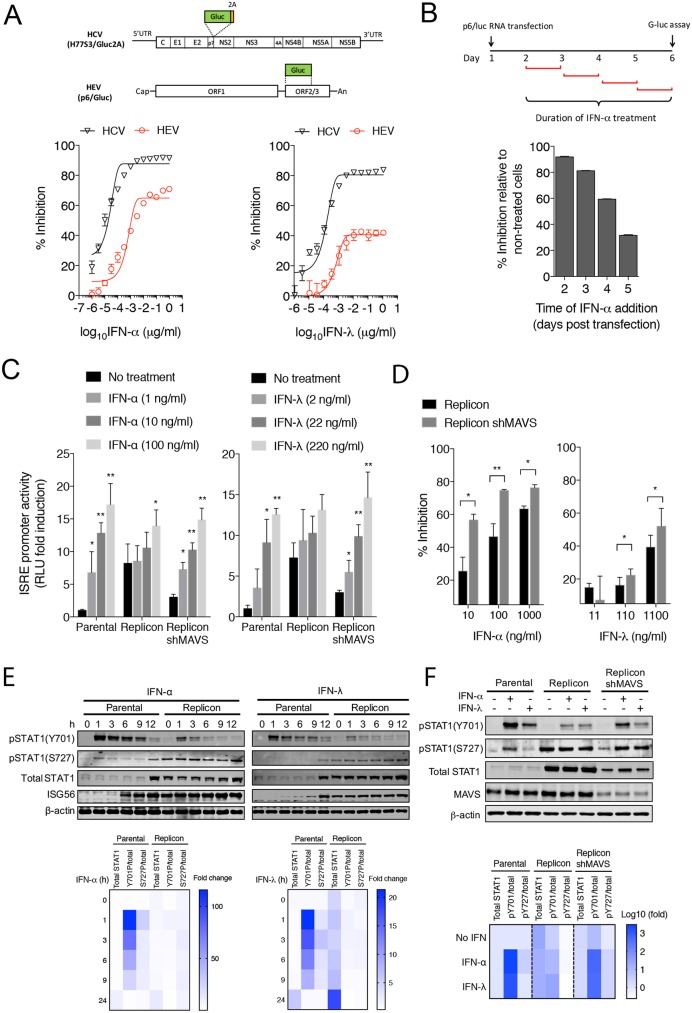
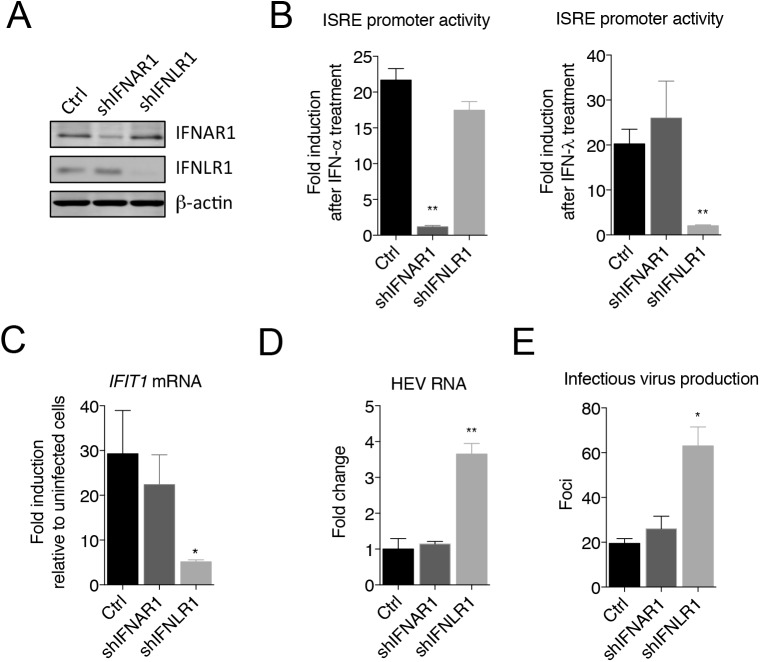
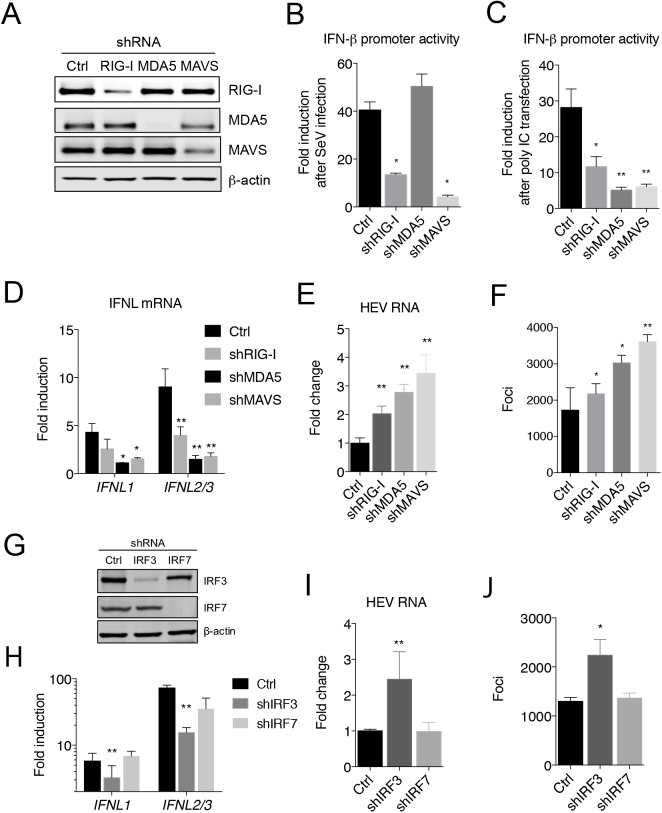
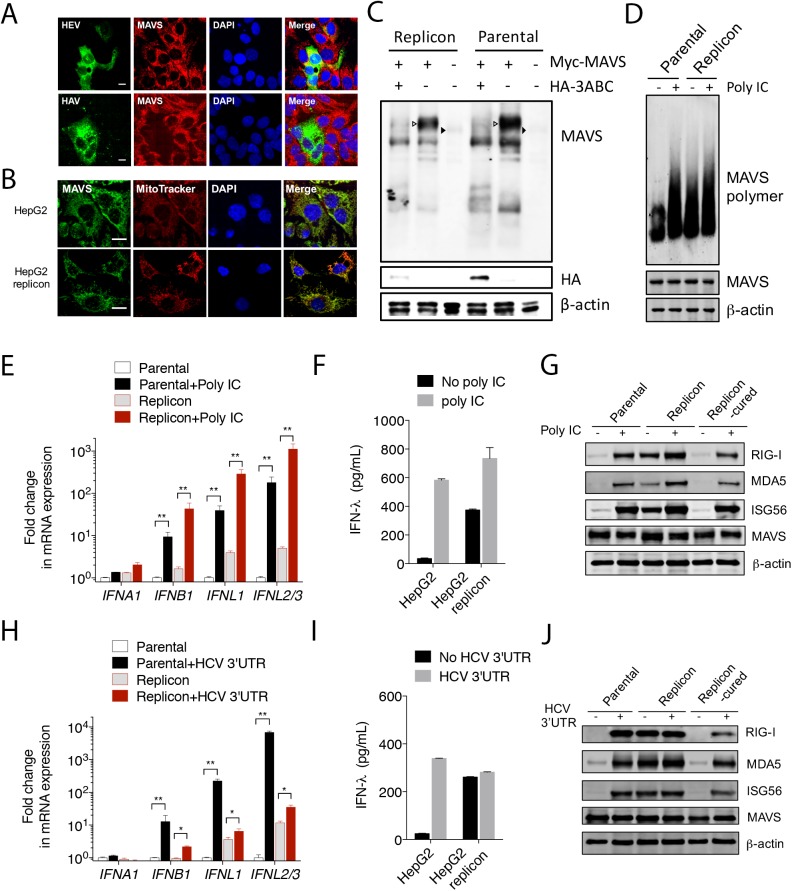
The RIG-I-like RNA helicase (RLR)-mediated interferon (IFN) response plays a pivotal role in the hepatic antiviral immunity. The hepatitis A virus (HAV) and the hepatitis C virus (HCV) counter this response by encoding a viral protease that cleaves the mitochondria antiviral signaling protein (MAVS), a common signaling adaptor for RLRs. However, a third hepatotropic RNA virus, the hepatitis E virus (HEV), does not appear to encode a functional protease yet persists in infected cells. We investigated HEV-induced IFN responses in human hepatoma cells and primary human hepatocytes. HEV infection resulted in persistent virus replication despite poor spread. This was companied by a type III IFN response that upregulated multiple IFN-stimulated genes (ISGs), but type I IFNs were barely detected. Blocking type III IFN production or signaling resulted in reduced ISG expression and enhanced HEV replication. Unlike HAV and HCV, HEV did not cleave MAVS; MAVS protein size, mitochondrial localization, and function remained unaltered in HEV-replicating cells. Depletion of MAVS or MDA5, and to a less extent RIG-I, also diminished IFN production and increased HEV replication. Furthermore, persistent activation of the JAK/STAT signaling rendered infected cells refractory to exogenous IFN treatment, and depletion of MAVS or the receptor for type III IFNs restored the IFN responsiveness. Collectively, these results indicate that unlike other hepatotropic RNA viruses, HEV does not target MAVS and its persistence is associated with continuous production of type III IFNs.
视黄酸诱导基因I样RNA解旋酶(RLR)介导的干扰素(IFN)反应在肝脏抗病毒免疫中起关键作用。甲型肝炎病毒(HAV)和丙型肝炎病毒(HCV)通过编码一种病毒蛋白酶来对抗这种反应,该蛋白酶可切割线粒体抗病毒信号蛋白(MAVS),MAVS是RLR的一种常见信号衔接蛋白。然而,第三种嗜肝RNA病毒,戊型肝炎病毒(HEV),似乎不编码功能性蛋白酶,但仍能在受感染细胞中持续存在。我们研究了HEV在人肝癌细胞和原代人肝细胞中诱导的IFN反应。尽管传播能力较差,但HEV感染导致病毒持续复制。这伴随着III型IFN反应,该反应上调了多个IFN刺激基因(ISG),但几乎检测不到I型IFN。阻断III型IFN的产生或信号传导会导致ISG表达降低和HEV复制增强。与HAV和HCV不同,HEV不会切割MAVS;在HEV复制的细胞中,MAVS蛋白大小、线粒体定位和功能保持不变。MAVS或MDA5的缺失,以及程度较轻的RIG-I的缺失,也会减少IFN的产生并增加HEV的复制。此外,JAK/STAT信号的持续激活使受感染细胞对外源性IFN治疗产生抗性,而MAVS或III型IFN受体的缺失恢复了IFN反应性。总的来说,这些结果表明,与其他嗜肝RNA病毒不同,HEV不靶向MAVS,其持续存在与III型IFN的持续产生有关。