Carnero Elvis Alvarez, Dubis Gabriel S, Hames Kazanna C, Jakicic John M, Houmard Joseph A, Coen Paul M, Goodpaster Bret H
Translational Research Institute for Metabolism and Diabetes, Florida Hospital, Orlando, Florida, USA.
Department of Kinesiology, East Carolina University, Greenville, North Carolina, USA.
Obesity (Silver Spring). 2017 Jul;25(7):1206-1216. doi: 10.1002/oby.21864. Epub 2017 May 30.
This study investigated the associations of both physical activity time (PA) and energy expenditure (EE) with weight and fat mass (FM) loss in patients following Roux-en-Y gastric bypass (RYGB) surgery.
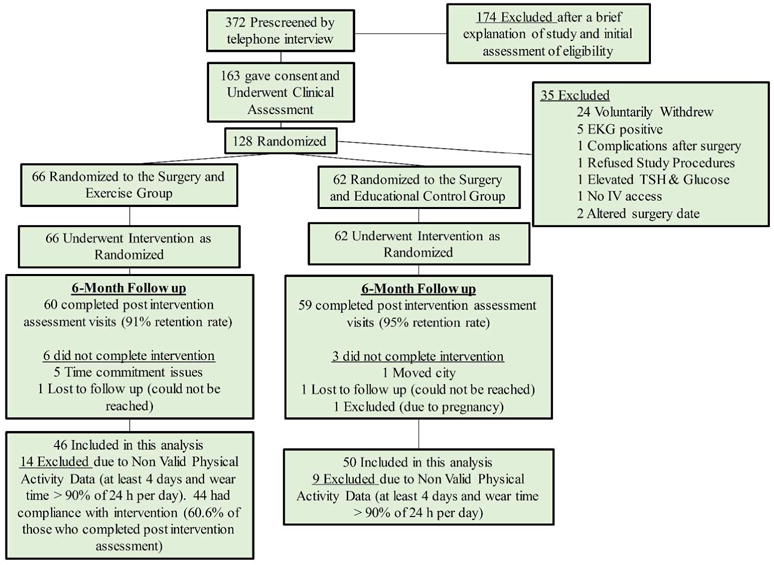
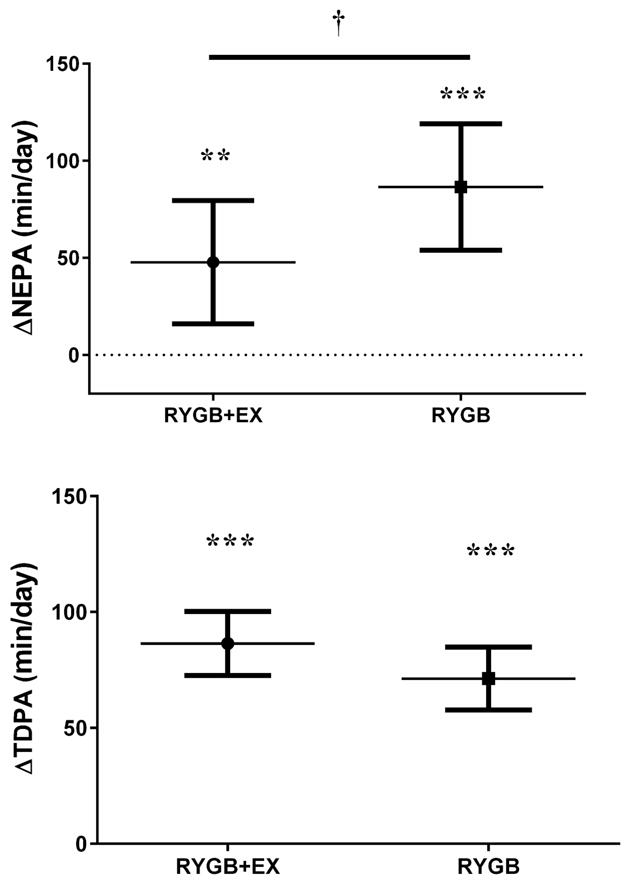
Ninety-six nondiabetic patients were included in this analysis. Post-RYGB patients were randomized in one of two treatments: A 6-month exercise training program (RYBG+EX) or lifestyle educational classes (RYGB). Body composition was assessed by dual-energy X-ray absorptiometry and computed tomography. Components of PA and EE were quantified by a multisensory device. Dose-response relationships of both PA and EE with weight loss and body composition were explored according to quartiles of change in steps per day.
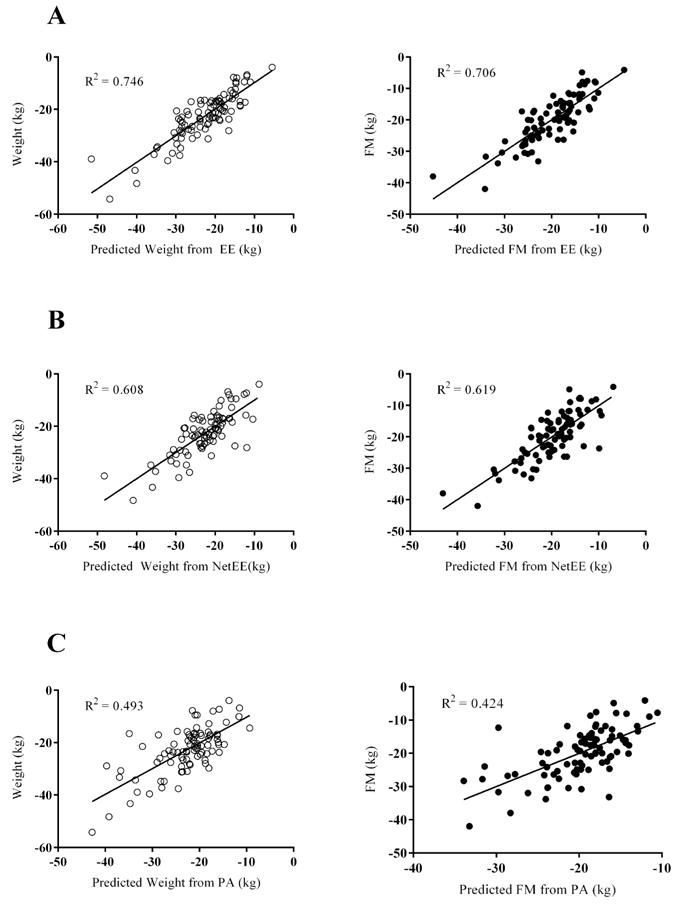
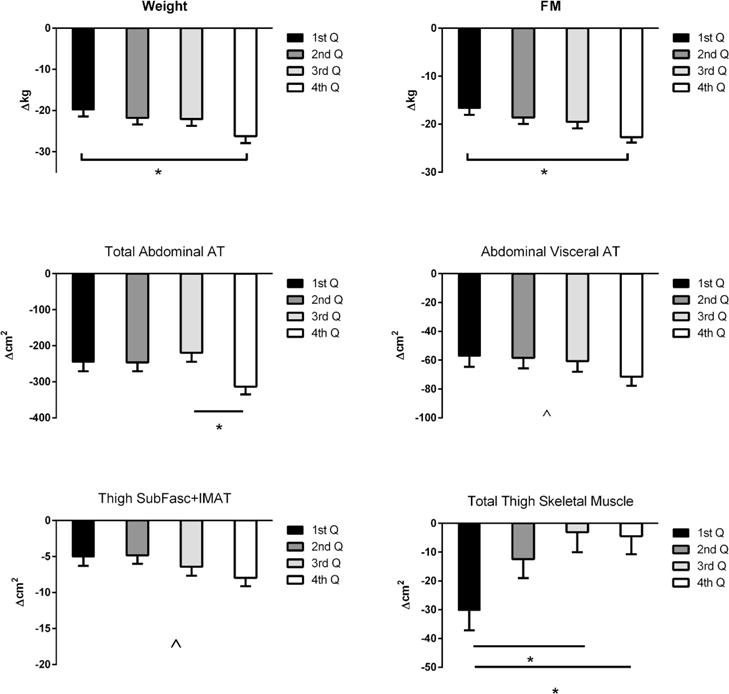
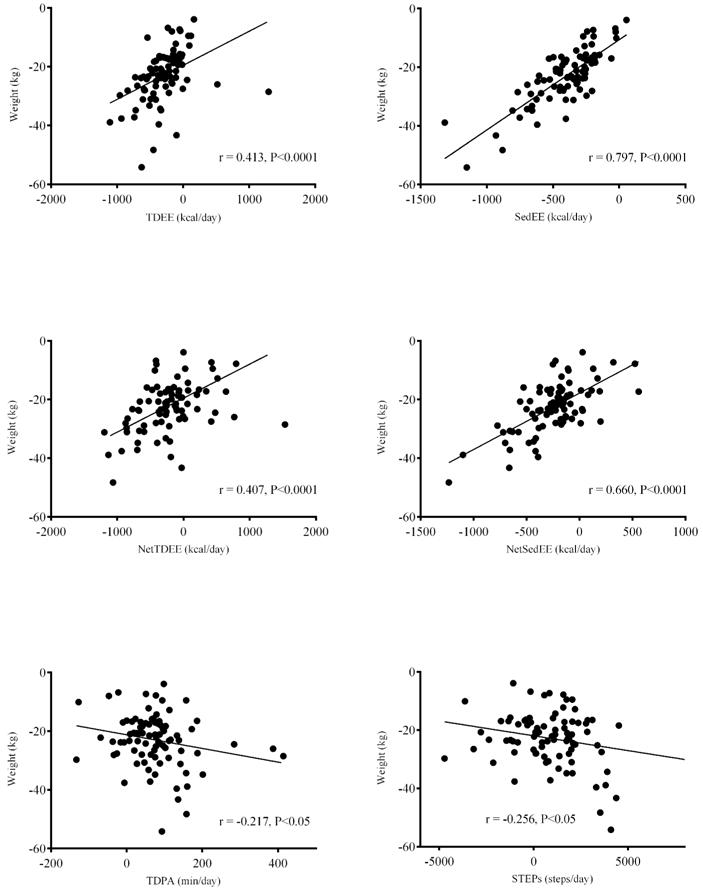
Patients in the highest quartiles of steps per day change lost more FM (3rd = -19.5 kg and 4th = -22.7 kg, P < 0.05) and abdominal adipose tissue (4th = -313 cm , P < 0.05), maintained skeletal muscle mass (3rd = -3.1 cm and 4th = -4.5 cm , P < 0.05), and had greater reductions in resting metabolic rate. Decreases in sedentary EE and increases in light EE and age were significant predictors of both Δweight and ΔFM (R = 73.8% and R = 70.6%, respectively).
Nondiabetic patients who perform higher, yet still modest, amounts of PA following RYGB have greater energy deficits and lose more weight and FM, while maintaining higher skeletal muscle mass.
本研究调查了Roux-en-Y胃旁路术(RYGB)后患者的身体活动时间(PA)和能量消耗(EE)与体重及脂肪量(FM)减少之间的关联。
96例非糖尿病患者纳入本分析。RYGB术后患者被随机分为两种治疗方案之一:为期6个月的运动训练计划(RYBG+EX)或生活方式教育课程(RYGB)。通过双能X线吸收法和计算机断层扫描评估身体成分。PA和EE的组成部分通过多感官设备进行量化。根据每日步数变化的四分位数探讨PA和EE与体重减轻及身体成分之间的剂量反应关系。
每日步数变化处于最高四分位数的患者减少了更多的FM(第3四分位数=-19.5 kg,第4四分位数=-22.7 kg,P<0.05)和腹部脂肪组织(第4四分位数=-313 cm,P<0.05),维持了骨骼肌质量(第3四分位数=-3.1 cm,第4四分位数=-4.5 cm,P<0.05),并且静息代谢率降低幅度更大。久坐EE的降低、轻度EE的增加以及年龄是体重变化量(Δ体重)和FM变化量(ΔFM)的显著预测因素(R分别为73.8%和70.6%)。
RYGB术后进行较高但仍适度PA量的非糖尿病患者能量亏空更大,体重和FM减轻更多,同时维持较高的骨骼肌质量。