Valdisser Paula A M R, Pereira Wendell J, Almeida Filho Jâneo E, Müller Bárbara S F, Coelho Gesimária R C, de Menezes Ivandilson P P, Vianna João P G, Zucchi Maria I, Lanna Anna C, Coelho Alexandre S G, de Oliveira Jaison P, Moraes Alessandra da Cunha, Brondani Claudio, Vianello Rosana P
Embrapa Arroz e Feijão (CNPAF), Santo Antônio de Goiás, Goiânia, GO, Brazil.
Programa de Pós-Graduação em Genética e Biologia Molecular, Universidade Estadual de Campinas (UNICAMP), Campinas, SP, Brazil.
BMC Genomics. 2017 May 30;18(1):423. doi: 10.1186/s12864-017-3805-4.
Common bean is a legume of social and nutritional importance as a food crop, cultivated worldwide especially in developing countries, accounting for an important source of income for small farmers. The availability of the complete sequences of the two common bean genomes has dramatically accelerated and has enabled new experimental strategies to be applied for genetic research. DArTseq has been widely used as a method of SNP genotyping allowing comprehensive genome coverage with genetic applications in common bean breeding programs.
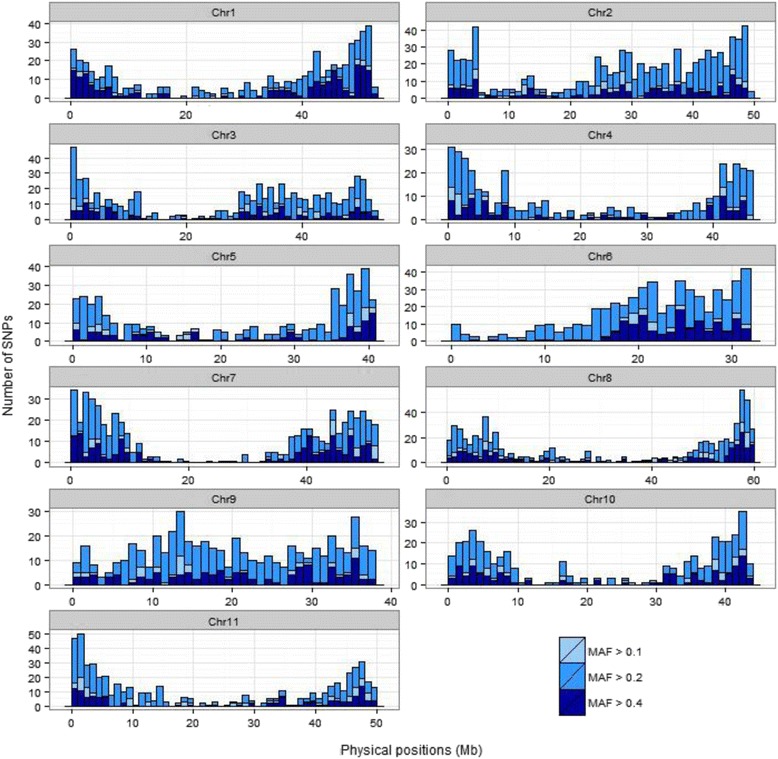
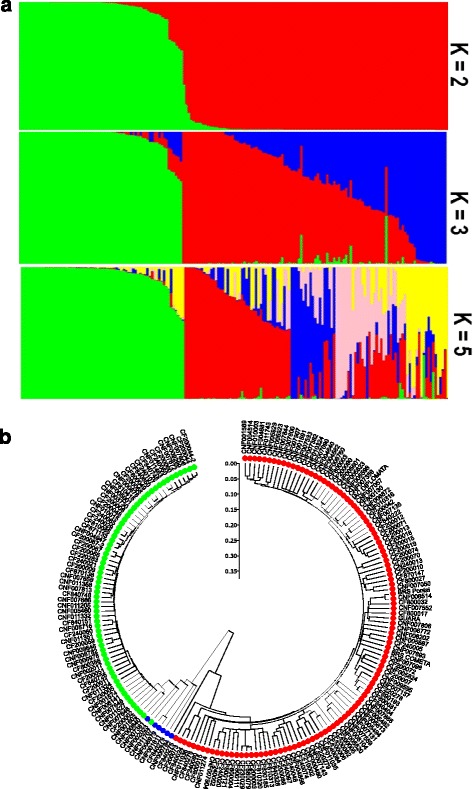
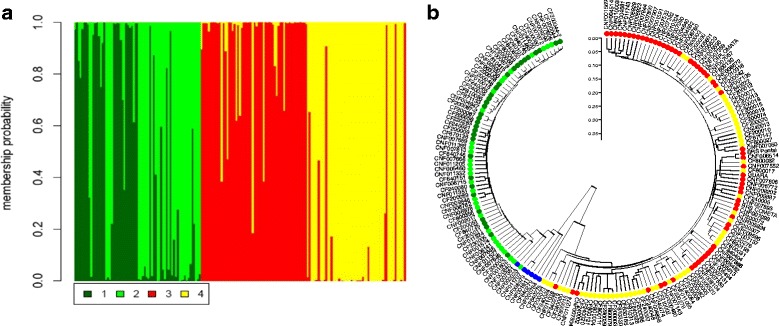
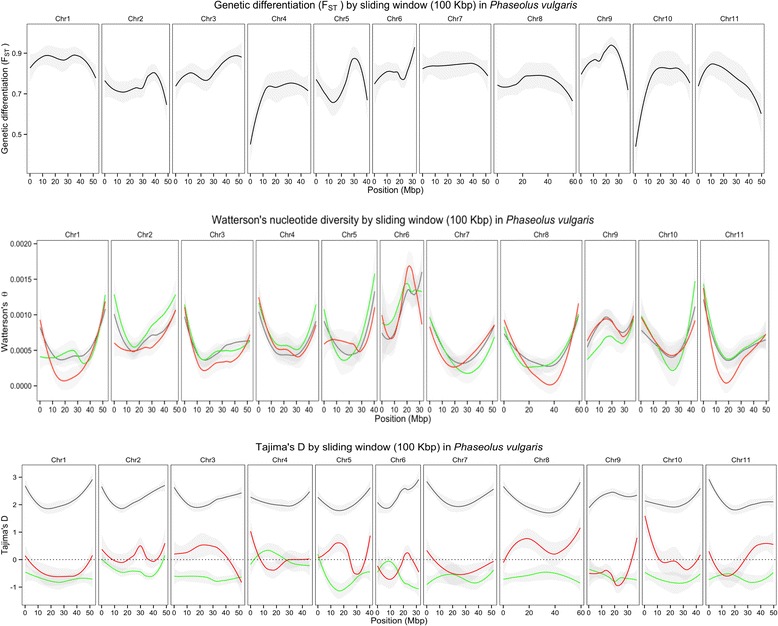
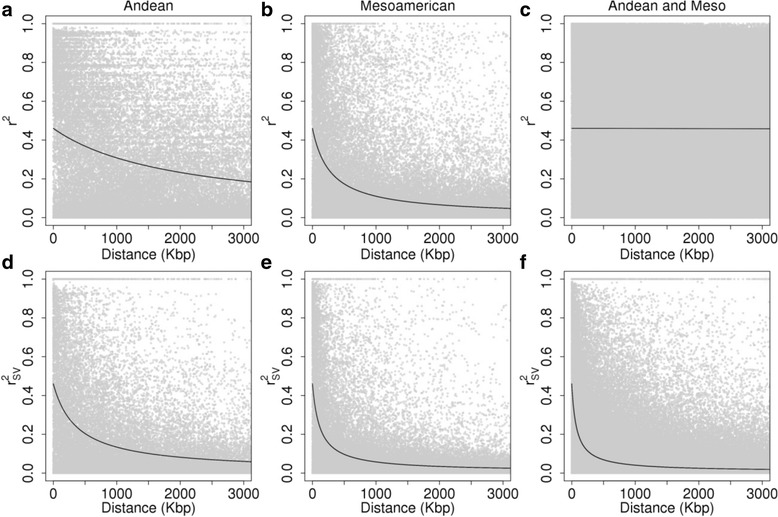
Using this technology, 6286 SNPs (1 SNP/86.5 Kbp) were genotyped in genic (43.3%) and non-genic regions (56.7%). Genetic subdivision associated to the common bean gene pools (K = 2) and related to grain types (K = 3 and K = 5) were reported. A total of 83% and 91% of all SNPs were polymorphic within the Andean and Mesoamerican gene pools, respectively, and 26% were able to differentiate the gene pools. Genetic diversity analysis revealed an average H of 0.442 for the whole collection, 0.102 for Andean and 0.168 for Mesoamerican gene pools (F = 0.747 between gene pools), 0.440 for the group of cultivars and lines, and 0.448 for the group of landrace accessions (F = 0.002 between cultivar/line and landrace groups). The SNP effects were predicted with predominance of impact on non-coding regions (77.8%). SNPs under selection were identified within gene pools comparing landrace and cultivar/line germplasm groups (Andean: 18; Mesoamerican: 69) and between the gene pools (59 SNPs), predominantly on chromosomes 1 and 9. The LD extension estimate corrected for population structure and relatedness (r) was ~ 88 kbp, while for the Andean gene pool was ~ 395 kbp, and for the Mesoamerican was ~ 130 kbp.
For common bean, DArTseq provides an efficient and cost-effective strategy of generating SNPs for large-scale genome-wide studies. The DArTseq resulted in an operational panel of 560 polymorphic SNPs in linkage equilibrium, providing high genome coverage. This SNP set could be used in genotyping platforms with many applications, such as population genetics, phylogeny relation between common bean varieties and support to molecular breeding approaches.
普通菜豆作为一种具有社会和营养重要性的粮食作物,是一种豆科植物,在全球范围内广泛种植,尤其是在发展中国家,是小农户重要的收入来源。两种普通菜豆基因组完整序列的可得性极大地加速了研究进程,并使新的实验策略得以应用于基因研究。DArTseq已被广泛用作单核苷酸多态性(SNP)基因分型的方法,可实现普通菜豆育种计划中遗传应用的全面基因组覆盖。
利用该技术,在基因区域(43.3%)和非基因区域(56.7%)对6286个SNP(1个SNP/86.5千碱基对)进行了基因分型。报道了与普通菜豆基因库(K = 2)以及与籽粒类型相关(K = 3和K = 5)的遗传细分情况。在安第斯基因库和中美洲基因库中,分别有83%和91%的所有SNP具有多态性,26%的SNP能够区分这两个基因库。遗传多样性分析显示,整个样本集的平均杂合度(H)为0.442,安第斯基因库为0.102,中美洲基因库为0.168(基因库间的Fst = 0.747),品种和品系组为0.440,地方品种组为0.448(品种/品系与地方品种组间的Fst = 0.002)。预测的SNP效应主要影响非编码区域(77.8%)。在比较地方品种和品种/品系种质组的基因库内(安第斯:18个;中美洲:69个)以及基因库间(59个SNP)鉴定出了受选择的SNP,主要位于第1和第9号染色体上。校正群体结构和相关性(r)后的连锁不平衡(LD)延伸估计值约为88千碱基对,而安第斯基因库约为395千碱基对,中美洲基因库约为130千碱基对。
对于普通菜豆,DArTseq为大规模全基因组研究生成SNP提供了一种高效且经济有效的策略。DArTseq产生了一个由560个处于连锁平衡的多态性SNP组成的实用面板,提供了高基因组覆盖度。该SNP集可用于多种应用的基因分型平台,如群体遗传学、普通菜豆品种间的系统发育关系以及支持分子育种方法。