Tan Kefang, Zheng Ke, Li Daiye, Lu Haiyuan, Wang Siqi, Sun Xuan
Institute of Reproductive and Stem Cell Engineering, School of Basic Medical Sciences, Central South University, Changsha, Hunan, China.
National Engineering and Research Center of Human Stem Cell, Changsha, Hunan, China.
PLoS One. 2017 May 31;12(5):e0178624. doi: 10.1371/journal.pone.0178624. eCollection 2017.
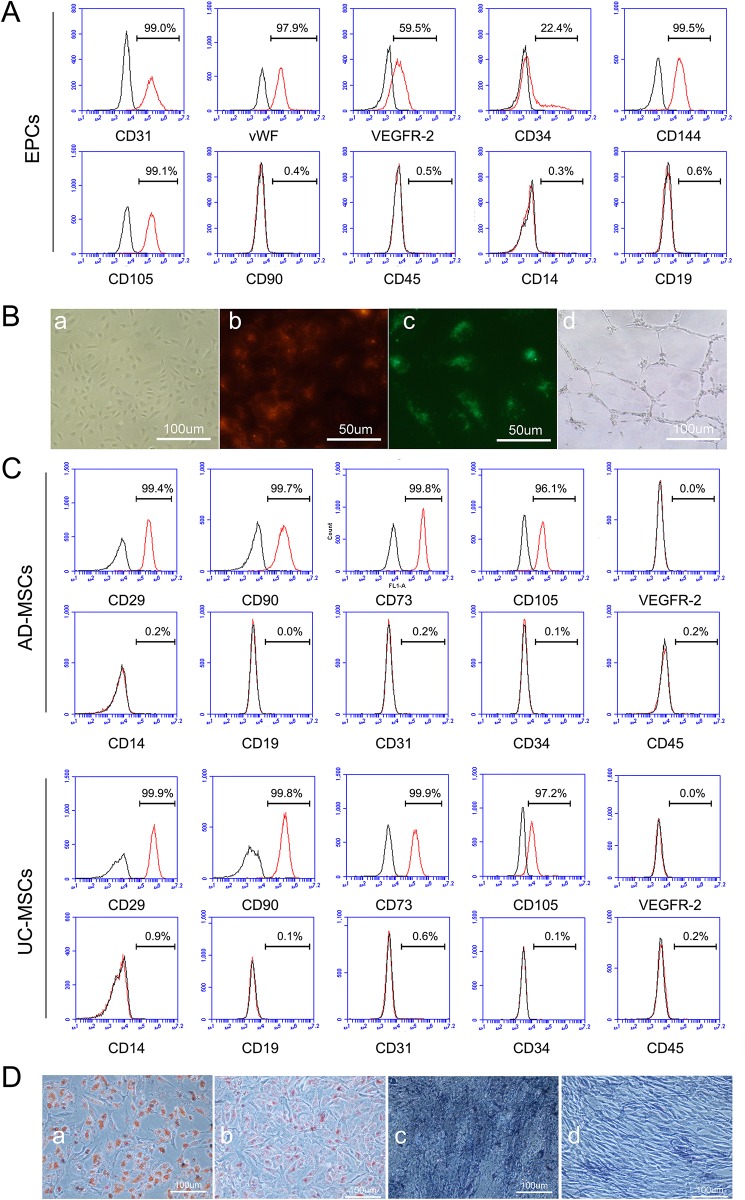
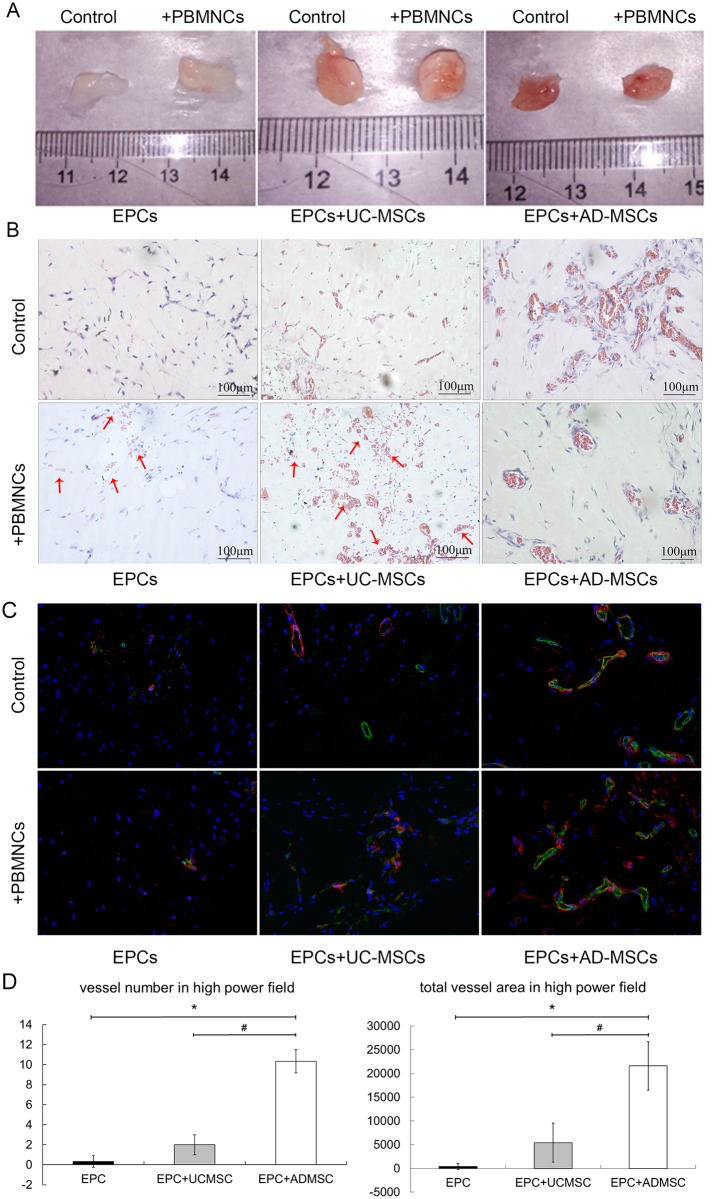
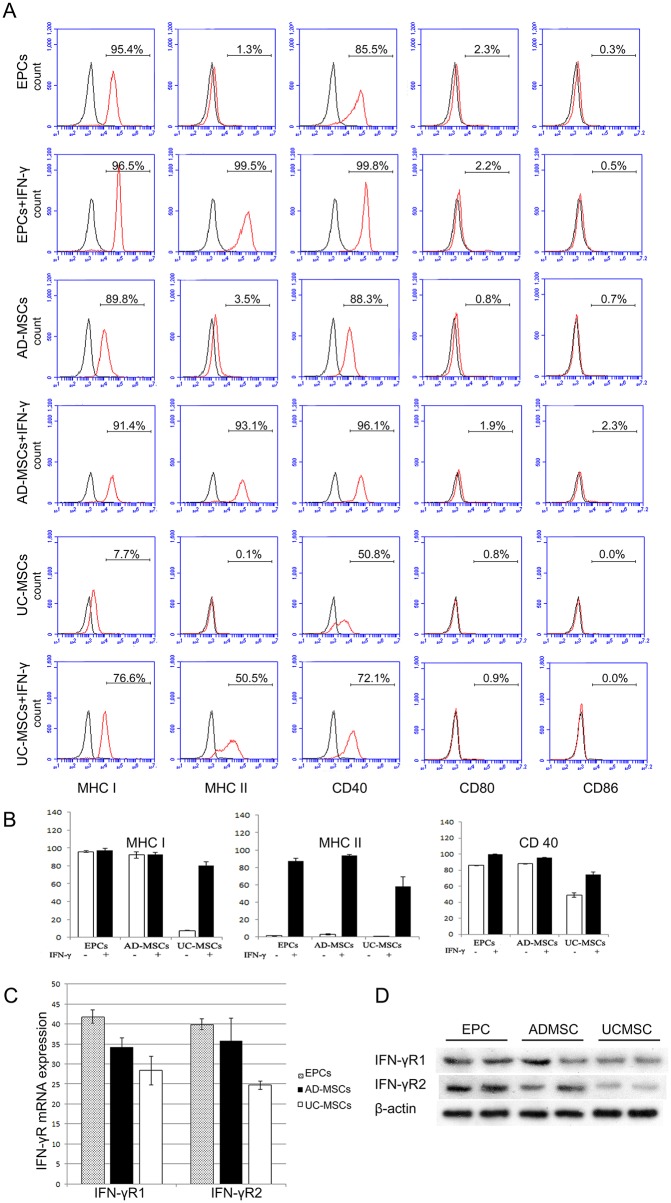
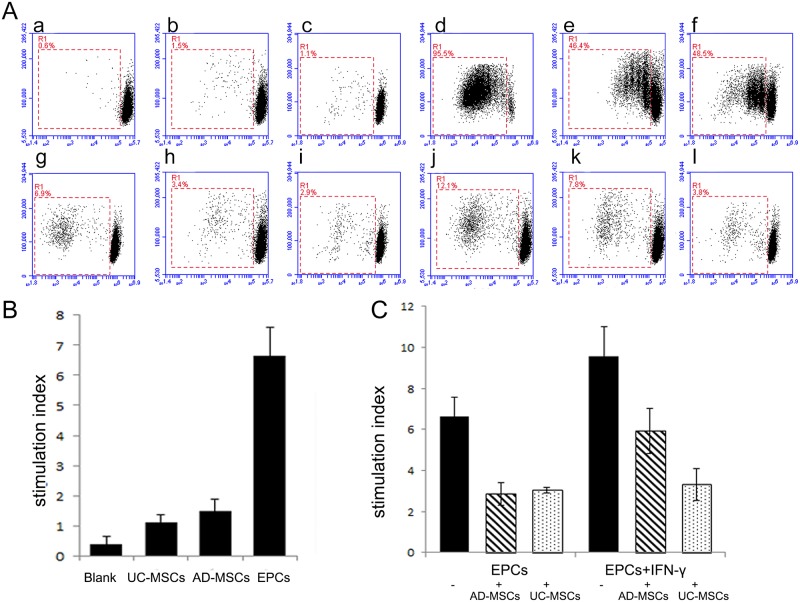
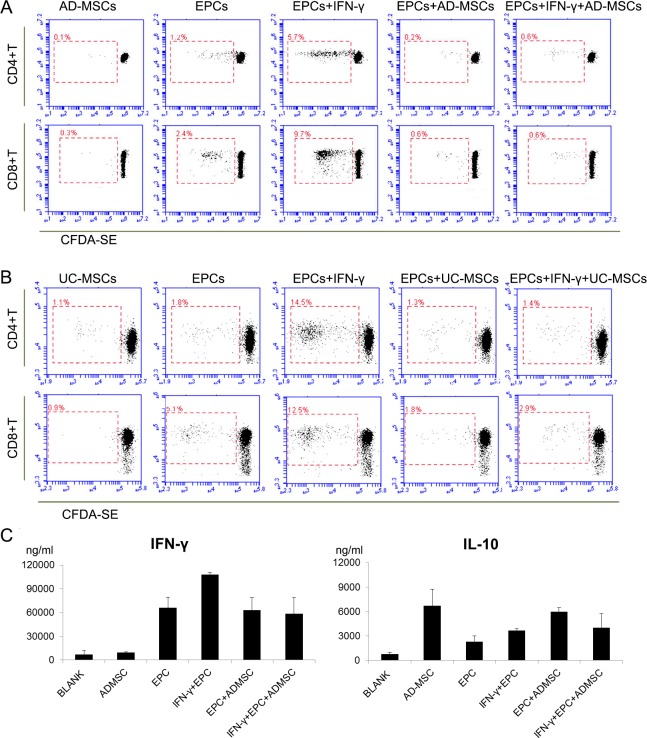
The application of autologous endothelial progenitor cell (EPC) transplantation is a promising approach in therapeutic cardiovascular diseases and ischemic diseases. In this study, we compared the immunogenicity of EPCs, adipose tissue (AD)-derived mesenchymal stem cells (MSCs) and umbilical cord (UC)-derived MSCs by flow cytometry and the mixed lymphocyte reaction. The impact of AD-MSCs and UC-MSCs on the immunogenicity of EPCs was analyzed by the mixed lymphocyte reaction and cytokine secretion in vitro and was further tested by allogenic peripheral blood mononuclear cell (PBMC) induced immuno-rejection on a cell/matrigel graft in an SCID mouse model. EPCs and AD-MSCs express higher levels of MHC class I than UC-MSCs. All three kinds of cells are negative for MHC class II. UC-MSCs also express lower levels of IFN-γ receptor mRNA when compared with EPCs and AD-MSCs. EPCs can stimulate higher rates of proliferation of lymphocytes than AD-MSCs and UC-MSCs. Furthermore, AD-MSCs and UC-MSCs can modulate immune response and inhibit lymphocyte proliferation induced by EPCs, mainly through inhibition of the proliferation of CD8+ T cells. Compared with UC-MSCs, AD-MSCs can significantly improve vessel formation and maintain the integrity of neovascular structure in an EPC+MSC/matrigel graft in SCID mice, especially under allo-PBMC induced immuno-rejection. In conclusion, our study shows that AD-MSC is a powerful candidate to minimize immunological rejection and improve vessel formation in EPC transplantation treatment.
自体内皮祖细胞(EPC)移植的应用是治疗心血管疾病和缺血性疾病的一种很有前景的方法。在本研究中,我们通过流式细胞术和混合淋巴细胞反应比较了EPC、脂肪组织(AD)来源的间充质干细胞(MSC)和脐带(UC)来源的MSC的免疫原性。通过混合淋巴细胞反应和体外细胞因子分泌分析AD-MSC和UC-MSC对EPC免疫原性的影响,并在SCID小鼠模型中通过同种异体外周血单个核细胞(PBMC)诱导的免疫排斥对细胞/基质胶移植物进行进一步检测。EPC和AD-MSC表达的MHC I类分子水平高于UC-MSC。这三种细胞的MHC II类分子均为阴性。与EPC和AD-MSC相比,UC-MSC表达的IFN-γ受体mRNA水平也较低。EPC刺激淋巴细胞增殖的速率高于AD-MSC和UC-MSC。此外,AD-MSC和UC-MSC可调节免疫反应并抑制EPC诱导的淋巴细胞增殖,主要是通过抑制CD8+T细胞的增殖。与UC-MSC相比,AD-MSC可显著改善SCID小鼠EPC+MSC/基质胶移植物中的血管形成并维持新生血管结构的完整性,尤其是在同种异体PBMC诱导的免疫排斥情况下。总之,我们的研究表明,AD-MSC是在EPC移植治疗中最小化免疫排斥并改善血管形成的有力候选者。