Quirós Pedro M, Prado Miguel A, Zamboni Nicola, D'Amico Davide, Williams Robert W, Finley Daniel, Gygi Steven P, Auwerx Johan
Laboratory for Integrative and Systems Physiology, Ecole Polytechnique Fédérale de Lausanne, Lausanne, Switzerland.
Department of Cell Biology, Harvard Medical School, Boston, MA.
J Cell Biol. 2017 Jul 3;216(7):2027-2045. doi: 10.1083/jcb.201702058. Epub 2017 May 31.
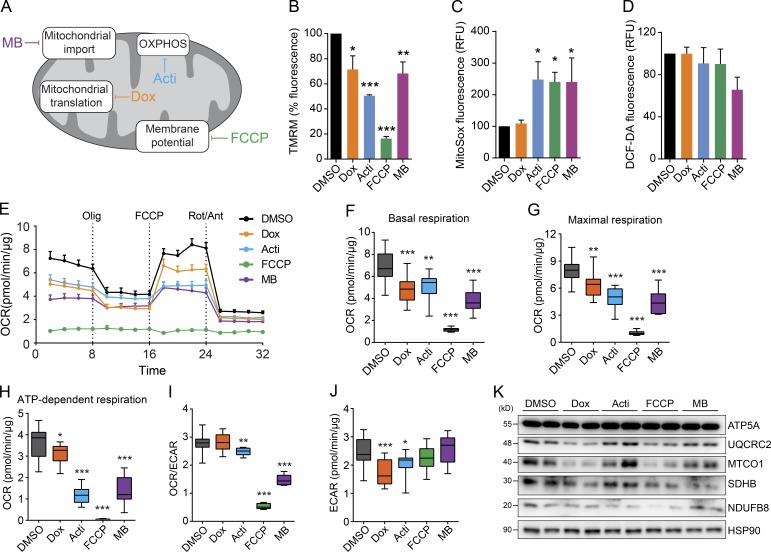
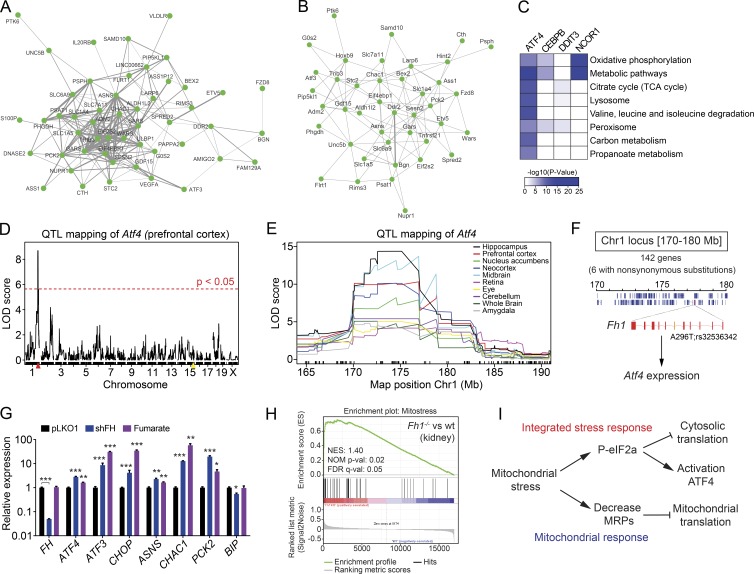
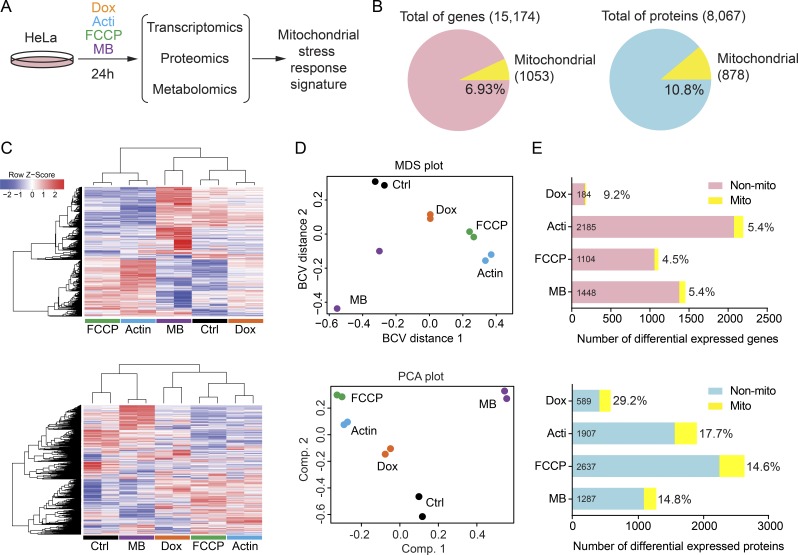
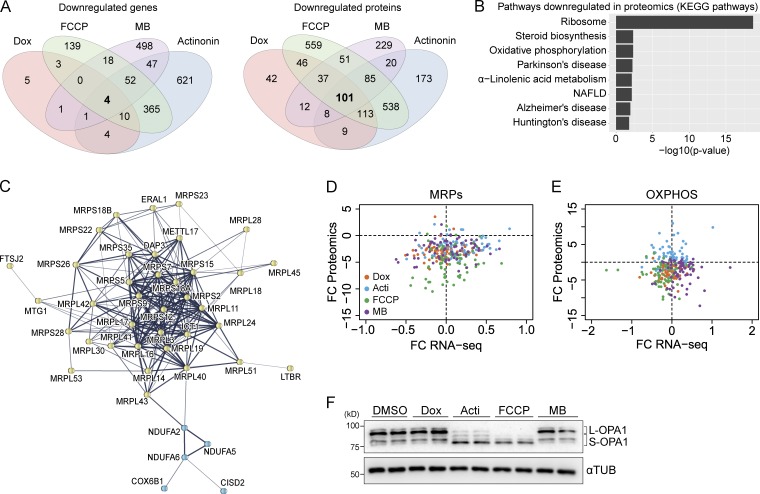
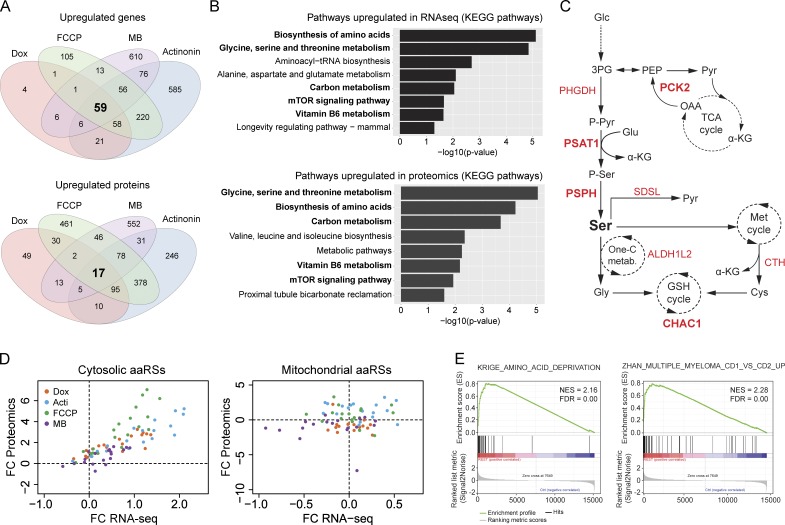
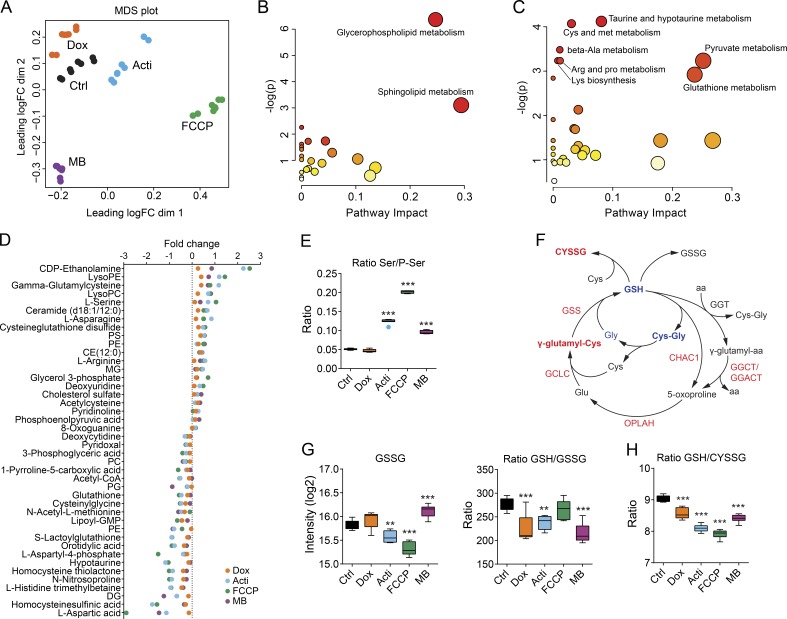
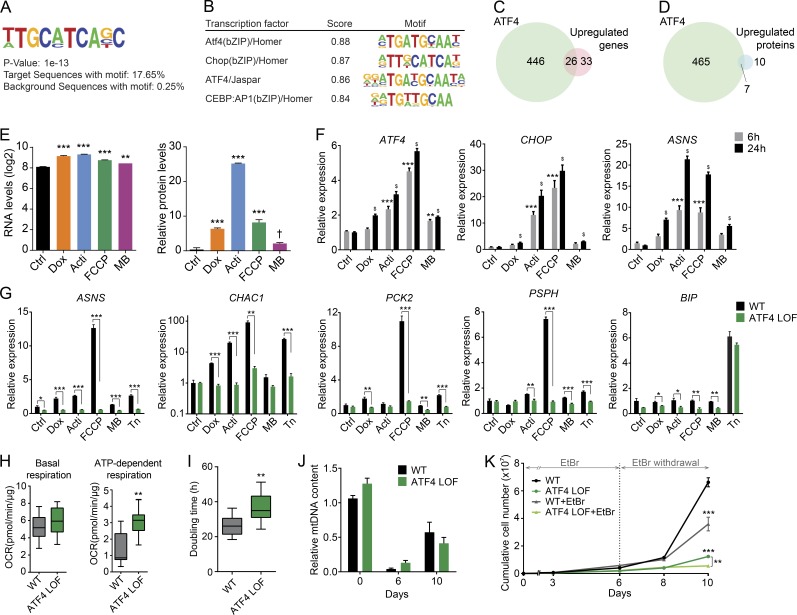
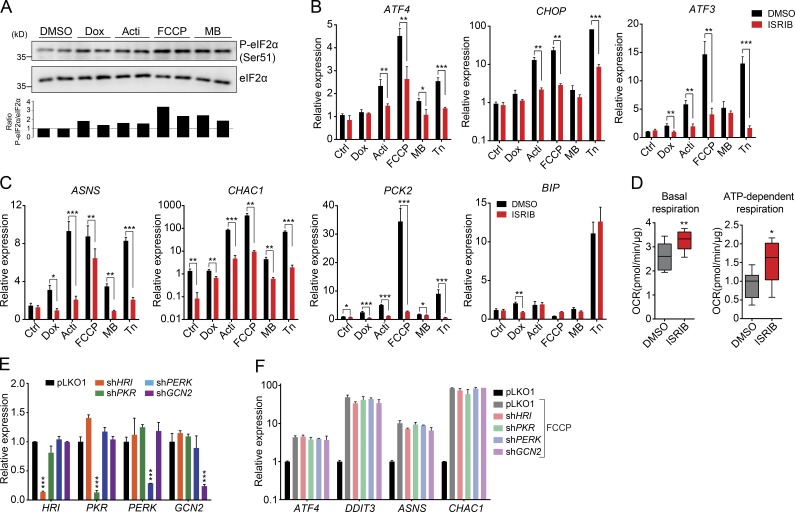
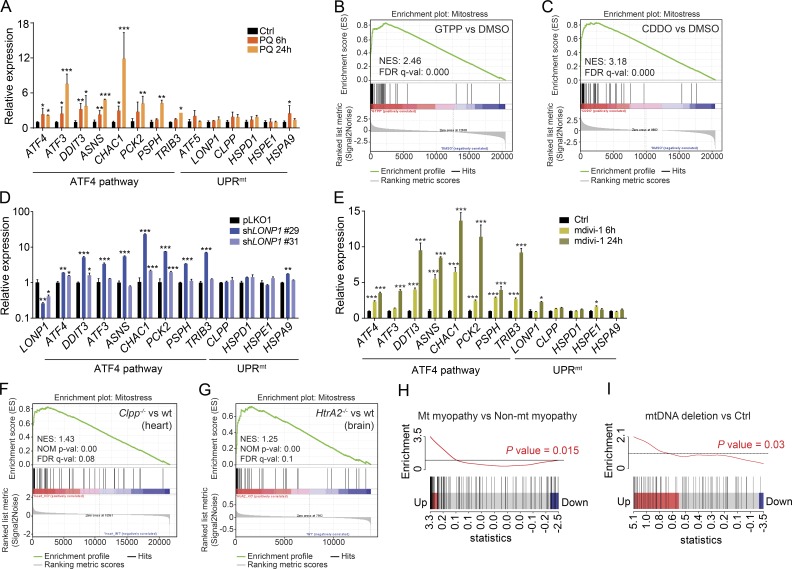
Mitochondrial stress activates a mitonuclear response to safeguard and repair mitochondrial function and to adapt cellular metabolism to stress. Using a multiomics approach in mammalian cells treated with four types of mitochondrial stressors, we identify activating transcription factor 4 (ATF4) as the main regulator of the stress response. Surprisingly, canonical mitochondrial unfolded protein response genes mediated by ATF5 are not activated. Instead, ATF4 activates the expression of cytoprotective genes, which reprogram cellular metabolism through activation of the integrated stress response (ISR). Mitochondrial stress promotes a local proteostatic response by reducing mitochondrial ribosomal proteins, inhibiting mitochondrial translation, and coupling the activation of the ISR with the attenuation of mitochondrial function. Through a trans-expression quantitative trait locus analysis, we provide genetic evidence supporting a role for Fh1 in the control of Atf4 expression in mammals. Using gene expression data from mice and humans with mitochondrial diseases, we show that the ATF4 pathway is activated in vivo upon mitochondrial stress. Our data illustrate the value of a multiomics approach to characterize complex cellular networks and provide a versatile resource to identify new regulators of mitochondrial-related diseases.
线粒体应激激活一种线粒体-细胞核反应,以保护和修复线粒体功能,并使细胞代谢适应应激。通过对用四种类型线粒体应激源处理的哺乳动物细胞采用多组学方法,我们确定激活转录因子4(ATF4)是应激反应的主要调节因子。令人惊讶的是,由ATF5介导的经典线粒体未折叠蛋白反应基因未被激活。相反,ATF4激活细胞保护基因的表达,这些基因通过激活综合应激反应(ISR)来重新编程细胞代谢。线粒体应激通过减少线粒体核糖体蛋白、抑制线粒体翻译以及将ISR的激活与线粒体功能的减弱相耦合,促进局部蛋白质稳态反应。通过反式表达定量性状基因座分析,我们提供了遗传证据,支持Fh1在哺乳动物中控制Atf4表达的作用。利用来自患有线粒体疾病的小鼠和人类的基因表达数据,我们表明ATF4途径在体内线粒体应激时被激活。我们的数据说明了多组学方法在表征复杂细胞网络方面的价值,并提供了一个通用资源来识别线粒体相关疾病的新调节因子。