Deak Terrence, Kudinova Anastacia, Lovelock Dennis F, Gibb Brandon E, Hennessy Michael B
Center for Affective Science and Department of Psychology, Binghamton University-State University of New York (SUNY), Binghamton, New York, USA.
Department of Psychology, Wright State University, Dayton, Ohio, USA.
Dialogues Clin Neurosci. 2017 Mar;19(1):37-53. doi: 10.31887/DCNS.2017.19.1/tdeak.
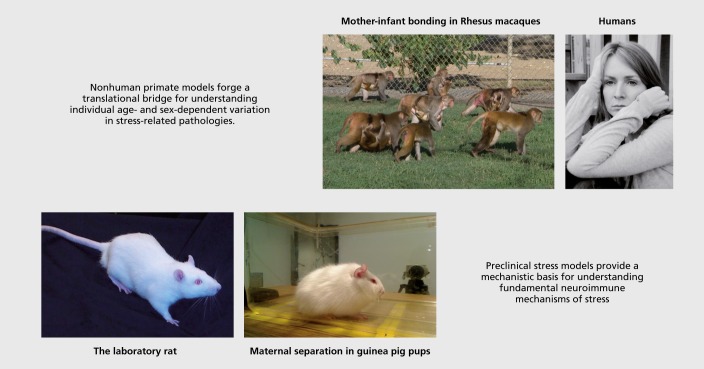
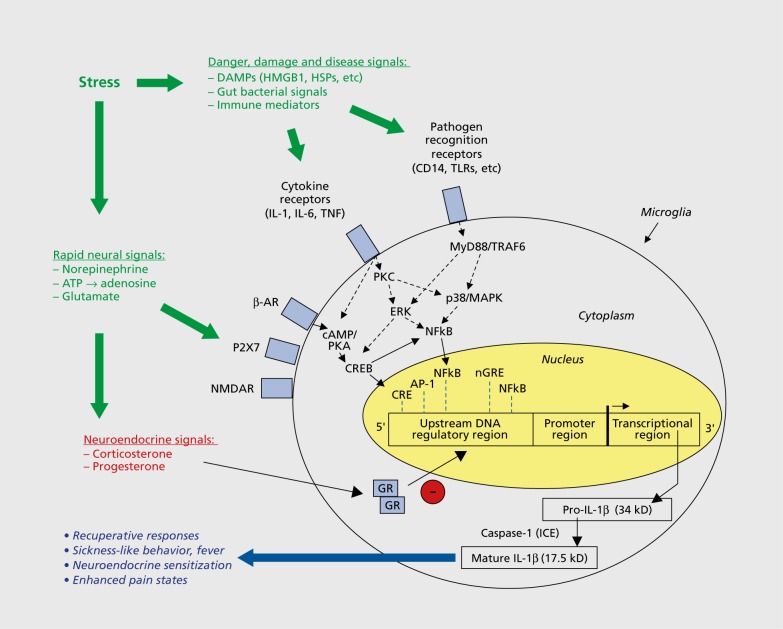
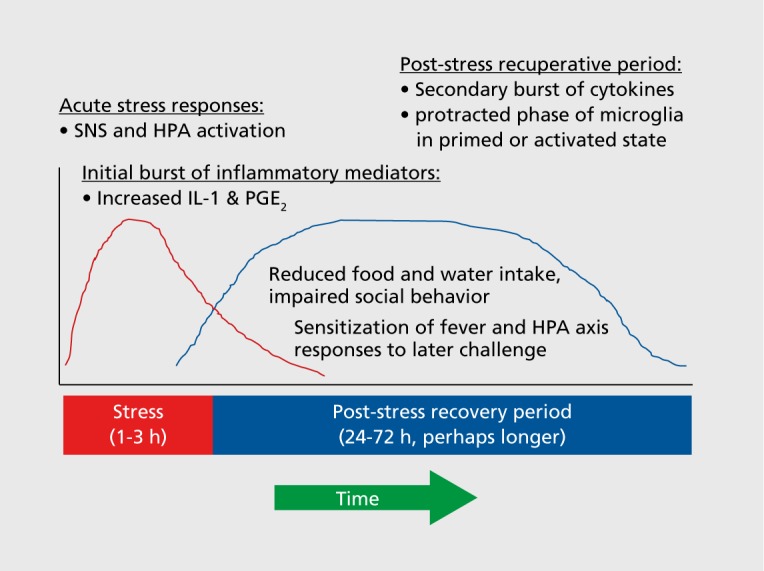
The relationship between stress challenges and adverse health outcomes, particularly for the development of affective disorders, is now well established. The highly conserved neuroimmune mechanisms through which responses to stressors are transcribed into effects on males and females have recently garnered much attention from researchers and clinicians alike. The use of animal models, from mice to guinea pigs to primates, has greatly increased our understanding of these mechanisms on the molecular, cellular, and behavioral levels, and research in humans has identified particular brain regions and connections of interest, as well as associations between stress-induced inflammation and psychiatric disorders. This review brings together findings from multiple species in order to better understand how the mechanisms of the neuroimmune response to stress contribute to stress-related psychopathologies, such as major depressive disorder, schizophrenia, and bipolar disorder.
压力挑战与不良健康后果之间的关系,尤其是对情感障碍发展的影响,现已得到充分证实。对应激源的反应通过高度保守的神经免疫机制转化为对男性和女性的影响,这一机制最近受到了研究人员和临床医生的广泛关注。从小鼠到豚鼠再到灵长类动物的动物模型的使用,极大地增进了我们在分子、细胞和行为水平上对这些机制的理解,而对人类的研究则确定了特定的感兴趣的脑区和连接,以及应激诱导的炎症与精神疾病之间的关联。这篇综述汇集了来自多个物种的研究结果,以便更好地理解应激神经免疫反应的机制如何导致与压力相关的精神病理学,如重度抑郁症、精神分裂症和双相情感障碍。