Miyakoshi Leo M, Marques-Coelho Diego, De Souza Luiz E R, Lima Flavia R S, Martins Vilma R, Zanata Silvio M, Hedin-Pereira Cecilia
Biophysics Institute Carlos Chagas Filho, Federal University of Rio de JaneiroRio de Janeiro, Brazil.
Laboratory of Cellular NeuroAnatomy, Institute for Biomedical Sciences, Federal University of Rio de JaneiroRio de Janeiro, Brazil.
Front Cell Neurosci. 2017 May 17;11:138. doi: 10.3389/fncel.2017.00138. eCollection 2017.
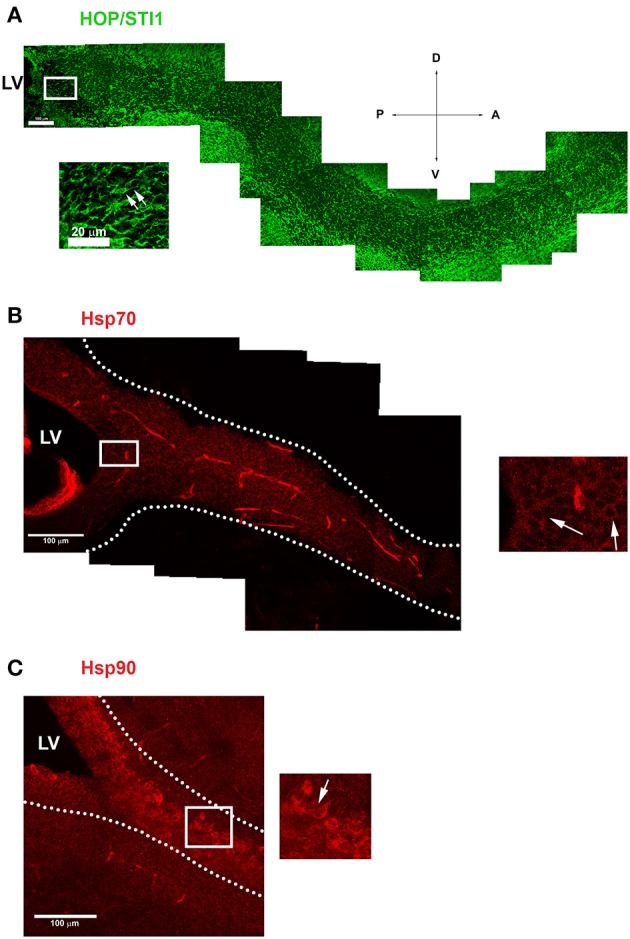
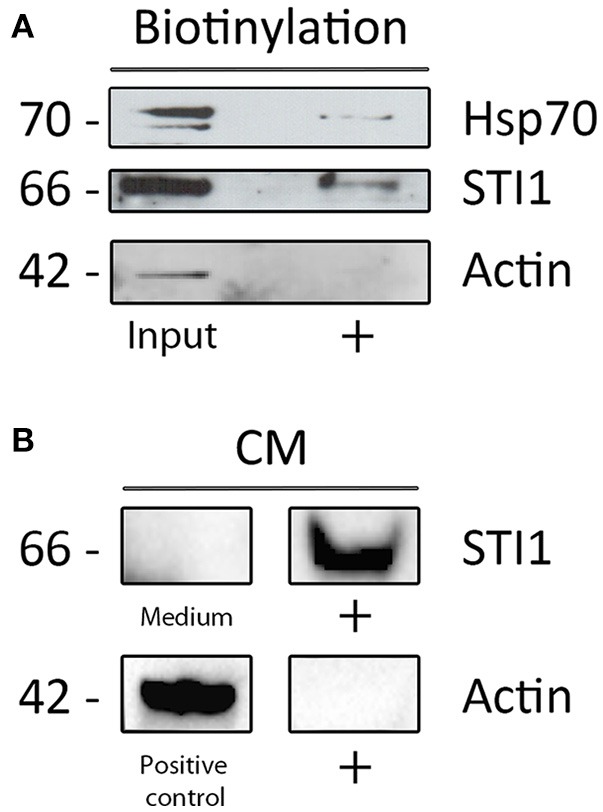
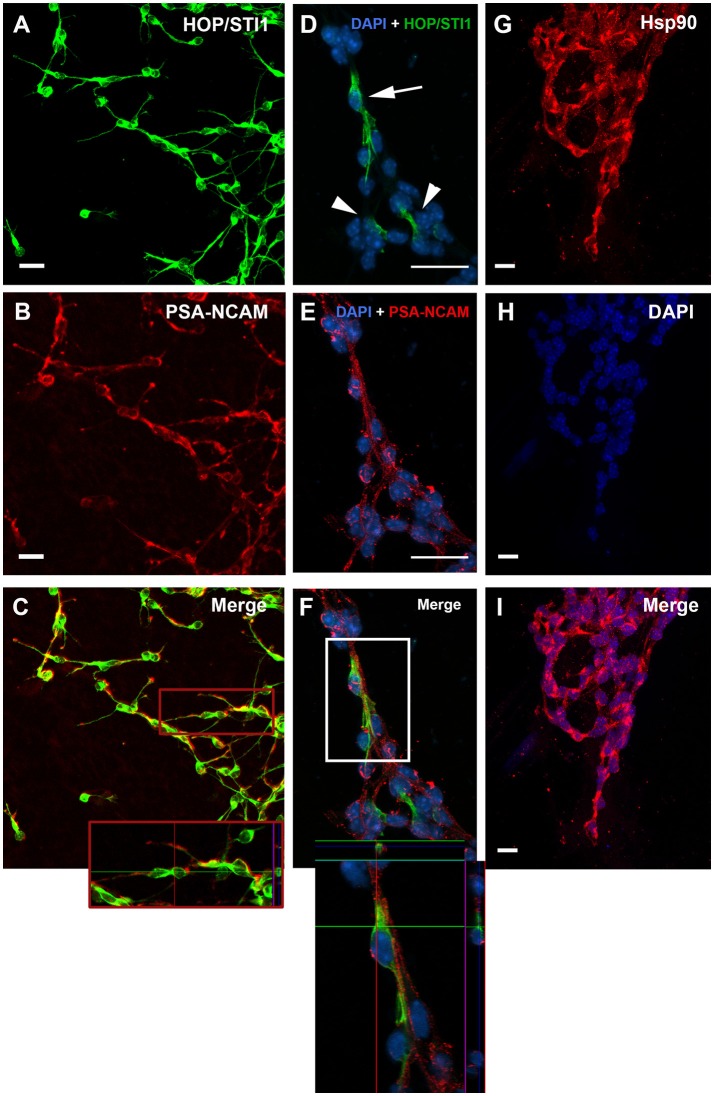
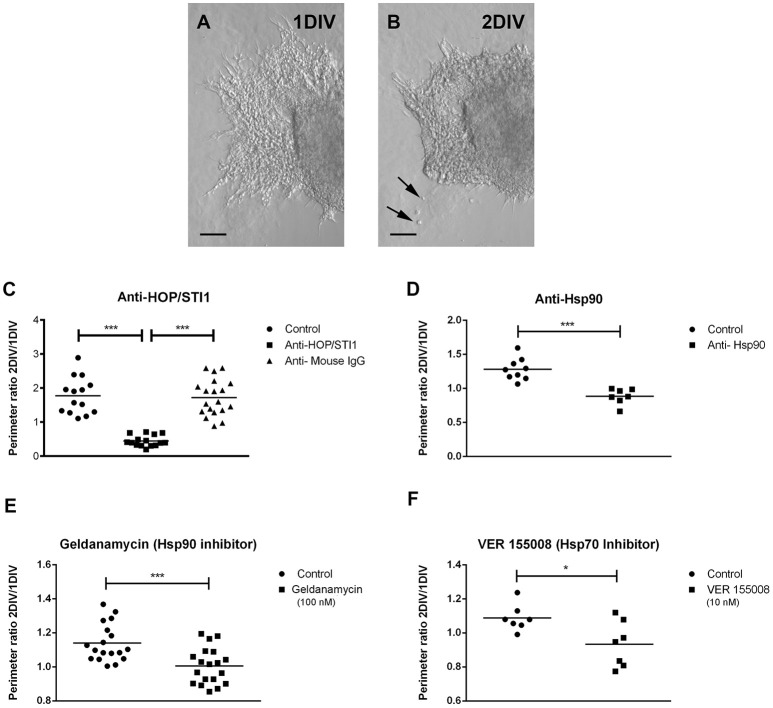
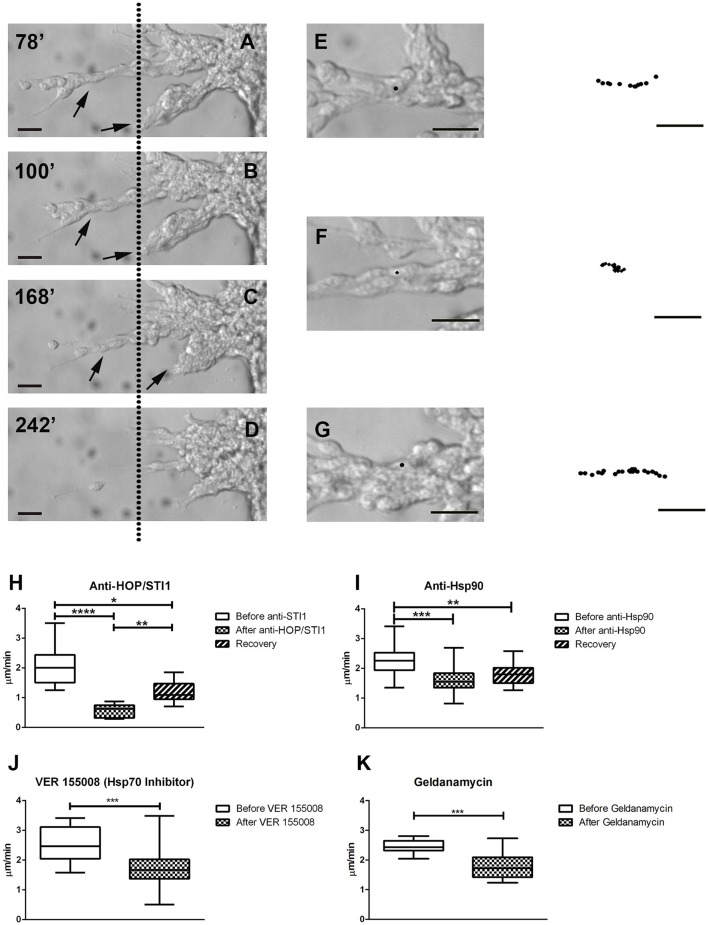
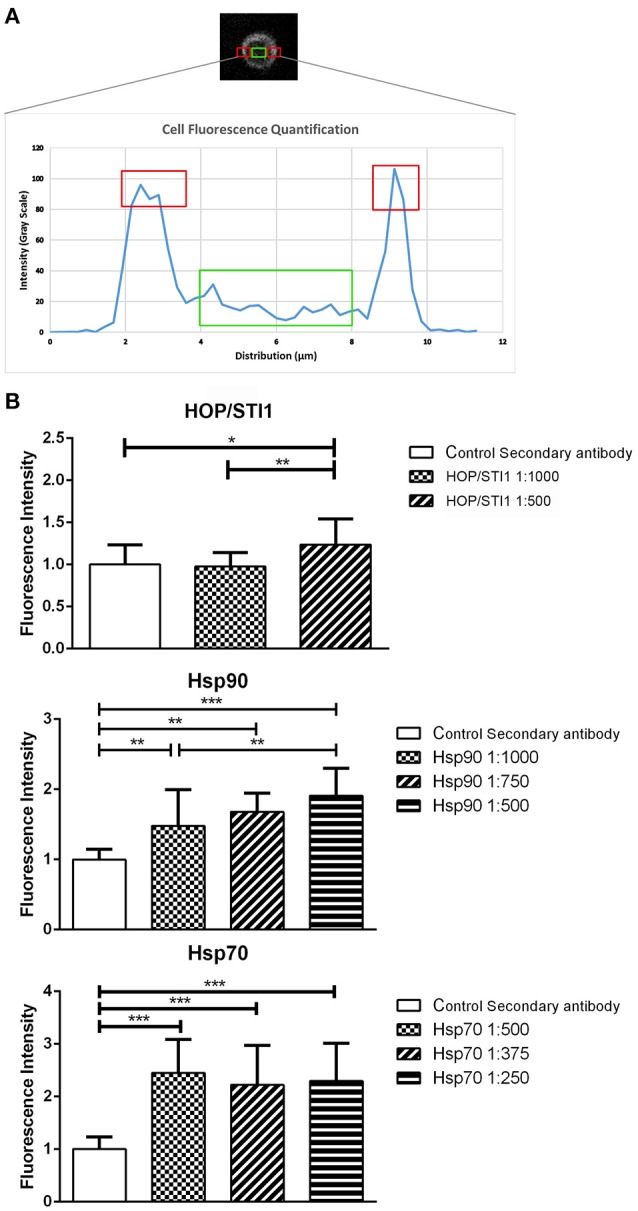
In most mammalian brains, the subventricular zone (SVZ) is a germinative layer that maintains neurogenic activity throughout adulthood. Neuronal precursors arising from this region migrate through the rostral migratory stream (RMS) and reach the olfactory bulbs where they differentiate and integrate into the local circuitry. Recently, studies have shown that heat shock proteins have an important role in cancer cell migration and blocking Hsp90 function was shown to hinder cell migration in the developing cerebellum. In this work, we hypothesize that chaperone complexes may have an important function regulating migration of neuronal precursors from the subventricular zone. Proteins from the Hsp90 complex are present in the postnatal SVZ as well as in the RMS. Using an SVZ explant model, we have demonstrated the expression of Hsp90 and Hop/STI1 by migrating neuroblasts. Treatment with antibodies against Hsp90 and co-chaperone Hop/STI1, as well as Hsp90 and Hsp70 inhibitors hinder neuroblast chain migration. Time-lapse videomicroscopy analysis revealed that cell motility and average migratory speed was decreased after exposure to both antibodies and inhibitors. Antibodies recognizing Hsp90, Hsp70, and Hop/STI1 were found bound to the membranes of cells from primary SVZ cultures and biotinylation assays demonstrated that Hsp70 and Hop/STI1 could be found on the external leaflet of neuroblast membranes. The latter could also be detected in conditioned medium samples obtained from cultivated SVZ cells. Our results suggest that chaperones Hsp90, Hsp70, and co-chaperone Hop/STI1, components of the Hsp90 complex, regulate SVZ neuroblast migration in a concerted manner through an extracellular mechanism.
在大多数哺乳动物的大脑中,脑室下区(SVZ)是一个生发层,在成年期维持神经发生活动。源自该区域的神经元前体细胞通过吻侧迁移流(RMS)迁移,到达嗅球并在那里分化并整合到局部神经回路中。最近,研究表明热休克蛋白在癌细胞迁移中起重要作用,并且已证明阻断Hsp90功能会阻碍发育中小脑的细胞迁移。在这项工作中,我们假设伴侣蛋白复合物可能在调节神经元前体细胞从脑室下区的迁移中具有重要功能。Hsp90复合物中的蛋白质存在于出生后的SVZ以及RMS中。使用SVZ外植体模型,我们已经证明了迁移的神经母细胞表达Hsp90和Hop/STI1。用抗Hsp90和共伴侣蛋白Hop/STI1的抗体以及Hsp90和Hsp70抑制剂进行处理会阻碍神经母细胞链迁移。延时视频显微镜分析显示,暴露于抗体和抑制剂后,细胞活力和平均迁移速度均降低。发现识别Hsp90、Hsp70和Hop/STI1的抗体与原代SVZ培养细胞的细胞膜结合,生物素化分析表明Hsp70和Hop/STI1可以在神经母细胞膜的外小叶上找到。后者也可以在从培养的SVZ细胞获得的条件培养基样品中检测到。我们的结果表明,伴侣蛋白Hsp90、Hsp70和共伴侣蛋白Hop/STI1(Hsp90复合物的成分)通过细胞外机制协同调节SVZ神经母细胞的迁移。