Cheteh Emarndeena H, Augsten Martin, Rundqvist Helene, Bianchi Julie, Sarne Victoria, Egevad Lars, Bykov Vladimir Jn, Östman Arne, Wiman Klas G
Department of Oncology-Pathology, Cancer Center Karolinska (CCK), Karolinska Institutet, Stockholm, Sweden.
Division for Vascular Oncology and Metastasis, German Cancer Research Center, Heidelberg, Germany.
Cell Death Dis. 2017 Jun 1;8(6):e2848. doi: 10.1038/cddis.2017.225.
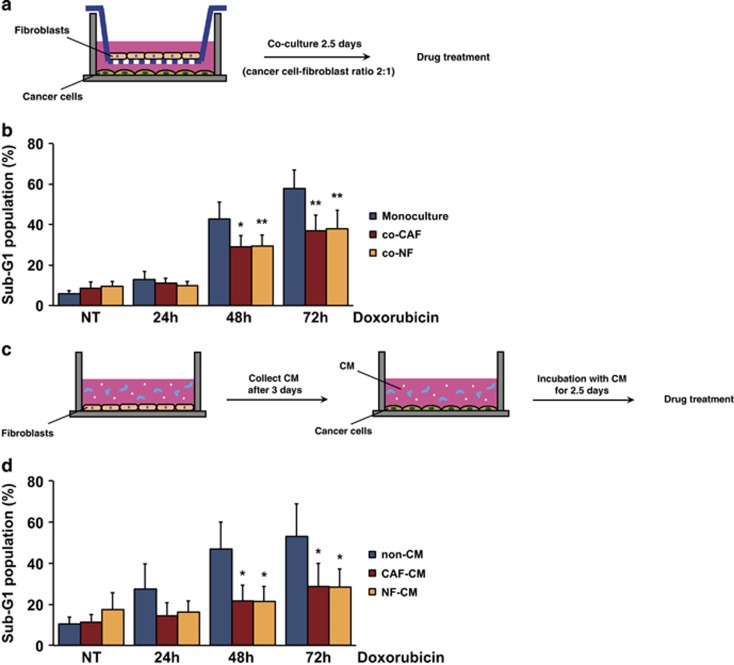
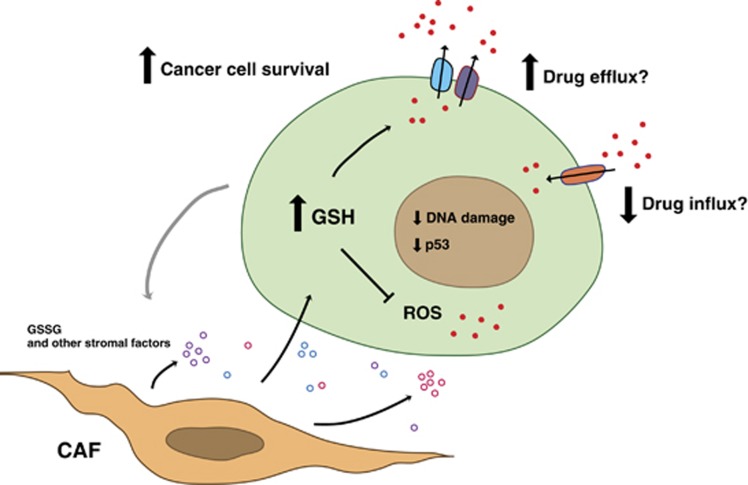
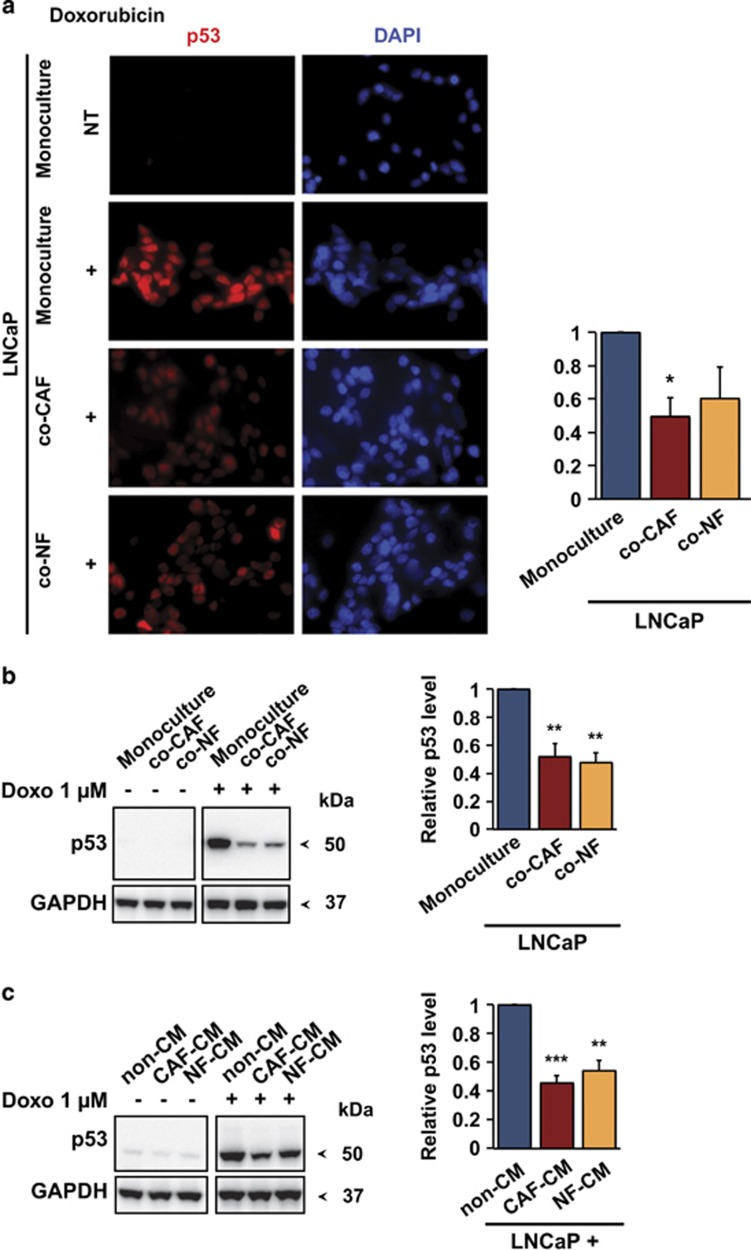
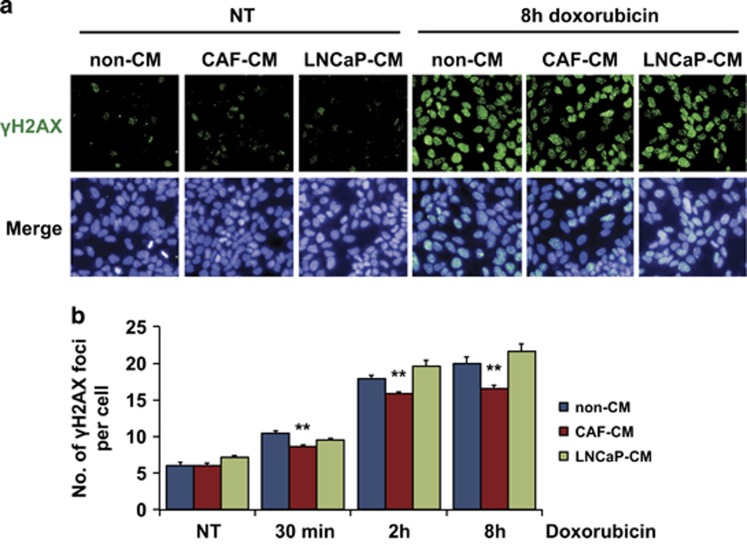
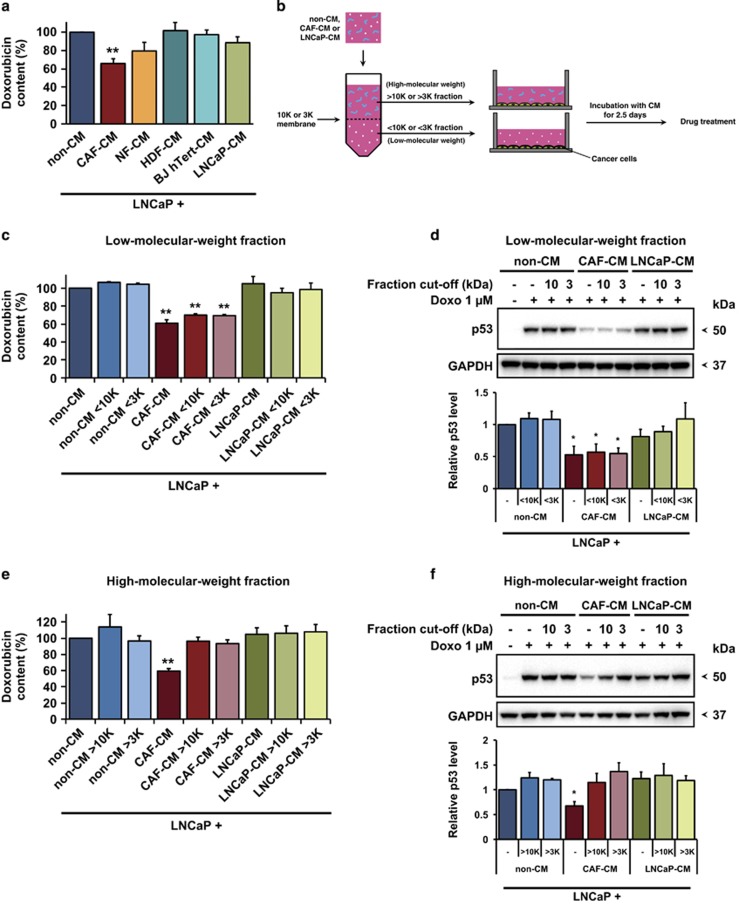
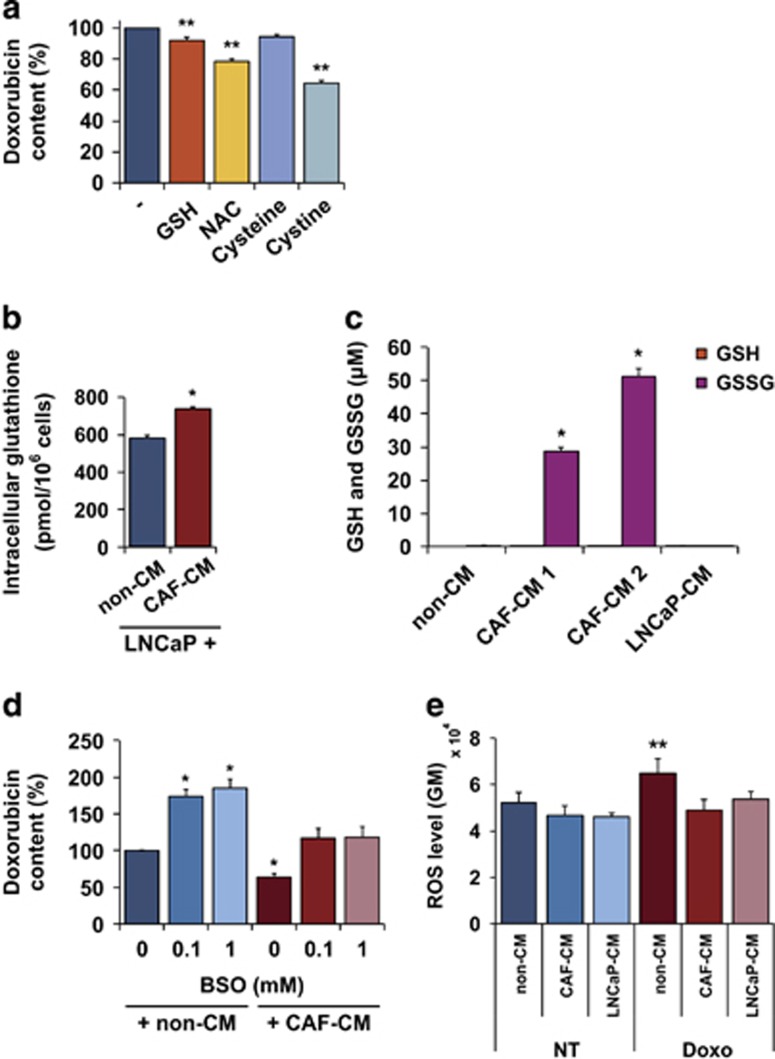
Drug resistance is a major problem in cancer therapy. A growing body of evidence demonstrates that the tumor microenvironment, including cancer-associated fibroblasts (CAFs), can modulate drug sensitivity in tumor cells. We examined the effect of primary human CAFs on p53 induction and cell viability in prostate cancer cells on treatment with chemotherapeutic drugs. Co-culture with prostate CAFs or CAF-conditioned medium attenuated DNA damage and the p53 response to chemotherapeutic drugs and enhanced prostate cancer cell survival. CAF-conditioned medium inhibited the accumulation of doxorubicin, but not taxol, in prostate cancer cells in a manner that was associated with increased cancer cell glutathione levels. A low molecular weight fraction (<3 kDa) of CAF-conditioned medium had the same effect. CAF-conditioned medium also inhibited induction of reactive oxygen species (ROS) in both doxorubicin- and taxol-treated cancer cells. Our findings suggest that CAFs can enhance drug resistance in cancer cells by inhibiting drug accumulation and counteracting drug-induced oxidative stress. This protective mechanism may represent a novel therapeutic target in cancer.
耐药性是癌症治疗中的一个主要问题。越来越多的证据表明,肿瘤微环境,包括癌症相关成纤维细胞(CAFs),可以调节肿瘤细胞的药物敏感性。我们研究了原代人CAFs对前列腺癌细胞经化疗药物处理后p53诱导和细胞活力的影响。与前列腺CAFs或CAF条件培养基共培养可减轻DNA损伤和p53对化疗药物的反应,并提高前列腺癌细胞的存活率。CAF条件培养基以与癌细胞谷胱甘肽水平升高相关的方式抑制阿霉素在前列腺癌细胞中的积累,但不抑制紫杉醇的积累。CAF条件培养基的低分子量组分(<3 kDa)具有相同的效果。CAF条件培养基还抑制了阿霉素和紫杉醇处理的癌细胞中活性氧(ROS)的诱导。我们的研究结果表明,CAFs可通过抑制药物积累和抵消药物诱导的氧化应激来增强癌细胞的耐药性。这种保护机制可能代表了癌症治疗的一个新靶点。