Orellana Esteban A, Kasinski Andrea L
Department of Biological Sciences, Bindley Bioscience Center, Purdue University, West Lafayette, USA.
Purdue University Interdisciplinary Life Science Program (PULSe), Purdue University, West Lafayette, USA.
Bio Protoc. 2016 Nov 5;6(21). doi: 10.21769/BioProtoc.1984.
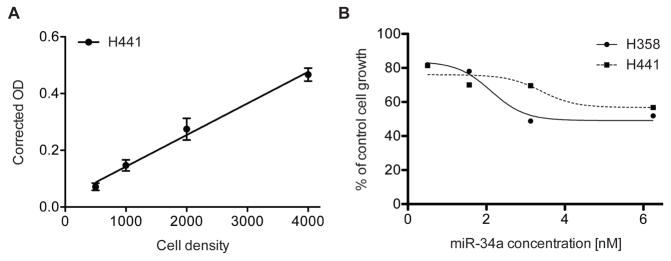
The SRB assay has been used since its development in 1990 (Skehan , 1990) to inexpensively conduct various screening assays to investigate cytotoxicity in cell based studies (Vichai and Kirtikara, 2006). This method relies on the property of SRB, which binds stoichiometrically to proteins under mild acidic conditions and then can be extracted using basic conditions; thus, the amount of bound dye can be used as a proxy for cell mass, which can then be extrapolated to measure cell proliferation. The protocol can be divided into four main steps: preparation of treatment, incubation of cells with treatment of choice, cell fixation and SRB staining, and absorbance measurement. This assay is limited to manual or semiautomatic screening, and can be used in an efficient and sensitive manner to test chemotherapeutic drugs or small molecules in adherent cells. It also has applications in evaluating the effects of gene expression modulation (knockdown, gene expression upregulation), as well as to study the effects of miRNA replacement on cell proliferation (Kasinski , 2015).
自1990年开发以来(斯凯汉,1990年),磺酰罗丹明B(SRB)检测法已被用于以低成本进行各种筛选检测,以研究基于细胞的研究中的细胞毒性(维猜和基尔蒂卡拉,2006年)。该方法依赖于SRB的特性,即在温和酸性条件下,SRB与蛋白质按化学计量结合,然后在碱性条件下可被提取;因此,结合染料的量可作为细胞量的替代指标,进而推断出细胞增殖情况。该实验方案可分为四个主要步骤:处理准备、用所选处理孵育细胞、细胞固定和SRB染色以及吸光度测量。此检测仅限于手动或半自动筛选,并且可以高效、灵敏地用于检测贴壁细胞中的化疗药物或小分子。它还可用于评估基因表达调控(敲低、基因表达上调)的效果,以及研究微小RNA替代对细胞增殖的影响(卡西姆斯基,2015年)。