Raran-Kurussi Sreejith, Waugh David S
Macromolecular Crystallography Laboratory, Center for Cancer Research, National Cancer Institute at Frederick, P.O. Box B, Frederick, MD, 21702-1201, USA.
Methods Mol Biol. 2017;1607:1-15. doi: 10.1007/978-1-4939-7000-1_1.
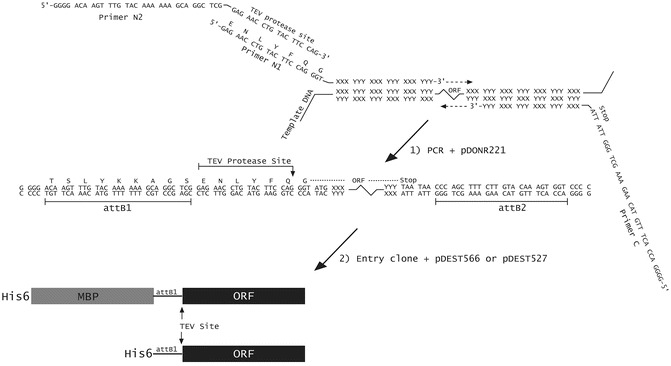
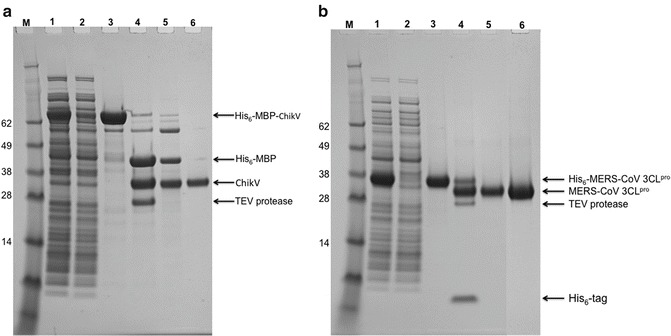
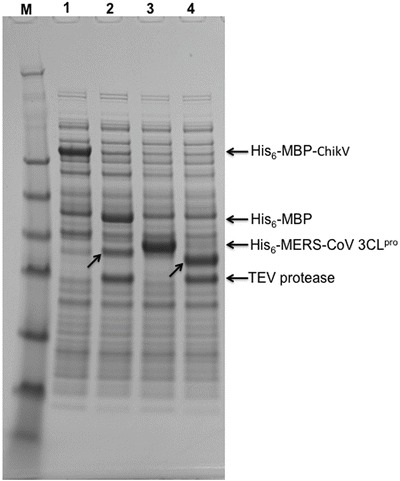
Rapid advances in bioengineering and biotechnology over the past three decades have greatly facilitated the production of recombinant proteins in Escherichia coli. Affinity-based methods that employ protein or peptide based tags for protein purification have been instrumental in this progress. Yet insolubility of recombinant proteins in E. coli remains a persistent problem. One way around this problem is to fuse an aggregation-prone protein to a highly soluble partner. E. coli maltose-binding protein (MBP) is widely acknowledged as a highly effective solubilizing agent. In this chapter, we describe how to construct either a His- or a dual His-MBP tagged fusion protein by Gateway recombinational cloning and how to evaluate their yield and solubility. We also describe a simple and rapid procedure to test the solubility of proteins after removing their N-terminal fusion tags by tobacco etch virus (TEV) protease digestion. The choice of whether to use a His tag or a His-MBP tag can be made on the basis of this solubility test.
在过去三十年里,生物工程和生物技术的飞速发展极大地促进了在大肠杆菌中生产重组蛋白。基于亲和的方法利用基于蛋白质或肽的标签进行蛋白质纯化,在这一进程中发挥了重要作用。然而,重组蛋白在大肠杆菌中的不溶性仍然是一个长期存在的问题。解决这个问题的一种方法是将易于聚集的蛋白与高度可溶的伴侣蛋白融合。大肠杆菌麦芽糖结合蛋白(MBP)被广泛认为是一种高效的增溶剂。在本章中,我们描述了如何通过Gateway重组克隆构建His标签或双His-MBP标签的融合蛋白,以及如何评估它们的产量和溶解性。我们还描述了一个简单快速的程序,用于通过烟草蚀纹病毒(TEV)蛋白酶消化去除蛋白质的N端融合标签后测试蛋白质的溶解性。是否使用His标签或His-MBP标签可基于此溶解性测试来决定。