Su Lin, Iordachita Iulian, Zhang Yin, Lee Junghoon, Ng Sook Kien, Jackson Juan, Hooker Ted, Wong John, Herman Joseph M, Sen H Tutkun, Kazanzides Peter, Lediju Bell Muyinatu A, Yang Chen, Ding Kai
School of Medicine, Department of Radiation Oncology and Molecular Radiation Sciences, Johns Hopkins University, Baltimore, MD, USA.
Department of Mechanical Engineering, Johns Hopkins University, Baltimore, MD, USA.
J Appl Clin Med Phys. 2017 Jul;18(4):84-96. doi: 10.1002/acm2.12100. Epub 2017 Jun 2.
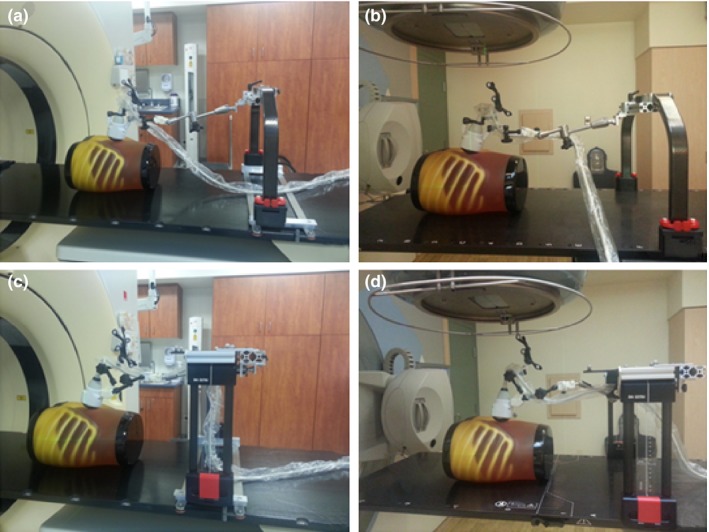
Stereotactic body radiation therapy (SBRT) allows for high radiation doses to be delivered to the pancreatic tumors with limited toxicity. Nevertheless, the respiratory motion of the pancreas introduces major uncertainty during SBRT. Ultrasound imaging is a non-ionizing, non-invasive, and real-time technique for intrafraction monitoring. A configuration is not available to place the ultrasound probe during pancreas SBRT for monitoring.
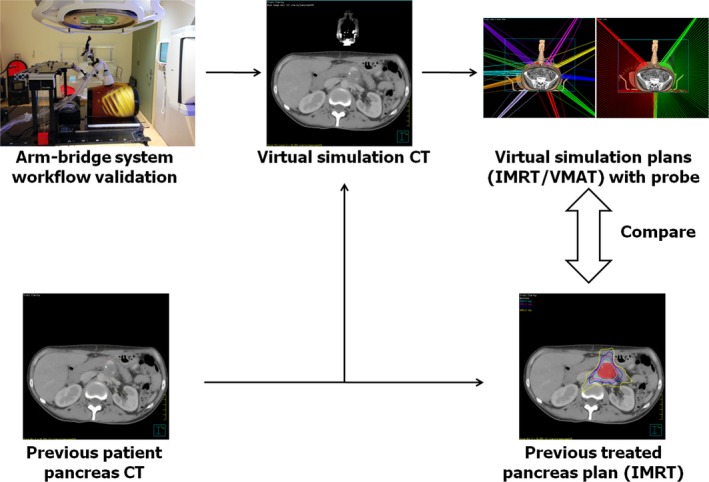
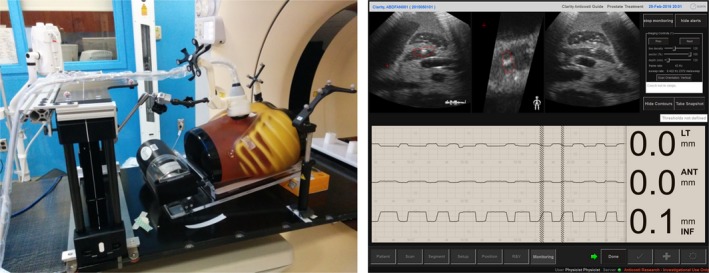
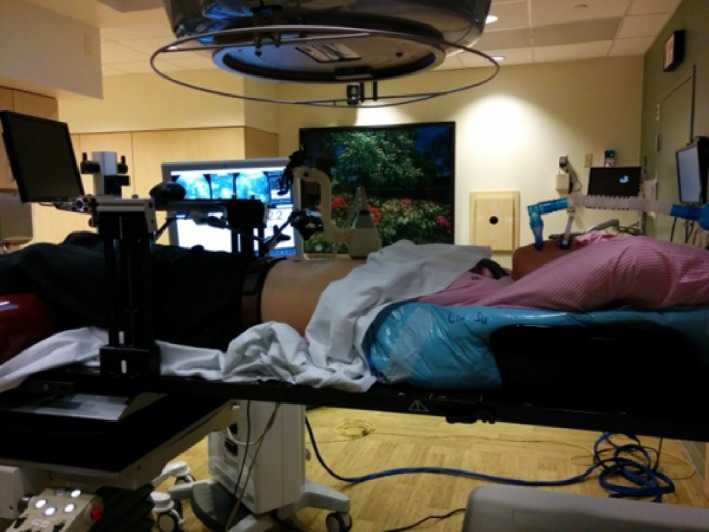
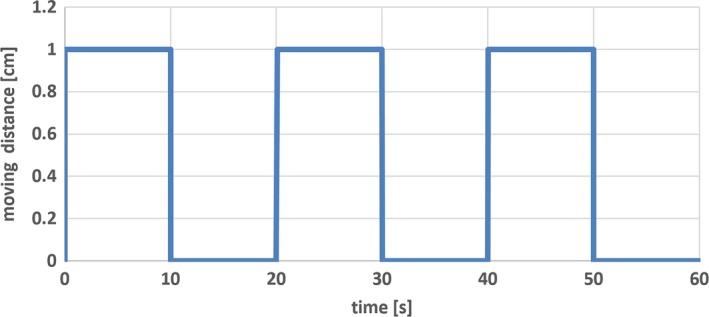
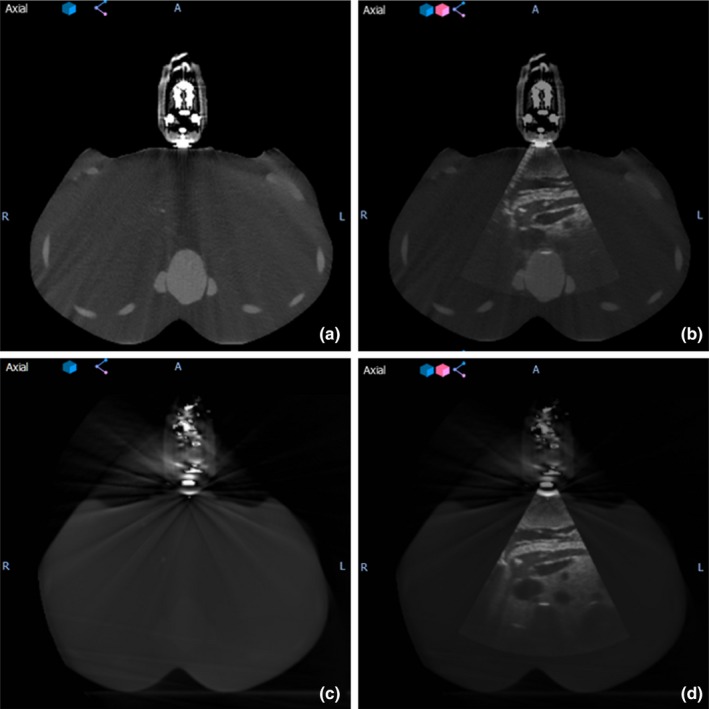
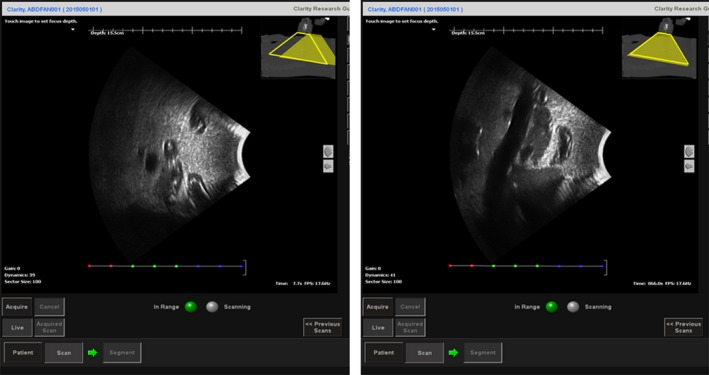
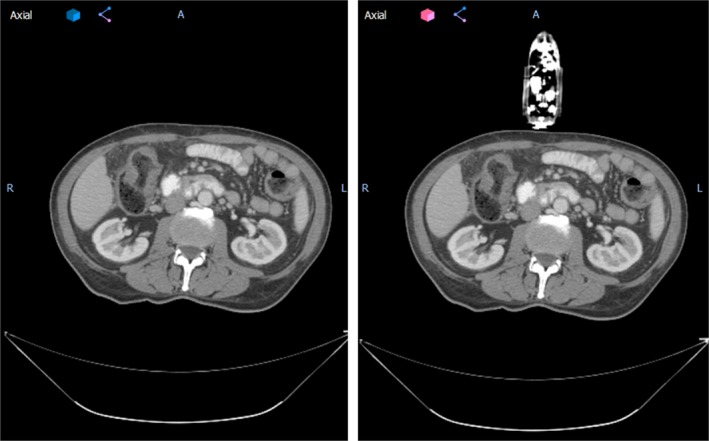
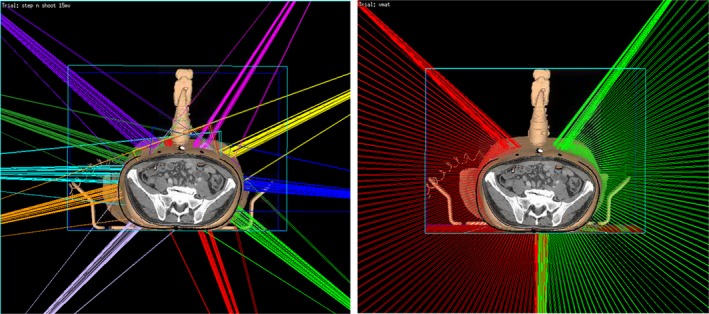
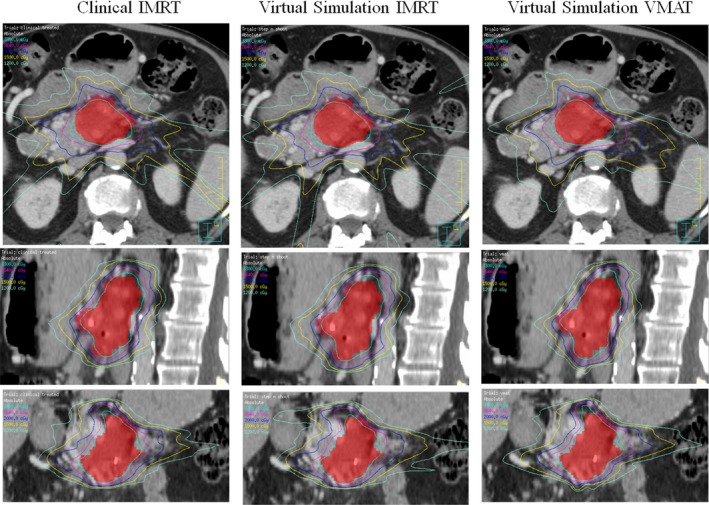
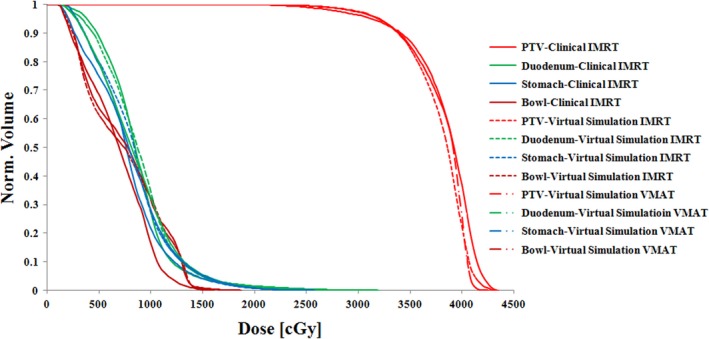
An arm-bridge system was designed and built. A CT scan of the bridge-held ultrasound probe was acquired and fused to ten previously treated pancreatic SBRT patient CTs as virtual simulation CTs. Both step-and-shoot intensity-modulated radiation therapy (IMRT) and volumetric-modulated arc therapy (VMAT) planning were performed on virtual simulation CT. The accuracy of our tracking algorithm was evaluated by programmed motion phantom with simulated breath-hold 3D movement. An IRB-approved volunteer study was also performed to evaluate feasibility of system setup. Three healthy subjects underwent the same patient setup required for pancreas SBRT with active breath control (ABC). 4D ultrasound images were acquired for monitoring. Ten breath-hold cycles were monitored for both phantom and volunteers. For the phantom study, the target motion tracked by ultrasound was compared with motion tracked by the infrared camera. For the volunteer study, the reproducibility of ABC breath-hold was assessed.
The volunteer study results showed that the arm-bridge system allows placement of an ultrasound probe. The ultrasound monitoring showed less than 2 mm reproducibility of ABC breath-hold in healthy volunteers. The phantom monitoring accuracy is 0.14 ± 0.08 mm, 0.04 ± 0.1 mm, and 0.25 ± 0.09 mm in three directions. On dosimetry part, 100% of virtual simulation plans passed protocol criteria.
Our ultrasound system can be potentially used for real-time monitoring during pancreas SBRT without compromising planning quality. The phantom study showed high monitoring accuracy of the system, and the volunteer study showed feasibility of the clinical workflow.
立体定向体部放射治疗(SBRT)能够在毒性有限的情况下将高剂量辐射传递至胰腺肿瘤。然而,胰腺的呼吸运动会在SBRT期间引入重大不确定性。超声成像是非电离、非侵入性的实时技术,可用于分次治疗期间的监测。在胰腺SBRT期间,没有可用的配置来放置超声探头进行监测。
设计并构建了一个臂桥系统。获取了桥接式超声探头的CT扫描图像,并将其与之前治疗的10例胰腺SBRT患者的CT图像融合,作为虚拟模拟CT。在虚拟模拟CT上进行了静态调强放射治疗(IMRT)和容积调强弧形治疗(VMAT)计划。通过编程运动体模模拟屏气三维运动,评估了我们跟踪算法的准确性。还进行了一项经机构审查委员会批准的志愿者研究,以评估系统设置的可行性。三名健康受试者采用主动呼吸控制(ABC)进行了与胰腺SBRT所需相同的患者设置。采集4D超声图像进行监测。对体模和志愿者均监测了10个屏气周期。对于体模研究,将超声跟踪的目标运动与红外摄像机跟踪的运动进行了比较。对于志愿者研究,评估了ABC屏气的可重复性。
志愿者研究结果表明,臂桥系统允许放置超声探头。超声监测显示,健康志愿者中ABC屏气的可重复性小于2毫米。体模监测在三个方向上的精度分别为0.14±0.08毫米、0.04±0.1毫米和0.25±0.09毫米。在剂量测定方面,100%的虚拟模拟计划通过了方案标准。
我们的超声系统可潜在地用于胰腺SBRT期间的实时监测,而不影响计划质量。体模研究显示该系统具有较高的监测精度,志愿者研究显示了临床工作流程的可行性。