Dillinger Stefan, Straub Tobias, Németh Attila
Biochemistry Center Regensburg, University of Regensburg, Regensburg, Germany.
Biomedical Center, Bioinformatics, Ludwig-Maximilians-University, Munich, Germany.
PLoS One. 2017 Jun 2;12(6):e0178821. doi: 10.1371/journal.pone.0178821. eCollection 2017.
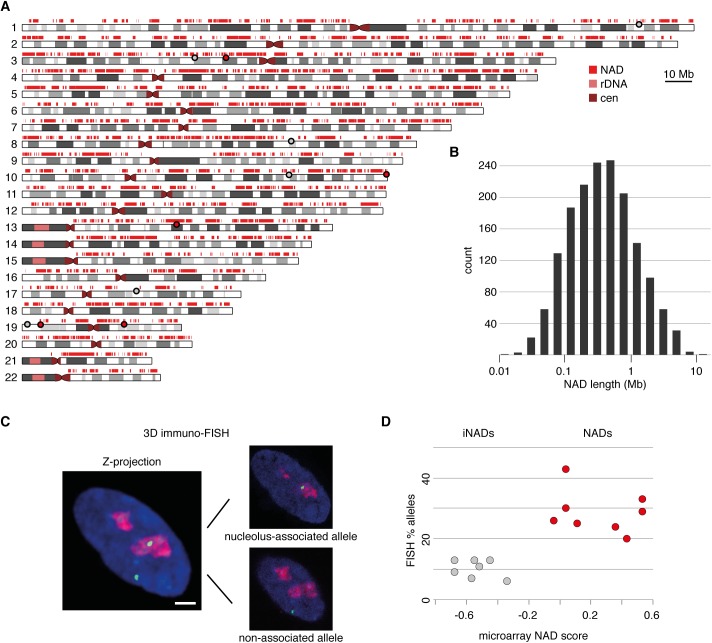
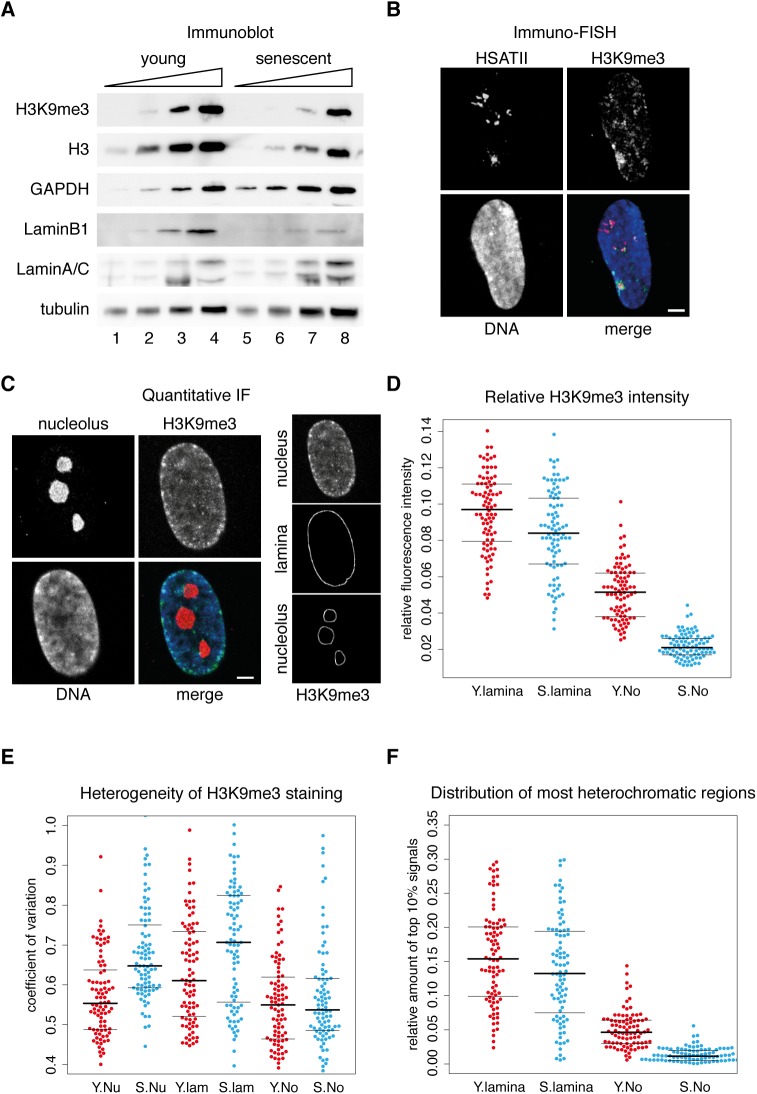
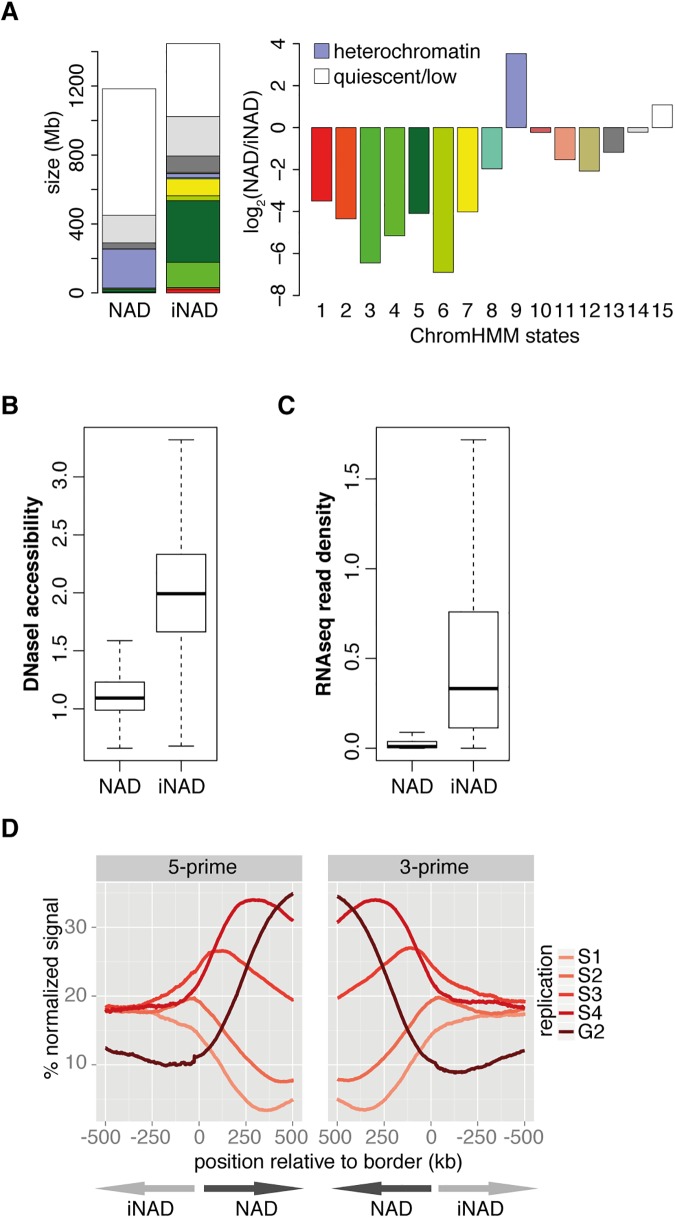
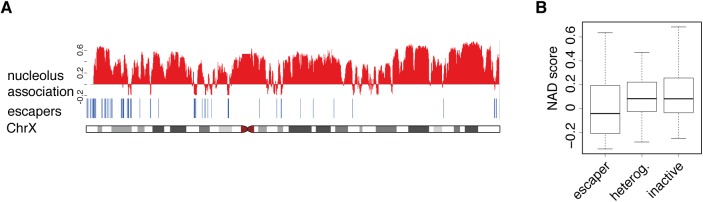
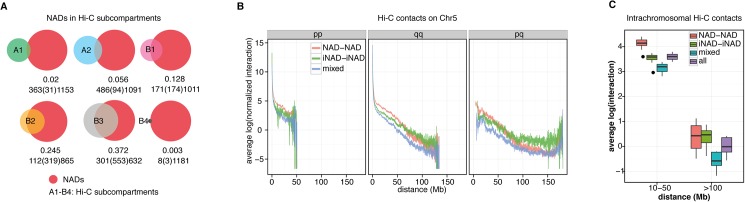
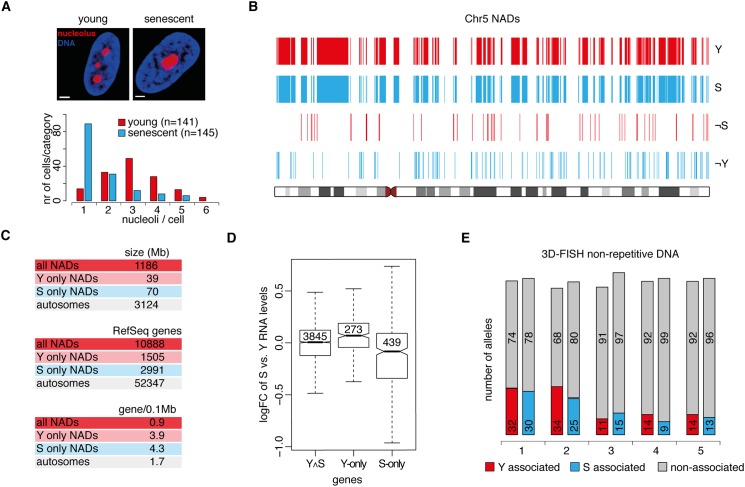
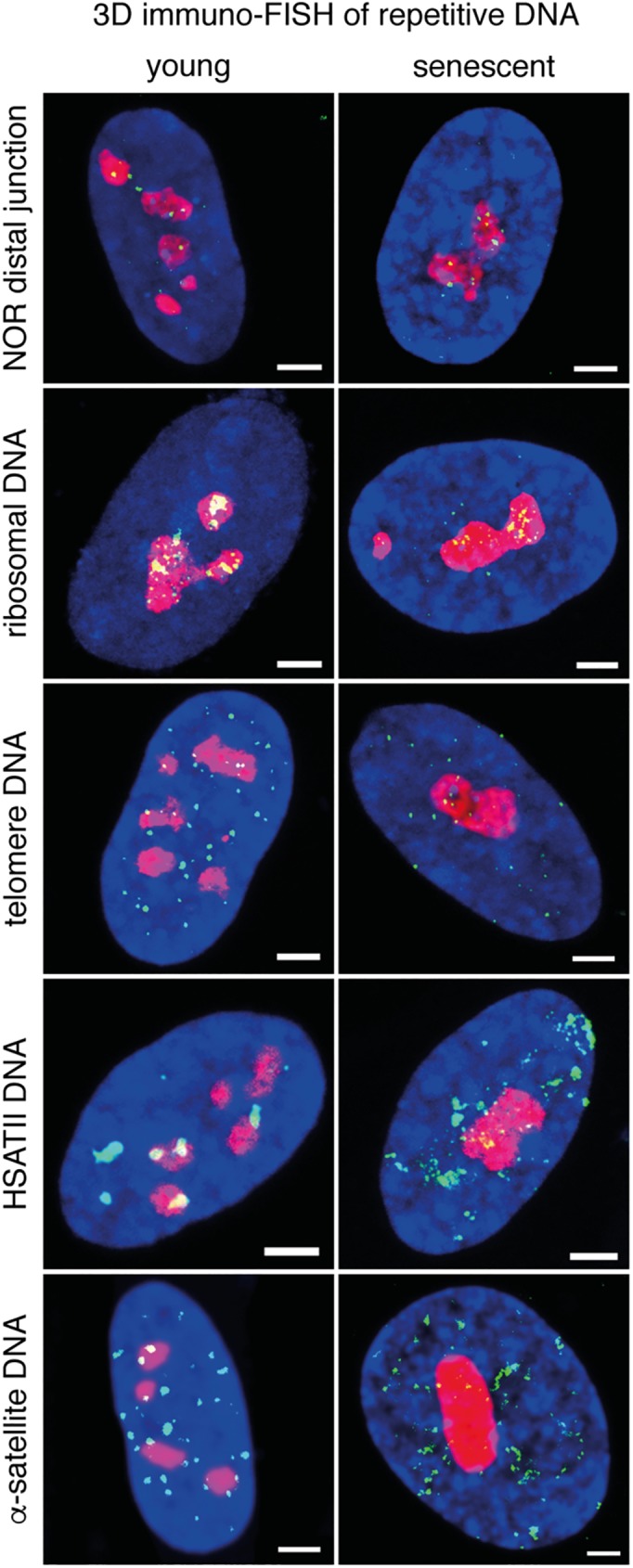
Mammalian chromosomes are organized in structural and functional domains of 0.1-10 Mb, which are characterized by high self-association frequencies in the nuclear space and different contact probabilities with nuclear sub-compartments. They exhibit distinct chromatin modification patterns, gene expression levels and replication timing. Recently, nucleolus-associated chromosomal domains (NADs) have been discovered, yet their precise genomic organization and dynamics are still largely unknown. Here, we use nucleolus genomics and single-cell experiments to address these questions in human embryonic fibroblasts during replicative senescence. Genome-wide mapping reveals 1,646 NADs in proliferating cells, which cover about 38% of the annotated human genome. They are mainly heterochromatic and correlate with late replicating loci. Using Hi-C data analysis, we show that interactions of NADs dominate interphase chromosome contacts in the 10-50 Mb distance range. Interestingly, only minute changes in nucleolar association are observed upon senescence. These spatial rearrangements in subdomains smaller than 100 kb are accompanied with local transcriptional changes. In contrast, large centromeric and pericentromeric satellite repeat clusters extensively dissociate from nucleoli in senescent cells. Accordingly, H3K9me3-marked heterochromatin gets remodelled at the perinucleolar space as revealed by immunofluorescence analyses. Collectively, this study identifies connections between the nucleolus, 3D genome structure, and cellular aging at the level of interphase chromosome organization.
哺乳动物染色体被组织成0.1 - 10 Mb的结构和功能域,其特征是在核空间中具有高自缔合频率以及与核亚区室的不同接触概率。它们表现出不同的染色质修饰模式、基因表达水平和复制时间。最近,已发现核仁相关染色体结构域(NADs),但其精确的基因组组织和动态仍 largely未知。在这里,我们使用核仁基因组学和单细胞实验来解决人类胚胎成纤维细胞在复制性衰老过程中的这些问题。全基因组图谱显示增殖细胞中有1646个NADs,它们覆盖了约38%的已注释人类基因组。它们主要是异染色质的,并且与晚期复制位点相关。使用Hi-C数据分析,我们表明NADs的相互作用在10 - 50 Mb距离范围内主导间期染色体接触。有趣的是,衰老时仅观察到核仁关联的微小变化。这些小于100 kb的亚结构域中的空间重排伴随着局部转录变化。相反,在衰老细胞中,大的着丝粒和着丝粒周围卫星重复簇与核仁广泛解离。因此,免疫荧光分析显示,在核仁周围空间,H3K9me3标记的异染色质发生了重塑。总体而言,这项研究在间期染色体组织水平上确定了核仁、三维基因组结构和细胞衰老之间的联系。