Beck Susanne C, Feng Yuxi, Sothilingam Vithiyanjali, Garcia Garrido Marina, Tanimoto Naoyuki, Acar Niyazi, Shan Shenliang, Seebauer Britta, Berger Wolfgang, Hammes Hans-Peter, Seeliger Mathias W
Division of Ocular Neurodegeneration, Institute for Ophthalmic Research, Centre for Ophthalmology, Tuebingen, Germany.
Institute of Experimental and Clinical Pharmacology and Toxicology, Medical Faculty Mannheim, University of Heidelberg, Mannheim, Germany.
PLoS One. 2017 Jun 2;12(6):e0178753. doi: 10.1371/journal.pone.0178753. eCollection 2017.
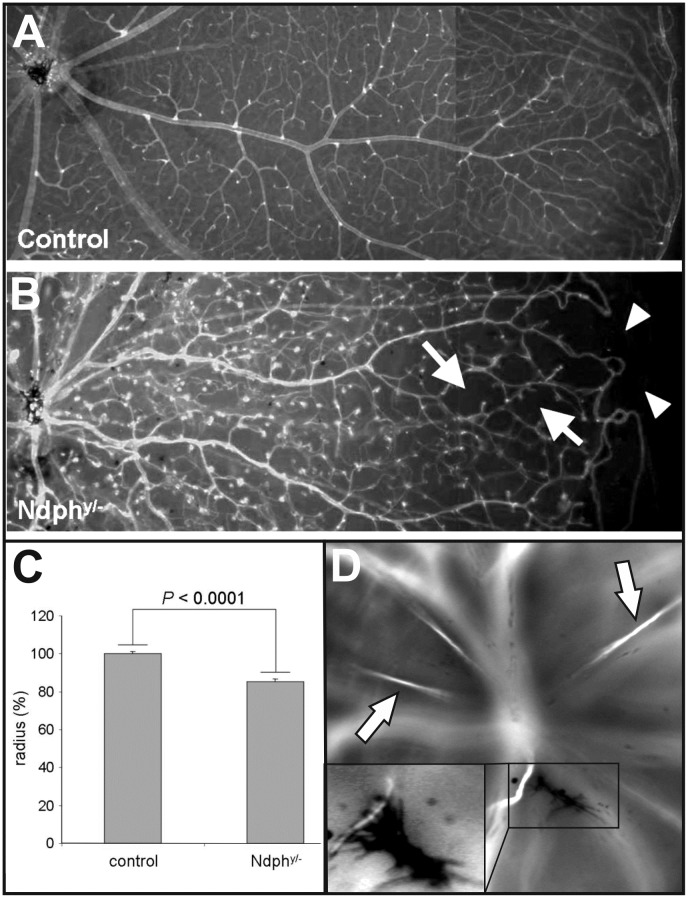
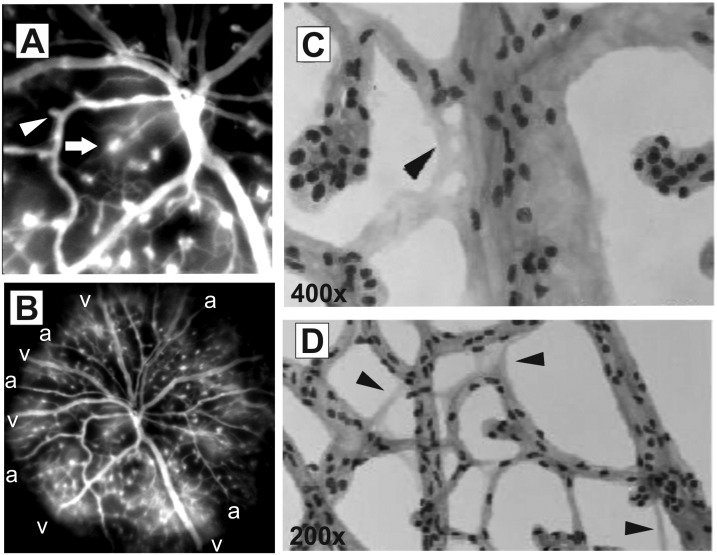
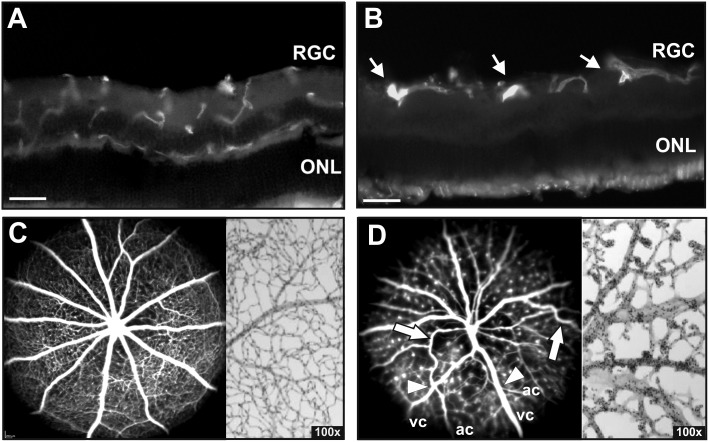
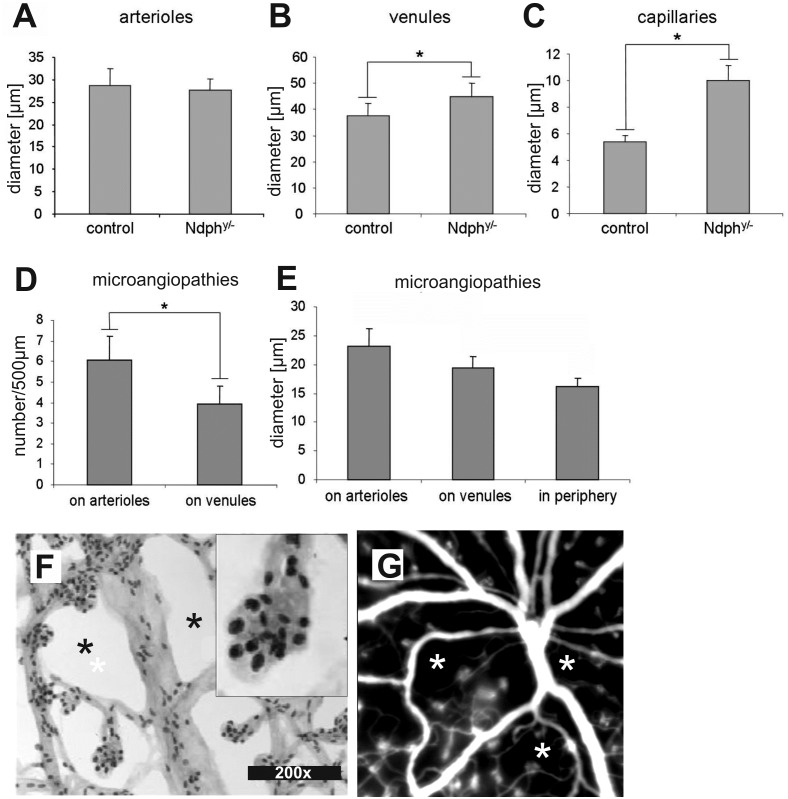
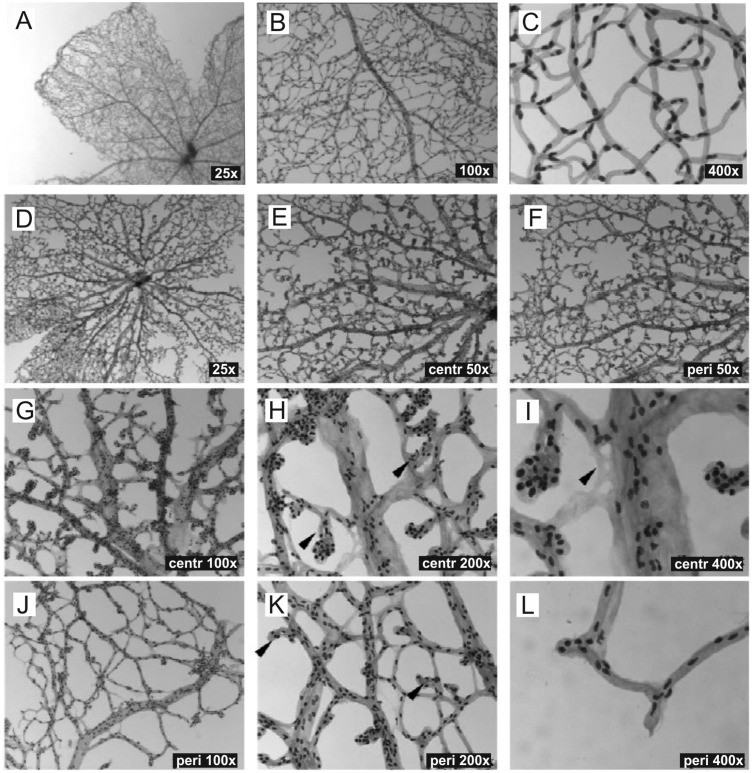
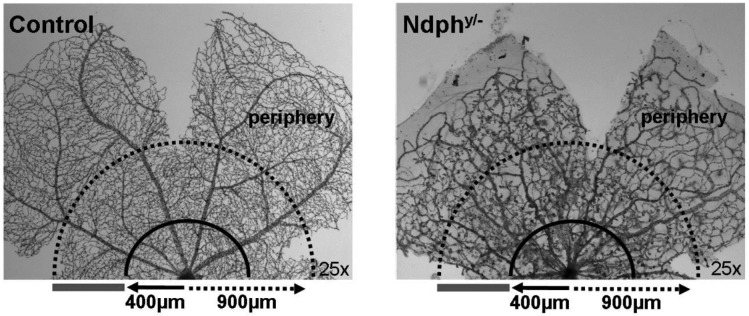
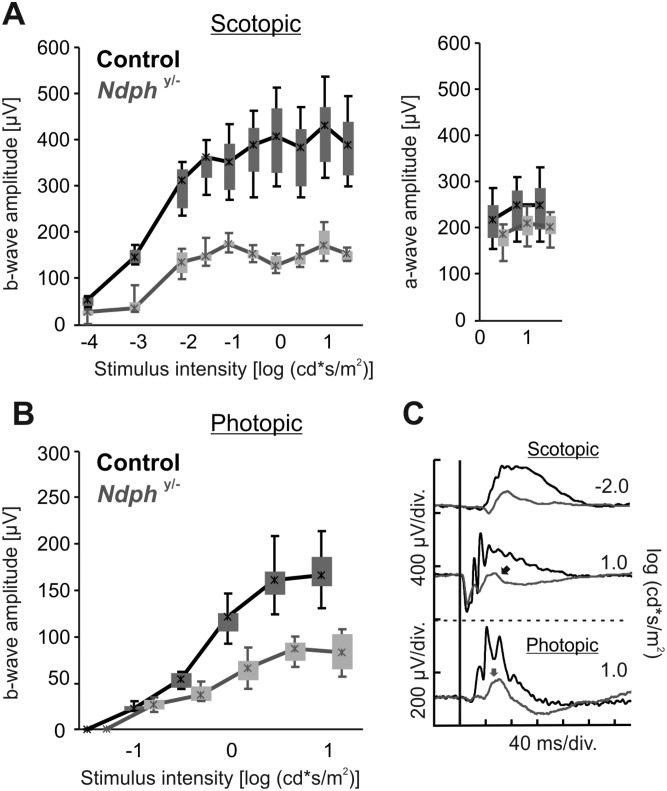
Loss of Norrin signalling due to mutations in the Norrie disease pseudoglioma gene causes severe vascular defects in the retina, leading to visual impairment and ultimately blindness. While the emphasis of experimental work so far was on the developmental period, we focus here on disease mechanisms that induce progression into severe adult disease. The goal of this study was the comprehensive analysis of the long-term effects of the absence of Norrin on vascular homeostasis and retinal function. In a mouse model of Norrie disease retinal vascular morphology and integrity were studied by means of in vivo angiography; the vascular constituents were assessed in detailed histological analyses using quantitative retinal morphometry. Finally, electroretinographic analyses were performed to assess the retinal function in adult Norrin deficient animals. We could show that the primary developmental defects not only persisted but developed into further vascular abnormalities and microangiopathies. In particular, the overall vessel homeostasis, the vascular integrity, and also the cellular constituents of the vascular wall were affected in the adult Norrin deficient retina. Moreover, functional analyses indicated to persistent hypoxia in the neural retina which was suggested as one of the major driving forces of disease progression. In summary, our data provide evidence that the key to adult Norrie disease are ongoing vascular modifications, driven by the persistent hypoxic conditions, which are ineffective to compensate for the primary Norrin-dependent defects.
诺里病假性胶质瘤基因突变导致的Norrin信号缺失会引起视网膜严重的血管缺陷,导致视力损害并最终失明。虽然迄今为止实验工作的重点是发育阶段,但我们在此关注的是导致发展为严重成人疾病的发病机制。本研究的目的是全面分析Norrin缺失对血管稳态和视网膜功能的长期影响。在诺里病小鼠模型中,通过体内血管造影研究视网膜血管形态和完整性;使用定量视网膜形态测量法在详细的组织学分析中评估血管成分。最后,进行视网膜电图分析以评估成年Norrin缺陷动物的视网膜功能。我们可以证明,主要的发育缺陷不仅持续存在,而且发展为进一步的血管异常和微血管病变。特别是,成年Norrin缺陷视网膜中的整体血管稳态、血管完整性以及血管壁的细胞成分均受到影响。此外,功能分析表明神经视网膜持续存在缺氧,这被认为是疾病进展的主要驱动力之一。总之,我们的数据提供了证据,表明成人诺里病的关键在于持续的血管改变,这种改变由持续的缺氧状态驱动,无法有效补偿原发性Norrin依赖性缺陷。