Center for Alcohol Research in Epigenetics, Department of Psychiatry, and Department of Anatomy and Cell Biology, University of Illinois at Chicago, Chicago; Jesse Brown Veterans Affairs Medical Center, Chicago, Illinois.
Int J Neuropsychopharmacol. 2017 Sep 1;20(9):758-768. doi: 10.1093/ijnp/pyx041.
Adolescent intermittent ethanol exposure causes long-lasting alterations in brain epigenetic mechanisms. Melanocortin and neuropeptide Y signaling interact and are affected by ethanol exposure in the brain. Here, the persistent effects of adolescent intermittent ethanol on alpha-melanocyte stimulating hormone, melanocortin 4 receptor, and neuropeptide Y expression and their regulation by histone acetylation mechanisms were investigated in adulthood.
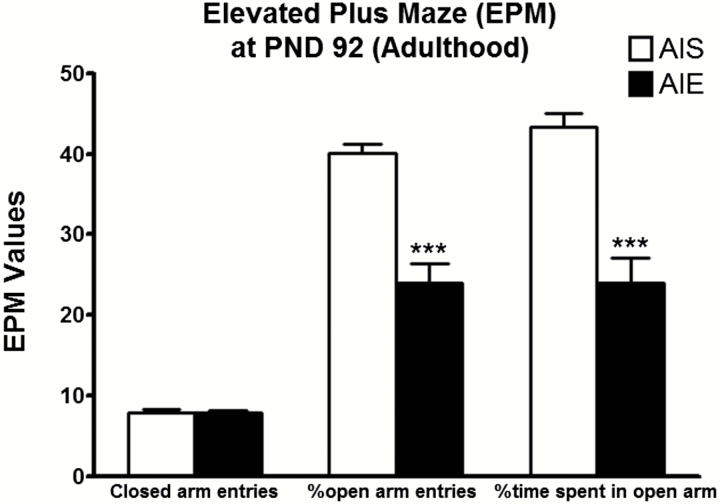
Male rats were exposed to adolescent intermittent ethanol (2 g/kg, i.p.) or volume-matched adolescent intermittent saline from postnatal days 28 to 41 and allowed to grow to postnatal day 92. Anxiety-like behaviors were measured by the elevated plus-maze test. Brain regions from adult rats were used to examine changes in alpha-melanocyte stimulating hormone, melanocortin 4 receptor, and neuropeptide Y expression and the histone acetylation status of their promoters.
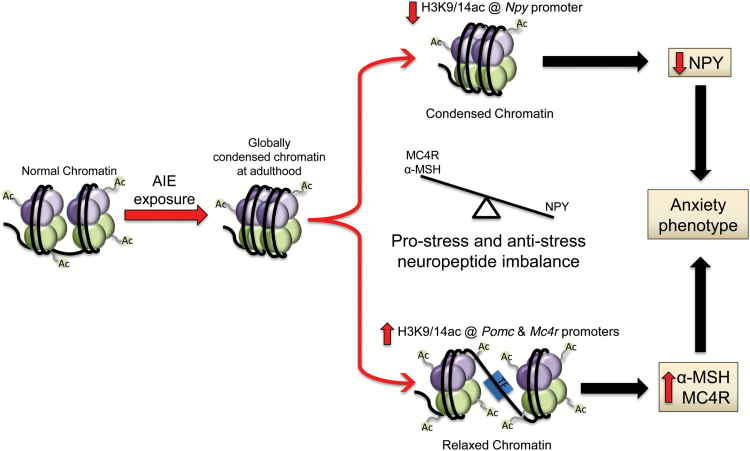
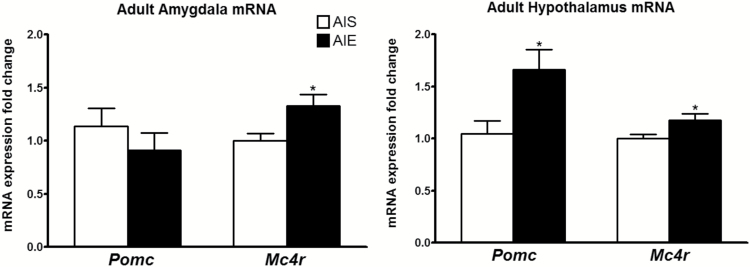
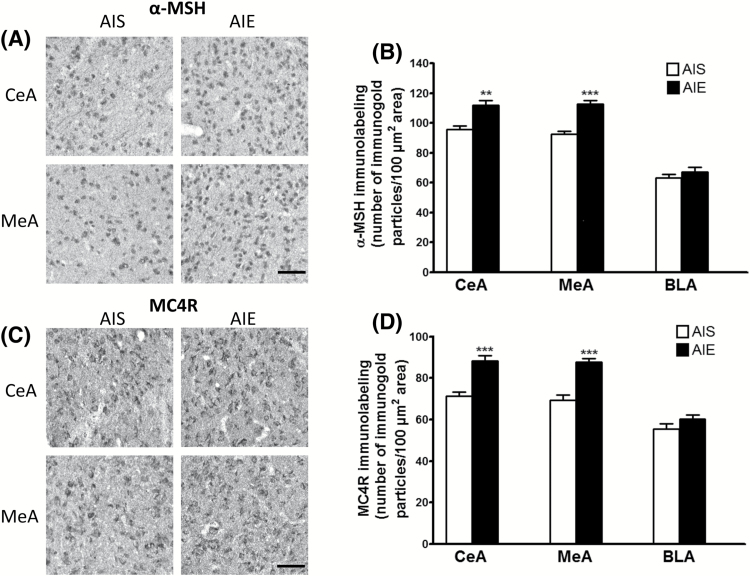
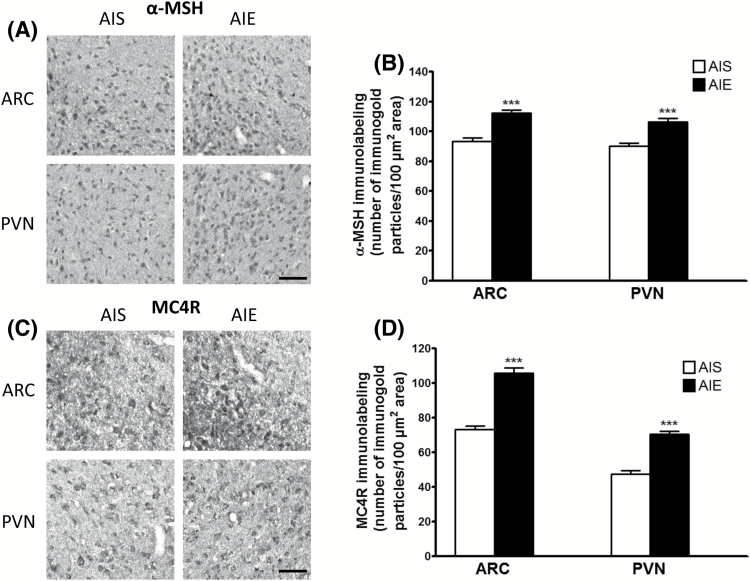
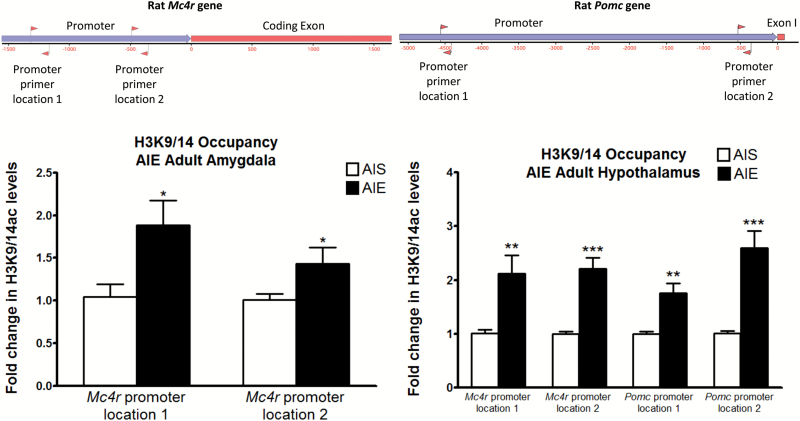
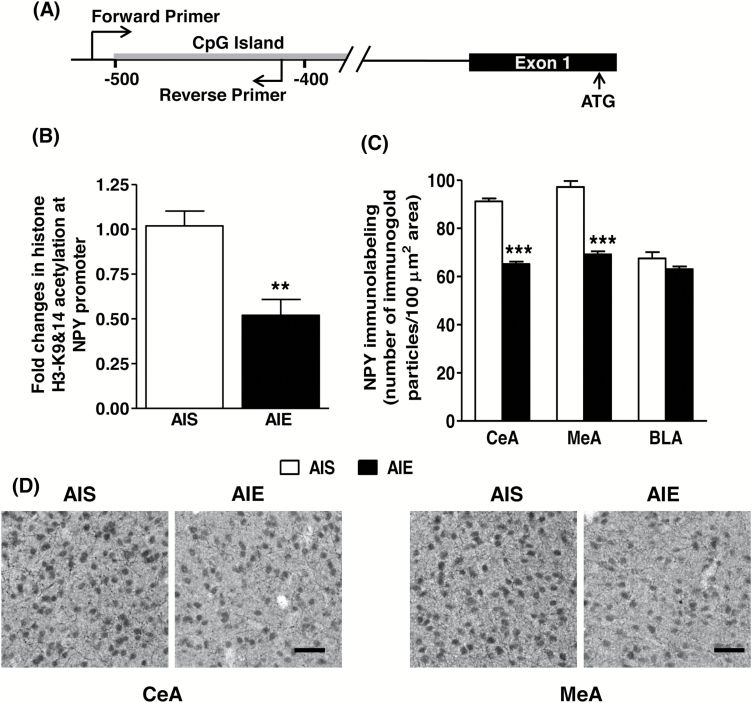
Adolescent intermittent ethanol-exposed adult rats displayed anxiety-like behaviors and showed increased pro-opiomelanocortin mRNA levels in the hypothalamus and increased melanocortin 4 receptor mRNA levels in both the amygdala and hypothalamus compared with adolescent intermittent saline-exposed adult rats. The alpha-Melanocyte stimulating hormone and melanocortin 4 receptor protein levels were increased in the central and medial nucleus of the amygdala, paraventricular nucleus, and arcuate nucleus of the hypothalamus in adolescent intermittent ethanol-exposed compared with adolescent intermittent saline-exposed adult rats. Neuropeptide Y protein levels were decreased in the central and medial nucleus of the amygdala of adolescent intermittent ethanol-exposed compared with adolescent intermittent saline-exposed adult rats. Histone H3K9/14 acetylation was decreased in the neuropeptide Y promoter in the amygdala but increased in the melanocortin 4 receptor gene promoter in the amygdala and the melanocortin 4 receptor and pro-opiomelanocortin promoters in the hypothalamus of adolescent intermittent ethanol-exposed adult rats compared with controls.
Increased melanocortin and decreased neuropeptide Y activity due to changes in histone acetylation in emotional brain circuitry may play a role in adolescent intermittent ethanol-induced anxiety phenotypes in adulthood.
青少年间歇性乙醇暴露会导致大脑表观遗传机制的长期改变。黑素细胞刺激素和神经肽 Y 信号相互作用,并受到大脑中乙醇暴露的影响。在这里,研究了青少年间歇性乙醇对 α-促黑素细胞刺激素、黑素细胞刺激素 4 受体和神经肽 Y 表达的持久影响及其对组蛋白乙酰化机制的调节作用。
雄性大鼠从出生后第 28 天到第 41 天接受青少年间歇性乙醇(2 g/kg,ip)或体积匹配的青少年间歇性盐水处理,并生长至出生后第 92 天。通过高架十字迷宫测试测量焦虑样行为。成年大鼠的脑区用于检测 α-促黑素细胞刺激素、黑素细胞刺激素 4 受体和神经肽 Y 表达的变化,以及它们启动子的组蛋白乙酰化状态。
与青少年间歇性盐水处理的成年大鼠相比,青少年间歇性乙醇处理的成年大鼠表现出焦虑样行为,下丘脑的前阿黑皮素原 mRNA 水平升高,杏仁核和下丘脑的黑素细胞刺激素 4 受体 mRNA 水平升高。与青少年间歇性盐水处理的成年大鼠相比,青少年间歇性乙醇处理的成年大鼠中央和内侧杏仁核、室旁核和下丘脑弓状核的 α-促黑素细胞刺激素和黑素细胞刺激素 4 受体蛋白水平升高。与青少年间歇性盐水处理的成年大鼠相比,青少年间歇性乙醇处理的成年大鼠杏仁核中央和内侧核的神经肽 Y 蛋白水平降低。与对照组相比,青少年间歇性乙醇处理的成年大鼠杏仁核神经肽 Y 启动子处的组蛋白 H3K9/14 乙酰化降低,而杏仁核和下丘脑的黑素细胞刺激素 4 受体基因启动子以及前阿黑皮素原的组蛋白 H3K9/14 乙酰化增加。
由于情绪脑回路中组蛋白乙酰化的变化,导致黑素细胞刺激素增加和神经肽 Y 活性降低,这可能在青少年间歇性乙醇诱导的成年焦虑表型中起作用。