Lin Lin, Zhou Yiwei, Li Huifang, Pang Dejian, Zhang Liyun, Lu Xiao, Chen Zhengliang, Zhao Xiaoshan, Zuo Daming, Sun Ledong
Department of Dermatology, Zhujiang Hospital, Southern Medical University, Guangzhou 510250, China.
Department of Immunology, School of Basic Medical Sciences, Southern Medical University, Guangzhou 510515, China.
Saudi Pharm J. 2017 May;25(4):625-632. doi: 10.1016/j.jsps.2017.04.035. Epub 2017 Apr 28.
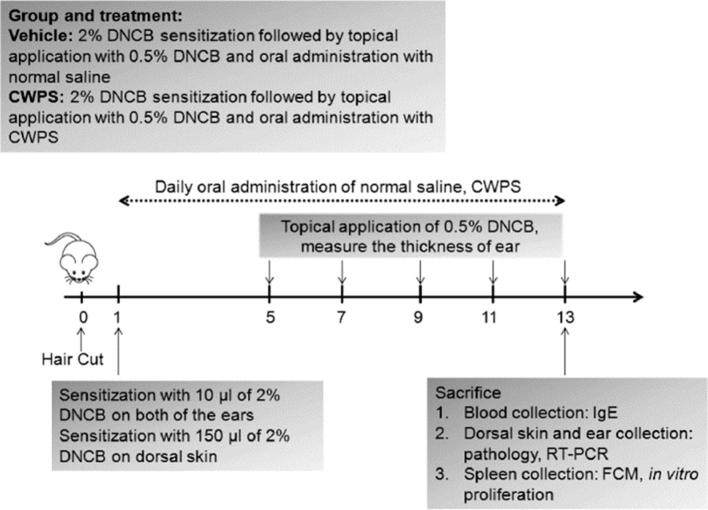
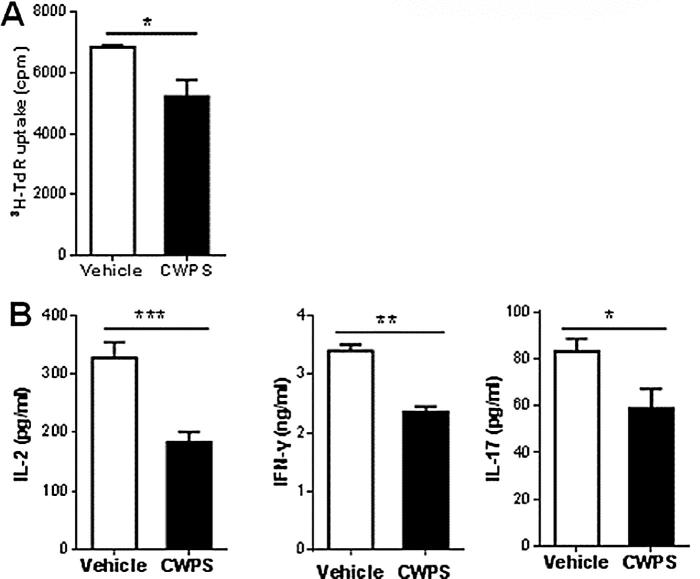
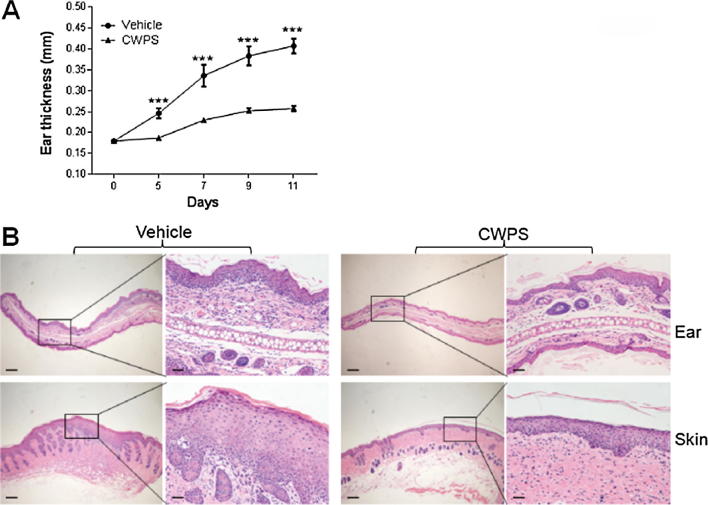
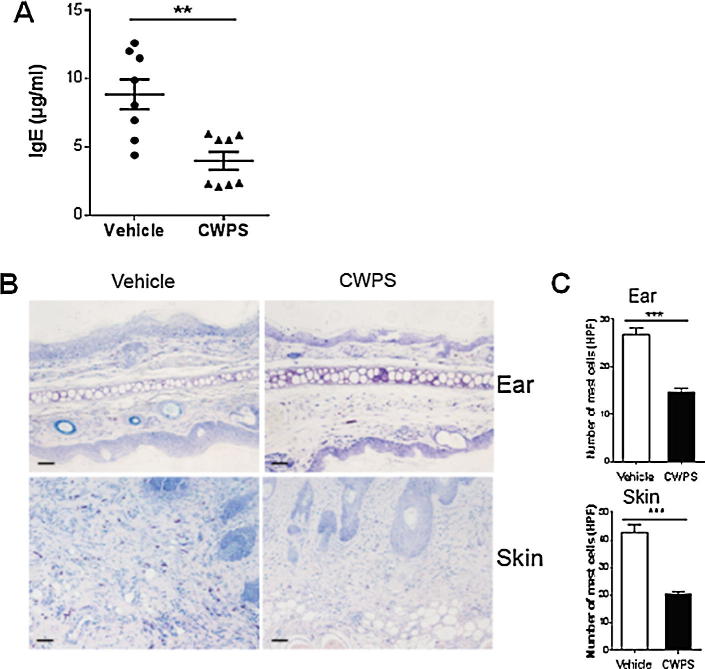
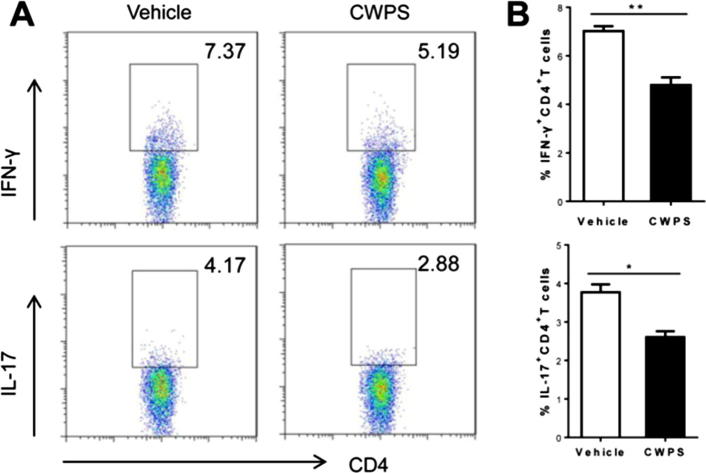
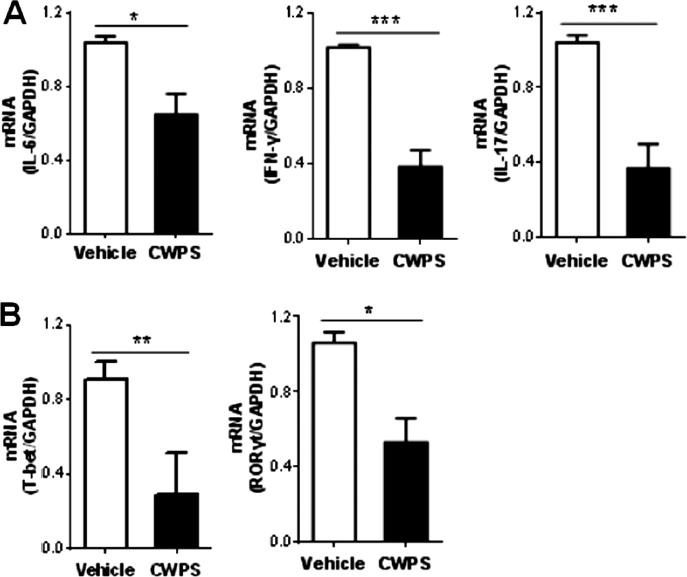
Atopic dermatitis (AD) is a common inflammatory skin disease with high rates of morbidity and is associated with erythema, pruritus, scaling of affected areas of skin. It is extremely important to introduce a therapeutic agent which has significant anti-inflammatory effect with less side-effect for treatment of AD. This study evaluated the effect of a natural compound from herbal extracts, the crude polysaccharide extracted from the white wax scale (CWPS), on AD-like mice. Repeated applications of 2,4-dinitrochlorobenzene (DNCB) were performed on ear and dorsal skin of BALB/c mice to induce AD-like symptoms and skin lesions. Oral administration of CWPS decreased serum IgE level and limited the infiltration of mast cells and eosinophils to the dermal tissues in the DNCB-induced AD mice. In addition, CWPS reduced Th1 and Th17 responses, leading to an attenuated cutaneous inflammatory response. Furthermore, study also demonstrated that CWPS limited T cell activation and cytokines (i.e. IFN-γ and IL-17) production induced by DNCB. We conclude that CWPS attenuates DNCB-induced AD-like skin lesion through modulating T cell-elicited immune responses and CD4 T cell polarization, and could be exploited as a new therapeutic approach for AD.
特应性皮炎(AD)是一种常见的炎症性皮肤病,发病率很高,与红斑、瘙痒、皮肤受累部位脱屑有关。引入一种具有显著抗炎作用且副作用较小的治疗药物来治疗AD极其重要。本研究评估了一种从草药提取物中提取的天然化合物——白蜡虫粗多糖(CWPS)对类AD小鼠的作用。对BALB/c小鼠的耳部和背部皮肤反复涂抹2,4-二硝基氯苯(DNCB)以诱导类AD症状和皮肤损伤。口服CWPS可降低血清IgE水平,并限制肥大细胞和嗜酸性粒细胞向DNCB诱导的AD小鼠真皮组织的浸润。此外,CWPS降低了Th1和Th17反应,导致皮肤炎症反应减弱。此外,研究还表明,CWPS限制了DNCB诱导的T细胞活化和细胞因子(即IFN-γ和IL-17)的产生。我们得出结论,CWPS通过调节T细胞引发的免疫反应和CD4 T细胞极化减轻DNCB诱导的类AD皮肤损伤,并可作为AD的一种新的治疗方法加以利用。