The Key Laboratory of Cultivating and Utilization of Resource Insects of State Forestry Administration, Research Institute of Resource Insects, Chinese Academy of Forestry, Kunming, 650224, China.
BMC Complement Med Ther. 2021 Mar 30;21(1):103. doi: 10.1186/s12906-021-03278-2.
Alzheimer's disease (AD), an age-related neurodegenerative disorder and a serious public health concern, is mainly caused by β-amyloid (Aβ)-induced toxicity. Currently, a limited number of drugs are effective against AD, and only a few are used for its treatment. According to traditional Chinese medicine, white wax is mainly composed of policosanol, hexacosanol, and octacosanol. Policosanol has been shown to reduce lipid levels in blood and alleviate the symptoms associated with diabetic complications and neurodegenerative disorders, such as Parkinson's disease and AD. However, the efficacy of policosanol depends on the purity and composition of the preparation, and the therapeutic efficacy of policosanol derived from insect wax (PIW) in AD is unknown.
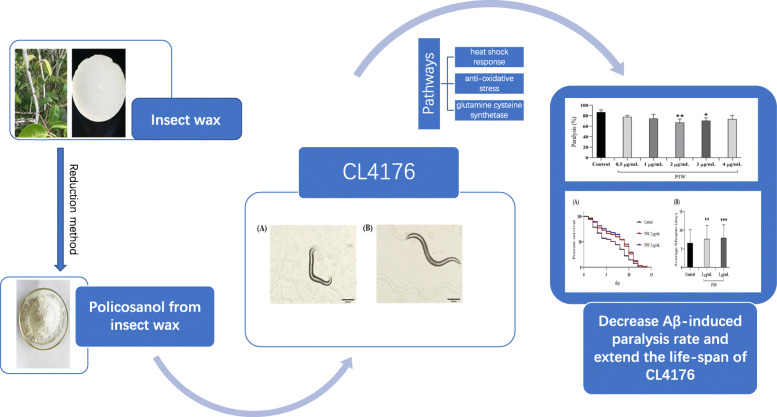
Here, we identified the main components of PIW and investigated the effects of PIW on Aβ-induced toxicity and life-span in a transgenic Caenorhabditis elegans model of AD, CL4176. Furthermore, we estimated the expression of amyloid precursor-like protein (apl-1) and the genes involved in various pathways associated with longevity and alleviation of AD-related symptoms in PIW-fed CL4176.
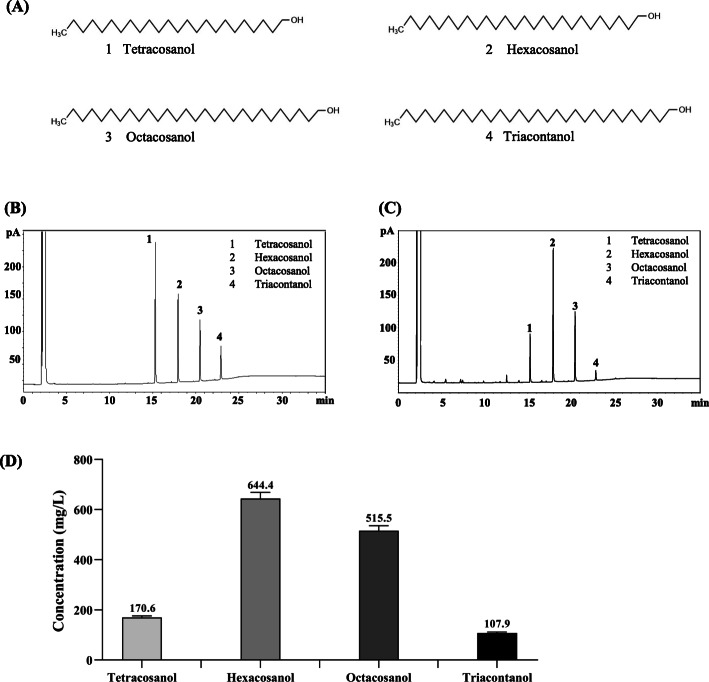
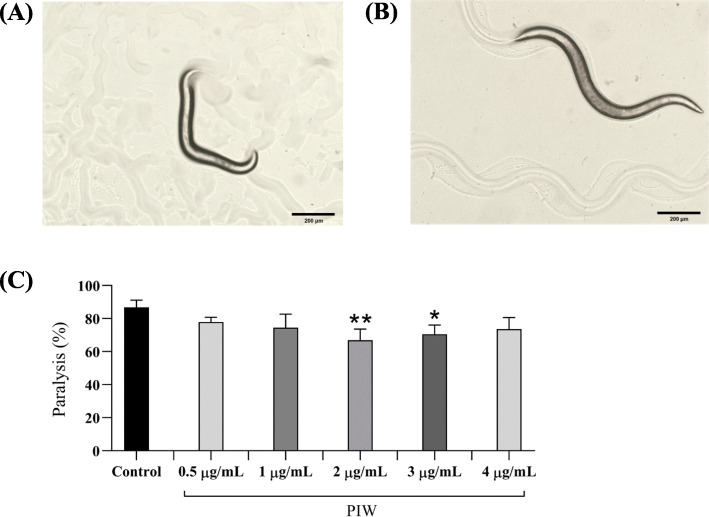
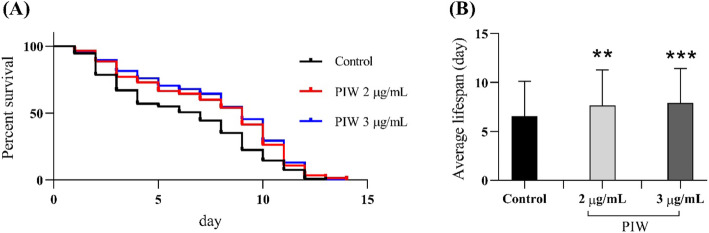
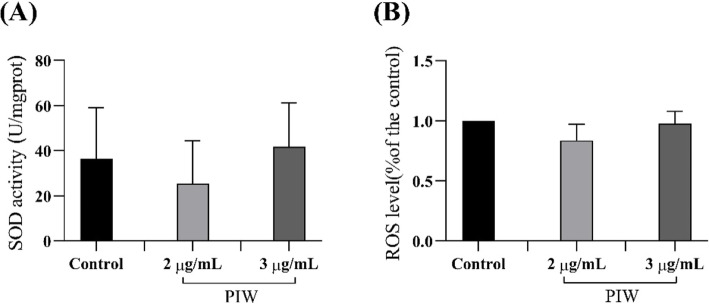
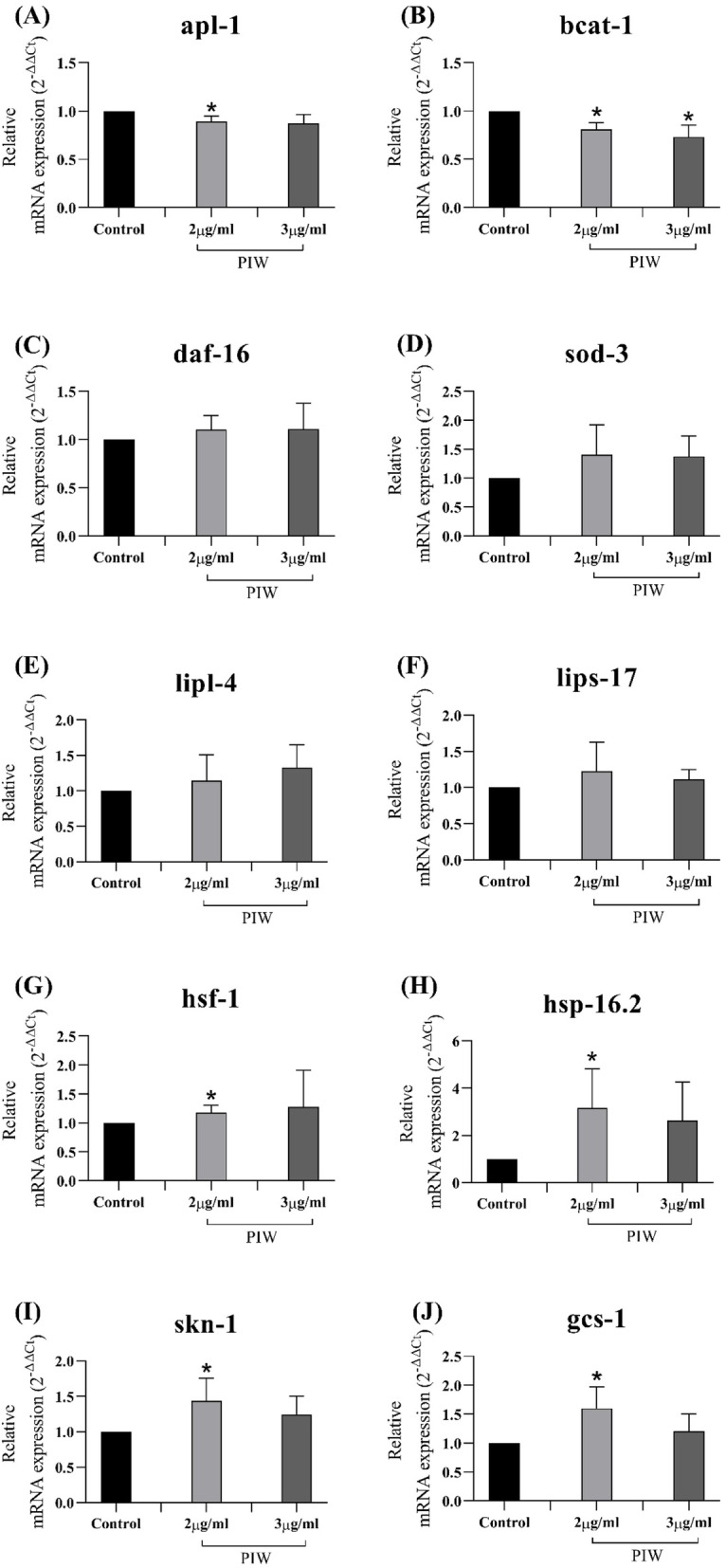
PIW mainly consists of tetracosanol, hexacosanol, octacosanol, and triacontanol; it could decrease the Aβ-induced paralysis rate from 86.87 to 66.97% (P < 0.01) and extend the life-span from 6.2 d to 7.8 d (P < 0.001) in CL4176 worms. Furthermore, PIW downregulated apl-1, a gene known to be associated with the levels of Aβ deposits in C. elegans. Additionally, our results showed that PIW modulated the expression of genes associated with longevity-related pathways such as heat shock response, anti-oxidative stress, and glutamine cysteine synthetase.
Our findings suggest that PIW may be a potential therapeutic agent for the prevention and treatment of AD. However, its effects on murine models and patients with AD need to be explored further.
阿尔茨海默病(AD)是一种与年龄相关的神经退行性疾病,也是一个严重的公共卫生问题,主要由β-淀粉样蛋白(Aβ)诱导的毒性引起。目前,针对 AD 有效的药物数量有限,且仅有少数几种可用于治疗。根据中医理论,白蜡主要由廿烷醇、二十六烷醇和二十八烷醇组成。廿烷醇已被证明可降低血液中的脂质水平,并缓解与糖尿病并发症和神经退行性疾病相关的症状,如帕金森病和 AD。然而,廿烷醇的疗效取决于制剂的纯度和组成,且来源于昆虫蜡(PIW)的廿烷醇在 AD 中的治疗效果尚不清楚。
在这里,我们鉴定了 PIW 的主要成分,并研究了 PIW 对 AD 转基因秀丽隐杆线虫 CL4176 模型中 Aβ诱导的毒性和寿命的影响。此外,我们还估计了 PIW 喂养的 CL4176 中淀粉样前体样蛋白(apl-1)和与长寿以及缓解 AD 相关症状相关的各种途径的基因的表达。
PIW 主要由二十四烷醇、二十六烷醇、二十八烷醇和三十烷醇组成;它可以将 Aβ诱导的麻痹率从 86.87%降低至 66.97%(P<0.01),并将寿命从 6.2 天延长至 7.8 天(P<0.001)。此外,PIW 下调了 apl-1,该基因已知与秀丽隐杆线虫中 Aβ沉积水平有关。此外,我们的结果表明,PIW 调节了与长寿相关途径相关的基因的表达,如热休克反应、抗氧化应激和谷氨酰胺半胱氨酸合成酶。
我们的研究结果表明,PIW 可能是预防和治疗 AD 的潜在治疗剂。然而,其对 AD 鼠模型和患者的影响需要进一步探索。