Division of Structural Biology, The Institute of Cancer Research, Chester Beatty Laboratories, 237 Fulham Road, London SW3 6JB, England.
MRC Laboratory of Molecular Biology, Francis Crick Avenue, Cambridge CB2 0QH, England.
Acta Crystallogr D Struct Biol. 2017 Jun 1;73(Pt 6):522-533. doi: 10.1107/S2059798317007021. Epub 2017 May 31.
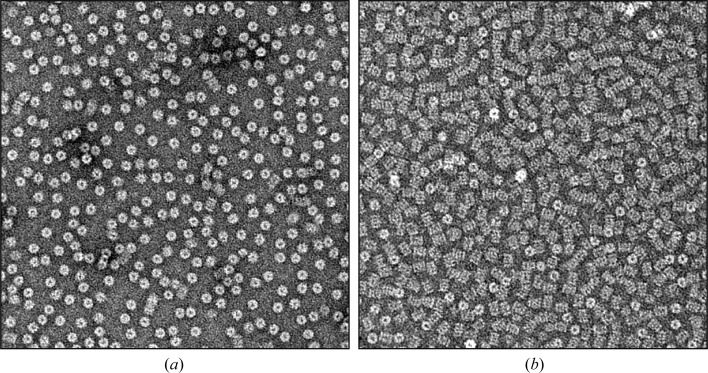
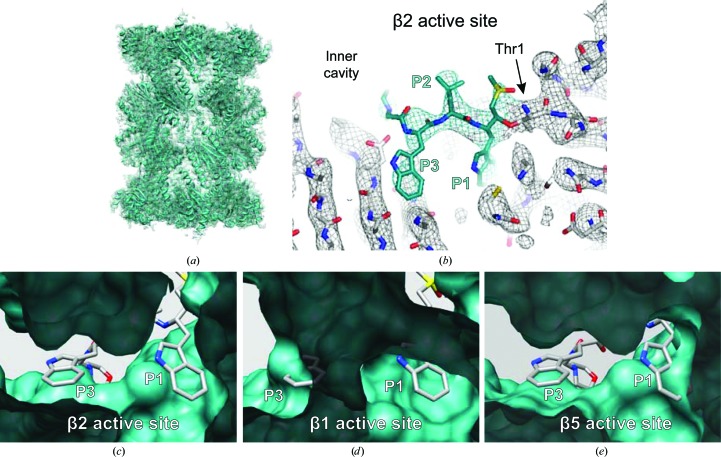
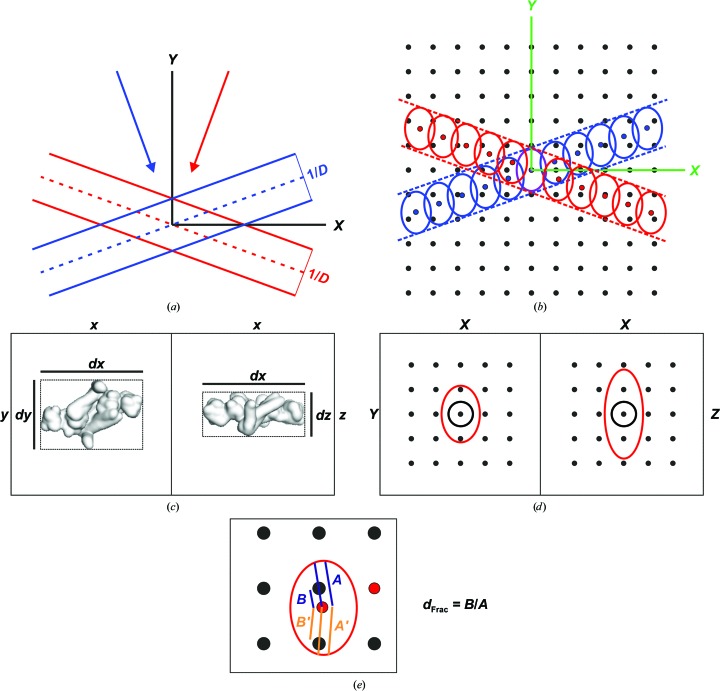
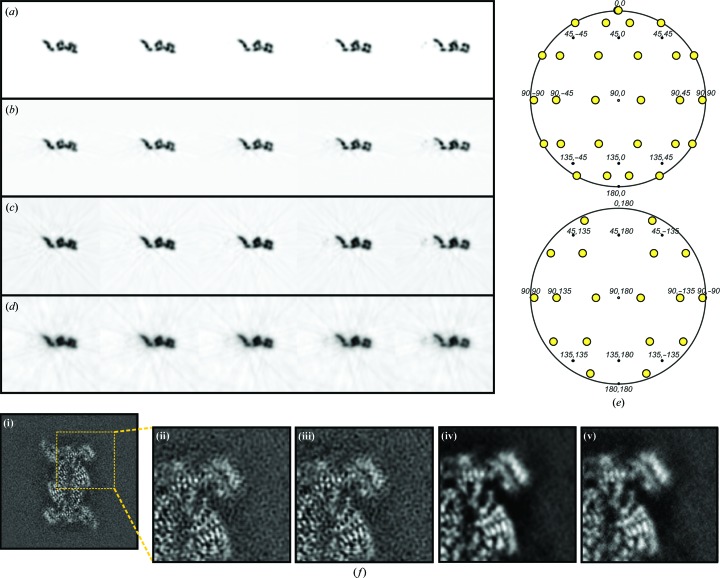
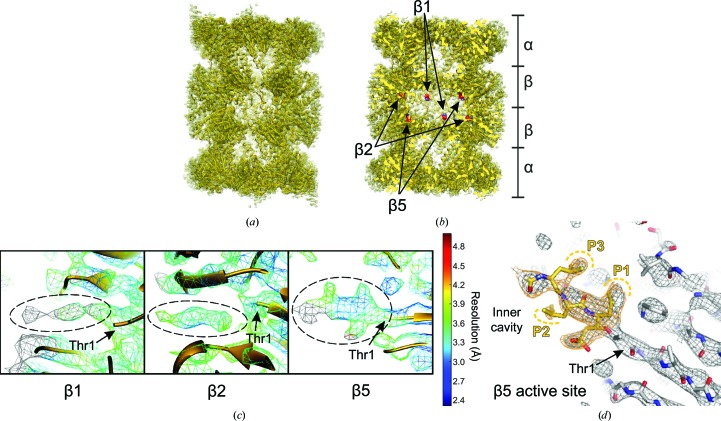
With the recent advances in biological structural electron microscopy (EM), protein structures can now be obtained by cryo-EM and single-particle analysis at resolutions that used to be achievable only by crystallographic or NMR methods. We have explored their application to study protein-ligand interactions using the human 20S proteasome, a well established target for cancer therapy that is also being investigated as a target for an increasing range of other medical conditions. The map of a ligand-bound human 20S proteasome served as a proof of principle that cryo-EM is emerging as a realistic approach for more general structural studies of protein-ligand interactions, with the potential benefits of extending such studies to complexes that are unfavourable to other methods and allowing structure determination under conditions that are closer to physiological, preserving ligand specificity towards closely related binding sites. Subsequently, the cryo-EM structure of the Plasmodium falciparum 20S proteasome, with a new prototype specific inhibitor bound, revealed the molecular basis for the ligand specificity towards the parasite complex, which provides a framework to guide the development of highly needed new-generation antimalarials. Here, the cryo-EM analysis of the ligand-bound human and P. falciparum 20S proteasomes is reviewed, and a complete description of the methods used for structure determination is provided, including the strategy to overcome the bias orientation of the human 20S proteasome on electron-microscope grids and details of the icr3d software used for three-dimensional reconstruction.
随着生物结构电子显微镜(EM)技术的最新进展,现在可以通过冷冻电镜和单颗粒分析获得蛋白质结构,其分辨率达到了以前仅通过晶体学或 NMR 方法才能达到的水平。我们已经探索了将其应用于研究蛋白质-配体相互作用,以人类 20S 蛋白酶体为研究对象,该蛋白酶体是癌症治疗的一个成熟靶点,也正在被作为越来越多其他医疗条件的靶点进行研究。配体结合的人类 20S 蛋白酶体的图谱证明了冷冻电镜正在成为研究蛋白质-配体相互作用的更通用结构的一种现实方法,其潜在的优势在于可以将此类研究扩展到不适合其他方法的复合物,并允许在更接近生理条件下进行结构测定,从而保留配体对密切相关结合位点的特异性。随后,与新型原型特异性抑制剂结合的疟原虫 20S 蛋白酶体的冷冻电镜结构揭示了配体对寄生虫复合物的特异性的分子基础,为指导开发高度需要的新一代抗疟药物提供了框架。在这里,对配体结合的人类和 P. falciparum 20S 蛋白酶体的冷冻电镜分析进行了综述,并提供了结构测定所用方法的完整描述,包括克服人类 20S 蛋白酶体在电子显微镜网格上的偏置取向的策略,以及用于三维重建的 icr3d 软件的详细信息。