Department of Geography, Northern Illinois University, Davis Hall 120, DeKalb, Illinois 60115, USA.
Department of Environmental Sciences, University of Virginia, Charlottesville, Virginia 22904, USA.
Nat Commun. 2017 Jun 5;8:15766. doi: 10.1038/ncomms15766.
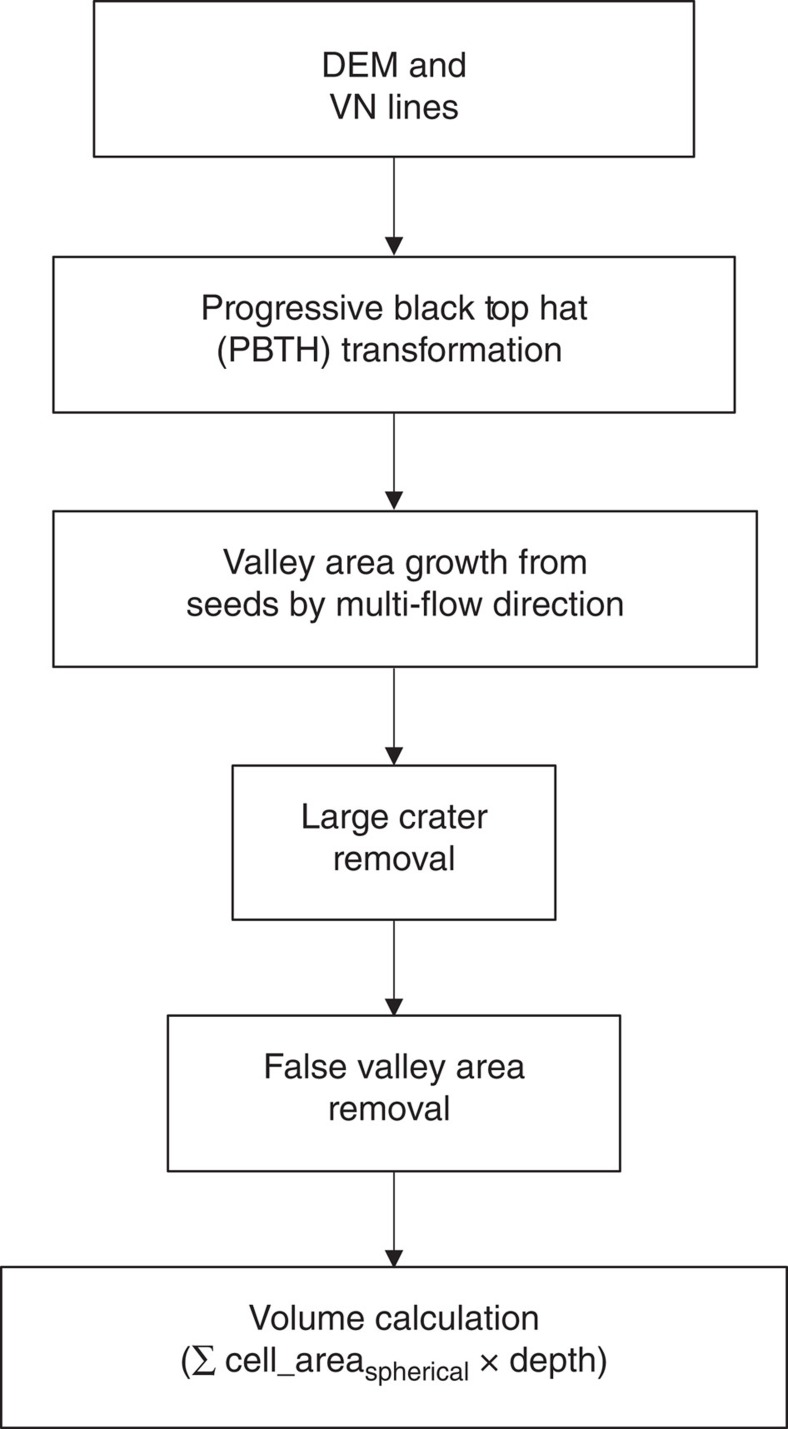
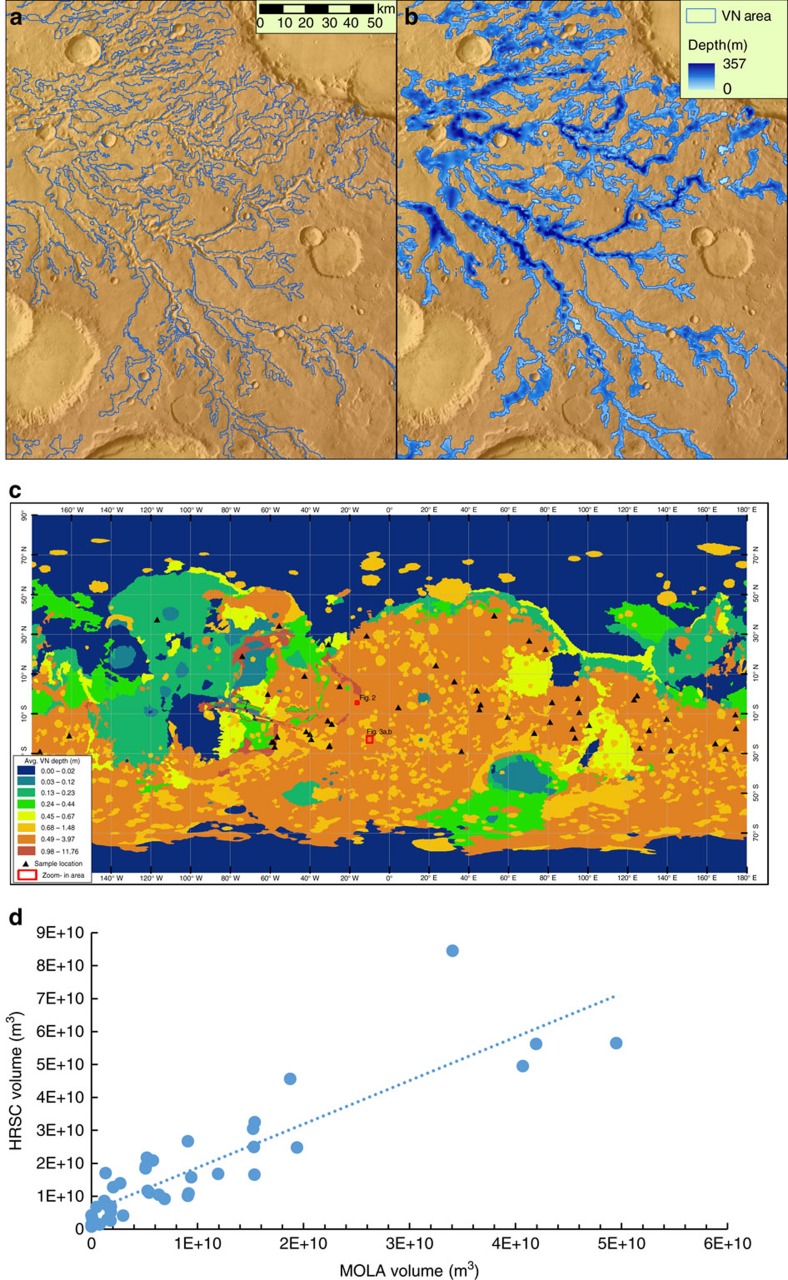
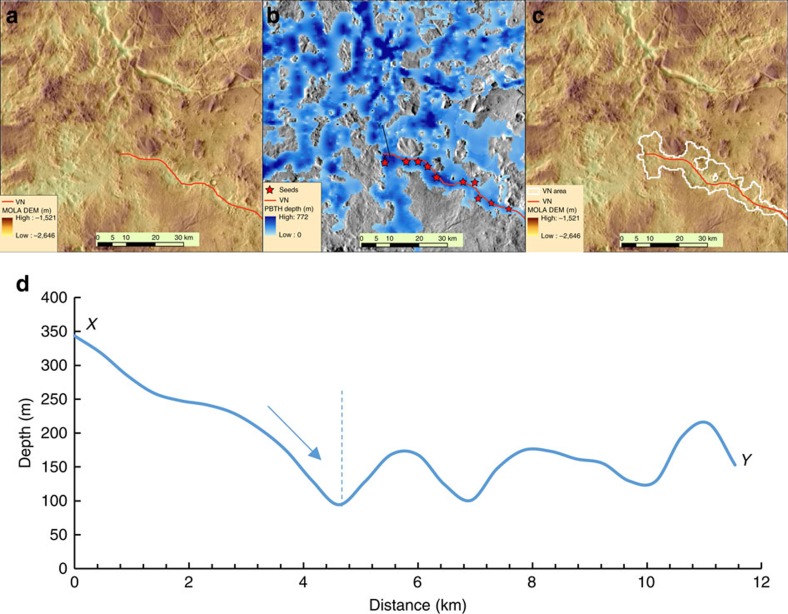
The volume of Martian valley network (VN) cavity and the amount of water needed to create the cavity by erosion are of significant importance for understanding the early Martian climate, the style and rate of hydrologic cycling, and the possibility of an ancient ocean. However, previous attempts at estimating these two quantities were based on selected valleys or at local sites using crude estimates of VN length, width and depth. Here we employed an innovative progressive black top hat transformation method to estimate them on a global scale based on the depth of each valley pixel. The conservative estimate of the minimum global VN volume is 1.74 × 10 m and minimum cumulative volume of water required is 6.86 × 10 m (or ∼5 km of global equivalent layer, GEL). Both are much larger than previous estimates and are consistent with an early warm and wet climate with active hydrologic cycling involving an ocean.
火星峡谷网络 (VN) 腔的体积和通过侵蚀产生腔所需的水量对于了解早期火星气候、水文循环的方式和速度以及古代海洋的可能性具有重要意义。然而,以前估算这两个数量的尝试是基于选定的山谷或使用 VN 长度、宽度和深度的粗略估计在局部地点进行的。在这里,我们使用了一种创新的渐进式黑色顶帽变换方法,根据每个山谷像素的深度在全球范围内对其进行估算。全球 VN 最小体积的保守估计值为 1.74×10^6m^3,所需最小累积水量为 6.86×10^6m^3(或约 5km 的全球等效层,GEL)。这两个值都远远大于以前的估计值,与早期温暖湿润的气候以及涉及海洋的活跃水文循环一致。