Geodynamics Research Center, Ehime University, Ehime 790-8577, Japan.
Department of Earth and Planetary Materials Science, Graduate School of Science, Tohoku University, Sendai 980-8578, Japan.
Nat Commun. 2017 Jun 5;8:15735. doi: 10.1038/ncomms15735.
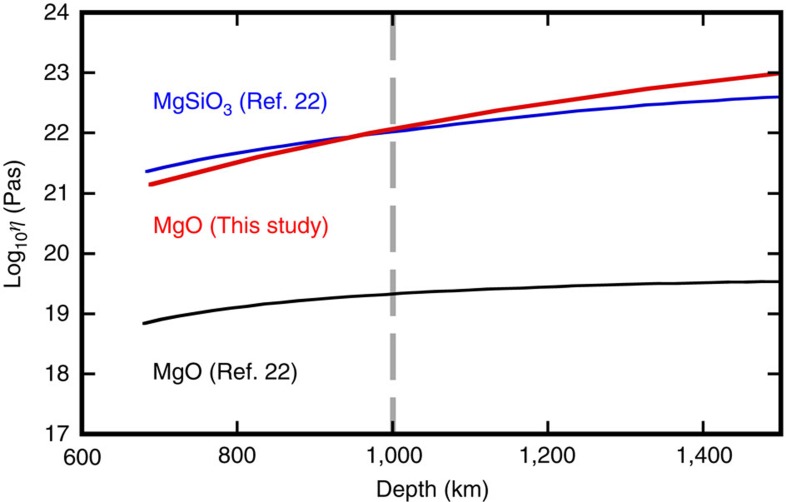
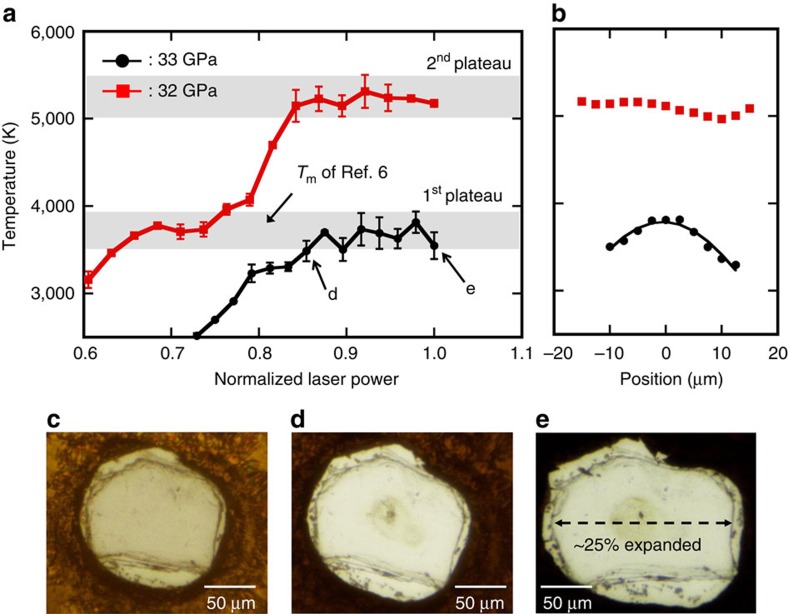
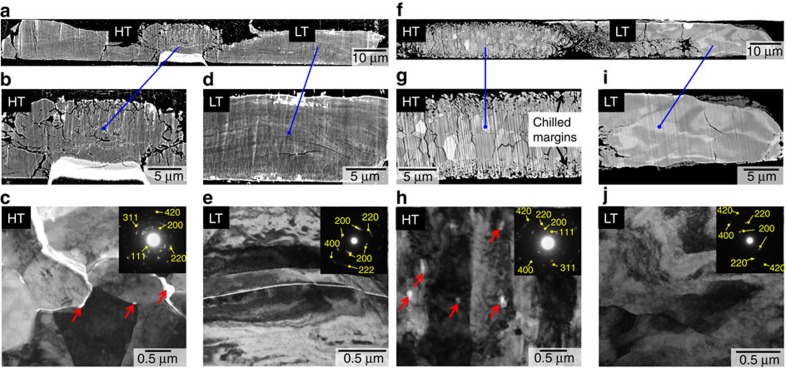
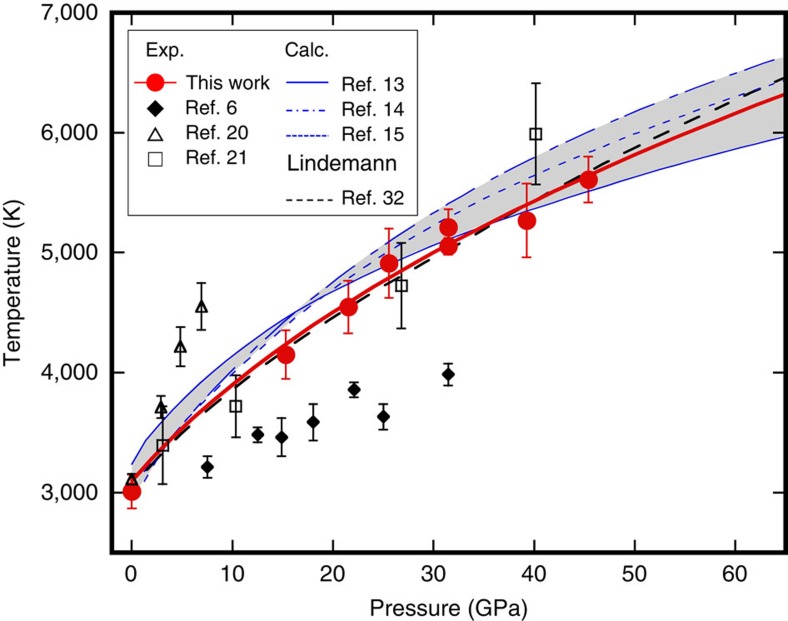
Periclase (MgO) is the second most abundant mineral after bridgmanite in the Earth's lower mantle, and its melting behaviour under pressure is important to constrain rheological properties and melting behaviours of the lower mantle materials. Significant discrepancies exist between the melting temperatures of MgO determined by laser-heated diamond anvil cell (LHDAC) and those based on dynamic compressions and theoretical predictions. Here we show the melting temperatures in earlier LHDAC experiments are underestimated due to misjudgment of melting, based on micro-texture observations of the quenched samples. The high melting temperatures of MgO suggest that the subducted cold slabs should have higher viscosities than previously thought, suggesting that the inter-connecting textural feature of MgO would not play important roles for the slab stagnation in the lower mantle. The present results also predict that the ultra-deep magmas produced in the lower mantle are peridotitic, which are stabilized near the core-mantle boundary.
尖晶石(MgO)是下地幔中仅次于布里奇曼石的第二丰富矿物,其在压力下的熔融行为对于限制下地幔物质的流变性质和熔融行为非常重要。激光加热金刚石压腔(LHDAC)测定的 MgO 熔融温度与基于动态压缩和理论预测的熔融温度之间存在显著差异。在这里,我们基于淬火样品的微观结构观察表明,早期 LHDAC 实验中的熔融温度被低估了,这是由于对熔融的错误判断。MgO 的高熔融温度表明俯冲的冷板块的粘度应该比以前认为的要高,这表明 MgO 的相互连接的纹理特征不会在下地幔中对板块停滞起到重要作用。目前的结果还预测,在下地幔中产生的超深岩浆是橄榄岩质的,它们在核幔边界附近稳定存在。