Sun Ruping, Hu Zheng, Sottoriva Andrea, Graham Trevor A, Harpak Arbel, Ma Zhicheng, Fischer Jared M, Shibata Darryl, Curtis Christina
Department of Medicine, Stanford University School of Medicine, Stanford, California, USA.
Department of Genetics, Stanford University School of Medicine, Stanford, California, USA.
Nat Genet. 2017 Jul;49(7):1015-1024. doi: 10.1038/ng.3891. Epub 2017 Jun 5.
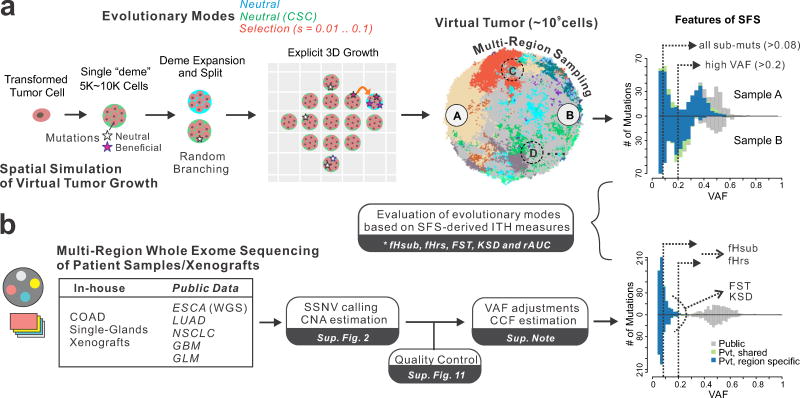
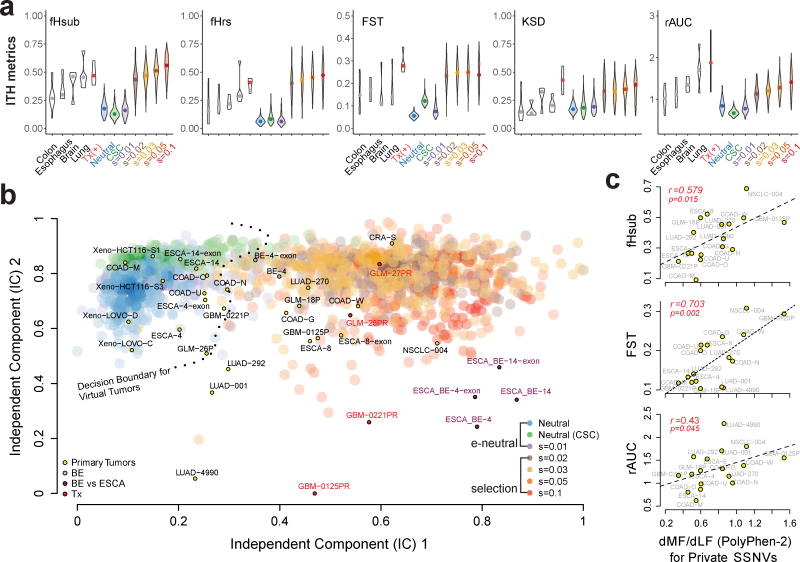
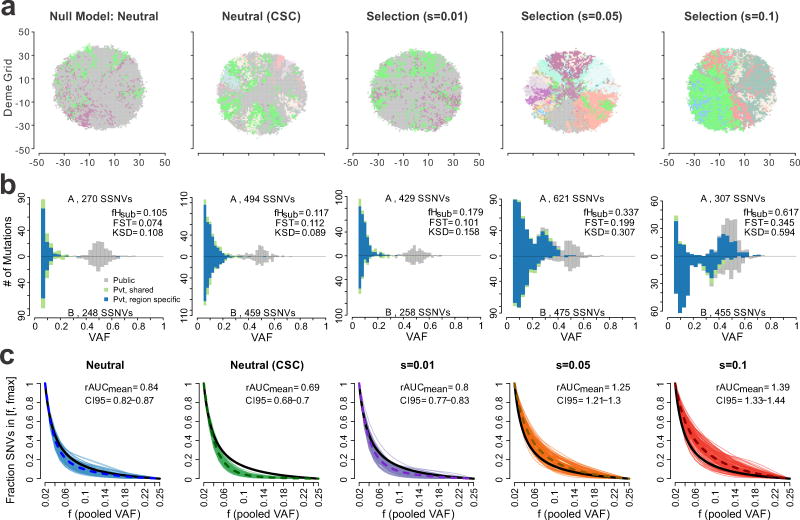
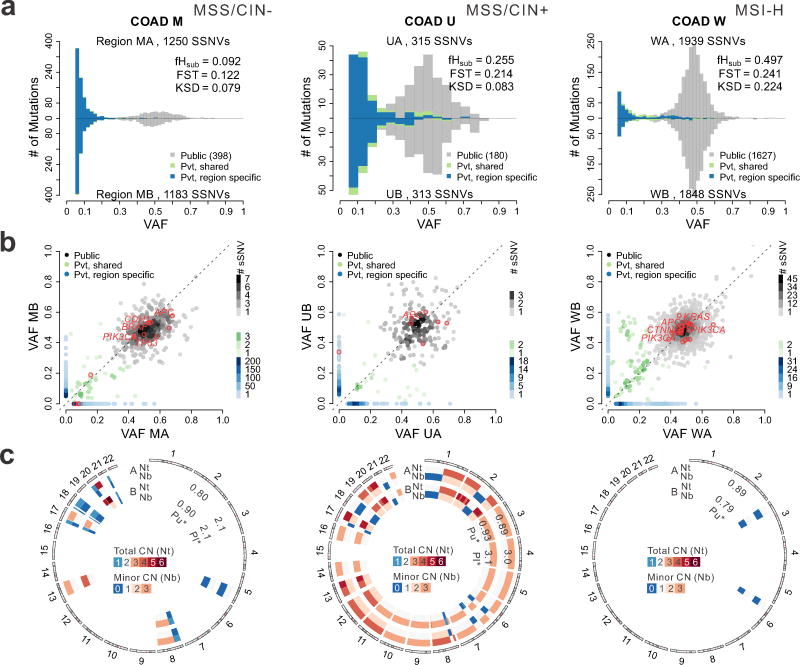
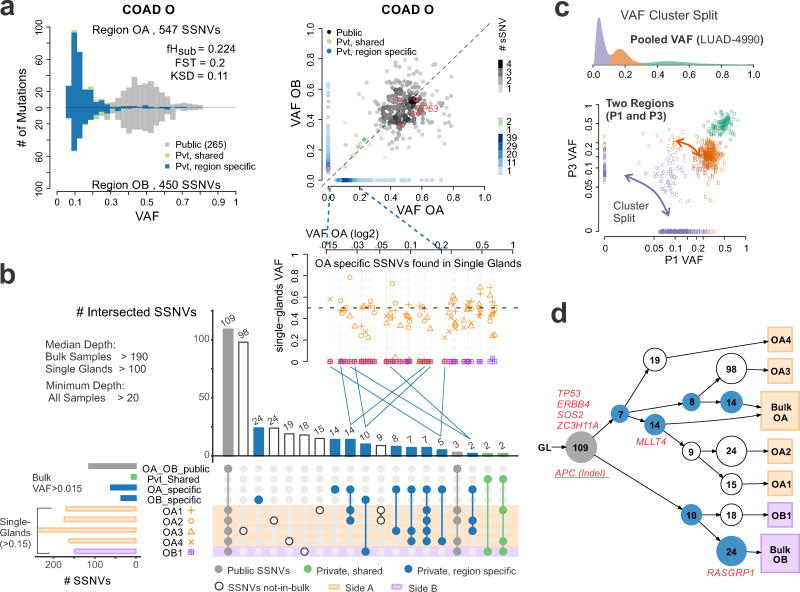
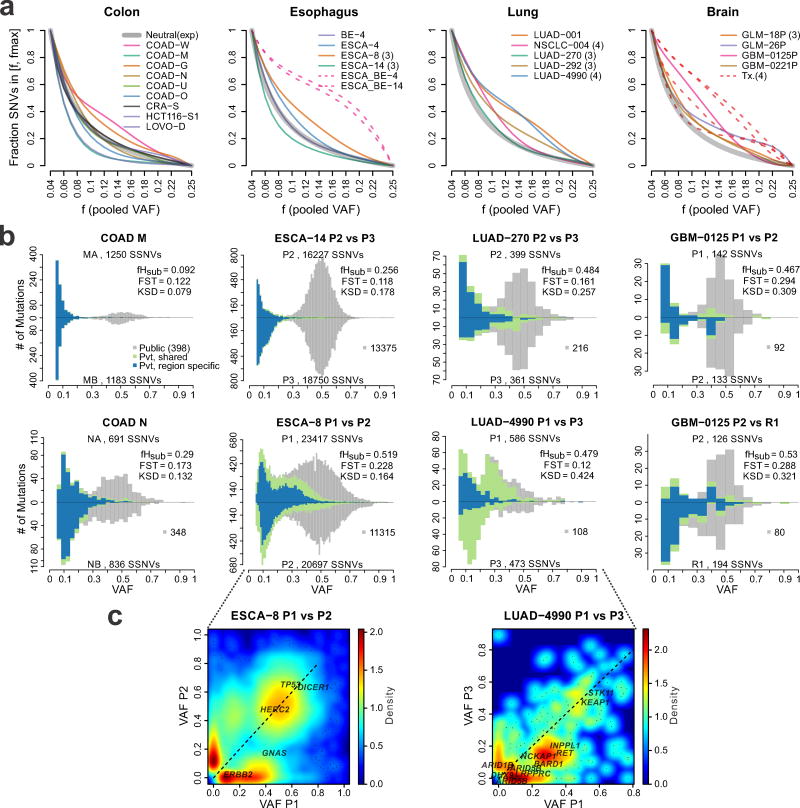
Given the implications of tumor dynamics for precision medicine, there is a need to systematically characterize the mode of evolution across diverse solid tumor types. In particular, methods to infer the role of natural selection within established human tumors are lacking. By simulating spatial tumor growth under different evolutionary modes and examining patterns of between-region subclonal genetic divergence from multiregion sequencing (MRS) data, we demonstrate that it is feasible to distinguish tumors driven by strong positive subclonal selection from those evolving neutrally or under weak selection, as the latter fail to dramatically alter subclonal composition. We developed a classifier based on measures of between-region subclonal genetic divergence and projected patient data into model space, finding different modes of evolution both within and between solid tumor types. Our findings have broad implications for how human tumors progress, how they accumulate intratumoral heterogeneity, and ultimately how they may be more effectively treated.
鉴于肿瘤动态变化对精准医学的影响,有必要系统地描述不同实体瘤类型的进化模式。特别是,目前缺乏推断自然选择在已形成的人类肿瘤中作用的方法。通过模拟不同进化模式下的空间肿瘤生长,并检查来自多区域测序(MRS)数据的区域间亚克隆遗传差异模式,我们证明区分由强烈的亚克隆阳性选择驱动的肿瘤与那些中性进化或弱选择进化的肿瘤是可行的,因为后者不会显著改变亚克隆组成。我们基于区域间亚克隆遗传差异的测量方法开发了一个分类器,并将患者数据投影到模型空间中,发现实体瘤类型内部和之间存在不同的进化模式。我们的研究结果对人类肿瘤的进展方式、肿瘤内异质性的积累方式以及最终如何更有效地治疗肿瘤具有广泛的意义。