Department of Pathology, Christian-Albrechts-University, University Hospital Schleswig-Holstein (UKSH), Campus Kiel, Arnold-Heller-Str. 3, Haus U33, D-24105, Kiel, Germany.
Institute for Clinical Molecular Biology, Christian-Albrechts-University, 24105, Kiel, Germany.
Genome Med. 2021 Nov 8;13(1):177. doi: 10.1186/s13073-021-00975-y.
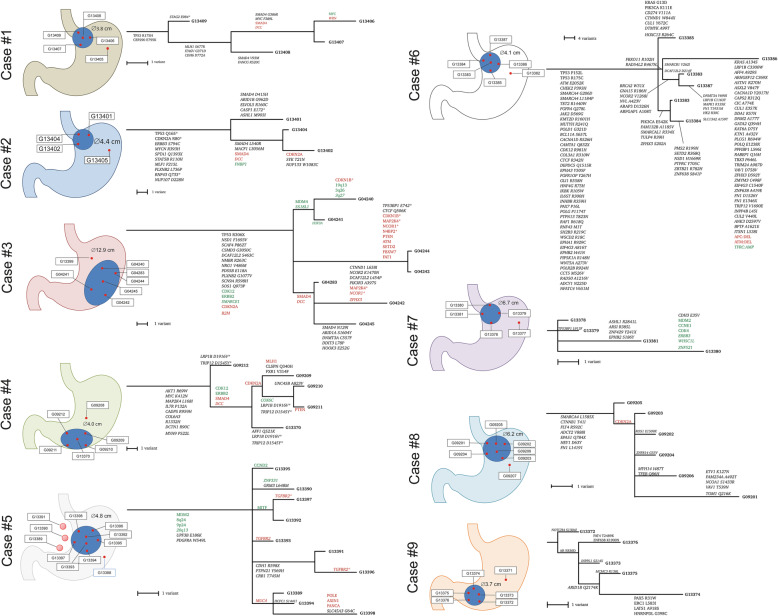
Cancer is a somatic evolutionary disease and adenocarcinomas of the stomach and gastroesophageal junction (GC) may serve as a two-dimensional model of cancer expansion, in which tumor subclones are not evenly mixed during tumor progression but rather spatially separated and diversified. We hypothesize that precision medicine efforts are compromised when clinical decisions are based on a single-sample analysis, which ignores the mechanisms of cancer evolution and resulting intratumoral heterogeneity. Using multiregional whole-exome sequencing, we investigated the effect of somatic evolution on intratumoral heterogeneity aiming to shed light on the evolutionary biology of GC.
The study comprised a prospective discovery cohort of 9 and a validation cohort of 463 GCs. Multiregional whole-exome sequencing was performed using samples form 45 primary tumors and 3 lymph node metastases (range 3-10 tumor samples/patient) of the discovery cohort.
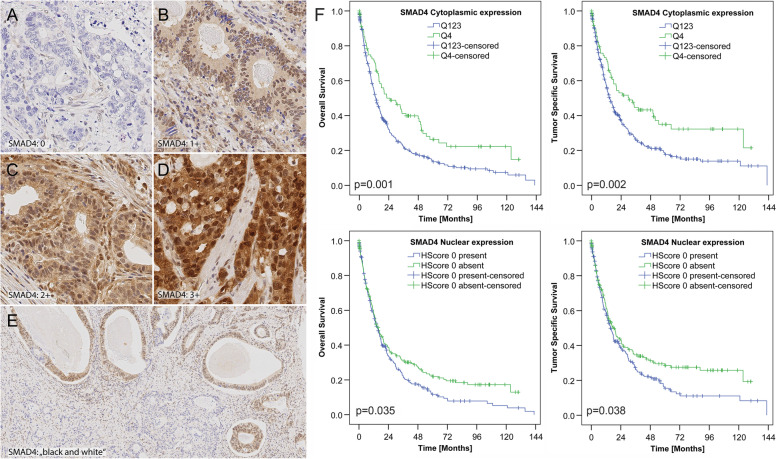
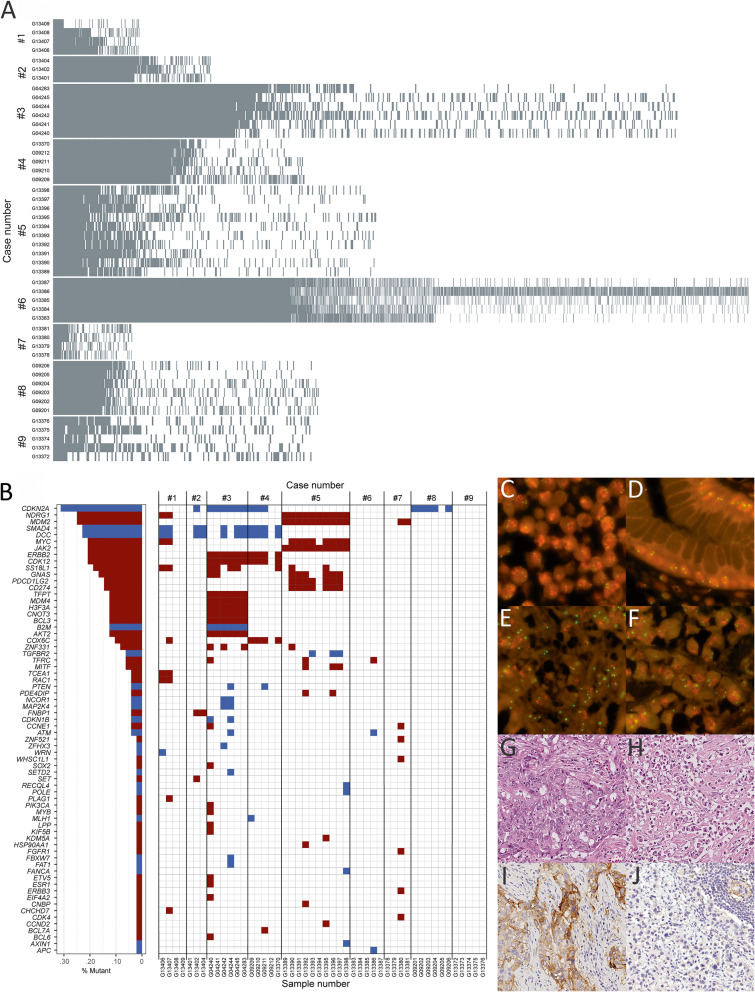
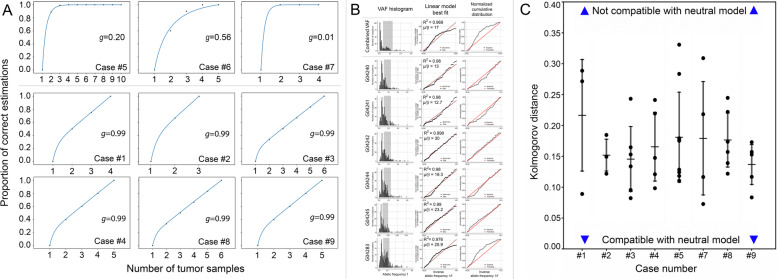
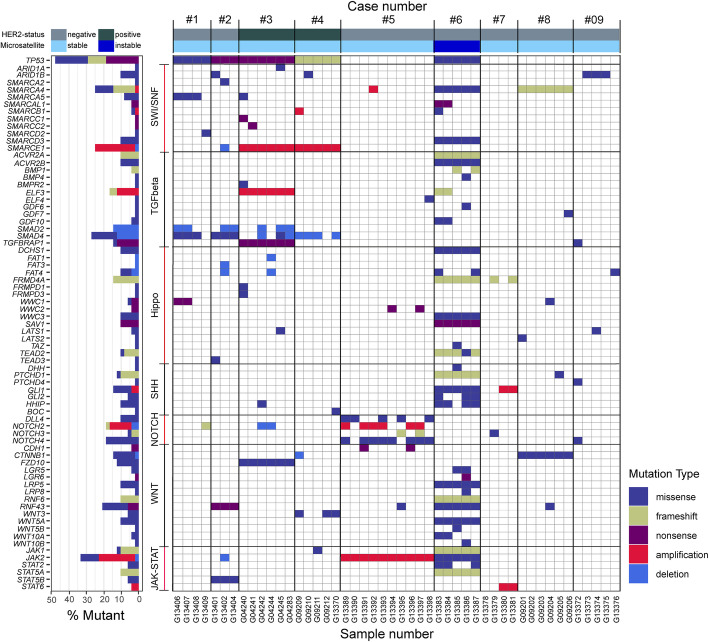
In total, the discovery cohort harbored 16,537 non-synonymous mutations. Intratumoral heterogeneity of somatic mutations and copy number variants were present in all tumors of the discovery cohort. Of the non-synonymous mutations, 53-91% were not present in each patient's sample; 399 genes harbored 2-4 different non-synonymous mutations in the same patient; 175 genes showed copy number variations, the majority being heterogeneous, including CD274 (PD-L1). Multi-sample tree-based analyses provided evidence for branched evolution being most complex in a microsatellite instable GC. The analysis of the mode of evolution showed a high degree of heterogeneity in deviation from neutrality within each tumor. We found evidence of parallel evolution and evolutionary trajectories: different mutations of SMAD4 aligned with different subclones and were found only in TP53 mutant GCs.
Neutral and non-neutral somatic evolution shape the mutational landscape in GC along its lateral expansions. It leads to complex spatial intratumoral heterogeneity, where lymph node metastases may stem from different areas of the primary tumor, synchronously. Our findings may have profound effects on future patient management. They illustrate the risk of mis-interpreting tumor genetics based on single-sample analysis and open new avenues for an evolutionary classification of GC, i.e., the discovery of distinct evolutionary trajectories which can be utilized for precision medicine.
癌症是一种体细胞进化疾病,胃腺癌和胃食管交界处(GC)腺癌可以作为癌症扩张的二维模型,其中肿瘤亚克隆在肿瘤进展过程中不是均匀混合的,而是空间上分离和多样化的。我们假设,当临床决策基于单一样本分析时,精准医学的努力会受到影响,因为这种分析忽略了癌症进化的机制和由此产生的肿瘤内异质性。我们使用多区域全外显子组测序,研究了体细胞进化对肿瘤内异质性的影响,旨在揭示 GC 的进化生物学。
该研究包括一个前瞻性的发现队列,由 9 名患者和一个验证队列的 463 名 GC 患者组成。对发现队列的 45 个原发性肿瘤和 3 个淋巴结转移(每个患者 3-10 个肿瘤样本)进行了多区域全外显子组测序。
在整个发现队列中,共发现 16537 个非同义突变。所有发现队列的肿瘤中均存在体细胞突变和拷贝数变异的肿瘤内异质性。在非同义突变中,53-91%的突变不在每个患者的样本中存在;399 个基因在同一位患者中存在 2-4 个不同的非同义突变;175 个基因存在拷贝数变异,大多数是异质性的,包括 CD274(PD-L1)。基于多样本树的分析为支化进化提供了证据,支化进化在微卫星不稳定的 GC 中最为复杂。对进化模式的分析表明,每个肿瘤内偏离中性的程度存在很大的异质性。我们发现了平行进化和进化轨迹的证据:SMAD4 的不同突变与不同的亚克隆一致,只在 TP53 突变的 GC 中发现。
中性和非中性体细胞进化沿着 GC 的侧向扩张塑造了突变景观。它导致了复杂的空间肿瘤内异质性,其中淋巴结转移可能来自原发性肿瘤的不同区域,同时发生。我们的发现可能对未来的患者管理产生深远影响。它们说明了基于单一样本分析来解释肿瘤遗传学的风险,并为 GC 的进化分类开辟了新的途径,即发现不同的进化轨迹,这些轨迹可用于精准医学。