Akhter Jaweed, Ahmed Asma, Mawani Minaz, Lakhani Laila, Kalsekar Ayaz, Tabassum Shehla, Islam Najmul
SETMA Diabetes Center, Beaumont, TX, USA.
Aga Khan University, Karachi, Pakistan.
BMC Endocr Disord. 2017 Jun 5;17(1):30. doi: 10.1186/s12902-017-0179-1.
Diabetes registry enables practitioners to measure the characteristics and patterns of diabetes across their patient population. They also provide insight into practice patterns which can be very effective in improving care and preventing complications. The aim of this study was to assess the patterns, control levels and complications at the baseline of the patients attending clinic at the large tertiary care hospital in Karachi, Pakistan with the help of the registry. This can be used as a reference to monitor the control and also for a comparison between peer groups.
This was a cross sectional study with the data obtained from diabetes registry collected with the help of pre-designed questionnaire. HbA1c was used as a central diabetes measure and other related factors and complications were assessed with it.
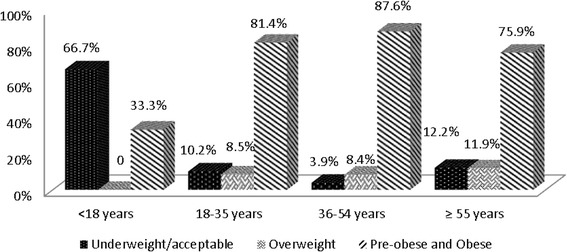
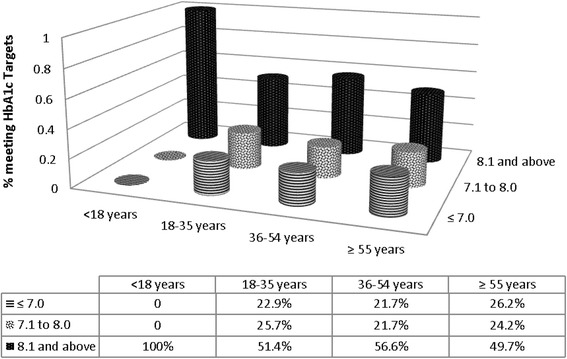
Only 16.6% of the participants had optimal HbA1c ≤ 7.0%. 52.9% of the patients were classified as having poor control defined by HbA1c of >8%. Three fourth of the study population were obese according to Asian specific BMI cutoffs and majority had type 2 diabetes with duration of diabetes ranging from less than one to about 35 years, mean(SD) duration being 7.6 years (7.1). Overall only 4% of the patients were on combine target of HbA1c, LDL and BP. Results of multivariable logistic regression showed that the odds of having optimal glycemic control increased by 3% with every one year increase in age. In addition, having longer duration of diabetes was associated with 56% lower odds of having good glycemic control. Moreover, having higher triglyceride levels was associated with 1% lower odds of having good glycemic control.
This highlights the large burden of sub optimally controlled people with diabetes in Pakistani population, a low income country with huge diabetes prevalence and ineffective primary health care system creating enormous health and economic burden.
糖尿病登记系统使从业者能够衡量其患者群体中糖尿病的特征和模式。它们还能深入了解实践模式,这对改善护理和预防并发症非常有效。本研究的目的是借助该登记系统评估在巴基斯坦卡拉奇一家大型三级护理医院就诊的患者基线时的模式、控制水平和并发症情况。这可作为监测控制情况的参考,也可用于同行群体之间的比较。
这是一项横断面研究,数据来自借助预先设计的问卷收集的糖尿病登记系统。糖化血红蛋白(HbA1c)被用作糖尿病的核心指标,并据此评估其他相关因素和并发症。
只有16.6%的参与者糖化血红蛋白水平最佳(≤7.0%)。52.9%的患者被归类为控制不佳,糖化血红蛋白水平>8%。根据亚洲特定的体重指数(BMI)临界值,四分之三的研究人群肥胖,大多数患有2型糖尿病,糖尿病病程从不到1年到约35年不等,平均(标准差)病程为7.6年(7.1年)。总体而言,只有4%的患者同时达到糖化血红蛋白、低密度脂蛋白和血压的控制目标。多变量逻辑回归结果显示,年龄每增加一岁,血糖控制达到最佳的几率增加3%。此外,糖尿病病程较长与血糖控制良好的几率降低56%相关。而且,甘油三酯水平较高与血糖控制良好的几率降低1%相关。
这凸显了在巴基斯坦人群中,糖尿病控制不佳的人群负担沉重。巴基斯坦是一个低收入国家,糖尿病患病率极高,初级卫生保健系统效率低下,造成了巨大的健康和经济负担。