Gonçalves Nádia Pereira, Moreira João, Martins Diana, Vieira Paulo, Obici Laura, Merlini Giampaolo, Saraiva Margarida, Saraiva Maria João
i3S - Instituto de Investigação e Inovação em Saúde da Universidade do Porto, Rua Alfredo Allen, 208, 4200-135, Porto, Portugal.
Molecular Neurobiology Group, IBMC - Institute for Molecular and Cell Biology, University of Porto, 4150-180, Porto, Portugal.
J Neuroinflammation. 2017 Jun 6;14(1):115. doi: 10.1186/s12974-017-0891-9.
Increasing evidence supports a key role for inflammation in the neurodegenerative process of familial amyloidotic polyneuropathy (FAP). While there seems to be an overactivation of the neuronal interleukin-1 signaling pathway, the immune response is apparently compromised in FAP. Accordingly, little immune cell infiltration is observed around pre-fibrillar or fibrillar amyloid deposits, with the underlying mechanism for this phenomenon remaining poorly understood. Cathepsin E (CtsE) is an important intermediate for antigen presentation and chemotaxis, but its role in the pathogenesis of FAP disease remains unknown.
In this study, we used both mouse primary macrophages and in vivo studies based on transgenic models of FAP and human samples to characterize CtsE expression in different physiological systems.
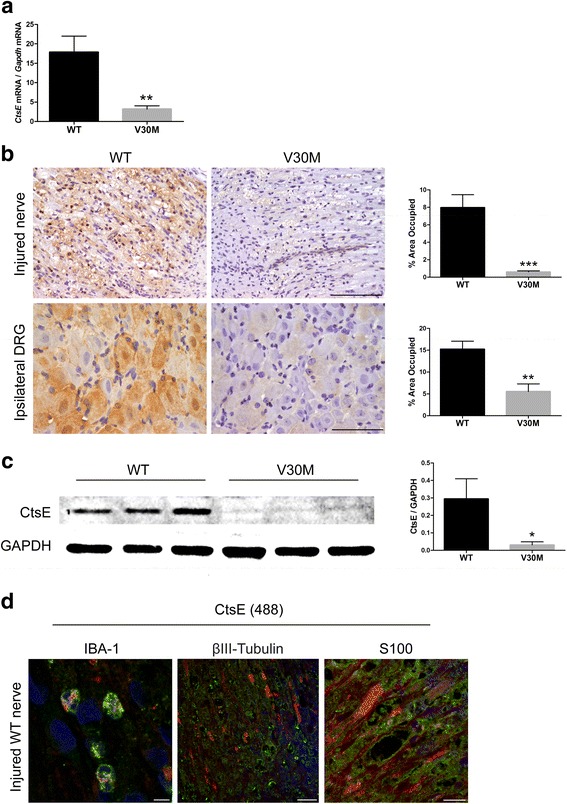
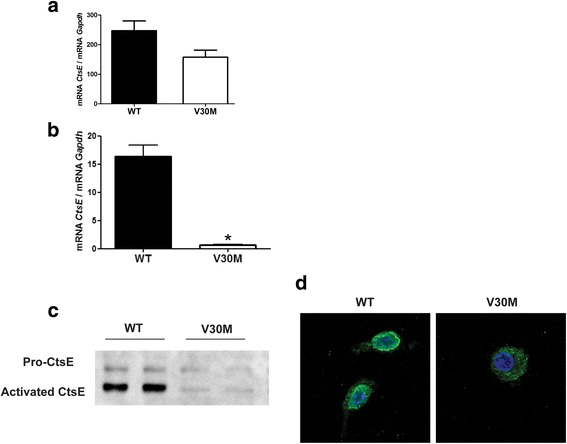
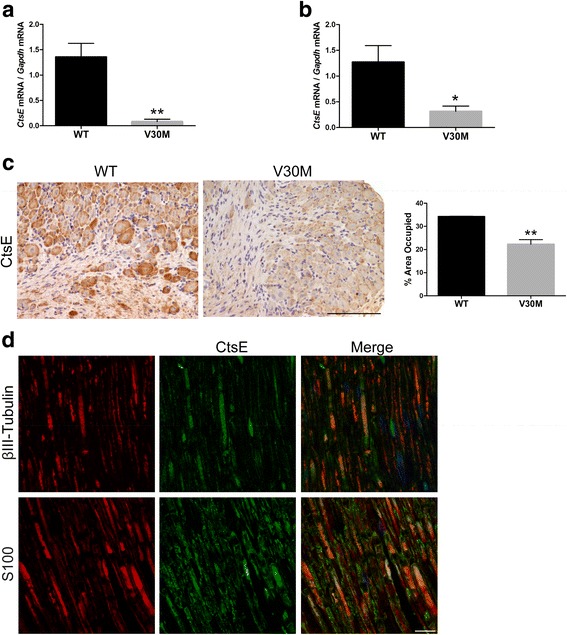
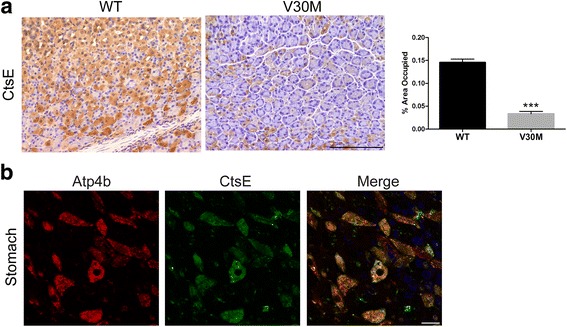
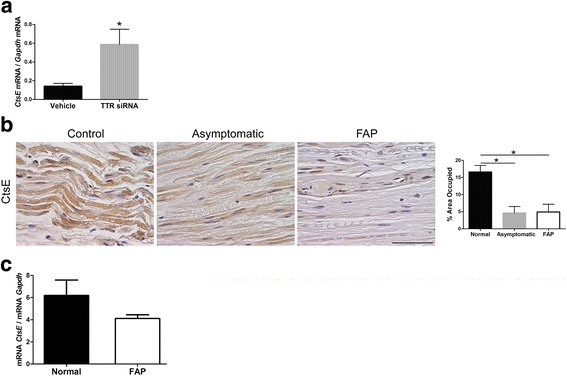
We show that CtsE is critically decreased in bone marrow-derived macrophages from a FAP mouse model, possibly contributing for cell function impairment. Compromised levels of CtsE were also found in injured nerves of transgenic mice and, most importantly, in naïve peripheral nerves, sensory ganglia, murine stomach, and sural nerve biopsies derived from FAP patients. Expression of CtsE in tissues was associated with transthyretin (TTR) deposition and differentially regulated accordingly with the physiological system under study. Preventing deposition with a TTR small interfering RNA rescued CtsE in the peripheral nervous system (PNS). In contrast, the expression of CtsE increased in splenic cells (mainly monocytes) or peritoneal macrophages, indicating a differential macrophage phenotype.
Altogether, our data highlights the potential of CtsE as a novel FAP biomarker and a possible modulator for innate immune cell chemotaxis to the disease most affected tissues-the peripheral nerve and the gastrointestinal tract.
越来越多的证据支持炎症在家族性淀粉样多神经病(FAP)神经退行性变过程中起关键作用。虽然神经元白细胞介素-1信号通路似乎过度激活,但FAP中的免疫反应显然受损。因此,在原纤维或纤维状淀粉样沉积物周围观察到很少的免疫细胞浸润,这种现象的潜在机制仍知之甚少。组织蛋白酶E(CtsE)是抗原呈递和趋化作用的重要中间体,但其在FAP疾病发病机制中的作用尚不清楚。
在本研究中,我们使用小鼠原代巨噬细胞以及基于FAP转基因模型和人类样本的体内研究来表征不同生理系统中CtsE的表达。
我们发现FAP小鼠模型的骨髓来源巨噬细胞中CtsE显著降低,这可能导致细胞功能受损。在转基因小鼠的损伤神经中也发现CtsE水平受损,最重要的是,在FAP患者的未受损外周神经、感觉神经节、小鼠胃和腓肠神经活检组织中也发现了CtsE水平受损。组织中CtsE的表达与转甲状腺素蛋白(TTR)沉积相关,并根据所研究的生理系统受到不同调节。用TTR小干扰RNA阻止沉积可挽救外周神经系统(PNS)中的CtsE。相反,CtsE在脾细胞(主要是单核细胞)或腹膜巨噬细胞中的表达增加,表明巨噬细胞表型存在差异。
总之,我们的数据突出了CtsE作为一种新型FAP生物标志物的潜力,以及作为先天性免疫细胞向受疾病影响最严重的组织——外周神经和胃肠道趋化的可能调节剂。