Schmitt Christopher E, Morales Blanca M, Schmitz Ellen M H, Hawkins John S, Lizama Carlos O, Zape Joan P, Hsiao Edward C, Zovein Ann C
Cardiovascular Research Institute, University of California San Francisco, San Francisco, CA, 94158, USA.
Eli and Edythe Broad Center of Regeneration Medicine and Stem Cell Research, University of California San Francisco, San Francisco, CA, USA.
Stem Cell Res Ther. 2017 Jun 5;8(1):132. doi: 10.1186/s13287-017-0581-7.
Non-integrating episomal vectors have become an important tool for induced pluripotent stem cell reprogramming. The episomal vectors carrying the "Yamanaka reprogramming factors" (Oct4, Klf, Sox2, and L-Myc + Lin28) are critical tools for non-integrating reprogramming of cells to a pluripotent state. However, the reprogramming process remains highly stochastic, and is hampered by an inability to easily identify clones that carry the episomal vectors.
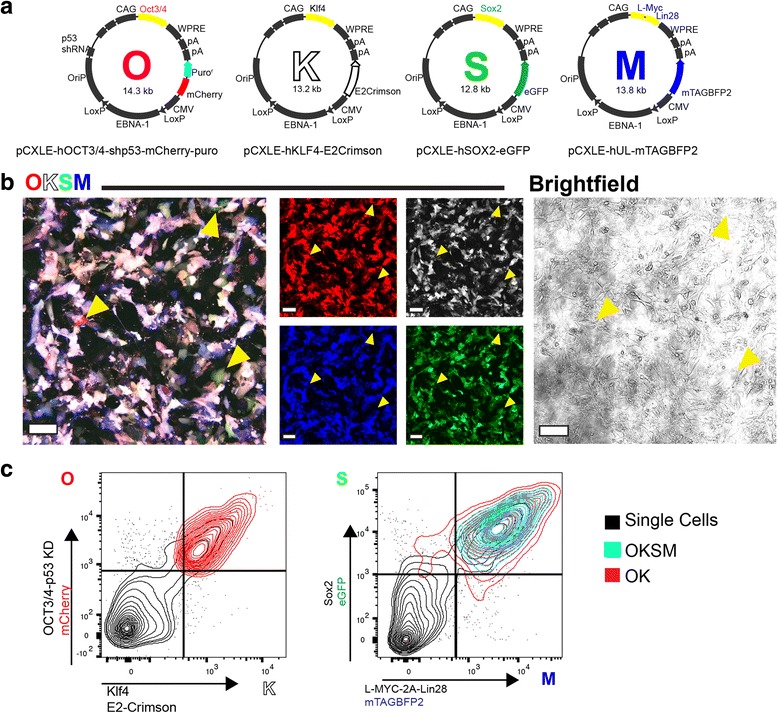
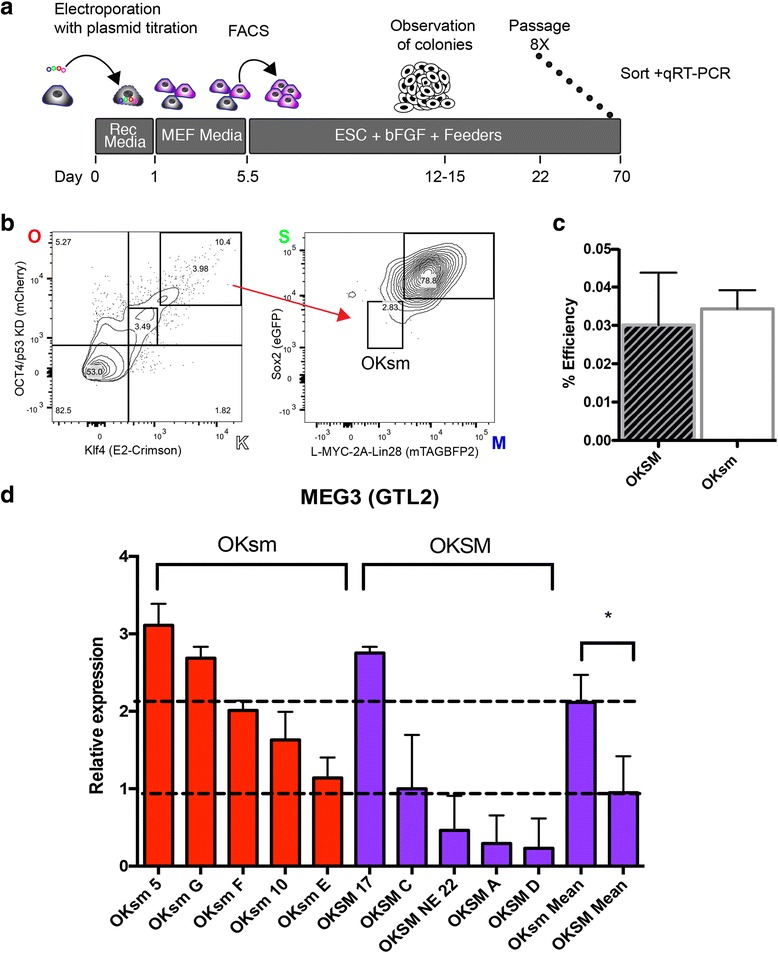
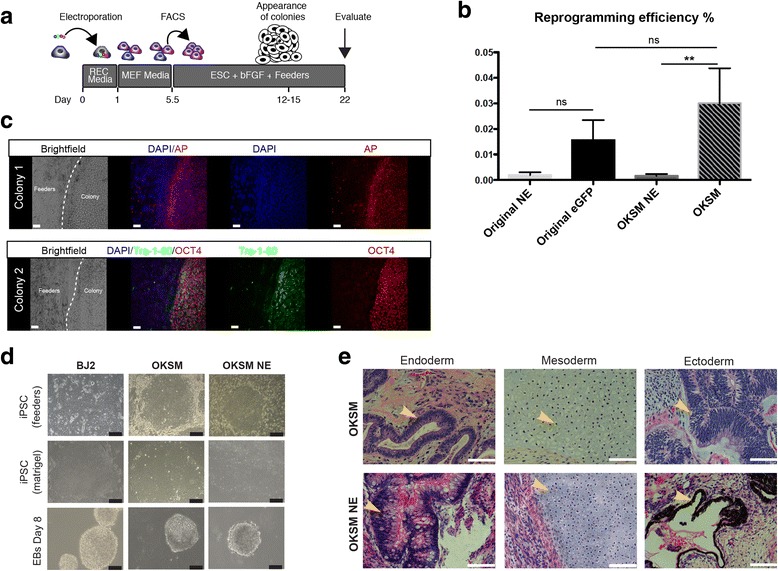
We modified the original set of vectors to express spectrally separable fluorescent proteins to allow for enrichment of transfected cells. The vectors were then tested against the standard original vectors for reprogramming efficiency and for the ability to enrich for stoichiometric ratios of factors.
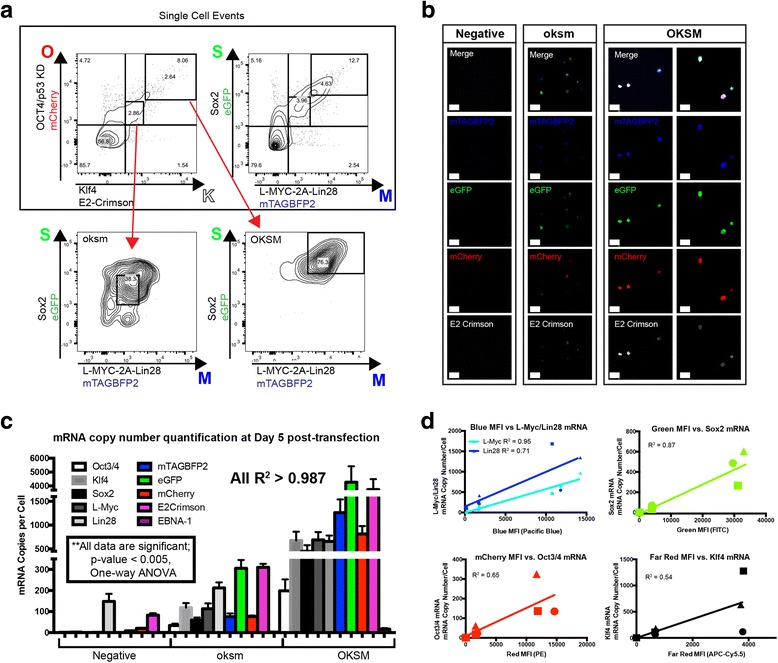
The reengineered vectors allow for cell sorting based on reprogramming factor expression. We show that these vectors can assist in tracking episomal expression in individual cells and can select the reprogramming factor dosage.
Together, these modified vectors are a useful tool for understanding the reprogramming process and improving induced pluripotent stem cell isolation efficiency.
非整合型附加体载体已成为诱导多能干细胞重编程的重要工具。携带“山中重编程因子”(Oct4、Klf、Sox2以及L-Myc + Lin28)的附加体载体是将细胞非整合性重编程为多能状态的关键工具。然而,重编程过程仍然高度随机,并且因无法轻松鉴定携带附加体载体的克隆而受到阻碍。
我们对原始载体组进行了改造,使其表达可通过光谱分离的荧光蛋白,以便富集转染细胞。然后将这些载体与标准原始载体进行重编程效率以及富集因子化学计量比能力的测试。
重新设计的载体允许基于重编程因子表达进行细胞分选。我们表明这些载体有助于追踪单个细胞中的附加体表达,并可选择重编程因子剂量。
总之,这些经过修饰的载体是理解重编程过程和提高诱导多能干细胞分离效率的有用工具。