Rothrauff Benjamin B, Yang Guang, Tuan Rocky S
Center for Cellular and Molecular Engineering, Department of Orthopaedic Surgery, University of Pittsburgh School of Medicine, 450 Technology Drive, Room 221, Pittsburgh, PA, 15219, USA.
McGowan Institute for Regenerative Medicine, University of Pittsburgh, Pittsburgh, PA, 15219, USA.
Stem Cell Res Ther. 2017 Jun 5;8(1):133. doi: 10.1186/s13287-017-0580-8.
Biological scaffolds composed of tissue-derived extracellular matrix (ECM) can promote homologous (i.e., tissue-specific) cell differentiation through preservation of biophysical and biochemical motifs found in native tissues. Solubilized ECMs derived from decellularized tendon and cartilage have recently been promoted as tissue-specific biomaterials, but whether tissue-specific bioactivity is preserved following solubilization is unknown. This study explored the tissue-specific bioactivity of soluble decellularized tendon and cartilage ECMs on human bone marrow-derived mesenchymal stem cells (MSCs) presented across different culture microenvironments, including two-dimensional (2D) tissue culture plastic, aligned electrospun nanofibers, cell pellets, and cell-seeded photocrosslinkable hydrogels.
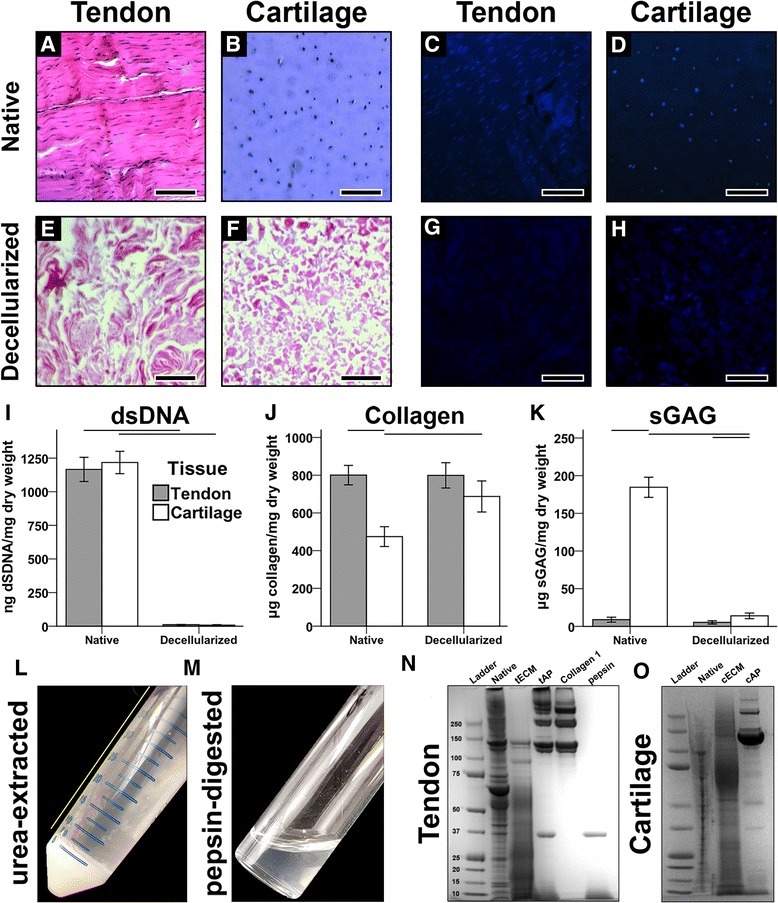
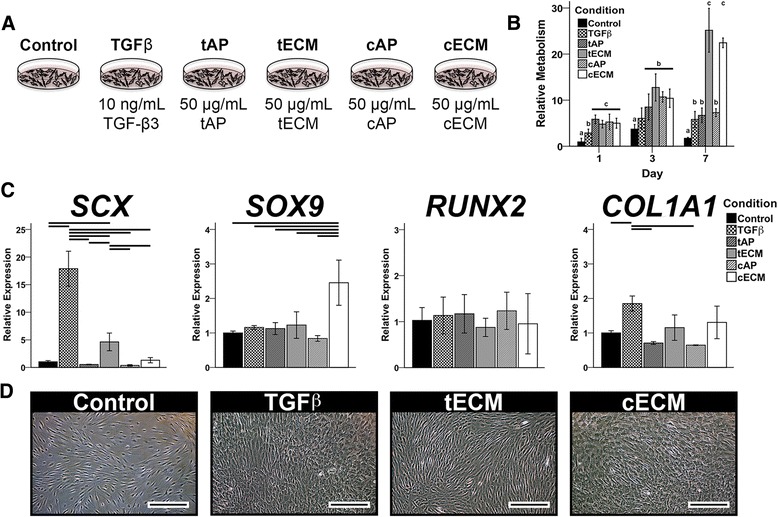
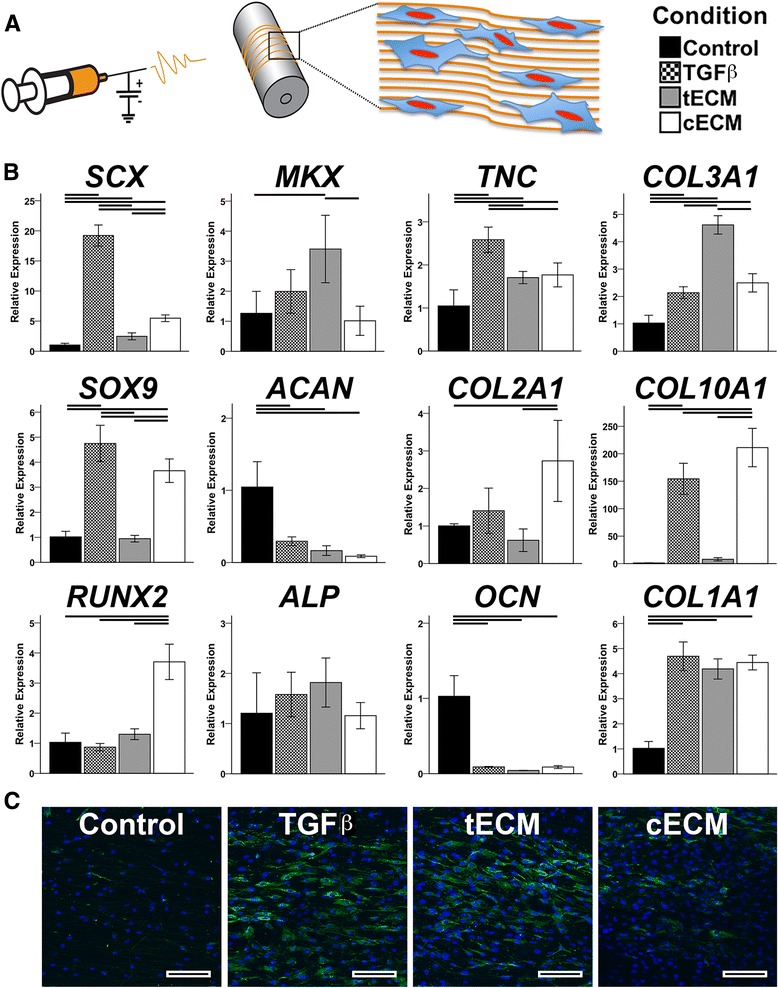
Tendon and cartilage ECMs were decellularized using established methods and solubilized either via pepsin digestion or urea extraction. The effect of soluble ECMs on cell proliferation and differentiation was initially explored by supplementing basal medium of human MSCs cultured on 2D tissue culture plastic. In subsequent experiments, MSCs were cultured on aligned electrospun nanofibers, ascell pellets, or encapsulated within photocrosslinkable methacrylated gelatin (GelMA) hydrogels. Urea-extracted tendon and cartilage ECMs were added as supplements.
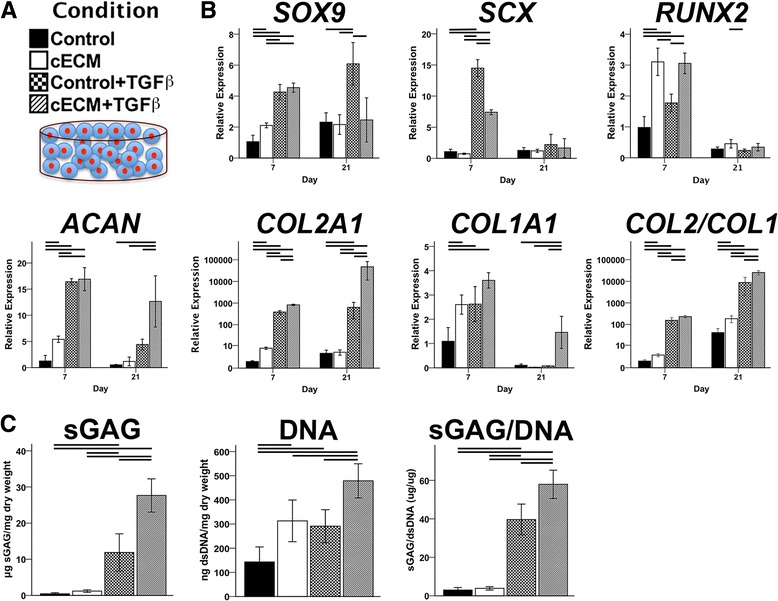
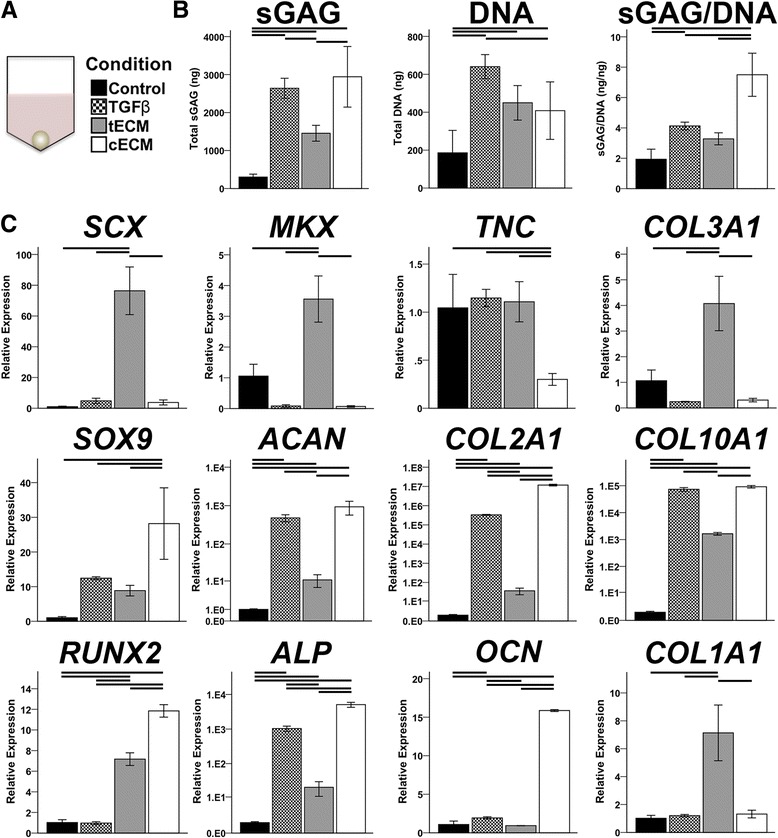
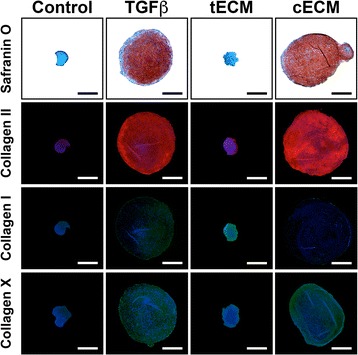
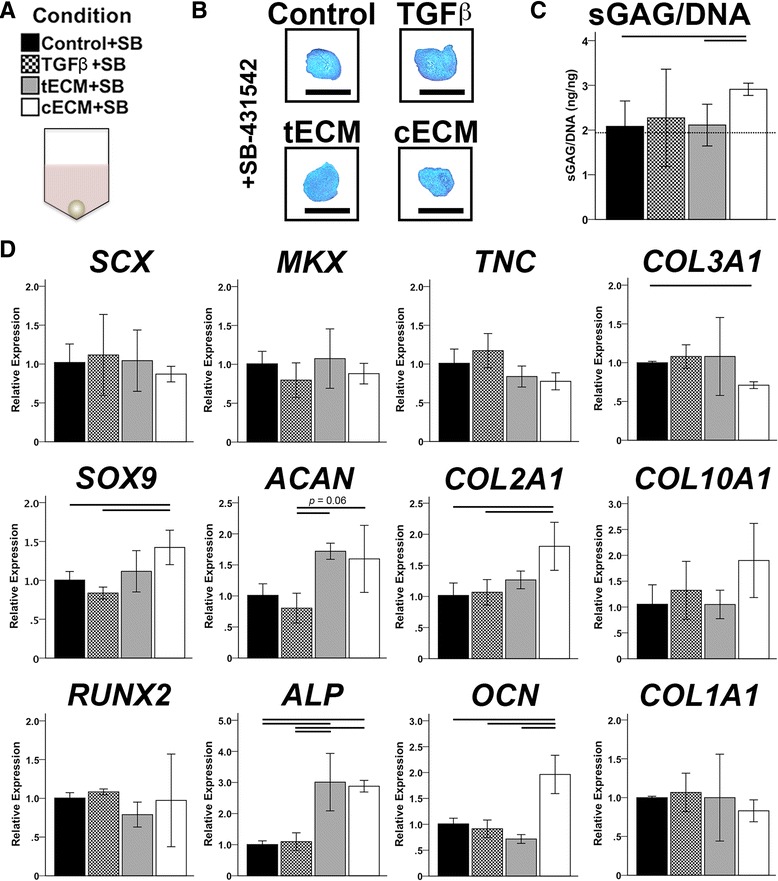
Pepsin-digested ECMs did not promote homologous differentiation in human MSCs, whether provided as a medium supplement or three-dimensional (3D) hydrogels. In contrast, urea-extracted ECMs tended to promote tissue-specific differentiation of MSCs cultured in 2D and 3D microenvironments. The application of the small molecule TGF-β signaling inhibitor SB-431542 largely negated the tissue-specific gene expression patterns mediated by tendon and cartilage ECMs. This suggests that the action of endogenous TGF-β was required, but was not sufficient, to impart tissue-specific bioactivity of urea-extracted ECMs. When urea-extracted cartilage ECM was incorporated within a photocurable GelMA hydrogel it independently enhanced chondrogenesis in encapsulated MSCs, and showed additive prochondrogenesis upon TGF-β supplementation in the medium.
Urea-extracted ECM fractions of decellularized tendon and cartilage are soluble supplements capable of enhancing tissue-specific differentiation of adult stem cells.
由组织衍生的细胞外基质(ECM)组成的生物支架可通过保留天然组织中发现的生物物理和生化基序来促进同源(即组织特异性)细胞分化。源自脱细胞肌腱和软骨的可溶性ECM最近被推广为组织特异性生物材料,但溶解后是否保留组织特异性生物活性尚不清楚。本研究探讨了可溶性脱细胞肌腱和软骨ECM对人骨髓间充质干细胞(MSC)的组织特异性生物活性,这些细胞呈现于不同的培养微环境中,包括二维(2D)组织培养塑料、排列的电纺纳米纤维、细胞球以及细胞接种的可光交联水凝胶。
使用既定方法对肌腱和软骨ECM进行脱细胞处理,并通过胃蛋白酶消化或尿素提取使其溶解。通过补充在2D组织培养塑料上培养的人MSC的基础培养基,初步探索可溶性ECM对细胞增殖和分化的影响。在随后的实验中,将MSC培养在排列的电纺纳米纤维上、作为细胞球或封装在可光交联的甲基丙烯酸化明胶(GelMA)水凝胶中。添加尿素提取的肌腱和软骨ECM作为补充剂。
无论作为培养基补充剂还是三维(3D)水凝胶提供,胃蛋白酶消化的ECM均未促进人MSC的同源分化。相比之下,尿素提取的ECM倾向于促进在2D和3D微环境中培养的MSC的组织特异性分化。小分子TGF-β信号抑制剂SB-431542的应用在很大程度上消除了由肌腱和软骨ECM介导的组织特异性基因表达模式。这表明内源性TGF-β的作用是赋予尿素提取的ECM组织特异性生物活性所必需的,但并不充分。当将尿素提取的软骨ECM掺入可光固化的GelMA水凝胶中时,它可独立增强封装的MSC中的软骨生成,并在培养基中补充TGF-β后显示出相加的促软骨生成作用。
脱细胞肌腱和软骨的尿素提取ECM组分是能够增强成体干细胞组织特异性分化的可溶性补充剂。