Hazra Avijit, Gogtay Nithya
Department of Pharmacology, Institute of Postgraduate Medical Education and Research, Kolkata, West Bengal, India.
Department of Clinical Pharmacology, Seth GS Medical College and KEM Hospital, Mumbai, Maharashtra, India.
Indian J Dermatol. 2017 May-Jun;62(3):251-257. doi: 10.4103/ijd.IJD_201_17.
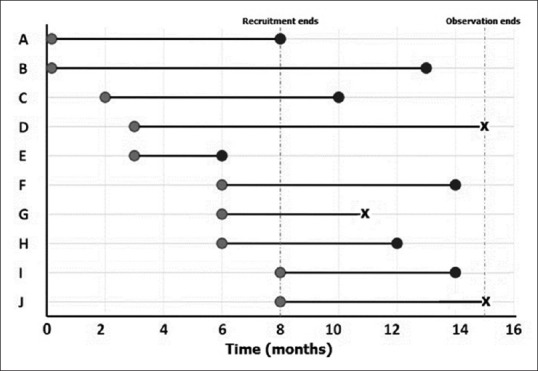
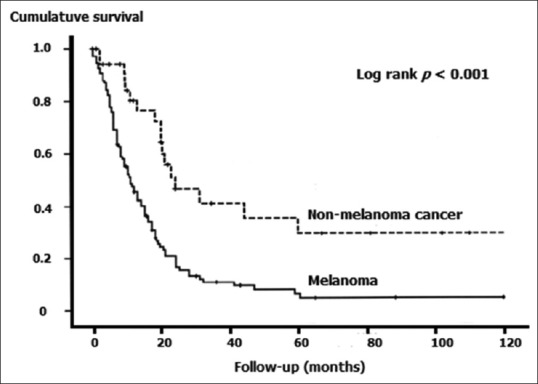
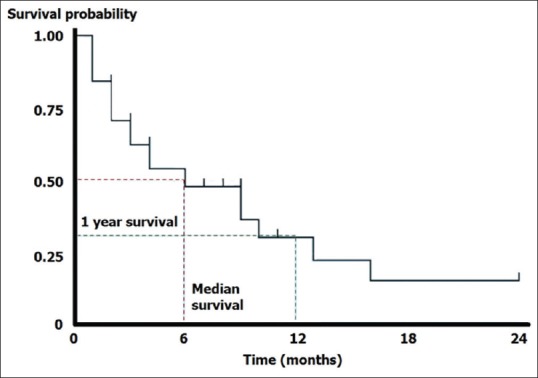
Survival analysis is concerned with "time to event" data. Conventionally, it dealt with cancer death as the event in question, but it can handle any event occurring over a time frame, and this need not be always adverse in nature. When the outcome of a study is the time to an event, it is often not possible to wait until the event in question has happened to all the subjects, for example, until all are dead. In addition, subjects may leave the study prematurely. Such situations lead to what is called censored observations as complete information is not available for these subjects. The data set is thus an assemblage of times to the event in question and times after which no more information on the individual is available. Survival analysis methods are the only techniques capable of handling censored observations without treating them as missing data. They also make no assumption regarding normal distribution of time to event data. Descriptive methods for exploring survival times in a sample include life table and Kaplan-Meier techniques as well as various kinds of distribution fitting as advanced modeling techniques. The Kaplan-Meier cumulative survival probability over time plot has become the signature plot for biomedical survival analysis. Several techniques are available for comparing the survival experience in two or more groups - the log-rank test is popularly used. This test can also be used to produce an odds ratio as an estimate of risk of the event in the test group; this is called hazard ratio (HR). Limitations of the traditional log-rank test have led to various modifications and enhancements. Finally, survival analysis offers different regression models for estimating the impact of multiple predictors on survival. Cox's proportional hazard model is the most general of the regression methods that allows the hazard function to be modeled on a set of explanatory variables without making restrictive assumptions concerning the nature or shape of the underlying survival distribution. It can accommodate any number of covariates, whether they are categorical or continuous. Like the adjusted odds ratios in logistic regression, this multivariate technique produces adjusted HRs for individual factors that may modify survival.
生存分析关注“事件发生时间”数据。传统上,它将癌症死亡视为所讨论的事件,但它可以处理在一个时间框架内发生的任何事件,而且该事件不一定总是负面的。当一项研究的结果是事件发生时间时,通常不可能等到所讨论的事件发生在所有受试者身上,例如,直到所有人都死亡。此外,受试者可能会提前退出研究。这种情况导致了所谓的删失观测值,因为无法获得这些受试者的完整信息。因此,数据集是所讨论事件的发生时间以及之后无法再获得个体更多信息的时间的集合。生存分析方法是唯一能够处理删失观测值而不将其视为缺失数据的技术。它们也不对事件发生时间数据的正态分布做任何假设。用于探索样本中生存时间的描述性方法包括生命表和 Kaplan-Meier 技术以及作为高级建模技术的各种分布拟合。 Kaplan-Meier 随时间变化的累积生存概率图已成为生物医学生存分析的标志性图表。有几种技术可用于比较两组或多组的生存经历——常用的是对数秩检验。该检验还可用于生成比值比,作为测试组中事件风险的估计值;这称为风险比(HR)。传统对数秩检验的局限性导致了各种改进和增强。最后,生存分析提供了不同的回归模型,用于估计多个预测因素对生存的影响。Cox 比例风险模型是最通用的回归方法,它允许在一组解释变量上对风险函数进行建模,而无需对潜在生存分布的性质或形状做出限制性假设。它可以容纳任意数量的协变量,无论它们是分类变量还是连续变量。与逻辑回归中的调整后比值比一样,这种多变量技术会为可能影响生存的个体因素生成调整后的 HR。