Division of Cancer and Genetics, School of Medicine, Cardiff University, Cardiff, CF14 4XN, UK.
Biomedical Engineering and Rheology Group, Zienkiewicz Centre for Computational Engineering, Swansea University, Swansea, SA2 8PP, UK.
Med Biol Eng Comput. 2017 Dec;55(12):2155-2167. doi: 10.1007/s11517-017-1657-3. Epub 2017 Jun 5.
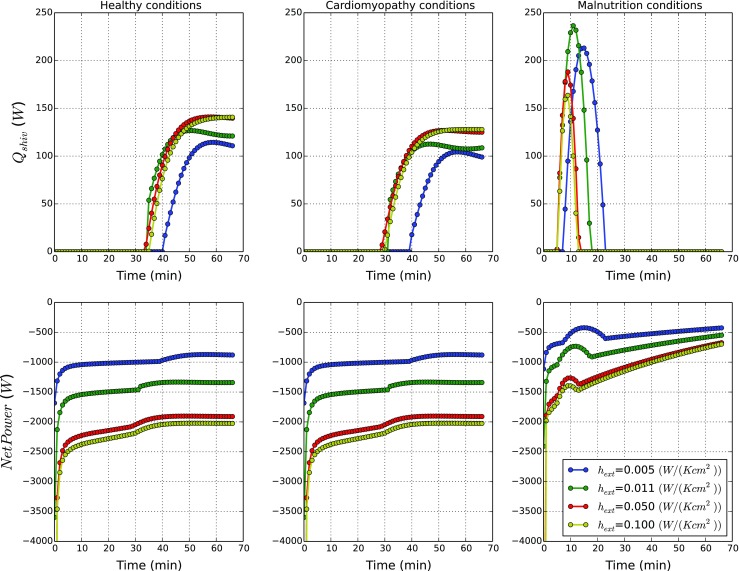
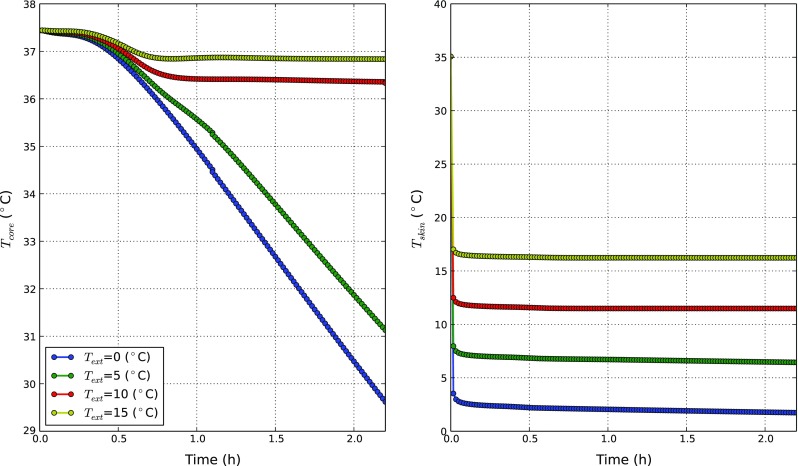
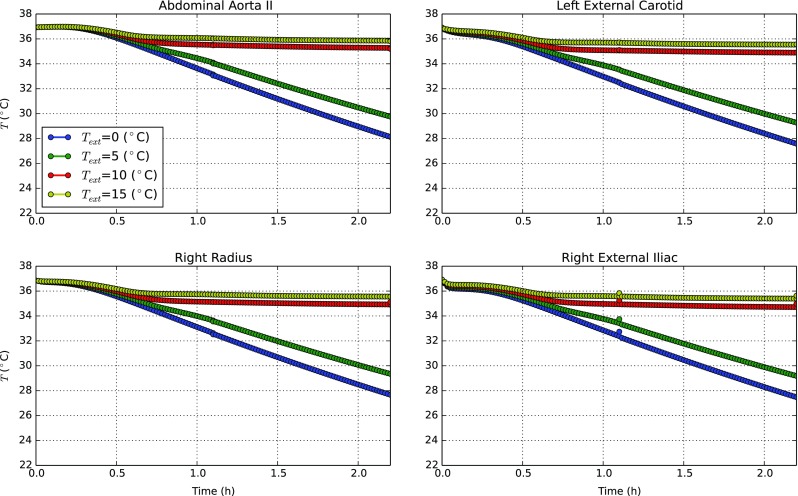
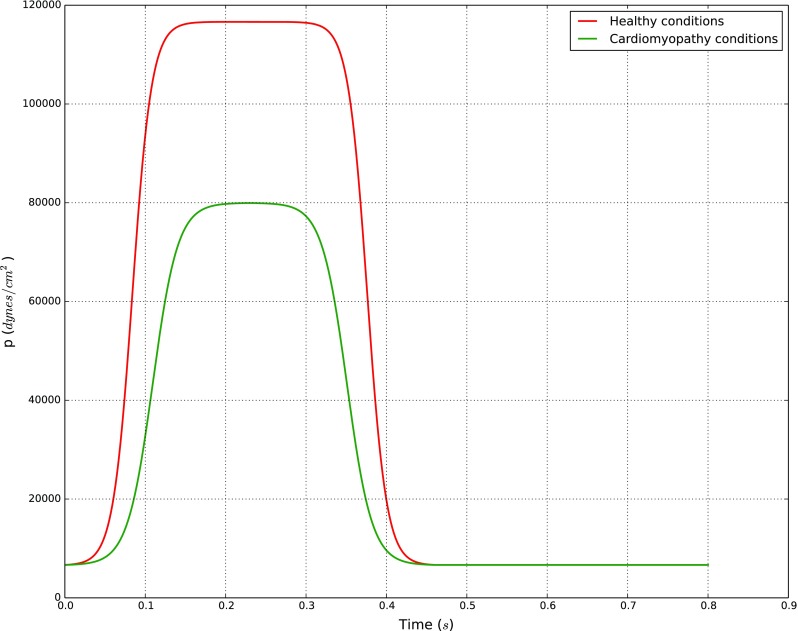
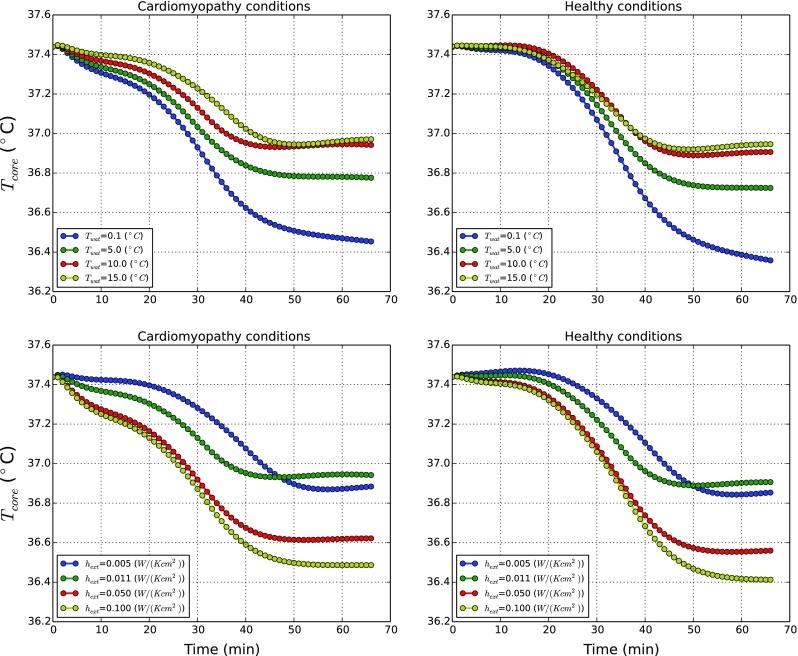
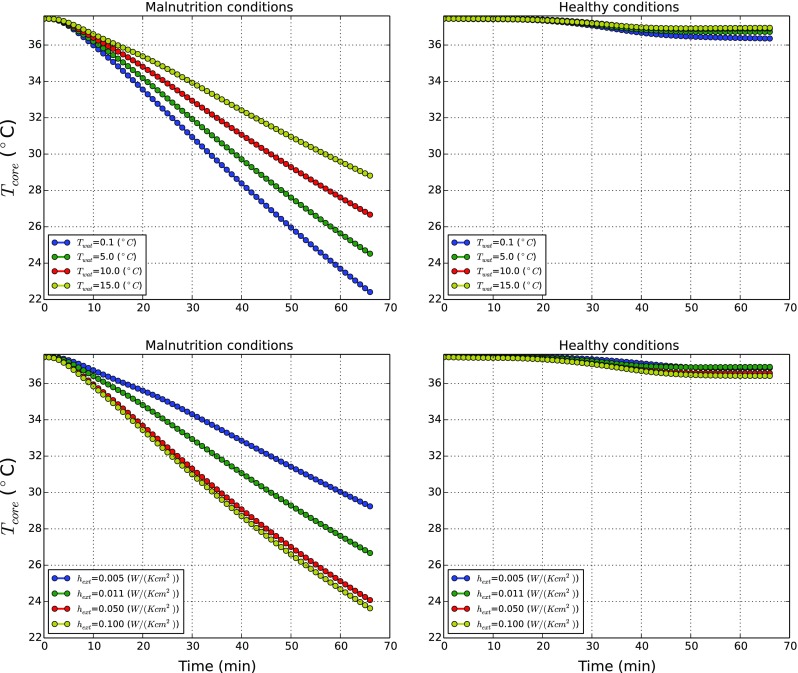
Accidental exposure to cold water environment is one of the most challenging situations in which hypothermia occurs. In the present work, we aim to characterise the energy balance of a human body subjected to such extreme environmental conditions. This study is carried out using a recently developed computational model and by setting boundary conditions needed to simulate the effect of cold surrounding environment. A major finding is the capacity of the body core regions to maintain their temperature high for a substantial amount of time, even under the most extreme environmental conditions. We also considered two disease states that highlight the spectrum of possible pathologies implicated in thermal regulation of the human body. These states are (i) cardiomyopathy, which affects the operating capacity of the heart, and (ii) malnutrition, which directly impairs the body's ability to regulate heat exchange with the environment. We have found that cardiomyopathy has little influence on the thermal balance of the human body, whereas malnutrition has a profound negative effect on the thermal balance and leads to dramatic reduction in core temperature.
意外暴露于冷水环境是导致体温过低的最具挑战性情况之一。在本工作中,我们旨在描述人体在这种极端环境条件下的能量平衡。本研究使用最近开发的计算模型进行,并设定了模拟周围寒冷环境影响所需的边界条件。主要发现是身体核心区域有能力在很长一段时间内保持较高的温度,即使在最极端的环境条件下也是如此。我们还考虑了两种疾病状态,这两种状态突出了可能与人体热调节相关的病理的范围。这些状态是:(i)心肌病,影响心脏的运行能力,以及(ii)营养不良,直接损害身体与环境进行热交换的能力。我们发现,心肌病对人体的热平衡几乎没有影响,而营养不良对热平衡有深远的负面影响,导致核心温度急剧下降。