Bian Shaomin, Li Xuyan, Mainali Hemanta, Chen Ling, Dhaubhadel Sangeeta
College of Plant Science, Jilin University, Changchun, Jilin, China.
Agriculture and Agri-Food Canada, London Research and Development Centre, London, ON, Canada.
PLoS One. 2017 Jun 6;12(6):e0178947. doi: 10.1371/journal.pone.0178947. eCollection 2017.
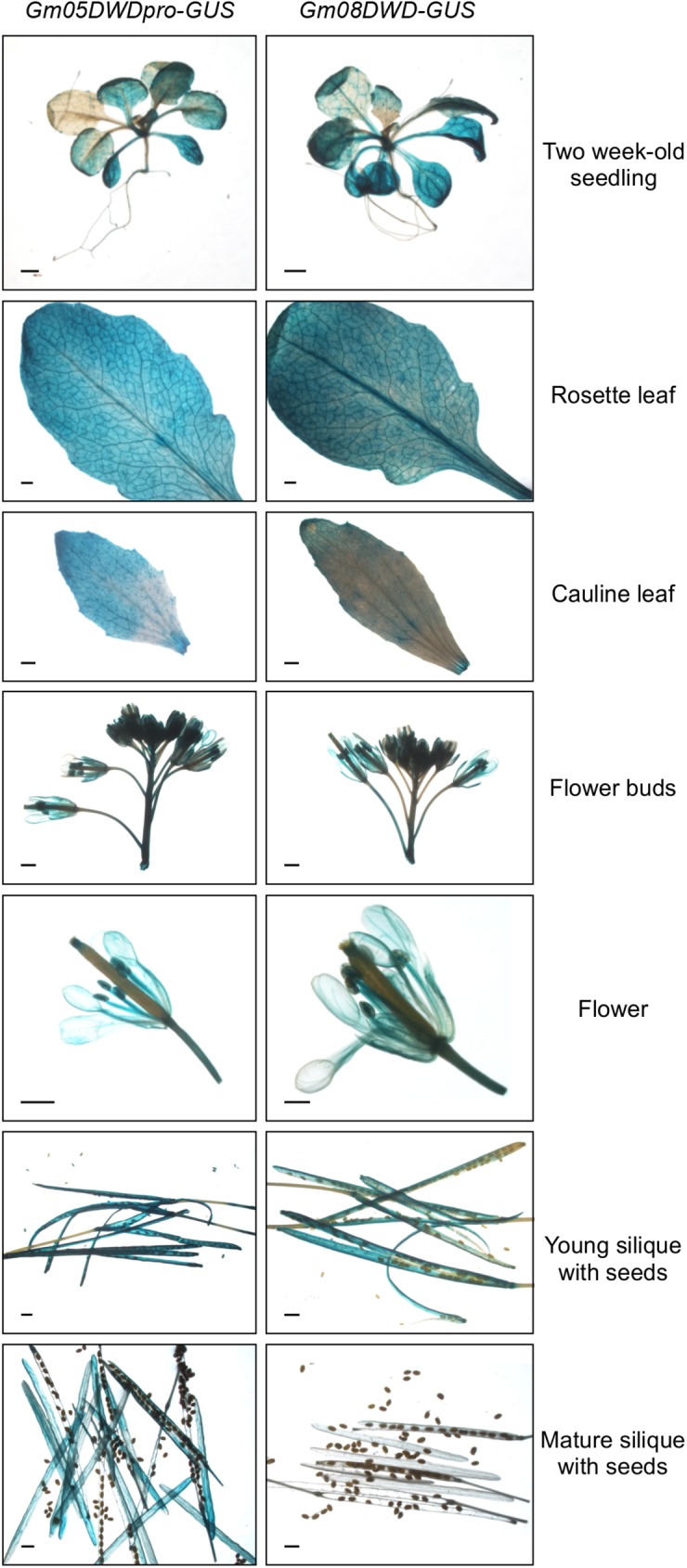
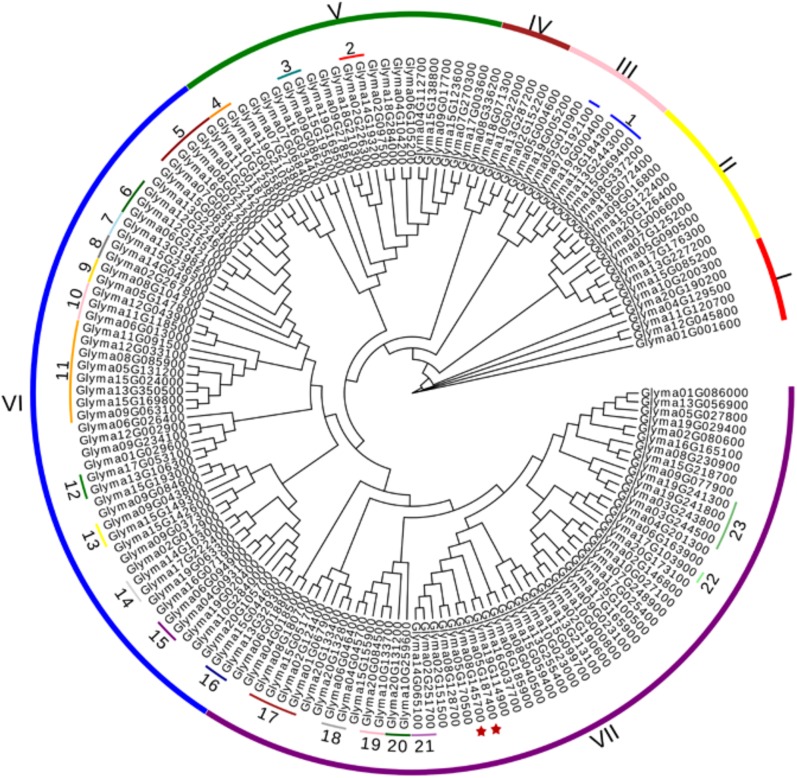
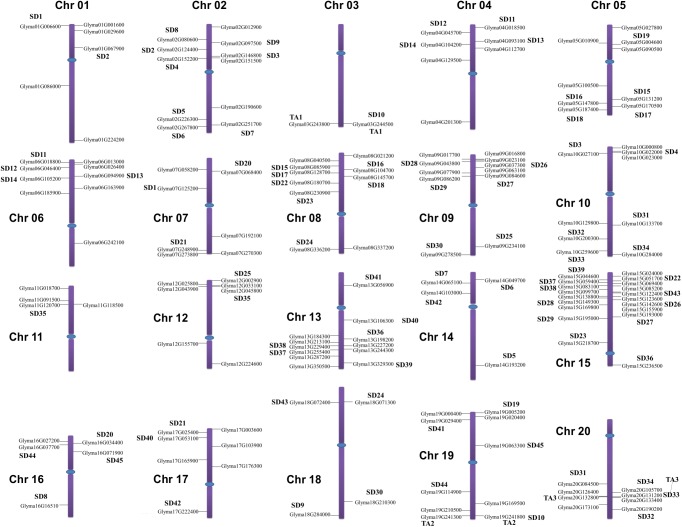
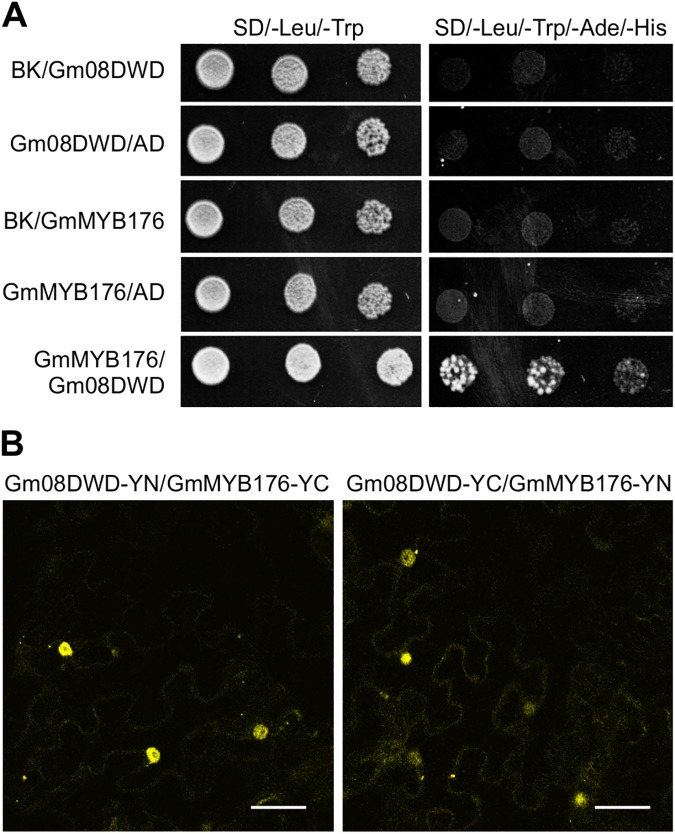
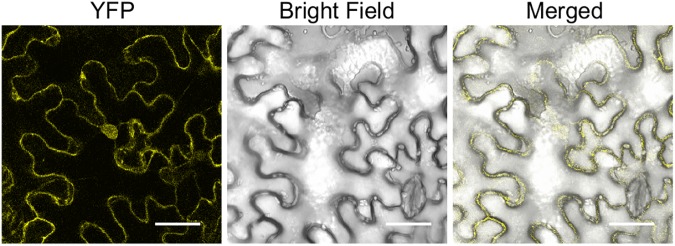
A subset of WD40 proteins with DWD motif has been proposed to serve as substrate receptor of DDB-CUL4-ROC1 complex, thereby getting involved in protein degradation via ubiquitination pathway. Here, we identified a total of 161 potential DWD proteins in soybean (Glycine max) by searching DWD motif against the genome-wide WD40 repeats, and classified them into 20 groups on the basis of their functional domains and annotations. These putative DWD genes in soybean displayed tissue-specific expression patterns, and their genome localization and analysis of evolutionary relationship identified 48 duplicated gene pairs within 161 GmDWDs. Among the 161 soybean DWD proteins, Gm08DWD was previously found to interact with an isoflavonoid regulator, GmMYB176. Therefore, Gm08DWD and its homologue Gm05DWD were further investigated. Expression profile of both genes in different soybean tissues revealed that Gm08DWD was expressed higher in embryo, while Gm05DWD exhibited maximum transcript accumulation in leaf. Our protein-protein interaction studies demonstrated that Gm08DWD interacts with GmMYB176. Although Gm08DWD was localized both in nucleus and cytoplasm, the resulting complex of Gm08DWD and GmMYB176 was mainly observed in the nucleus. This finding is consistent with the functional localization of CUL4-E3 ligase complex. In conclusion, the survey on soybean potential DWD protein is useful reference for the further functional investigation of their DDB1-binding ability. Based on the functional investigation of Gm08DWD, we speculate that protein-protein interaction between Gm08DWD and GmMYB176 may lead to the degradation of GmMYB176 through CUL4-DDB1complex.
有人提出,具有DWD基序的WD40蛋白亚群可作为DDB-CUL4-ROC1复合物的底物受体,从而通过泛素化途径参与蛋白质降解。在这里,我们通过在全基因组的WD40重复序列中搜索DWD基序,在大豆(Glycine max)中总共鉴定出161个潜在的DWD蛋白,并根据它们的功能域和注释将它们分为20组。大豆中的这些假定DWD基因表现出组织特异性表达模式,它们的基因组定位和进化关系分析在161个GmDWD中鉴定出48对重复基因对。在161个大豆DWD蛋白中,先前发现Gm08DWD与异黄酮调节剂GmMYB176相互作用。因此,对Gm08DWD及其同源物Gm05DWD进行了进一步研究。这两个基因在不同大豆组织中的表达谱显示,Gm08DWD在胚中表达较高,而Gm05DWD在叶中表现出最大的转录积累。我们的蛋白质-蛋白质相互作用研究表明,Gm08DWD与GmMYB176相互作用。尽管Gm08DWD定位于细胞核和细胞质中,但Gm08DWD和GmMYB176形成的复合物主要在细胞核中观察到。这一发现与CUL4-E3连接酶复合物的功能定位一致。总之,对大豆潜在DWD蛋白的研究为进一步研究它们与DDB1结合能力的功能提供了有用的参考。基于对Gm08DWD的功能研究,我们推测Gm08DWD和GmMYB176之间的蛋白质-蛋白质相互作用可能导致GmMYB176通过CUL4-DDB1复合物降解。