Pipkins Haley R, Bradshaw Jessica L, Keller Lance E, Swiatlo Edwin, McDaniel Larry S
Department of Microbiology and Immunology, University of Mississippi Medical Center, Jackson, Mississippi, United States of America.
PLoS One. 2017 Jun 6;12(6):e0179159. doi: 10.1371/journal.pone.0179159. eCollection 2017.
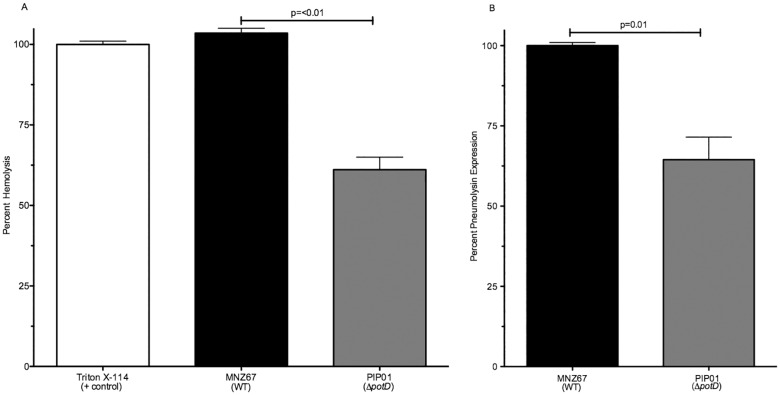
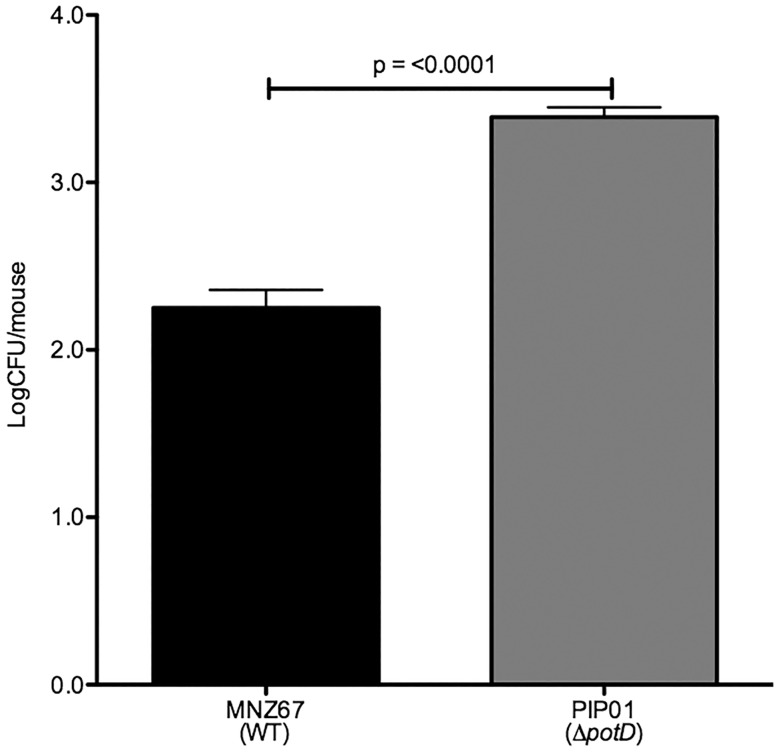
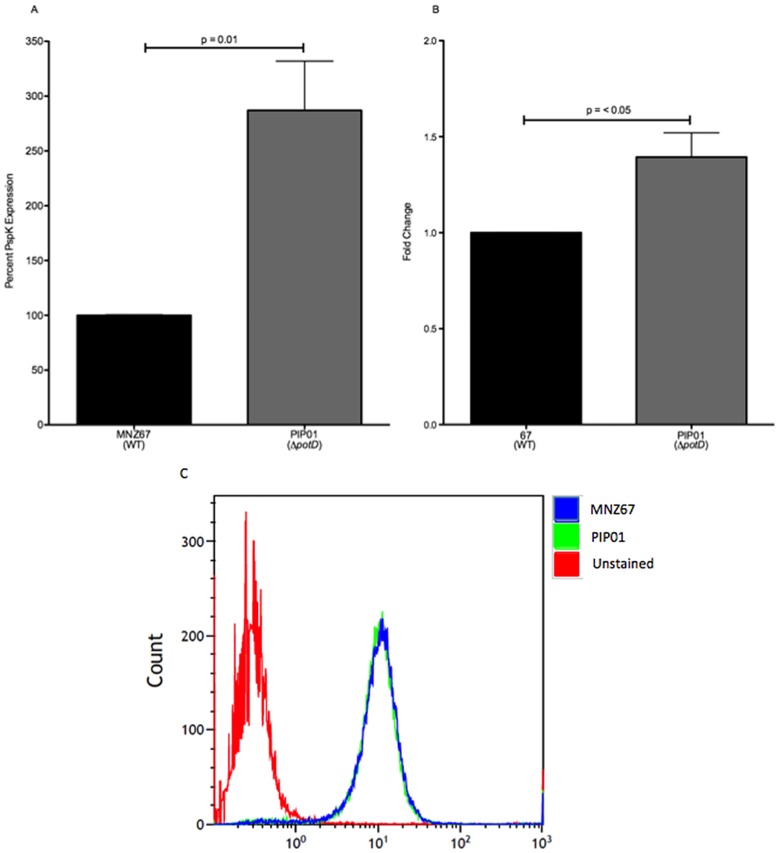
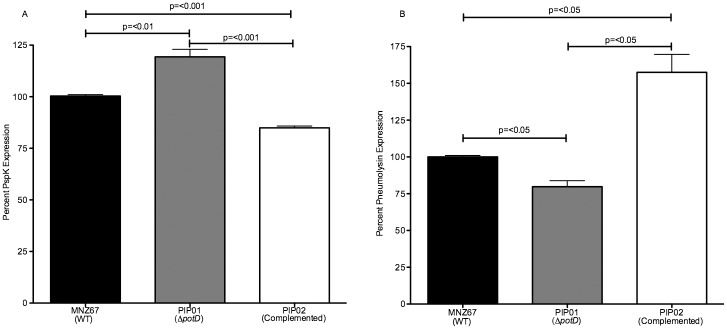
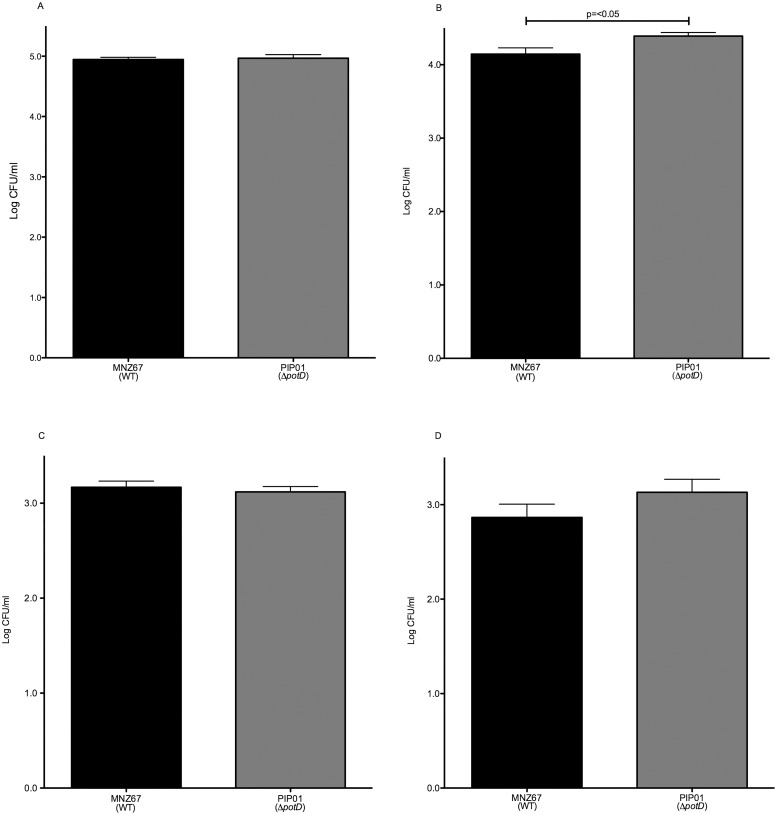
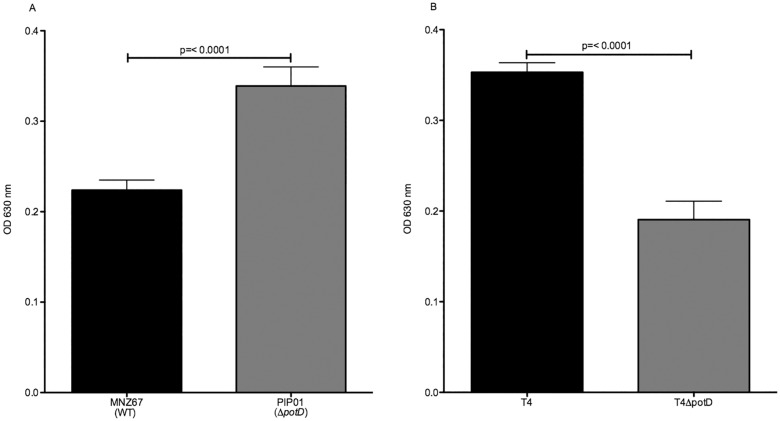
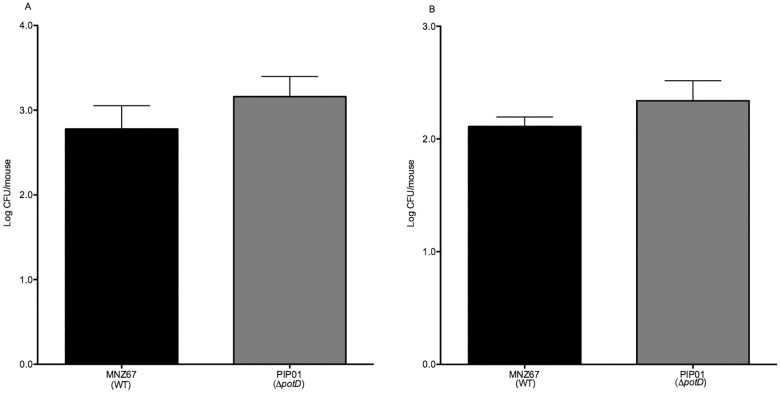
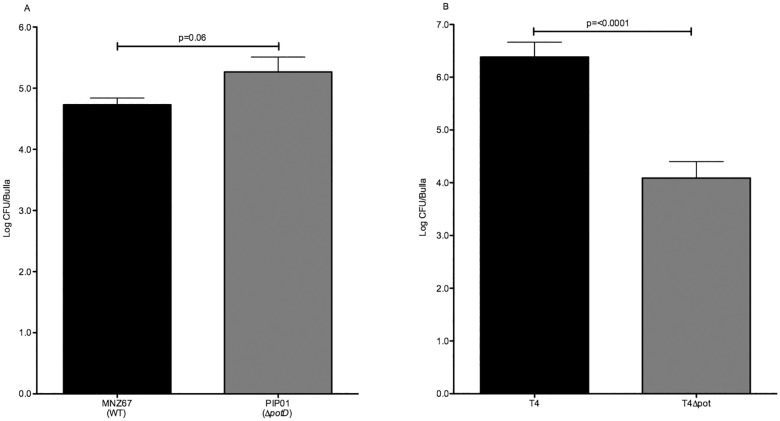
Streptococcus pneumoniae is commonly found in the human nasopharynx and is the causative agent of multiple diseases. Since invasive pneumococcal infections are associated with encapsulated pneumococci, the capsular polysaccharide is the target of licensed pneumococcal vaccines. However, there is an increasing distribution of non-vaccine serotypes, as well as nonencapsulated S. pneumoniae (NESp). Both encapsulated and nonencapsulated pneumococci possess the polyamine oligo-transport operon (potABCD). Previous research has shown inactivation of the pot operon in encapsulated pneumococci alters protein expression and leads to a significant reduction in pneumococcal murine colonization, but the role of the pot operon in NESp is unknown. Here, we demonstrate deletion of potD from the NESp NCC1 strain MNZ67 does impact expression of the key proteins pneumolysin and PspK, but it does not inhibit murine colonization. Additionally, we show the absence of potD significantly increases biofilm production, both in vitro and in vivo. In a chinchilla model of otitis media (OM), the absence of potD does not significantly affect MNZ67 virulence, but it does significantly reduce the pathogenesis of the virulent encapsulated strain TIGR4 (serotype 4). Deletion of potD also significantly reduced persistence of TIGR4 in the lungs but increased persistence of PIP01 in the lungs. We conclude the pot operon is important for the regulation of protein expression and biofilm formation in both encapsulated and NCC1 nonencapsulated Streptococcus pneumoniae. However, in contrast to encapsulated pneumococcal strains, polyamine acquisition via the pot operon is not required for MNZ67 murine colonization, persistence in the lungs, or full virulence in a model of OM. Therefore, NESp virulence regulation needs to be further established to identify potential NESp therapeutic targets.
肺炎链球菌常见于人类鼻咽部,是多种疾病的病原体。由于侵袭性肺炎球菌感染与有荚膜的肺炎球菌有关,荚膜多糖是已获许可的肺炎球菌疫苗的靶点。然而,非疫苗血清型以及非荚膜肺炎链球菌(NESp)的分布正在增加。有荚膜和无荚膜的肺炎球菌都拥有多胺寡转运操纵子(potABCD)。先前的研究表明,有荚膜肺炎球菌中pot操纵子的失活会改变蛋白质表达,并导致肺炎球菌在小鼠体内的定殖显著减少,但pot操纵子在NESp中的作用尚不清楚。在这里,我们证明从NESp NCC1菌株MNZ67中缺失potD确实会影响关键蛋白肺炎溶血素和PspK的表达,但不会抑制小鼠定殖。此外,我们发现缺失potD会显著增加体外和体内的生物膜形成。在中耳炎(OM)的栗鼠模型中,缺失potD不会显著影响MNZ67的毒力,但会显著降低强毒性有荚膜菌株TIGR4(血清型4)的致病性。缺失potD还会显著降低TIGR4在肺部的持久性,但会增加PIP01在肺部的持久性。我们得出结论,pot操纵子对于有荚膜和NCC1无荚膜肺炎链球菌中蛋白质表达和生物膜形成的调节很重要。然而,与有荚膜肺炎球菌菌株不同,通过pot操纵子获取多胺对于MNZ67在小鼠体内的定殖、在肺部的持久性或在OM模型中的完全毒力并非必需。因此,需要进一步确定NESp的毒力调节机制,以确定潜在的NESp治疗靶点。