Mulberry Geoffrey, White Kevin A, Vaidya Manjusha, Sugaya Kiminobu, Kim Brian N
Department of Electrical & Computer Engineering, College of Engineering and Computer Science, University of Central Florida, Orlando, Florida, United States of America.
Burnett School of Biomedical Sciences, College of Medicine, University of Central Florida, Orlando, Florida, United States of America.
PLoS One. 2017 Jun 6;12(6):e0179133. doi: 10.1371/journal.pone.0179133. eCollection 2017.
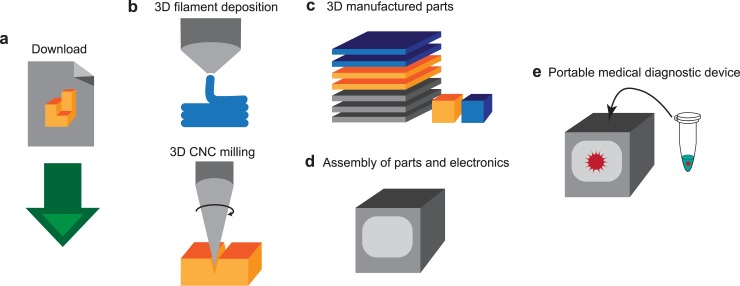
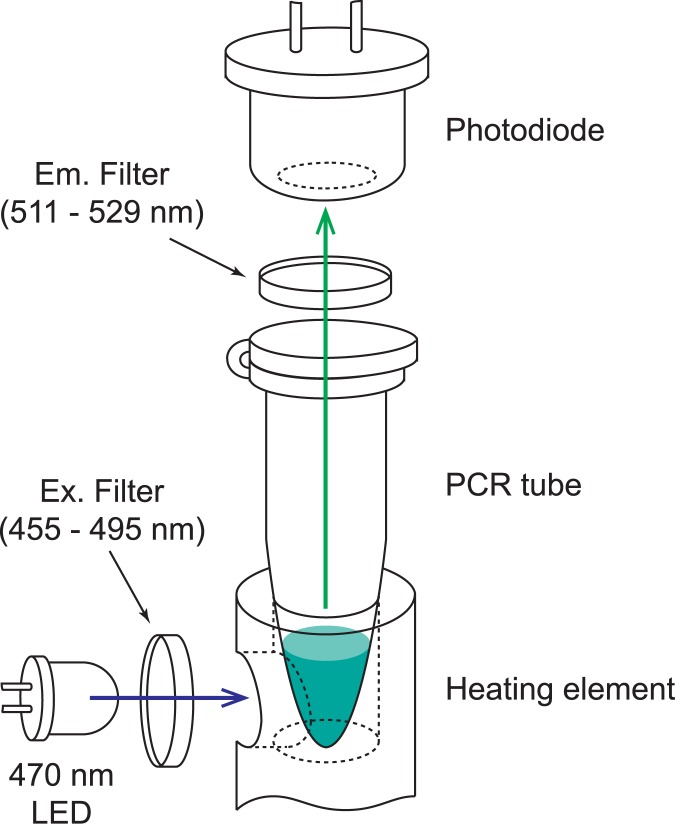
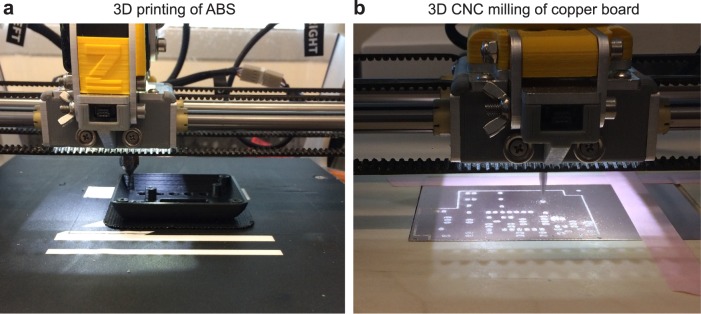
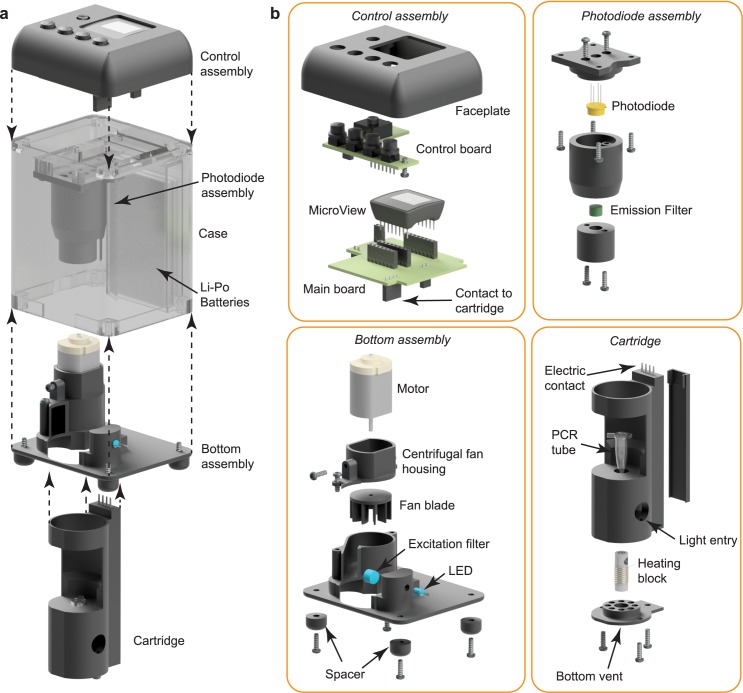
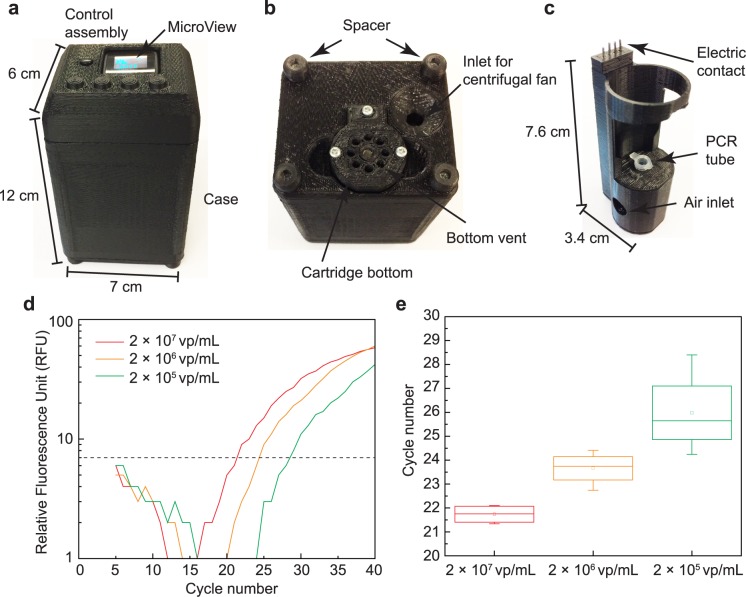
Diagnosing infectious diseases using quantitative polymerase chain reaction (qPCR) offers a conclusive result in determining the infection, the strain or type of pathogen, and the level of infection. However, due to the high-cost instrumentation involved and the complexity in maintenance, it is rarely used in the field to make a quick turnaround diagnosis. In order to provide a higher level of accessibility than current qPCR devices, a set of 3D manufacturing methods is explored as a possible option to fabricate a low-cost and portable qPCR device. The key advantage of this approach is the ability to upload the digital format of the design files on the internet for wide distribution so that people at any location can simply download and feed into their 3D printers for quick manufacturing. The material and design are carefully selected to minimize the number of custom parts that depend on advanced manufacturing processes which lower accessibility. The presented 3D manufactured qPCR device is tested with 20-μL samples that contain various concentrations of lentivirus, the same type as HIV. A reverse-transcription step is a part of the device's operation, which takes place prior to the qPCR step to reverse transcribe the target RNA from the lentivirus into complementary DNA (cDNA). This is immediately followed by qPCR which quantifies the target sequence molecules in the sample during the PCR amplification process. The entire process of thermal control and time-coordinated fluorescence reading is automated by closed-loop feedback and a microcontroller. The resulting device is portable and battery-operated, with a size of 12 × 7 × 6 cm3 and mass of only 214 g. By uploading and sharing the design files online, the presented low-cost qPCR device may provide easier access to a robust diagnosis protocol for various infectious diseases, such as HIV and malaria.
使用定量聚合酶链反应(qPCR)诊断传染病,在确定感染情况、病原体的菌株或类型以及感染水平方面能提供确凿的结果。然而,由于涉及的仪器成本高昂且维护复杂,它很少在现场用于快速周转诊断。为了提供比当前qPCR设备更高的可及性,人们探索了一套3D制造方法,作为制造低成本便携式qPCR设备的一种可能选择。这种方法的关键优势在于能够在互联网上上传设计文件的数字格式以广泛传播,这样任何地点的人都可以简单地下载并输入到他们的3D打印机中进行快速制造。材料和设计经过精心挑选,以尽量减少依赖先进制造工艺的定制部件数量,而先进制造工艺会降低可及性。所展示的3D制造的qPCR设备用含有不同浓度慢病毒(与HIV同类型)的20微升样本进行了测试。逆转录步骤是该设备操作的一部分,它在qPCR步骤之前进行,将慢病毒中的目标RNA逆转录为互补DNA(cDNA)。紧接着就是qPCR,它在PCR扩增过程中对样本中的目标序列分子进行定量。热控制和时间协调荧光读取的整个过程通过闭环反馈和微控制器实现自动化。最终的设备便于携带且由电池供电,尺寸为12×7×6立方厘米,质量仅214克。通过在网上上传和共享设计文件,所展示的低成本qPCR设备可能会使人们更容易获得针对各种传染病(如HIV和疟疾)的可靠诊断方案。